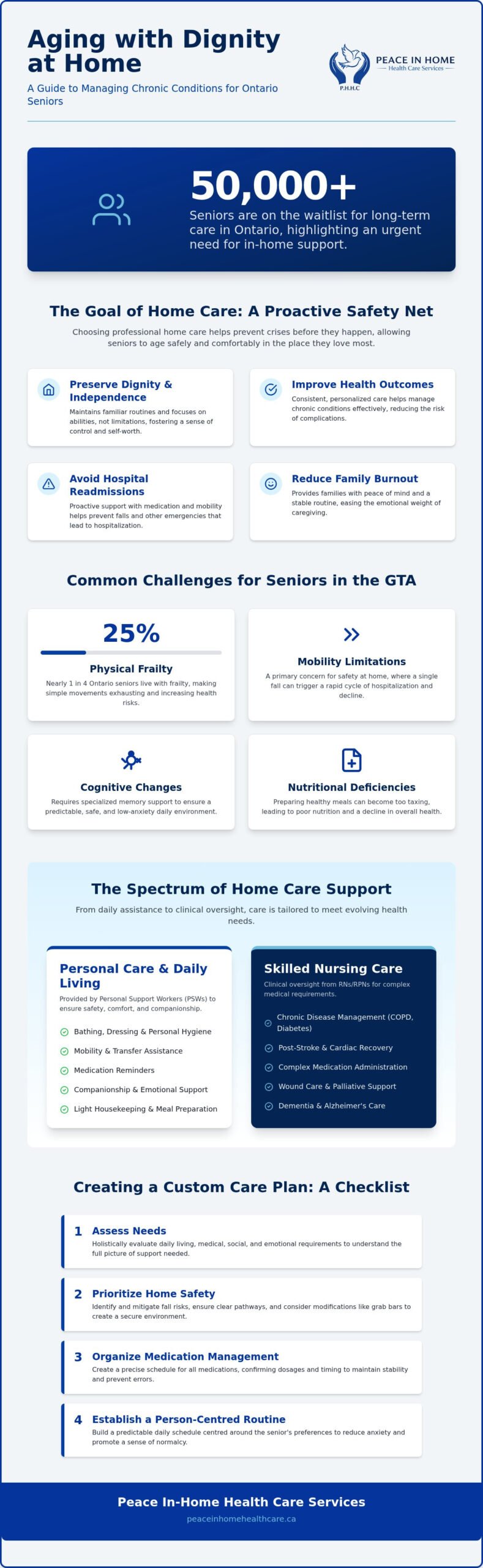
With over 50,000 seniors currently on the waitlist for long-term care in Ontario, many families feel trapped between an overstretched public system and the urgent needs of their loved ones. If you are watching a parent struggle with the daily demands of a long-term illness, you know that waiting simply isn’t an option. Finding reliable home care for seniors with chronic conditions is no longer just about convenience; it’s about preserving the dignity and safety of those who wish to age in the place they love most.
It’s natural to feel exhausted by the emotional weight of caregiving or overwhelmed by the shifting health landscape of 2026. You deserve a stable routine that manages symptoms effectively without sacrificing your own health. In this guide, you’ll discover how specialized home care helps seniors manage chronic conditions with dignity, safety, and personalized support in the comfort of their own homes. We will walk through the latest provincial care trends, practical ways to avoid premature long-term care placement, and how professional monitoring can finally bring your family the peace of mind you’ve been searching for.
Key Takeaways
- Understand how aging in place improves health outcomes and preserves independence for seniors living with long-term illnesses like COPD or heart disease.
- Distinguish between personal care and skilled nursing to find the most effective home care for seniors with chronic conditions.
- Navigate the Ontario health system with confidence by identifying where public funding might leave gaps in your loved one’s daily support.
- Use a step-by-step checklist to organize a custom care plan that prioritizes home safety and accurate medication management.
- Learn how a compassionate, person-centred approach helps families in the GTA avoid burnout while ensuring their loved ones age with dignity.
Understanding the Impact of Chronic Conditions on Senior Independence
Living with a long-term illness often changes the family dynamic in ways we don’t expect. When a loved one is diagnosed with diabetes, heart disease, COPD, or dementia, the focus shifts from shared memories to managing symptoms. This transition from “child” to “caregiver” carries a heavy emotional weight; it’s a role you likely didn’t choose but feel deeply responsible for. You might feel a constant sense of worry about their safety or a deep sadness as you watch their independence slip away. However, choosing home care for seniors with chronic conditions isn’t about admitting defeat. It’s about providing a proactive safety net that prevents emergency hospital visits before they happen. By organizing support early, you can avoid the “revolving door” of hospital readmissions that so often follows a health crisis.
Common Chronic Challenges for GTA Seniors
Aging in place is the goal for most, but the reality in the GTA often involves significant hurdles that require specialized attention. In Ontario, nearly 25% of seniors live with some level of frailty, which makes simple movements feel risky and exhausting. Mobility limitations are a primary concern, as a single fall in the home can lead to a cycle of hospitalization and rapid decline. Beyond physical safety, cognitive changes require specialized memory support to keep daily life predictable and safe. Many seniors also face nutritional deficiencies because preparing a healthy meal becomes too physically or mentally taxing. These challenges don’t just affect the senior’s physical health; they create a cycle of exhaustion for the family members trying to fill the gaps.
The Goal of Home Care: Preservation of Dignity
The true goal of home care for seniors with chronic conditions is the preservation of dignity during a difficult life transition. By keeping the individual at the centre of the care plan and maintaining a familiar routine, seniors can focus on what they are still capable of doing instead of dwelling on their limitations. This strengths-based approach is a cornerstone of a comprehensive overview of home care that prioritizes the person over the medical diagnosis. Personalized care plans help reduce the deep-seated anxiety and confusion that often accompany chronic illnesses. When a senior knows they have a reliable, attentive partner to help with medication or mobility, they can stop worrying about their limitations and start enjoying the comfort of their own living room again. This shift from crisis management to stable, daily care is what allows for a truly dignified aging experience.
The Spectrum of Home Care for Seniors with Chronic Conditions
Supporting a loved one with a long-term illness requires a flexible approach that adapts as their health needs change. For many, home care for seniors with chronic conditions starts with daily assistance that preserves their routine and self-esteem. It’s helpful to view these services as a spectrum. On one end, you have non-medical personal care that focuses on daily comfort and safety. On the other, skilled nursing provides clinical oversight for complex medical requirements. By understanding these distinctions, you can ensure your parent receives the right level of support without feeling overwhelmed by unnecessary medical intervention.
Personal Care and Daily Living Support
Personal Support Workers (PSWs) are often the heart of the care team. They provide dignified assistance with Activities of Daily Living (ADLs), such as bathing, dressing, and personal hygiene. These tasks can become sources of frustration for seniors with limited mobility, but professional support ensures they are handled with respect and patience. For those recovering from a stroke or living with severe arthritis, mobility and transfer assistance is critical to preventing falls. Additionally, light housekeeping helps maintain an allergen-free and clutter-free environment, which is essential for seniors with respiratory conditions like COPD.
Beyond physical help, companionship care addresses the isolation that often accompanies chronic illness. Living with a condition that limits social outings can lead to depression, but having a consistent, friendly presence can significantly lift a senior’s spirits. This emotional support works alongside practical help, like medication reminders. Ensuring that a senior takes the right dose at the right time is one of the most effective ways to maintain stability and prevent a health crisis. When treatment compliance is handled by a professional, it removes a major source of tension between family members and their loved ones.
Skilled Nursing and Medical Monitoring
When a condition requires more than daily living support, clinical intervention becomes necessary. Managing complex needs through skilled nursing care at home in Toronto allows seniors to receive professional medical attention in their own bedrooms. This includes vital sign monitoring, wound care for post-surgical recovery, and managing specialized medical equipment. Our nurses act as a bridge between the home and the medical system, coordinating directly with family physicians and specialists to ensure a unified care approach. If you aren’t sure which level of support is right for your family, you can speak with a care coordinator to explore your options and find the most reliable path forward.
Public vs. Private Home Care in Ontario: Navigating Your Options
Most families begin their journey by contacting Ontario Health atHome to request a functional assessment. While this is a necessary step to access government-funded support, the reality of the 2026 health landscape is that public resources are often stretched thin. Service caps mean that even those with significant needs may only receive a few hours of help each week. For families managing complex symptoms, these gaps can lead to unsafe situations or total caregiver burnout. This is why many households in Toronto and Vaughan choose a hybrid approach, using public hours for basic needs while relying on private home care for seniors with chronic conditions to provide the consistent, round-the-clock monitoring that the public system cannot always guarantee.
Bypassing the Assessment Bottleneck
One of the greatest stressors for families is the waiting period. The public assessment process can take weeks or even months to finalize, but chronic conditions don’t wait for paperwork. Private agencies offer a vital alternative by providing support within days, allowing you to stabilize a situation before it becomes a crisis. Beyond speed, private care offers the benefit of consistency. Unlike the public system, where different workers may cycle through the home, private care allows you to choose a caregiver who matches your loved one’s personality and routine. Whether you need a short four-hour visit to run errands or 24/7 live-in support, the flexibility of private care ensures that the schedule revolves around your family’s life, not the agency’s availability.
Cost Considerations for GTA Families
We understand that financial planning is a major part of this transition. When evaluating the cost of home care services for seniors in Toronto, it’s helpful to compare these expenses against the high monthly fees of private retirement residences. In many cases, staying at home with personalized support is not only more comfortable but also more cost-effective. Canadian seniors and their families should also explore available financial resources to help offset these costs. Many home care expenses qualify for the Medical Expense Tax Credit on your annual return. Additionally, some long-term care insurance policies and provincial grants can provide much-needed relief. By focusing on a proactive care plan, you’re investing in your loved one’s health today to prevent the much higher costs of emergency medical interventions tomorrow.
Creating a Custom Care Plan: A Checklist for Families
Starting the process of organizing home care for seniors with chronic conditions can feel like a daunting task, but breaking it down into manageable steps makes the transition smoother for everyone. A custom care plan isn’t just a list of tasks; it’s a living document that evolves with your loved one’s health. To build a plan that truly supports their independence, we recommend following these four practical steps:
- Step 1: Conduct a home safety audit. Look for fall hazards like loose rugs, poor lighting, or bathrooms that lack grab bars. Since nearly half of hospitalized seniors in Ontario fall into high-risk frailty categories, making the home a secure environment is the first priority.
- Step 2: Document all medical details. Create a master list of all medications, dosages, and pharmacy details. Include the contact information for every specialist involved in their care to ensure a unified approach.
- Step 3: Define “Success” for your family. Determine if your primary goal is improved mobility, better nutritional intake, or more social engagement to combat isolation. Setting clear outcomes helps the care team focus their efforts effectively.
- Step 4: Interview agencies with condition-specific questions. Ask how they have handled similar cases of heart disease or COPD in the past. Their experience with home care for seniors with chronic conditions will be the foundation of your loved one’s safety.
Addressing Specialized Care Needs
Designing a plan for dementia and Alzheimer’s care requires a focus on cognitive stimulation and a predictable routine. For many, this includes specialized meal preparation that accounts for specific dietary needs. If your parent is managing diabetes or hypertension, their care plan should include low-sodium or low-glycemic meal options prepared fresh in their kitchen. We also recommend setting up a communication log. This simple notebook or digital file allows caregivers to record daily observations, appetite, and mood, providing you with a clear window into their daily well-being even when you can’t be there yourself.
The Role of Respite Care
You cannot pour from an empty cup, and recognizing when you need a break is a sign of strength, not a failure. Integrating respite care in Toronto acts as a vital safety net for primary caregivers. It allows you to step away for a few hours or a few days, knowing a professional is monitoring your loved one’s health. Many families start with occasional respite support before transitioning to a more structured daily routine as care needs increase. This gradual approach helps seniors adjust to having a new person in their home while giving you the breathing room needed to remain a supportive family member rather than just a task-oriented caregiver.
Why Peace In-Home Health Care is the Trusted Choice in the GTA
Peace In-Home Health Care stands as a reliable partner for families navigating the complexities of the Greater Toronto Area’s health system. With over 17 years of experience, we’ve guided countless households through the transition to home care for seniors with chronic conditions. Our “Human-First” philosophy means we prioritize emotional well-being and personal dignity alongside physical safety. We realize that a senior is more than their diagnosis; they’re a person with a history, a routine, and a home they love. By serving communities like Toronto, Mississauga, Markham, and Vaughan, we’ve built deep roots and a reputation for quiet advocacy for the elderly.
Our caregivers undergo a rigorous screening process followed by ongoing professional training to keep their skills sharp and their hearts open. We don’t just hire for technical ability; we hire for the capacity for kindness. This meticulous approach is what allows us to offer our “Peace of Mind” guarantee. It’s a promise that you’ll have a stable, experienced presence in your home, providing the steady hand needed during uncertain times. You’ll find that our team doesn’t just manage symptoms; they protect the familiar lifestyle your loved one has worked so hard to build.
Our Approach to Chronic Condition Management
We believe that the best care happens when there’s a genuine connection between the caregiver and the senior. We focus on personalized matching, finding a professional whose personality and temperament complement your loved one’s unique character. This relationship-centred approach reduces the anxiety often caused by chronic illness and fosters a sense of security. Whether your family requires personal care assistance from a PSW or medical oversight from our skilled nursing team, we ensure seamless coordination. Our goal is always to preserve the independence of every senior, focusing on their strengths while providing dignified support for the tasks that have become difficult.
Getting Started with a Free Consultation
Taking the first step doesn’t have to be a source of panic. During our initial in-home assessment, we listen to your family’s concerns and observe the daily rhythms of the household. This isn’t a clinical interrogation; it’s a supportive conversation designed to understand your specific needs and goals. We then build a tailored care plan that is designed to be flexible. As your loved one’s needs change, our support evolves with them, ensuring they always have the right level of attentive care. Our role is to lead you through a logical, low-stress path toward a more stable and peaceful home life.
Schedule a compassionate care consultation today
Embracing a Future of Comfort and Dignity at Home
Managing a long-term illness is a marathon, not a sprint. You don’t have to navigate the complexities of the Ontario health system or the physical demands of caregiving alone. Choosing specialized home care for seniors with chronic conditions means selecting a path that prioritizes your loved one’s independence while protecting your own well-being. Whether you need specialized dementia support or the clinical oversight of a skilled nurse, the right support system turns a daily struggle into a manageable, dignified routine.
Peace In-Home Health Care has served families across the GTA for over 17 years. Our team of vetted caregivers and professional nurses is dedicated to providing the attentive, personalized care your parent deserves. We’re here to be your trusted guide, offering the steady hand you need during this life transition.
You’ve done so much to support your family already. Now, let us help you find the peace of mind that comes with knowing your loved one is safe, respected, and truly at home.
Frequently Asked Questions
What is the difference between home care and home health care for seniors?
Home care generally refers to non-medical support like personal care, meal preparation, and companionship to help with daily living. In contrast, home health care involves clinical services provided by registered nurses or therapists, such as wound care or medication administration. While home care helps a senior maintain their routine and independence, home health care focuses on medical monitoring. Many families in the GTA choose a combination of both to ensure every health need is met.
How do I know if my parent’s chronic condition requires professional home care?
You might notice your parent struggling with basic tasks like bathing, dressing, or keeping up with a complex medication schedule. Safety concerns, such as frequent falls or unexplained bruises, are clear indicators that professional support is needed. Additionally, if family caregivers are experiencing emotional exhaustion, it’s time to consider home care for seniors with chronic conditions. Professional intervention ensures symptoms are monitored accurately while allowing you to return to being a supportive family member.
Does the Ontario government pay for private home care services?
Publicly funded home care is available through Ontario Health atHome, but these services are often limited by strict hourly caps and waitlists. Private home care services are typically paid for out-of-pocket by the family to fill the gaps left by the public system. However, many of these expenses are eligible for the Medical Expense Tax Credit on Canadian tax returns. Some families also use long-term care insurance or provincial grants to help manage the costs.
Can home care providers help with specialized diets for diabetic seniors?
Yes, our caregivers are trained to assist with meal preparation that follows specific dietary requirements, such as low-sodium or low-glycemic plans. For seniors living with diabetes or heart disease, consistent nutrition is a vital part of symptom management. We work with the family’s existing nutritional guidelines to prepare fresh, healthy meals in the home. This ensures your loved one maintains a stable diet without the physical strain of cooking or cleaning for themselves.
What happens if our needs change or the condition worsens?
Care plans are designed to be flexible and evolve alongside your loved one’s health journey. If a condition worsens, we can increase the frequency of visits or transition from companionship care to more intensive personal support or skilled nursing. Our care coordinators conduct regular reviews to ensure the level of service remains appropriate. This adaptability provides a safety net that helps families avoid premature placement in long-term care facilities during difficult health transitions.
Is home care safe for seniors living with advanced dementia?
Home care is a safe and often preferred option for seniors with advanced dementia because it allows them to stay in a familiar, calming environment. Specialized memory care focuses on reducing agitation through predictable routines and constant supervision. Our caregivers are trained to manage the unique challenges of cognitive decline, including confusion or exit-seeking behaviours. By maintaining a one-on-one ratio, we provide a level of attentive safety that is difficult to achieve in larger facilities.
How quickly can home care services be started in Toronto or Vaughan?
Private home care services in Toronto or Vaughan can often be initiated within 24 to 48 hours of an initial assessment. This rapid response is essential for families dealing with a sudden health decline or an unexpected hospital discharge. Unlike the public system, which may involve lengthy waitlists and assessment bottlenecks, our process is streamlined to provide immediate relief. We prioritize getting a reliable professional into the home as quickly as possible to stabilize the situation.