

You’re sitting at your desk in downtown Toronto, but your mind is miles away in a quiet living room in Richmond Hill, wondering if the silence on the phone means your father is napping or if he’s had a fall. It’s an exhausting cycle of guilt and worry that many Canadian families face as they try to balance their own lives with the stressful role of parenting their own parent. You want them to stay in the place they love, yet you may feel unsure about how to keep elderly parent at home safely without being there every hour of the day.
We understand that your goal is to protect their independence while ensuring they’re never truly alone. This 2026 guide provides a compassionate, professional roadmap to help you create a secure and dignified environment that offers your family total peace of mind. We’ll explore practical home safety modifications, the benefits of personalized companionship, and the specific local resources and tax credits available to seniors across the GTA and York Region to make aging in place a sustainable reality.
Key Takeaways
- Learn how to use the “Fridge Test” and other subtle indicators to recognize when it’s time to enhance safety measures in your loved one’s home.
- Discover a room-by-room audit strategy that focuses on high-risk areas like the bathroom to eliminate hazards and improve lighting for better mobility.
- Understand how to keep elderly parent at home safely by balancing professional personal care with meaningful companionship to support their daily routine.
- Gain practical tips for having the “safety conversation” with empathy, ensuring your loved one feels respected and involved in every decision.
- Learn how to build a sustainable care plan in the Toronto area that includes respite care to protect your own well-being as a caregiver.
Recognizing the Signs: When Is It Time to Enhance Home Safety?
In the year 2026, the Canadian concept of Aging in place is defined as having the necessary health, social, and physical supports to live safely and independently in one’s own residence for as long as possible. For many families in Toronto and the York Region, the challenge isn’t the desire to stay home, but rather recognizing the subtle shift from “normal aging” to genuine safety risks. You might find yourself wondering how to keep elderly parent at home safely while watching these changes unfold, often feeling a mix of concern and uncertainty.
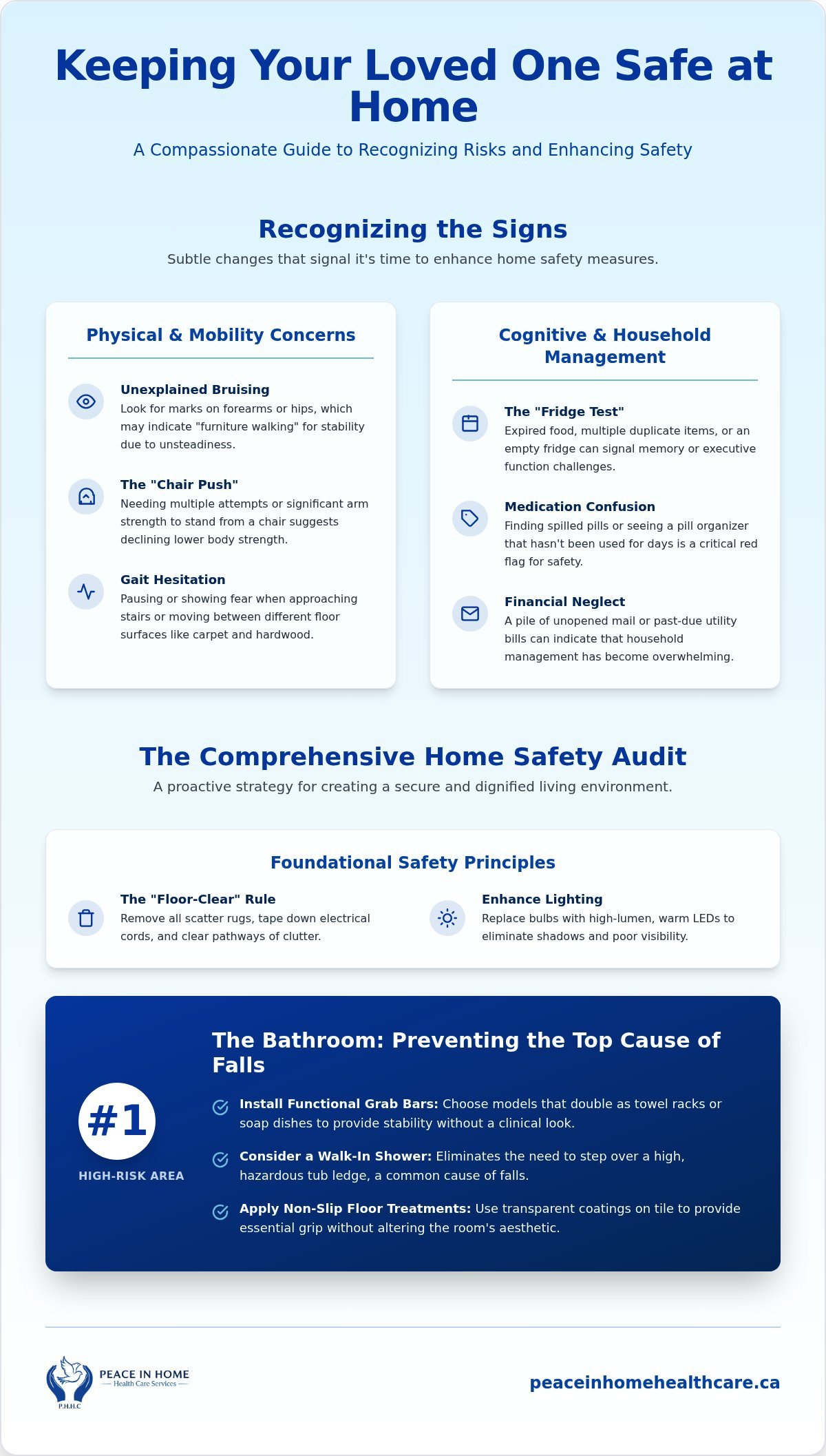
Distinguishing between a senior who is simply slowing down and one who is at risk requires a keen eye for detail. One of the most effective ways to assess cognitive health is through the “Fridge Test.” When you visit, take a gentle look inside their refrigerator. Are there multiple containers of expired milk, or perhaps four jars of the same mustard? These small redundancies often signal that a parent is struggling with memory or the executive function needed to plan meals. Similarly, look for subtle changes in personal grooming or home maintenance. A garden that was once a source of pride but is now overgrown, or a parent who has always been meticulous but now wears stained clothing, suggests they’re becoming overwhelmed by daily routines.
Don’t ignore the “near-misses.” A scorched pot left on the stove or a trip on a loose rug that didn’t result in a fall are your most valuable warning signs. They aren’t just accidents; they’re data points that show the current environment isn’t supporting their needs anymore. Identifying these moments early allows you to make adjustments before a crisis occurs.
Physical Red Flags and Mobility Concerns
Physical safety often declines in ways that seniors try to hide to maintain their independence. Watch for these specific indicators:
- Unexplained bruising: Look for marks on their forearms or hips. This often points to “furniture walking,” where a senior steadies themselves by grabbing tables and chairs because they feel unsteady.
- The “Chair Push”: If your parent needs multiple attempts or significant arm strength to get up from their favourite armchair, their lower body mobility is declining.
- Gait hesitation: Notice if they pause or seem fearful when approaching stairs or moving from carpet to hardwood floors.
Cognitive and Executive Function Warning Signs
Safety isn’t just about physical falls; it’s about the ability to manage a household. Understanding these signs is the first step in learning how to keep elderly parent at home safely through tailored support.
- Medication confusion: Finding pills on the floor or seeing a pill organizer that hasn’t been touched for days is a critical red flag.
- Financial neglect: Unopened mail or past-due utility bills from Toronto Hydro often indicate that the mental load of home management is too high.
- Social withdrawal: If they’ve stopped attending their usual community groups in the GTA or skip weekly calls with friends, it’s often because the effort to socialize has become physically or mentally taxing.
The Comprehensive Home Safety Audit: A Room-by-Room Strategy
A safe home is more than just a place with fewer rugs; it’s a living environment that supports a senior’s dignity. When you begin a safety audit, start with the “Floor-Clear” rule. This means removing all scatter rugs, taping down loose electrical cords, and clearing pathways of everyday clutter that can become a trip hazard in low light. Lighting itself is a powerful safety tool. By replacing standard bulbs with high-lumen, warm LEDs, you can eliminate the deep shadows and “blind spots” that often lead to missteps. If you’re wondering how to keep elderly parent at home safely, these small, immediate changes create the foundation for long-term independence.
The Bathroom: Preventing the #1 Cause of Falls
The bathroom is statistically the most hazardous room in any house. To prevent falls, consider installing grab bars that double as high-end towel racks or soap dishes. These “invisible” safety features provide essential stability during transfers without making the space look like a hospital ward. Walk-in showers are far safer than traditional tubs, as they eliminate the need to balance on one leg while stepping over a high ledge. For the floor, apply transparent non-slip treatments that provide grip on tile surfaces without altering the aesthetic of the room. Professional mobility and transfer assistance can also ensure that daily hygiene routines remain a source of comfort rather than a moment of risk.
Kitchen and Living Area Optimizations
In the kitchen, fire safety and ease of access are the primary goals. Move frequently used items, such as the kettle or favourite mugs, to waist-height shelving to prevent the need for step stools or deep bending. Installing automatic shut-off devices for stoves and small appliances provides a vital safety net if a burner is accidentally left on. In the living room, choose ergonomic furniture with firm cushions and sturdy armrests. These choices make it much easier for a senior to stand up independently, reducing the strain on their joints. Conducting this audit together is often a gentle way to have difficult conversations about future needs while focusing on immediate comfort.
Stairs and Entryways: Securing the Perimeter
Stairs require double handrails that extend slightly past the top and bottom steps to provide a continuous grip. Adding high-contrast tape to the edge of each step helps those with declining vision distinguish where one step ends and the next begins. Given the Toronto climate, keep entryways clear of seasonal hazards like ice, slush, and wet leaves. Smart doorbells are also an excellent addition, allowing you or your parent to see and speak with visitors from a smartphone, which helps prevent “door-to-door” scams and unnecessary trips to the door. If you feel overwhelmed by these technical changes, our team can provide a personalized assessment to help you prioritize the most urgent modifications for your family.
Balancing Independence with Professional Support Systems
While physical home modifications are essential, they’re only half of the safety equation. To truly understand how to keep elderly parent at home safely, we must look at the human support that bridges the gap between independence and risk. Professional personal care assistance for seniors acts as a vital safety net. It allows your loved one to maintain their daily rhythms, such as bathing or dressing, without the fear of a simple task turning into a crisis. This support doesn’t take away their autonomy; it provides the stability they need to exercise it.
One often overlooked safety risk is social isolation. Companionship care plays a critical role in preventing “loneliness-related” health declines, which often manifest as poor nutrition or a lack of motivation to stay active. Similarly, professional medication reminders change the family dynamic for the better. Instead of you feeling like you’re “nagging” your parent about their prescriptions, it becomes a seamless part of a professional caregiver’s routine. This preserves your relationship as a son or daughter while ensuring strict medical compliance.
For families managing memory loss, specialized dementia care at home in Toronto offers a level of “cognitive safety” that general help simply can’t provide. It involves understanding the specific triggers and patterns of Alzheimer’s to prevent wandering or agitation before they start. This personalized approach is the gold standard for how to keep elderly parent at home safely while protecting their emotional well-being.
Technology vs. Human Connection
In 2026, we have access to incredible tools like AI-powered fall detection and smart home sensors. However, a wearable device is only as good as the response plan behind it. A sensor can alert you that a fall happened, but it can’t provide real-time mobility and transfer assistance to prevent the fall from occurring in the first place. We believe smart home tech should supplement, not replace, human eyes. A caregiver’s presence means having someone to notice a slight change in skin colour or a new hesitation in their step that a camera might miss.
The Value of Skilled Nursing at Home
There are times when a Personal Support Worker (PSW) isn’t enough to manage complex medical needs. This is where RN-supervised skilled nursing becomes essential for aging in place. If your parent is managing chronic conditions like diabetes or heart health, having a professional to monitor vitals and manage post-hospital recovery is the most reliable way to prevent readmission. It’s about having a trusted guide who can navigate medical complexities while keeping your parent in the familiar comfort of their own home.
How to Have the ‘Safety Conversation’ Without Causing Stress
The conversation about home safety is rarely about the house itself; it’s about the fear of losing one’s identity. When you’re researching how to keep elderly parent at home safely, the emotional barrier is often higher than the physical one. Approaching this topic requires a “human-first” perspective that prioritizes their dignity over your own anxiety. It’s a delicate balance of being a protective child and a respectful partner in their aging journey.
Choosing the right setting is your first strategic move. Avoid having this talk during high-stress events, such as a busy holiday dinner or immediately after a doctor’s appointment. Instead, pick a neutral, quiet time when everyone is well-rested. Sometimes, a “neutral” location like a favourite park bench or a quiet cafe can help your parent feel less like they’re being “cornered” in their own living room. This simple change in environment can lower defences and open the door to a more honest dialogue.
Focus on “I” statements to keep the tone supportive rather than accusatory. Saying, “I feel a lot of peace when I know someone is helping with the heavy laundry,” is much more effective than saying, “You can’t do the laundry safely anymore.” By centering the conversation on your feelings and the common goal of independence, you frame help as a tool for staying home longer. This “Gradual Introduction” method, perhaps starting with light housekeeping or meal prep, allows them to realize that professional support is a way to preserve their lifestyle, not a restriction on it.
Five Steps to a Productive Family Meeting
- Step 1: Gather facts and observations. Before the meeting, write down specific instances you’ve noticed, such as those red flags mentioned in the first section of this guide.
- Step 2: Ask for their perspective first. Start with a gentle question like, “How do you feel the house is managing lately?” This gives them the floor and ensures they feel heard.
- Step 3: Present options as a “trial period.” Suggesting a two-week trial of companionship care feels much less daunting than a permanent life change.
- Step 4: Involve a neutral third party. If the conversation stalls, a family doctor or a care manager can provide an objective professional opinion that feels less personal.
- Step 5: Document the shared plan. Write down what you’ve agreed upon so everyone, including siblings in the GTA, is on the same page.
Handling Resistance with Empathy
If your parent pushes back, take a breath and validate their feelings. Resistance is often a mask for the fear of losing their home or their sense of self. Acknowledge this by saying, “I understand that you value your privacy, and I want to protect that.” This simple validation can de-escalate a tense moment and show that you’re on their side. Your goal is to be a steady, reliable partner, not a guard who is taking their freedom away.
Recognize when it’s time to back off. If the conversation becomes too heated, it’s okay to try again in a few days. Forcing a decision usually leads to more resistance later on. A successful strategy for how to keep elderly parent at home safely is built on trust and patience, which often takes multiple small conversations rather than one big “intervention.”
Building a Sustainable Care Plan in the Greater Toronto Area
Sustainability isn’t just about today’s safety; it’s about building a robust “Care Circle” that can weather the months and years ahead. This network includes family, trusted neighbours, and professional partners working in harmony. When exploring how to keep elderly parent at home safely, many families find that the missing link is support for the primary caregiver. This is where respite care in Toronto becomes vital. It allows you to recharge your own energy, ensuring you can continue to provide the highest quality of love and support without facing burnout.
Vetting a home care agency in Toronto requires looking beyond basic services. In 2026, ensure any provider you choose holds a valid Temporary Help Agency (THA) license as required by Ontario regulations. Look for agencies with a deep-rooted presence in the community and RN-supervised care. A reliable agency should feel like a partner that shares your commitment to your parent’s dignity and security, offering a steady hand as you navigate the complexities of aging in place.
Customizing Care to Your Neighbourhood
Families in North York, Etobicoke, and Scarborough often face different logistical challenges than those in Vaughan or Markham. A sustainable plan leverages local community centres and senior networks that understand these specific GTA pockets. Coordination of errands and appointment accompaniment is particularly helpful for navigating the city’s busy transit and medical hubs. Whether it’s a trip to a specialist at Sunnybrook or a local grocery run, having a professional companion ensures these outings remain safe and stress-free for your loved one.
Long-Term Sustainability and Peace of Mind
A care plan is a living document that must evolve alongside your parent. It shouldn’t be set in stone; instead, it should be adjusted through regular “Safety Reviews” every few months. These reviews allow you to adapt as your parent’s mobility or health needs change, ensuring the environment remains supportive. There’s a profound psychological relief in knowing a professional is on-site, allowing you to return to being a daughter or son rather than a full-time care manager. This shift is essential for how to keep elderly parent at home safely while maintaining your own well-being.
Use this final checklist to ensure the home is ready for the next 12 months:
- Seasonal Maintenance: Schedule outdoor checks for ice and leaf removal to prevent exterior falls.
- Tech Updates: Verify that all smart home safety devices have fresh batteries and the latest software updates.
- Schedule Audit: Review the current care hours to ensure they still match your parent’s daily energy levels.
- Contact List: Confirm that local emergency contacts and GTA medical providers are updated and easily accessible.
Embracing a Secure and Dignified Future at Home
Helping a loved one age in place is one of the most meaningful gifts you can provide. By conducting a thorough home safety audit and introducing supportive care early, you’re not just preventing accidents; you’re actively protecting their dignity and independence. You’ve learned how to spot the subtle warning signs, how to have those sensitive conversations with empathy, and why professional support serves as a vital safety net rather than a restriction.
Determining how to keep elderly parent at home safely doesn’t have to be a solo journey that leads to burnout. With over 17 years of trusted experience across the GTA, Peace In-Home Health Care Services provides personalized care plans supervised by Registered Nurses. Whether your family needs specialized expertise in Alzheimer’s and Dementia care or simple companionship, we’re here to offer a steady, compassionate hand. Ready to create a safer home for your loved one?
You deserve the peace of mind that comes from knowing your parent is safe, respected, and well-supported in the home they love. Taking these steps today ensures a brighter, more secure tomorrow for your entire family.
Frequently Asked Questions
How do I keep my elderly parent safe at home if they are stubborn and refuse help?
Start by introducing non-medical support that feels like a luxury rather than “care.” If you’re exploring how to keep elderly parent at home safely, focus on services like meal preparation or light housekeeping first. These tasks feel less invasive and help build a relationship with a caregiver. Frame the support as a way to reduce your own worry, which often encourages a parent to accept help for your sake.
Can technology like fall-detection watches replace a home caregiver?
Technology is a valuable monitoring tool, but it cannot offer physical support. A watch can alert you after a fall occurs, but it can’t provide the real-time mobility and transfer assistance needed to prevent the accident entirely. Human eyes notice subtle changes in skin colour, gait, or balance that sensors often miss. We recommend using smart devices to supplement, rather than replace, the attentive presence of a professional caregiver.
What are the most important home modifications for preventing senior falls?
Focus your efforts on high-impact areas like the bathroom and stairways. Installing sturdy grab bars and ensuring every room has high-lumen lighting to eliminate deep shadows are critical steps. Following the “Floor-Clear” rule by removing all scatter rugs and loose cords significantly reduces everyday trip hazards. For those with declining vision, adding high-contrast tape to the edges of stairs helps them navigate level changes with much greater confidence.
Is it safer for a senior with dementia to stay at home or move to a facility?
Familiarity is a powerful safety factor for those living with memory loss. Staying in a known environment reduces the confusion and agitation that often lead to falls or wandering in new settings. With specialized dementia and Alzheimer’s care, a private home can be just as secure as a facility. The key is ensuring the environment is modified for cognitive safety and that caregivers are trained to manage specific patterns.
How much does professional home care in Toronto cost compared to a nursing home?
Home care offers a level of flexibility that residential facilities often cannot match. Instead of a fixed monthly room-and-board fee, you only pay for the specific hours of support your parent actually needs. This makes it a sustainable option for many GTA families, especially when you factor in provincial tax credits. It allows your parent to keep their home equity while receiving tailored, RN-supervised care that scales as their needs change.
What should I do if my parent keeps forgetting to take their heart medication?
Forgetting heart medication is a serious risk that requires a professional routine. Medication reminders from a caregiver ensure doses are taken accurately and on schedule, removing the burden of “nagging” from family members. If the medical regimen is complex, RN-supervised skilled nursing can provide the clinical oversight needed to manage chronic conditions. This structured approach prevents the dangerous health spikes often associated with missed or double doses during the week.
Can I hire a caregiver for just a few hours a week in Mississauga or Oakville?
Yes, professional support is highly flexible and available across the entire GTA, including Mississauga and Oakville. You can arrange for companionship care or respite care for just a few hours a week to help with errands or appointment accompaniment. This is an excellent way to “test the waters” and see how your parent responds to a new face in the home. It helps build a sustainable care plan without a large commitment.
What happens if my parent has an emergency while I am at work?
A comprehensive care plan ensures your parent is never truly alone in a crisis. When a professional caregiver is on-site, they are trained to follow a specific emergency response protocol immediately. For the hours they are alone, we help you set up a “Care Circle” involving neighbours and local family. This layered approach ensures that even while you are at your desk, there is always a clear, reliable path to assistance.