

What if the most effective way to preserve your independence isn’t by moving into a facility, but by transforming your current home into a sanctuary of safety and support? For many families, the desire to stay in a beloved neighbourhood is often clouded by anxiety over the high costs of nursing homes in Ontario or confusion about which government programs actually apply to them. You want to remain in the place where your memories were built, yet the logistics of staying safe can feel overwhelming. It’s a common concern; with more than one in five Canadians now over the age of 65, the need for a sustainable plan has never been more vital.
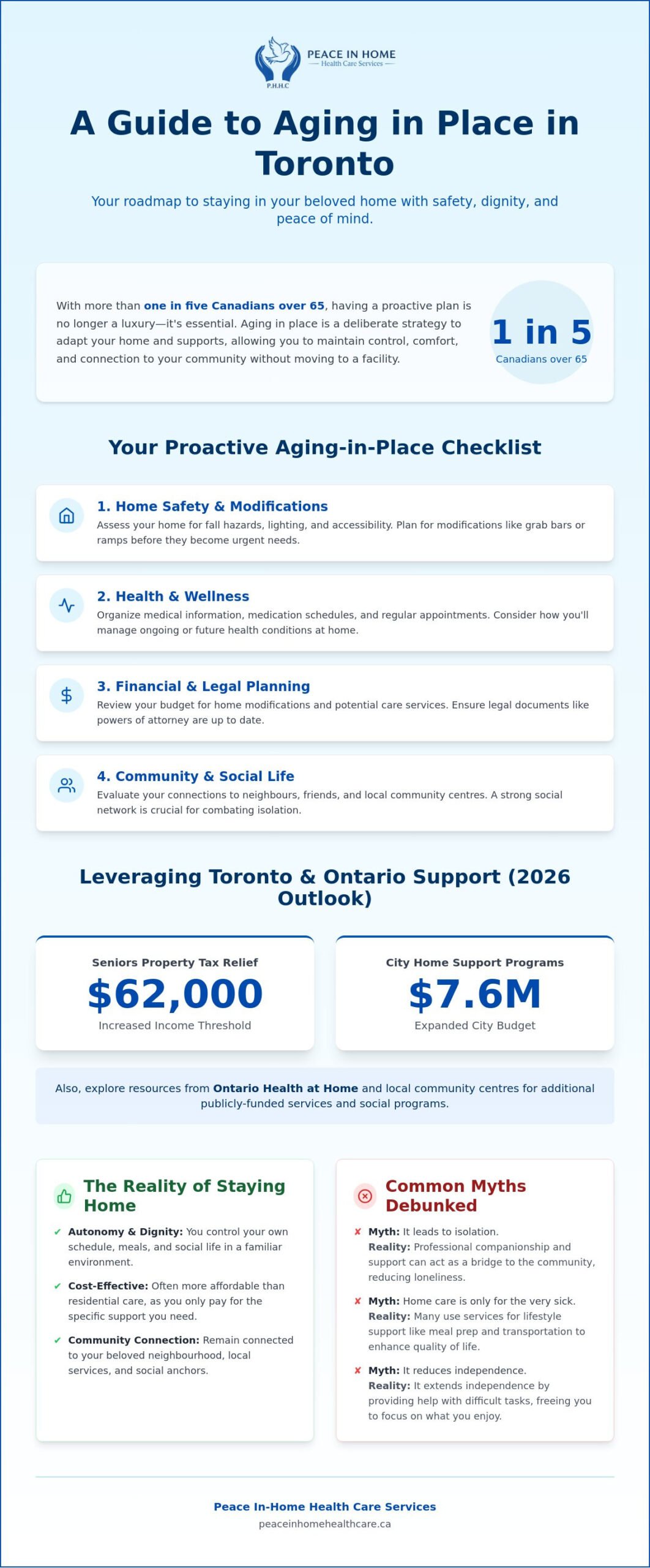
This comprehensive guide to aging in place Toronto provides the clarity you need to move forward with confidence. We’ll show you how to navigate the latest 2026 local resources, such as the increased property tax relief for seniors with a $62,000 income threshold and the City’s expanded $7.6 million budget for home support programs. By the end of this article, you’ll have a clear roadmap for home safety modifications and a better understanding of how to layer in personalized professional care. Our goal is to help you or your loved one stay home with the dignity, comfort, and peace of mind you deserve.
Key Takeaways
- Learn why a proactive plan is the key to staying in your beloved neighbourhood and how to assess nine essential areas of life before a health crisis occurs.
- Discover the “Big Three” home modifications tailored for Toronto’s unique housing styles to ensure long-term safety and mobility.
- Understand how to transition from family-only care to professional support, including how companionship helps prevent isolation and preserves your daily lifestyle.
- Navigate the 2026 landscape for aging in place Toronto by leveraging Ontario Health at Home and local community centres.
- Gain a clear roadmap for balancing physical home safety with personalized human care to provide lasting peace of mind for the entire family.
What Does Aging in Place in Toronto Actually Mean?
Many people view Aging in place as simply staying in the same house as they get older. However, for those of us living in the GTA, it’s much more than a default setting; it’s a proactive choice to maintain control over your life. It means having the right supports to live safely and comfortably in the home you love. When we talk about aging in place Toronto, we’re talking about a strategy that values your history and your future equally. It’s about ensuring your environment adapts to you, rather than you being forced to adapt to a new, unfamiliar facility.
There’s an undeniable emotional value in staying connected to a familiar neighbourhood. Whether it’s the leafy streets of North York or the community feel of Etobicoke, your home is part of a larger ecosystem. You know where the best local bakery is, you recognize your neighbours, and you’ve navigated the same parks for decades. Moving away often means losing these vital social anchors. By choosing to stay, you’re preserving the “Toronto Factor.” This includes easy access to the TTC, familiar community centres, and a dense network of local services that are often more accessible in the city than in outlying areas.
Families often find themselves at a crossroads when health needs change. They start researching the home care vs nursing home debate, often fearing that a facility is the only safe option. Aging in place offers a dignified alternative. It allows you to layer in support as you need it, ensuring that your home remains a place of joy rather than a source of stress. It’s a hybrid approach that balances the safety of professional care with the comfort of your own living room.
The Benefits of Staying in Your Own Home
Staying home is about more than just four walls; it’s about autonomy. You decide when to eat, who to visit, and how to spend your afternoon. Beyond dignity, there’s a practical side. High-end retirement residences in the GTA can be incredibly expensive. Utilizing aging in place Toronto strategies often proves more cost-effective because you only pay for the specific care you need, when you need it. You remain close to the local community hubs and libraries that keep you socially active and mentally engaged.
Common Misconceptions About Staying at Home
A common fear is that staying home leads to isolation. In reality, professional support often acts as a bridge to the outside world. It’s a myth that home care is only for those who are “very sick.” Many people use services for meal preparation or companionship to improve their daily quality of life. Professional care doesn’t reduce your independence; it actually extends it. By handling the tasks that have become difficult, a caregiver frees you up to focus on the activities you actually enjoy, keeping you in the driver’s seat of your own life.
Creating Your Toronto Aging-in-Place Plan
Planning for the future isn’t about admitting defeat. It’s about securing your peace of mind. The best time to build a strategy for aging in place Toronto is while you’re healthy and active, not in the middle of a medical emergency. By starting the conversation early, you ensure your voice remains the loudest in the room. You aren’t just planning for care. You’re designing a lifestyle that respects your autonomy across the next 5, 10, and 15 years in the GTA.
A successful plan looks at nine essential areas of life, focusing on your physical health, your financial security, and your social connections. In a city as vibrant as Toronto, your plan should account for the specific rhythms of your borough. Are you within walking distance of a grocery store in Etobicoke? How close is the nearest hospital in North York? Evaluating these factors helps you identify where you might need to layer in support later on. It’s also the time to involve family members, ensuring they understand your wishes and can act as reliable partners in your journey.
Assessing Your Current Situation
Begin with a functional assessment of your daily activities. This includes simple tasks like managing stairs, preparing nutritious meals, and keeping up with medical appointments. It’s also vital to review your social circle. Isolation can creep in quietly, so look at how you currently engage with City of Toronto seniors’ services and local recreation centres. If your support network is shrinking, it may be time to consider how professional companionship can fill those gaps and keep you connected to your neighbourhood.
Planning for the Unexpected
Life rarely follows a perfectly straight line. A sudden change in mobility or a new cognitive diagnosis shouldn’t mean an immediate move to a facility. This is where understanding personal care assistance for seniors becomes crucial. Having a reliable partner ready to step in during a recovery period allows you to stay in your familiar environment while you heal. Additionally, ensure your legal and financial proxies, such as a Power of Attorney, are established within the Ontario legal framework to protect your interests.
Building this roadmap provides a sense of quiet confidence for the whole family. If you’re feeling unsure about where to start your assessment, you can always speak with a care coordinator to explore which supports might best fit your current lifestyle and long-term goals.
Home Modifications for Safety and Comfort
Once you have a solid plan in place, the next step is ensuring your physical environment supports your long-term goals. A safe home is the foundation of aging in place Toronto. Many of the city’s most beloved residences, from narrow Victorian semi-detached homes in the downtown core to mid-century bungalows in Scarborough and North York, weren’t built with modern accessibility in mind. Adapting these spaces doesn’t require a total overhaul. Instead, it focuses on the “Big Three” pillars of safety: lighting, flooring, and accessibility.
In those classic Toronto semis, lighting is often a challenge due to the deep, narrow floor plans. Installing motion-activated LED strips along baseboards or under kitchen cabinets can prevent trips during late-night walks. Flooring also plays a vital role. Replacing thick, loose rugs with slip-resistant surfaces or low-pile carpeting reduces the risk of falls. For homeowners in bungalows, accessibility might mean widening a few key doorways to accommodate a walker. These changes allow you to move through your familiar rooms with a renewed sense of security and ease.
The bathroom remains the most critical area for modification. High-walled tubs can become significant obstacles as mobility changes. Replacing them with walk-in showers and adding non-slip surfaces can make a world of difference. Smart home technology is also becoming a reliable partner in home safety. Fall detection sensors and automated lighting centres provide an extra layer of protection, alerting family members if something goes wrong without the need for a wearable pendant.
Room-by-Room Safety Checklist
- Kitchen: Install pull-out shelves in lower cabinets to reduce bending and strain. Swap traditional round knobs for lever-style faucets that are much easier to operate.
- Bedroom: Ensure the bed is at a height where your feet touch the floor comfortably while sitting. Keep pathways to the washroom clear of clutter and ensure they’re always well-lit.
- Entrances: Consider ramp installations for homes with steep front steps. Widening the main entry door provides the necessary clearance for mobility aids like wheelchairs or walkers.
Managing the Costs of Modifications
Budgeting for these changes involves distinguishing between “must-have” safety fixes and aesthetic upgrades. You should prioritize the bathroom and main entrances first. Fortunately, there are Ontario-specific tax credits designed to help seniors with the cost of these essential accessibility renovations. It’s helpful to view these modifications alongside the cost of home care for seniors Toronto to see how an investment in your home’s safety compares to other long-term support options. By making these changes today, you’re directly investing in your ability to remain independent in the place you love.
The Role of Professional Care in Aging at Home
Transitioning from family-only care to professional support is often a delicate emotional journey. You might feel that bringing in a caregiver is a loss of privacy; however, it’s actually a way to reclaim your relationship with your loved ones. When a professional handles the daily chores and physical assistance, family members can return to being sons, daughters, or spouses again. This shift is a cornerstone of successful aging in place Toronto, allowing you to stay in your home while ensuring all your needs are met with dignity and expertise.
Isolation is one of the greatest risks for seniors living independently in a large city. Professional companionship care for seniors Toronto provides more than just a watchful eye. It offers meaningful social interaction that keeps the mind sharp and the spirit high. Many families choose to layer services over time, starting with light housekeeping or meal preparation. As needs evolve, these services can naturally transition into more hands-on personal care. This ensures that medication reminders and nutritional support remain consistent pillars of your health strategy without causing a sense of panic or sudden change.
Types of In-Home Support Available
Understanding the different levels of care helps you make an informed choice. Personal Support Workers (PSWs) are the most common form of assistance, helping with daily hygiene, dressing, and mobility. For those with complex medical needs or those recovering after a hospital stay, skilled nursing care provides specialized clinical support right in your living room. Additionally, respite care is available to give family caregivers a necessary break, preventing burnout and ensuring the entire support system remains strong and reliable.
Choosing the Right Home Care Agency
Finding a partner you can trust is essential. When choosing a home care agency in Toronto, you should look for an agency that prioritizes personalized care plans tailored to your specific routine and preferences. It’s also beneficial to choose a provider with deep roots in the community, serving the entire GTA from Vaughan to Scarborough. With a 17-year local track record in Ontario, a seasoned agency provides the reliable, high-integrity care that families need during complex life transitions. This experience ensures they can navigate the local healthcare landscape while maintaining a human-first approach that values your independence.
Navigating Toronto-Specific Resources and Services
Successfully navigating the local healthcare landscape is the final piece of the puzzle for aging in place Toronto. While the city offers a wealth of resources, the sheer volume of options can sometimes feel overwhelming. Understanding the distinction between public and private support is crucial for a sustainable plan. Ontario Health at Home, formerly known as the LHIN, provides essential baseline services. However, many families find that public hours are limited or inconsistent. By integrating private home care services for seniors Toronto, you can ensure a more personalized and consistent level of attention that fills the gaps in government-funded care.
Toronto’s infrastructure also supports independence through specialized transit and community programs. Wheel-Trans remains a vital lifeline for those with mobility challenges, ensuring you can still reach appointments and social events. Additionally, the City’s 2026 budget has increased funding for seniors’ programming at libraries and community centres, making it easier than ever to stay socially engaged. Utilizing these local resources allows you to remain active in your borough without the stress of navigating heavy traffic or complex transit routes alone.
Local GTA Support Networks
Isolation doesn’t just affect seniors; it impacts family caregivers too. You can find robust caregiver support groups in North York and Mississauga that provide a safe space to share experiences and advice. Within the broader Toronto health network, specialized dementia resources are available to help families manage cognitive changes with grace. Community dining programs and meal delivery services also ensure that nutrition remains a priority even when daily cooking becomes a chore, helping you maintain your health without the strain of constant meal prep.
Taking the Next Step with Peace In-Home
At Peace In-Home Health Care Services, we act as your trusted guide through these life transitions. Our personalized consultations help families realize their specific goals for staying home safely and with dignity. We offer a “Peace of Mind” guarantee, providing reliable, compassionate care that’s tailored to your unique household and routine. We invite you to contact us for a free home assessment in Toronto or the surrounding GTA. Let us provide the steady hand and expert navigation your family needs to move forward with confidence and security.
Your Path to a Safe and Dignified Future at Home
Staying in the home where you’ve built your life is a deeply personal goal. We’ve explored how a proactive strategy, combined with targeted modifications and a clear understanding of local resources, makes this possible. By layering in professional support when the time is right, you can preserve your autonomy while ensuring your safety is never compromised. Choosing aging in place Toronto is a journey that requires a steady hand and a reliable partner who understands the unique housing and healthcare landscape of our city.
With over 17 years of experience in senior care across Toronto, Vaughan, Markham, and the wider GTA, we’re here to help you navigate these transitions. Our customized care plans are always focused on dignity, ensuring that you or your loved one receives the attentive, personalized support needed to thrive in a familiar environment. You don’t have to manage these complex decisions alone; expert guidance is just a conversation away.
We’re ready to stand alongside your family as a trusted guide. Taking this first step today provides the security and peace of mind you deserve for the years ahead. Your home is where your heart is, and we’re committed to helping you stay there safely.
Frequently Asked Questions
What is the first step in planning to age in place in Toronto?
The first step is conducting a thorough functional assessment of your current lifestyle and daily activities. This involves evaluating how well you manage tasks like meal preparation and mobility while having an open, honest conversation with your family about your long-term wishes. Starting this process early ensures you remain the primary decision-maker in your journey of aging in place Toronto.
Is home care in Toronto covered by OHIP?
Standard home care is not directly covered by OHIP. However, you may be eligible for government-funded support through Ontario Health at Home, formerly known as the LHIN. Because these public services are often limited in scope or hours, many families choose to supplement them with private home care to ensure consistent, personalized attention that matches their specific routine and needs.
How much do home modifications for seniors typically cost in Ontario?
Costs for home modifications vary significantly depending on the scope of the project, ranging from simple grab bar installations to major bathroom renovations like walk-in showers. While specific pricing depends on your home’s layout, the Ontario government has historically provided tax credits to help offset these expenses. Programs like the Seniors’ Home Safety Tax Credit are designed to make these essential accessibility upgrades more affordable for families.
What is the difference between a retirement home and aging in place with home care?
A retirement home is a residential facility where you live in a communal setting with shared services and amenities. In contrast, aging in place with home care allows you to remain in your own private residence while professional support is brought to you. This option prioritizes your independence, allowing you to stay in a familiar environment while layering in services like personal care or light housekeeping as needed.
Can someone with dementia safely age in place at home?
Yes, many individuals with dementia can safely remain at home with a structured support system. This typically requires a combination of specialized dementia and Alzheimer’s care and specific home safety modifications to prevent wandering or accidents. Professional caregivers trained in memory care provide the attentive supervision and routine necessary to maintain a high quality of life, which is a vital part of aging in place Toronto for families facing cognitive challenges.
How do I know if my parent is no longer safe living alone in their Toronto home?
Signs that a parent may need more support include frequent falls, neglected household chores, or uncharacteristic confusion with their medication. You might also notice a decline in personal hygiene or significant weight loss due to poor nutrition. Recognizing these subtle changes early allows you to layer in support before a health crisis occurs, ensuring they stay safe and dignified in their familiar surroundings.
What local Toronto transportation options are available for seniors who no longer drive?
Toronto offers several reliable options, including the TTC’s Wheel-Trans service, which provides door-to-door transportation for those with mobility challenges. Older adults also receive a 50% reduction in regular recreation program fees and significant transit discounts. Many local neighbourhoods and community centres also offer senior-specific shuttle services for grocery shopping and medical appointments, helping you stay connected to your community without the need for a car.