
The hospital discharge papers are signed, the taxi is waiting, and suddenly, the weight of managing complex medications and mobility aids hits you all at once. It’s a moment many families face, feeling the sudden shift from the safety of a clinical ward to the daunting reality of solo caregiving. You want nothing more than for your loved one to be back in their own bed, but the fear of a stumble or a missed dose can be overwhelming. Finding reliable post-surgery home care Toronto services is often the missing piece that turns a stressful transition into a period of genuine healing.
We understand that you’re looking for more than just a checklist; you’re looking for a steady hand to guide you through the recovery process. This guide will show you how to manage the local healthcare landscape to ensure a safe, comfortable, and dignified recovery at home. We’ll clarify the differences between OHIP support and private care, outline essential safety protocols to prevent hospital readmission, and explain how personalized assistance can protect your family from burnout while preserving your loved one’s independence.
Key Takeaways
- Understand why the “Recovery Gap” immediately following hospital discharge is the most critical time for preventing complications and readmission.
- Learn how to work with GTA hospital discharge planners to effectively manage the vital first 72 hours of the transition back home.
- Discover how to bridge the gap between limited OHIP-funded visits and the comprehensive support required for a truly safe recovery.
- Explore specialized post-surgery home care Toronto strategies for orthopaedic and cardiac patients to minimize fall risks and ensure strict medication adherence.
- Gain peace of mind by identifying how tailored care plans can reduce caregiver burnout while preserving your loved one’s dignity and comfort.
What is Post-Surgery Home Care? Ensuring a Safe Recovery in Toronto
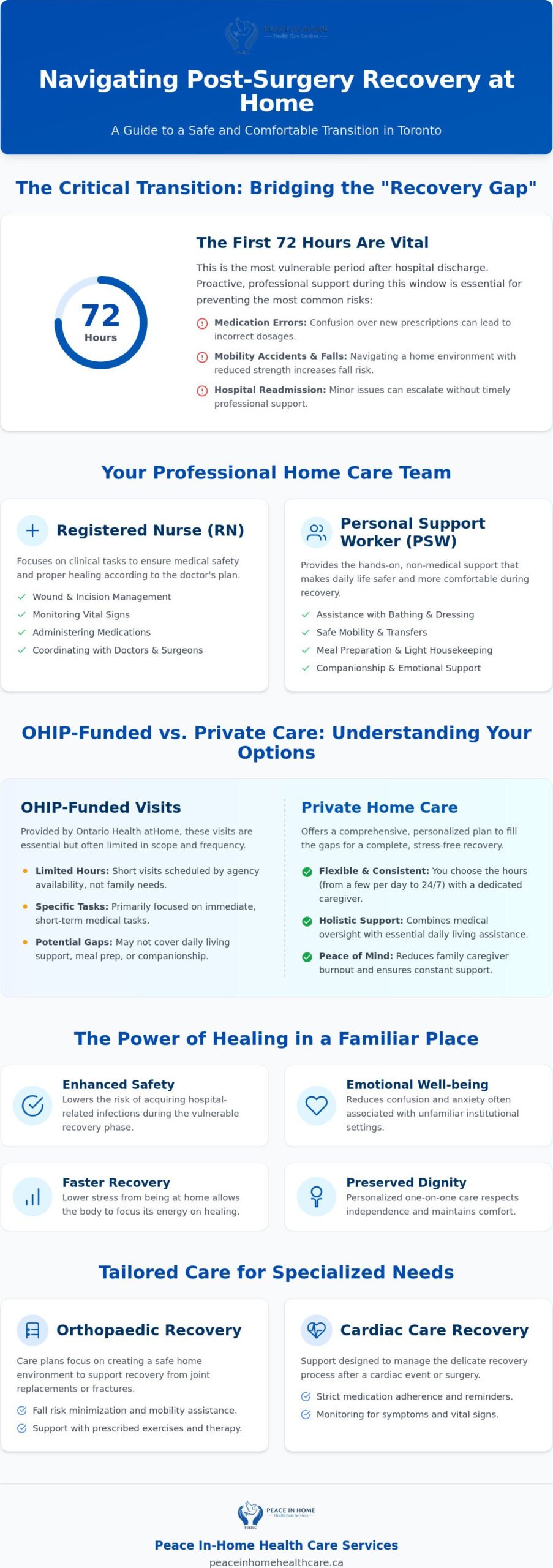
Post-surgery home care is much more than a series of medical check-ins; it’s a specialized range of medical and non-medical supports tailored to help a person heal where they feel most secure. This type of care addresses the entire postoperative care window, ensuring that the transition from the operating room to the living room is seamless. By bringing professional expertise into the house, families can bridge what we call the “Recovery Gap.” This is the vulnerable period immediately following hospital discharge when the risk of complications is highest, yet professional oversight is often most scarce.
Choosing post-surgery home care Toronto services allows for a human-first approach that prioritizes a loved one’s dignity alongside their clinical needs. While hospitals focus on the surgery itself, home care focuses on the person. Many Toronto families are now opting for home-based recovery over institutional rehab facilities because it offers a level of personalized attention that a busy facility simply cannot match. It transforms the recovery process from a clinical event into a comfortable, supported journey toward wellness.
The Role of Professional Caregivers and Nurses
Understanding the different levels of support is essential for a smooth recovery. A Registered Nurse (RN) focuses on clinical tasks such as wound management, monitoring vital signs, and coordinating with doctors. In contrast, a Personal Support Worker (PSW) provides the hands-on help that makes daily life possible. Our personal care assistance for seniors serves as the bedrock of this support, helping with bathing, dressing, and safe movement around the house. Skilled medical monitoring ensures safety while daily living support fosters the strength needed for a full recovery.
Why Familiar Surroundings Matter for Healing
There is a profound psychological benefit to recovering in a familiar neighbourhood, whether that’s the quiet streets of North York or the leafy corners of Etobicoke. Being in one’s own environment reduces the confusion and anxiety that often accompany a hospital stay. Beyond the emotional comfort, the home environment significantly lowers the risk of hospital-acquired infections, which can be a major setback during the early stages of healing.
Healing requires a specific kind of environment that institutions often lack. The peace and quiet of a private bedroom, the ability to eat familiar food, and the presence of cherished belongings all contribute to a faster, more robust recovery. When a senior is surrounded by the things they love, their stress levels drop, allowing their body to focus all its energy on the vital work of repair and restoration.
The Hospital-to-Home Transition: Navigating Toronto’s Healthcare System
Leaving a facility like Sunnybrook Health Sciences Centre or Toronto General is a moment of relief, but it often marks the start of a complex logistical journey. The hospital discharge planner plays a vital role in this handoff; however, their primary focus is ensuring the patient is stable enough to leave the ward. This is where the “First 72 Hours” rule becomes essential. This window is the most critical period for preventing hospital readmission, as it is when medication errors or mobility accidents are most likely to occur. Without a structured plan for post-surgery home care Toronto families may find themselves overwhelmed by the sudden responsibility of monitoring recovery milestones without professional backup.
Preparing for the transition involves more than just securing a ride home. It requires a dedicated “settling in” period where the patient is physically and emotionally supported as they adjust to their modified environment. Organizing these details before the patient even leaves the hospital ensures that the focus remains entirely on rest and healing. If you feel uncertain about managing these moving parts, you can always speak with a care coordinator to discuss your specific situation and clear a path forward.
Coordinating with Toronto Health Networks
Navigating the discharge paperwork and follow-up schedules from the University Health Network (UHN) or Mount Sinai can be exhausting for a family caregiver. Private agencies act as a “Trusted Guide,” collaborating with Ontario Health atHome coordinators to fill the gaps that public coverage might leave behind. This partnership is especially valuable for “errands and appointment accompaniment.” Having a professional assist with follow-up visits ensures your loved one reaches their clinic safely, navigating the complexities of hospital parking and check-in procedures without physical strain.
Preparing the Recovery Space at Home
A safe recovery starts with a thoughtful home setup. Before the patient arrives, families should evaluate the “recovery room” for bright lighting, clear walking paths, and proximity to the washroom. Maintaining a sterile environment is paramount for health. Following the guidelines for preventing surgical site infection includes keeping high-touch surfaces clean and minimizing dust. Regular light housekeeping for seniors Toronto ensures the home remains a sanctuary rather than a source of stress. You may also need to realize a safer bathroom configuration by installing temporary mobility aids to prevent falls during those first few vulnerable weeks.
Public vs. Private Care: Filling the Gaps in Your Recovery Plan
Ontario’s healthcare system provides a vital foundation for recovery, but many families are surprised to learn what “home care” actually looks like in practice. Under OHIP, support is typically delivered through Ontario Health atHome and focuses on essential clinical tasks. This usually includes short nursing visits to check a wound or limited physiotherapy sessions to encourage movement. While these services are high quality, they are often brief. For a family managing post-surgery home care Toronto, this creates what we call the “Hourly Gap.” If a public personal support worker (PSW) visits for two hours, it leaves 22 hours of the day where the family is responsible for monitoring risks like falls, confusion, or medication timing.
Supplementing public support with private care ensures that your loved one is never left to navigate a difficult moment alone. Following the Enhanced Recovery after Surgery guidelines developed by the University of Toronto, we know that consistent monitoring and early mobilization are keys to success. Having a dedicated caregiver provides the peace of mind that comes from knowing someone is there for the long haul, not just rushing to their next scheduled appointment across the city. This continuous presence allows for a much more stable and dignified healing environment.
Understanding the Limits of Public Home Care in 2026
The reality of public home care in 2026 often involves “nursing visits” rather than “nursing presence.” A visit might last only 30 to 60 minutes, which is enough to change a dressing but not enough to assist with a full day of meals and mobility. Current staffing shortages across the GTA can also lead to inconsistent schedules, leaving families guessing when help will arrive. Using a home care services for seniors Toronto safety net ensures that these gaps are filled by a reliable professional who follows your specific routine, providing the stability that public systems often cannot guarantee.
The Advantages of Private Post-Op Support
Private care offers a level of personalization that starts with a matched caregiver approach. We consider the patient’s personality and preferences, ensuring the person providing support feels like a trusted partner rather than a stranger. This model is incredibly flexible; you can scale support from a few hours of respite during the day to full-time live-in assistance. Beyond the medical needs, private care allows for intensive companionship care for seniors Toronto during those often-lonely recovery hours. This emotional support is just as vital as physical care, helping to keep spirits high and preventing the post-operative blues that can slow down the healing process.
Specialized Recovery Needs: From Orthopaedics to Cardiac Care
Every surgical journey is unique, but the goal of post-surgery home care Toronto remains constant; we want to ensure the body has exactly what it needs to repair itself without setback. For those recovering from hip or knee replacements, the focus is often on managing the physical environment. This involves precise ice management to control swelling and vigilant fall prevention. Cardiac surgery recovery, however, requires a quieter, more methodical approach. It focuses on monitoring vital signs, reducing emotional stress, and ensuring strict medication adherence to support the heart as it heals.
Abdominal surgeries bring their own set of requirements, particularly regarding dietary modifications and “gentle” movement. While it might be tempting to stay perfectly still, small, supported movements are essential to prevent blood clots. Regardless of the procedure, a universal recovery checklist helps families stay organized during the first few weeks:
- Incision Monitoring: Check daily for increased redness, swelling, or unusual discharge.
- Pain Management: Track doses to stay ahead of discomfort rather than chasing it.
- Hydration: Ensure a steady intake of fluids to support kidney function and prevent constipation.
- Mobility Support: Never attempt a first walk or stairs without a second person present.
Mobility, Transfers, and Fall Prevention
Professional mobility and transfer assistance is a cornerstone of safe healing. It isn’t just about getting from the bed to the chair; it’s about doing so without putting undue strain on a fresh incision. We help families organize “walker-friendly” paths by removing common trip hazards like area rugs or loose cords. Our caregivers also assist with “active range of motion” exercises. These are the specific movements prescribed by physiotherapists to ensure joints don’t stiffen during the early days of recovery. As strength gradually returns, incorporating structured fall prevention for seniors at home Toronto exercise routines can help your loved one rebuild confidence and stability safely within their own environment.
Nutrition and Medication Management
The body requires extra fuel to build new tissue and fight infection. Nutritious meal preparation for elderly at home ensures that your loved one receives the proteins and vitamins necessary for speeding up repair. Equally important is the timing of prescriptions. Medication reminders are vital to prevent the dangerous “pain spike” cycle, where a patient waits too long for relief and then struggles to get comfortable again. Staying hydrated is another simple but critical task that prevents post-op urinary tract infections and keeps the digestive system moving predictably.
Peace In-Home Health Care Services: Your Recovery Partner in the GTA
Peace In-Home Health Care Services brings over 17 years of deep-rooted experience to families across the Greater Toronto Area. We act as a compassionate expert and a trusted guide, dedicated to helping your loved one regain their strength in the sanctuary of their own home. Our reach extends well beyond the downtown core, providing the specialized post-surgery home care Toronto families rely on in communities including Richmond Hill, Vaughan, Markham, and Mississauga. We believe that medical recovery should never come at the expense of a person’s dignity or their sense of independence.
Every recovery journey begins with our “Tailored Care Plan” process. This starts with an empathetic home assessment, where we take the time to understand the unique rhythms and routines of your household. We don’t just look at the clinical requirements; we prioritize the individual. This person-centered approach ensures that the support we provide is respectful, attentive, and perfectly aligned with your family’s specific expectations and lifestyle.
Why Toronto Families Choose Our Caregivers
Our caregivers are chosen for their attentive nature and their unwavering commitment to professional excellence. We understand that inviting a professional into your home is a significant decision. To ensure your comfort, we maintain a rigorous vetting process that prioritizes both high-level skill and genuine kindness. We provide a “Peace of Mind” guarantee, offering 24/7 clinical oversight and consistent family communication. This allows us to serve as a reliable partner, offering a steady hand during the often-unpredictable weeks following a major operation.
Taking the First Step Toward a Stress-Free Recovery
Booking an initial consultation is a simple, low-pressure step toward a safer recovery for your loved one. We’re here to listen to your concerns and answer your questions, not to rush you into a decision. Our care models are designed to be inherently flexible; we can easily scale support up or down as the patient regains their mobility and strength. This adaptability ensures your loved one always has the right level of assistance without feeling overwhelmed. We’re committed to being your steady partner through this transition, providing the stability and expertise your family deserves.
Ensuring a Dignified and Supported Journey Home
Navigating the transition from hospital to home is a significant milestone that requires both clinical expertise and deep empathy. By understanding how to bridge the gap between limited public support and the 24-hour reality of recovery, you can protect your loved one from common setbacks. Whether you’re managing the specific needs of a cardiac recovery or the mobility challenges of a hip replacement, having a professional partner ensures that safety and dignity remain the top priorities.
Peace In-Home Health Care Services brings 17+ years of trusted experience to families throughout the GTA. Our expert team provides skilled nursing and personalized post-surgery home care Toronto that adapts as your loved one regains their strength. We’re here to offer the steady hand and professional reassurance needed to turn a stressful discharge week into a period of genuine healing and peace of mind.
You’ve already taken the first step by learning how to advocate for the best possible care. Now, let’s work together to ensure the recovery process is as smooth, safe, and comfortable as it can be.
Frequently Asked Questions About Post-Surgery Recovery
Is post-surgery home care covered by OHIP in Toronto?
The Ontario Health Insurance Plan (OHIP) covers basic home care through Ontario Health atHome, but this support is typically limited to short clinical visits. While you may receive a brief nursing visit or a physiotherapy session, these public services don’t cover 24-hour supervision or help with daily living. Most families choose to supplement this with private post-surgery home care Toronto to fill the gaps in monitoring and personal assistance.
What is the difference between a PSW and a private nurse for post-op care?
A Personal Support Worker (PSW) assists with the practical, non-medical aspects of recovery, such as bathing, dressing, and mobility. A private nurse, like a Registered Nurse (RN), focuses on clinical tasks such as monitoring vitals and complex wound management. While the PSW ensures the patient’s daily comfort and safety, the nurse provides the medical oversight required to catch potential complications before they escalate.
How soon after surgery should home care begin?
Professional support should ideally be in place the moment the patient arrives home from the hospital. The first 72 hours are the most critical window for preventing accidents and ensuring the patient adheres to their new medication schedule. Starting care immediately reduces the risk of hospital readmission by providing a steady hand during the most vulnerable stage of the transition.
Can home care caregivers help with transportation to follow-up appointments?
Yes, caregivers can provide errands and appointment accompaniment to ensure patients reach their follow-up clinics safely. Navigating the busy parking and large complexes of Toronto hospitals like Mount Sinai or UHN can be physically exhausting for a recovering patient. A caregiver handles the logistics and provides physical stability, making the trip much less stressful for both the patient and the family.
What happens if my loved one needs 24/7 care but we only have a small budget?
If around-the-clock support is required, live-in care is often a more economical option than paying an hourly rate for 24-hour shifts. This model utilizes a flat daily rate, which can significantly reduce the overall cost. Families should also look into the Ontario Seniors’ Care at Home Tax Credit, which provides a refundable credit for eligible medical expenses to help offset the costs of private support.
How do I choose the right home care agency in the GTA?
You should prioritize agencies with a long history of service in the GTA and a transparent vetting process for their staff. Look for a provider that offers an empathetic home assessment and a plan that’s tailored to your loved one’s specific surgery and personality. A reliable agency acts as a partner, offering consistent communication and 24/7 clinical oversight to ensure your peace of mind.
Will the caregiver coordinate with my hospital discharge planner?
A professional caregiver will work closely with the hospital discharge planner to ensure all medical instructions are followed accurately at home. They review the discharge summary, medication lists, and follow-up schedules to provide a seamless transition from the clinical ward. This coordination ensures that the “Circle of Care” remains unbroken, reducing the chance of errors during the first week home.
What are the most common signs of post-surgery complications at home?
Red flags include a persistent fever, sudden shortness of breath, or increased redness and warmth around the incision site. You should also watch for a sharp spike in pain that medication doesn’t relieve, or any sudden onset of confusion. Having professional post-surgery home care Toronto ensures that these subtle changes are identified early, allowing for quick intervention and preventing a return trip to the emergency room.