
What if the secret to staying independent in your favourite Toronto home isn’t about doing less to stay safe, but about moving more in the right way? Finding reliable methods for fall prevention for seniors at home Toronto is about more than just safety; it’s about reclaiming the freedom to move through your own hallways with confidence. For many, the fear of a sudden slip can make a familiar space feel daunting, leading to a more cautious lifestyle that can actually increase the risk of weakness.
It’s understandable to feel hesitant when your joints are stiff or your balance feels less certain than it once was. You might worry about trying new movements without a professional nearby to guide you. We agree that your safety is the absolute priority, and you shouldn’t have to choose between staying active and staying secure. You deserve a clear, supportive path toward better mobility and the peace of mind that comes with feeling steady on your feet.
In this guide, you’ll discover a selection of gentle, effective exercises designed specifically for the needs of Canadian seniors in 2026. We will walk you through how to strengthen your core and improve your stability so you can continue to enjoy your home comfortably and maintain the lifestyle you love for years to come.
Key Takeaways
- Discover how functional movement acts as a foundation for aging in place, helping you manage chronic conditions and preserve your daily independence.
- Learn safe strength exercises that utilize common household items like chairs and walls to build muscle without the need for specialized equipment.
- Understand the science of retraining your nervous system through balance routines, an essential step for effective fall prevention for seniors at home Toronto.
- Explore the benefits of having a supportive “spotter” through companionship care, ensuring your exercise sessions are both socially engaging and physically secure.
- Gain insights on developing a personalized wellness programme that respects your doctor’s advice and fits the unique layout of your living space.
Why Regular Exercise is the Foundation of Aging in Place
Exercise for seniors isn’t about running marathons or lifting heavy weights at a local gym. In our experience, it’s about functional movement: the kind of activity that allows you to reach for a favourite book on a high shelf or step safely over a doorway threshold. When we discuss fall prevention for seniors at home Toronto, we are really talking about building a body that can handle the unexpected. Regular movement strengthens the systems that keep us upright and alert, turning a potentially dangerous slip into a minor, manageable stumble.
Staying active is directly linked to a lower risk of chronic conditions like heart disease and type 2 diabetes. It also preserves what we like to call the “colour of life.” When you maintain your strength, you keep the ability to walk to a nearby park or visit with grandchildren. These social connections are the heartbeat of a happy retirement. Without them, the world can start to feel smaller and quieter. Consistency also wards off frailty by protecting bone density and muscle mass. As we age, our bodies naturally lose these assets, but gentle resistance training tells the body to stay resilient and strong.
The Physical Benefits of Functional Movement
Functional movement focuses on the muscles you use every single day. For instance, gentle abdominal contractions aren’t just about fitness; they support your spine and can significantly reduce chronic back pain. This core strength is essential for daily tasks such as meal preparation for elderly at home, where you might be standing at a kitchen counter for twenty minutes at a time.
Even low-impact aerobic movements, like walking through your hallway, provide vital cardiovascular benefits. Improved circulation ensures that your muscles receive the oxygen they need to function correctly. This is particularly important for those managing balance disorders in older adults, as a healthy heart and steady blood flow help maintain the focus and coordination required to stay upright and secure in your own space.
Cognitive and Emotional Well-being
The benefits of movement go far beyond the physical. Regular activity is a natural tool for mood regulation and better sleep. When you move your body during the day, your mind finds it much easier to rest at night. For seniors living with cognitive decline or dementia, physical activity is especially vital. It stimulates the brain and helps maintain neural pathways, which can slow the progression of memory loss and reduce periods of confusion.
Perhaps most importantly, staying active builds confidence. There’s a profound emotional relief that comes from knowing your legs are strong enough to support you. By following a consistent movement programme, you reduce the anxiety that often surrounds fall prevention for seniors at home Toronto. This allows you to focus on enjoying your day rather than worrying about every step you take.
Safe Strength and Mobility Exercises for Daily Independence
Building strength doesn’t require a gym membership or heavy weights. Your home is already equipped with the tools you need to stay resilient. By using a sturdy kitchen chair or a flat section of wall, you can create a safe environment for physical activity. When focusing on fall prevention for seniors at home Toronto, we always recommend prioritizing slow, controlled movements. Speed can lead to momentum, which often results in poor form or a loss of balance. Instead, try to count to three as you lift and three as you lower. This methodical pace ensures your muscles are doing the work, not gravity.
Proper breathing is just as vital as the movement itself. Many people instinctively hold their breath when they exert themselves, which can cause a sudden spike in blood pressure or feelings of lightheadedness. A simple rule is to exhale during the “hard” part of the exercise and inhale as you return to your starting position. This steady rhythm keeps your oxygen levels stable and helps you feel more grounded throughout your favourite routine. If you ever feel unsure about starting these movements alone, you might find it helpful to speak with a professional who can offer personalized encouragement as you build your confidence.
Upper Body Strength and Flexibility
Maintaining upper body strength helps with reaching, lifting, and maintaining an upright posture. These exercises focus on the muscles needed for everyday tasks like carrying groceries or opening heavy doors.
- Wall Pushups: Stand facing a wall, slightly more than arm’s length away. Place your palms flat at shoulder height. Slowly bend your elbows to bring your chest toward the wall, then push back to the start. This strengthens the chest and arms without the strain of a traditional floor pushup.
- Shoulder Blade Squeezes: While sitting tall in a chair, imagine trying to hold a pencil between your shoulder blades. Squeeze them together for three seconds and release. This simple action counters the “slumping” that can happen after long periods of sitting.
- Arm Curls: Use light household items like full water bottles or cans of soup as weights. Keep your elbows tucked into your sides as you slowly lift the weight toward your shoulder and lower it back down.
Lower Body Mobility for Better Walking
Your legs are your foundation. Strengthening them is a core component of fall prevention for seniors at home Toronto, as it ensures you can clear obstacles like rugs or doorframes with ease.
- Chair Squats (Sit-to-Stand): This is the ultimate functional exercise. Sit on a sturdy chair with your feet flat on the floor. Lean forward slightly and use your legs to stand up. If you need a little help, place your hands on the armrests, but try to let your legs do the most of the work.
- Heel Raises: Stand behind a chair and hold onto the back for support. Slowly rise onto your tiptoes, hold for a moment, and lower back down. This builds calf strength and improves ankle stability.
- Knee Lifts: While seated or standing with support, lift one knee toward your chest as if you are marching in place. This keeps your hip flexors flexible, making your stride more confident and steady.
Balance and Stability Routines to Prevent Falls at Home
Balance is a skill that requires constant practice. In Ontario, falls remain a leading cause of injury for seniors, often leading to a loss of independence that can be difficult to regain. However, balance isn’t just about physical strength; it’s a sophisticated dialogue between your brain, your inner ear, and your nervous system. When you perform stability drills, you are effectively retraining your brain to process sensory information more efficiently. This heightened awareness is a vital part of fall prevention for seniors at home Toronto, as it helps you stay upright when navigating uneven surfaces or sudden changes in direction.
Before you begin, it’s essential to set up a dedicated “exercise centre” in your home. Choose a space that is well lit and completely free of loose rugs or clutter. Always perform these drills near a sturdy piece of furniture, such as a heavy dining table or a kitchen countertop, so you have a reliable point of contact if you feel unsteady. It is also important to realize your own limits. Progress happens through consistency, not through pushing yourself to the point of exhaustion or pain. If a movement feels too challenging today, simply holding a stable position for a few seconds is a win. Keeping your exercise area clear of hazards is just one reason why light housekeeping for seniors Toronto is considered a vital clinical strategy for reducing fall risks at home.
Static Balance Drills for Beginners
Static drills focus on maintaining your centre of gravity while standing still. These movements build the foundational stability needed for more complex activities.
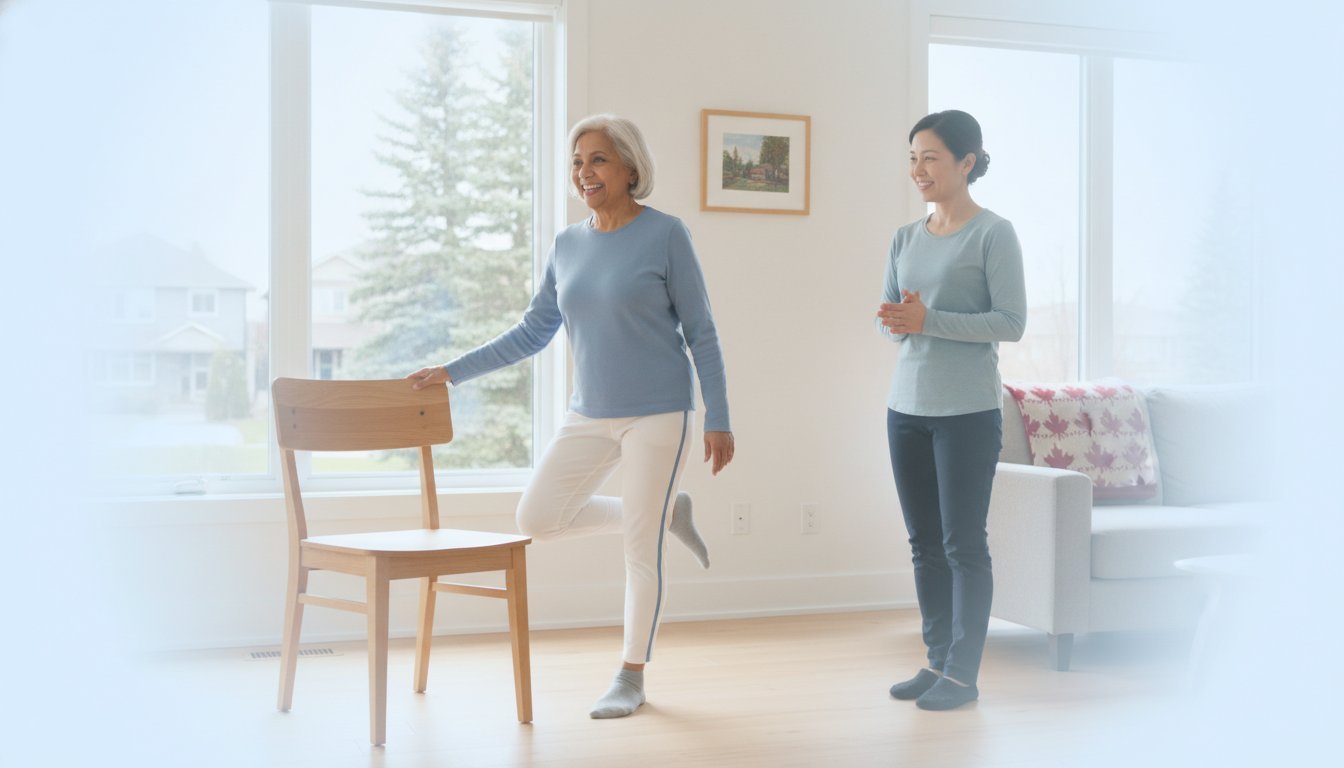
- The Single Limb Stance: Stand behind a sturdy chair and hold onto the back with both hands. Slowly lift one foot off the floor and try to balance on the other leg for ten seconds. As you feel more secure, try using only one hand for support, and eventually, just one finger.
- The Tandem Stance: Place one foot directly in front of the other so the heel of your front foot touches the toes of your back foot. This narrows your base of support, mimicking the way you step through narrow spaces. Hold this position while looking straight ahead to challenge your internal sense of balance.
- Pelvic Tilt: While standing tall, gently engage your abdominal muscles by pulling your belly button toward your spine. This small contraction stabilizes your core, which acts as the anchor for your entire body during movement.
Dynamic Stability Movements
Dynamic movements help you stay balanced while your body is in motion. This is crucial for fall prevention for seniors at home Toronto, especially when moving between rooms.
- The Heel-to-Toe Walk: Imagine walking along a straight line on the floor. Take a step and place your heel directly in front of the toes of your other foot. This “tightrope walk” improves your coordination and steadiness during your natural gait.
- The Side Leg Raise: Stand behind your chair for support. Keeping your toe pointed forward, slowly lift one leg out to the side and bring it back down. This strengthens the outer hips, which are essential for preventing side-to-side swaying when you walk.
- Toe Taps: Stand in front of a small step or even a flat book. Slowly tap the toes of one foot onto the object and return it to the floor. This improves foot-eye coordination and helps you learn to clear small obstacles in your path without tripping.
The Caregiver’s Role: How to Support a Safe Exercise Routine
Exercise is often more successful when it’s shared. For many families, the biggest hurdle isn’t the physical movement itself, but the anxiety of doing it alone. This is where companionship care for seniors Toronto changes the dynamic. Instead of a daunting chore, the daily routine becomes a social event. Having a trusted partner nearby provides the emotional security needed to try a new balance drill or complete those extra repetitions. This supportive presence is a cornerstone of effective fall prevention for seniors at home Toronto, as it replaces fear with a sense of shared accomplishment.
The caregiver acts as a “spotter,” offering a steady hand or a gentle guiding touch without taking away the senior’s autonomy. It’s a delicate balance of providing physical support while encouraging the individual to use their own strength. This role also involves a high level of attentiveness. A professional caregiver is trained to watch for subtle signs of fatigue, such as a slight tremor in the legs, or indicators of dizziness and pain. By stepping in to suggest a rest before exhaustion sets in, they ensure every session remains safe and productive. Consistency is key, and a caregiver helps by organizing a predictable schedule that makes movement a natural part of the day.
Safety Checks and Environment Setup
Before any movement begins, a caregiver ensures the surroundings are prepared for success. This includes a thorough clearing of the exercise area, specifically removing loose rugs, electrical cords, or general clutter that could cause a trip. Proper footwear is another non-negotiable safety step. Caregivers help ensure seniors are wearing supportive, non-slip shoes or specialized socks rather than walking in loose slippers. They also manage the rhythm of the session, providing regular water breaks and ensuring the senior doesn’t overexert themselves. This organized approach creates a calm, focused environment where the senior can feel entirely secure. Professional light housekeeping for seniors Toronto complements this safety-first mindset by ensuring that walkways, exercise areas, and common spaces remain consistently free of hazards between caregiver visits.
Motivation and Positive Reinforcement
A little encouragement goes a long way. Caregivers often use music or light conversation to make the routine feel natural and enjoyable. They also play a vital role in tracking progress, celebrating small but significant wins like holding a balance for an extra ten seconds or standing up from a chair with more ease. This focus on dignity and capability is why personal care assistance for seniors often includes dedicated mobility support. By integrating movement into the daily flow of life, caregivers help seniors maintain the physical confidence required to age in place comfortably.
Creating a Sustainable Home Wellness Plan with Professional Support
A sustainable wellness plan isn’t a temporary fix; it’s a long-term commitment to your quality of life. Before you begin any new movement programme, we strongly encourage you to consult with your family doctor or a physiotherapist. They can provide specific medical insights tailored to your health history. Once you have their approval, the next step is to look at your environment. A truly effective strategy for fall prevention for seniors at home Toronto takes the unique layout of your living space into account. Whether it’s identifying a sturdy banister for support or ensuring there’s enough room to move around the dining table, a personalized plan makes the routine feel natural and safe.
Living in the GTA means we must also consider the weather. During our long winters, outdoor walking often becomes hazardous due to ice and slush. Your home shouldn’t just be a place where you stay inside to avoid the cold; it should be your primary wellness centre. By shifting your focus to indoor routines during these months, you maintain your strength without risking a slip on a frozen sidewalk. Professional home care acts as your partner in this journey, providing the steady hand and expert guidance needed to stay active regardless of the season.
Setting Realistic and Dignified Goals
Sustainability comes from setting goals that feel achievable and respectful. We often see seniors move from a place of “I can’t do this anymore” to “I can do this with the right support.” This shift in mindset is powerful. It isn’t about how many repetitions you can do; it’s about the quality of every movement. Focusing on slow, intentional actions prevents injury and builds real, functional strength. This approach is particularly important during transitions, such as integrating activity into post-surgery home care Toronto, where the body needs extra patience and specialized attention to heal correctly.
When to Seek Professional Assistance
There are times when a senior’s needs go beyond gentle encouragement. It’s important to identify when a loved one might require skilled nursing care at home Toronto, especially if they are managing complex medical conditions or recovering from a serious injury. A trained professional can provide essential transfer assistance, helping a senior move safely from a bed to a chair or navigate stairs. Having this level of support ensures that fall prevention for seniors at home Toronto remains a proactive strategy rather than a reactive one. Ultimately, home care services for seniors Toronto provide a vital safety net, offering families the peace of mind that their loved ones are moving through their days with dignity and expert care.
Embracing a Future of Strength and Stability
Reclaiming your independence starts with the first small step toward a consistent movement routine. We’ve explored how functional strength and specialized balance drills form the core of effective fall prevention for seniors at home Toronto. By focusing on quality movement and utilizing your home’s layout safely, you can maintain the lifestyle you love regardless of the season. You don’t have to navigate these transitions alone; having a dedicated partner can turn a daunting exercise into a dignified, social experience.
At Peace In-Home Health Care Services, we specialize in helping families across the GTA find security and comfort. Our trusted senior care includes professional mobility and transfer assistance, ensuring that every activity is performed with the highest level of safety. We work closely with you to create personalized wellness plans that respect your unique needs and goals.
You deserve to feel steady and secure in your own space. With the right support and a gentle plan, you can look forward to a future filled with confidence and vitality.
Frequently Asked Questions
Is it safe for seniors over 80 to exercise at home alone?
Safety depends on an individual’s specific balance and health conditions, but we generally recommend having a companion or professional caregiver present during activity. This is a vital part of fall prevention for seniors at home Toronto, as a second set of eyes can prevent slips before they happen. If exercising alone is the only option, always stay near sturdy furniture and keep a communication device within reach.
What are the best exercises for seniors with limited mobility or arthritis?
Chair-based movements and gentle range-of-motion stretches are excellent for those with stiff joints or limited mobility. Seated leg extensions and gentle wrist rotations help maintain flexibility without putting excessive pressure on the hips or knees. These low-impact options ensure that movement remains a dignified and pain-free part of your daily routine while still building necessary functional strength.
How many times a week should a senior perform these exercises?
Current health guidelines suggest that seniors should aim for at least 150 minutes of moderate-intensity aerobic activity each week. We find that breaking this down into manageable 20 to 30 minute sessions every day is often more sustainable than longer, infrequent workouts. Consistency is more important than intensity; it helps the body adapt and stay resilient over the long term.
Do I need to buy special equipment for a home senior workout?
You don’t need to purchase expensive gym equipment to stay fit and secure at home. Sturdy kitchen chairs, countertop edges, and even full water bottles or cans of soup can serve as effective weights and stability supports. Using familiar household items makes the routine feel more natural and allows you to focus entirely on your form and personal safety.
Can exercise help reduce the symptoms of dementia or Alzheimer’s?
Regular physical activity can help manage symptoms of cognitive decline by increasing blood flow to the brain and improving neural connectivity. It often improves mood and reduces the restlessness or anxiety sometimes associated with dementia or Alzheimer’s. Engaging in familiar, repetitive movements also provides a comforting sense of routine and a boost in confidence for those navigating memory challenges.
What should I do if my elderly parent refuses to exercise?
If a loved one is resistant, try reframing “exercise” as “functional movement” or a social activity rather than a medical requirement. Suggesting a short walk to look at the garden or doing gentle stretches while listening to their favourite music can make the process feel less like a chore. Focus on the benefits they value most, such as staying independent enough to age in place.
How can I tell if an exercise is too difficult for my loved one?
Watch for signs like heavy panting, a flushed face, or a sudden loss of proper form and balance. If your loved one mentions sharp pain or feels dizzy, you should stop the activity immediately. Exercises should feel challenging but never painful; a “tired” feeling in the muscles is expected, but joint pain or lightheadedness are clear signs to rest.
Are there specific exercises to help a senior get up after a fall?
Learning the “backward crawl” and practicing the transition from a kneeling position to a sturdy chair are essential skills for recovery. These movements strengthen the specific muscles needed to lift your own body weight safely from the floor. Including these drills in a plan for fall prevention for seniors at home Toronto provides an extra layer of confidence and prepares you for unexpected situations.