
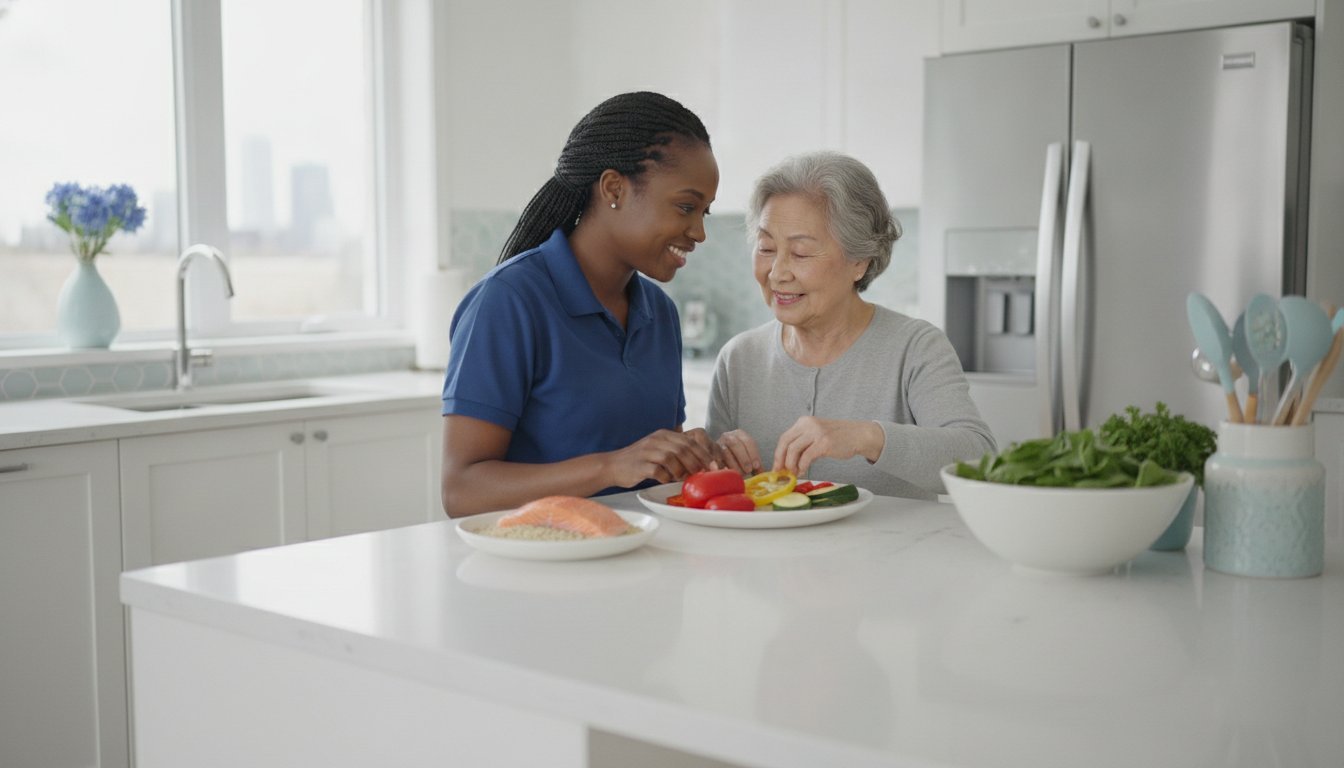
You stand in the kitchen at sunset, looking at a plate of food that hasn’t been touched, and wonder if your parent is getting the nourishment they need. It’s a quiet, heavy worry that many families carry while trying to balance work, life, and the safety of their loved ones. Effective meal preparation for elderly at home isn’t just about following a recipe; it’s about protecting their dignity and ensuring they have the energy to enjoy their days. We understand that the pressure of dietary restrictions and kitchen safety can lead to caregiver burnout, but you don’t have to manage this transition alone.
We agree that your loved one deserves to age in place with vitality, and we’re here to help you make that a reality. You’ll discover how to organize a structured meal plan that meets the 2026 Health Canada guidelines while making daily cooking feel manageable again. We’ll walk you through practical strategies to handle meal refusal, simplify grocery shopping, and create a kitchen environment that fosters independence and peace of mind for everyone involved.
What you will learn in this guide:
- Why personalized meal preparation for elderly at home is the foundation of healthy aging and a key factor in reducing hospital visits.
- How to align daily menus with the 2026 Canada’s Food Guide, prioritizing high-quality protein and fibre to support muscle and digestive health.
- Practical methods to organize your pantry for safety and use the “Theme Day” approach to simplify your weekly shopping and cooking routine.
- Ways to involve your loved one in the kitchen to honour their dignity and encourage a more positive relationship with food.
- How to recognize the gentle signs that your family might benefit from the support of professional meal preparation services.
Why Meal Preparation for Elderly at Home is Critical for Healthy Aging
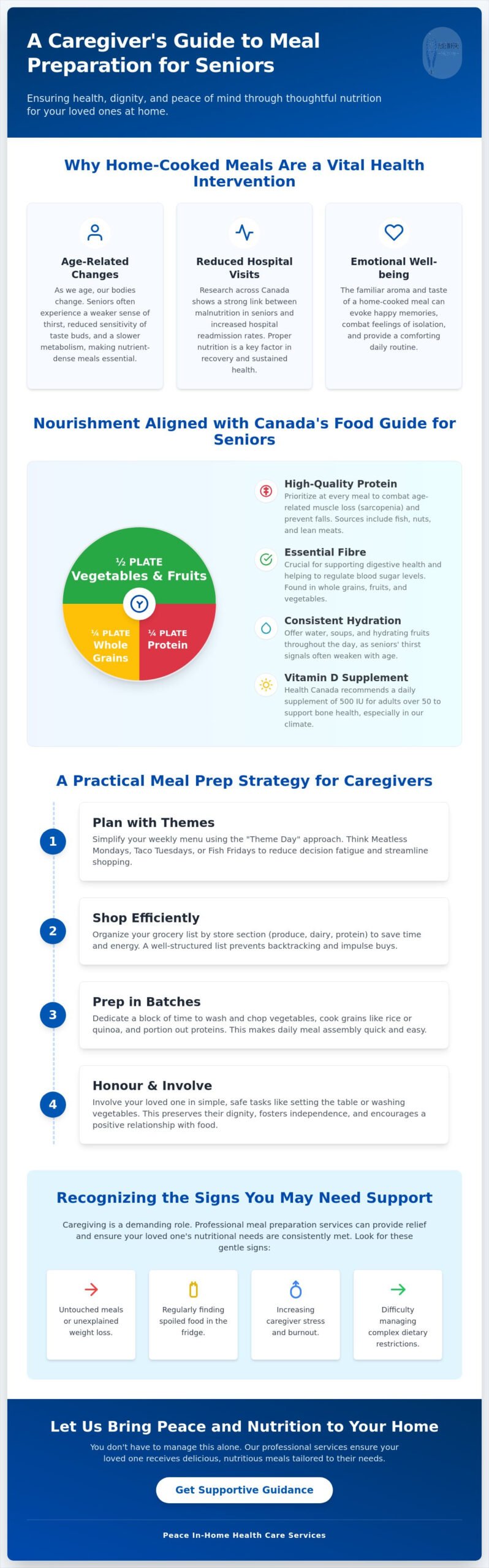
Meal preparation for elderly at home is a thoughtful process that goes far beyond simply putting food on a plate. It involves the careful planning, grocery shopping, and cooking of meals that are specifically tailored to a senior’s changing nutritional requirements and physical abilities. As we age, our bodies require a more precise approach to Human Nutrition to maintain vitality and prevent illness. For many Ontario families, this isn’t just a matter of convenience; it’s a vital health intervention. Research across Canada consistently shows a strong link between malnutrition and increased hospital readmission rates among seniors. This suggests that what happens in the kitchen is just as important for recovery as the care received in a medical facility.
Aging brings about subtle but significant changes that affect how we eat. Taste buds often lose their sensitivity, which can make once-favourite foods seem bland and unappealing. Thirst signals also weaken, meaning a senior might become dehydrated before they even realize they’re thirsty. Additionally, a slowing metabolism means that every calorie consumed needs to be packed with essential nutrients to be effective. Beyond these biological shifts, there’s a profound emotional component to food. The familiar aroma of a home-cooked meal can act as a bridge to happy memories, helping to combat the feelings of isolation that often affect those living alone.
Common Challenges in Senior Nutrition
Many seniors face a trio of hurdles when trying to eat well. Physical barriers like arthritis or low vision can make chopping vegetables or reading small labels a frustrating struggle. Cognitive factors, such as early-stage dementia, might lead to skipped meals or dangerous safety risks like leaving a burner on. Social factors also play a huge role. We often see the ‘tea and toast’ syndrome, where a senior living alone finds the effort of cooking a full meal too overwhelming. They begin to rely on simple, nutrient-poor snacks, which quickly leads to a decline in overall health.
The Benefits of Regular Home-Cooked Meals
Consistent, healthy meals are a powerful tool for managing chronic conditions like hypertension and diabetes. By controlling sodium and sugar intake through home cooking, you can help your loved one maintain better health markers. Proper nutrition also fuels the brain, leading to improved cognitive function and higher energy levels throughout the day. Most importantly, a diet rich in high-quality protein helps maintain muscle mass. This is the best defence against the falls and fractures that can so quickly change a senior’s life, making meal preparation for elderly at home a cornerstone of a safe and independent lifestyle.
Essential Nutrition: Aligning with Canada’s Food Guide for Seniors
Aligning your kitchen routine with the Government of Canada’s “Healthy eating for seniors” guide, updated on April 23, 2026, ensures your loved one receives the fuel they need to thrive. This updated standard emphasizes a variety of vegetables, fruits, whole grains, and diverse protein sources like fish, nuts, and lean meats. One of the most critical goals of meal preparation for elderly at home is combating sarcopenia, which is the natural loss of muscle mass that occurs with age. By prioritizing high-quality proteins at every meal, you provide the building blocks necessary to maintain strength and prevent debilitating falls. Proper nutrition is equally essential during recovery periods; families navigating post-surgery home care Toronto services often find that a structured meal plan accelerates healing and reduces the risk of complications after a hospital discharge.
Effective nutrition also requires a focus on fibre to support digestive health and regulate blood sugar levels. Because many seniors experience a decline in thirst signals, hydration must be a deliberate part of the daily routine. Offering water, soups, or hydrating fruits throughout the day is often more effective than waiting for them to feel thirsty. For those living in our Canadian climate, Health Canada recommends a daily supplement of 500 IU of Vitamin D for adults over 50 to support bone health when sunlight is scarce. If you find these nutritional requirements difficult to manage alongside other caregiving duties, reaching out for supportive guidance can help you create a sustainable plan.
Key Nutrients for the 65+ Demographic
As we age, the body’s ability to absorb certain nutrients changes. Vitamin B12 absorption often decreases, making it necessary to include fortified cereals or lean proteins to protect nerve function. Omega-3 fatty acids are equally vital for heart health and reducing brain inflammation, while potassium-rich foods like bananas and spinach help manage blood pressure naturally. When you are looking for Healthy Meal Planning: Tips for Older Adults, remember that small, frequent, nutrient-dense meals are often easier for the body to process than three large ones.
Adapting Textures for Safety and Comfort
Maintaining the joy of eating sometimes requires adjusting how food is presented. If your loved one experiences dysphagia, or swallowing difficulties, softening vegetables or using thickeners can make dining safer. For those dealing with tremors or dexterity issues, creating nutrient-dense ‘finger foods’ allows them to eat independently without the frustration of using cutlery. You can also enhance flavours by using vibrant herbs and spices instead of salt; this helps overcome a dulling palate while protecting heart health and keeping blood pressure in check.
How to Organize Meal Prep: A Step-by-Step Caregiver Guide
Organizing meal preparation for elderly at home doesn’t need to be a source of daily anxiety. It begins with a thoughtful inventory check to ensure the kitchen is both accessible and safe. We recommend placing frequently used items at waist height to prevent your loved one from bending or reaching too far, which can lead to balance issues. To simplify the mental load of menu planning, many families find success with a ‘Theme Day’ approach. Assigning specific categories to certain days, such as “Soup Sundays” or “Fish Fridays,” provides a helpful framework that makes decision-making much faster.
For caregivers in the Greater Toronto Area, time is often the most scarce resource. Utilizing local grocery delivery services is a reliable way to reclaim hours of your week while ensuring the pantry remains stocked with fresh, seasonal produce. Once the groceries arrive, focus on batch cooking. Preparing larger quantities of nutrient-dense stews or casseroles allows you to create ‘homemade TV dinners.’ These frozen portions are far superior to store-bought options because you control the sodium levels and ensure the flavours are exactly what your parent enjoys. This method reduces the need for daily cooking while guaranteeing a healthy meal is always ready in minutes.
Step 1: The Weekly Menu Plan
Planning is the foundation of nutritional success. When designing the menu, aim for a balanced plate at every sitting. A balanced senior plate consists of a visual ratio of 50 per cent vegetables and fruits, 25 per cent high-quality protein, and 25 per cent whole grains to ensure optimal nutrient density. This simple rule helps you avoid the ‘tea and toast’ syndrome mentioned earlier. Don’t forget to account for leftovers in your plan; cooking once and eating twice is a smart strategy to reduce caregiver burnout while maintaining consistency in your loved one’s diet.
Step 2: Safe and Efficient Cooking Sessions
Kitchen safety and physical comfort are paramount during the actual cooking process. If your loved one has arthritic joints, don’t hesitate to use pre-chopped vegetables or pre-washed salad greens. These small conveniences make a significant difference in the sustainability of meal preparation for elderly at home. Once the food is prepared, use clear containers and label them with large-print dates and simple reheating instructions. To further enhance safety, consider updating the kitchen with essential tools like electric kettles with auto-shutoff features and ergonomic utensils with weighted, easy-to-grip handles. These adjustments preserve independence while minimizing the risk of accidents.
Involving Your Loved One: Preserving Dignity in the Kitchen
For many seniors, the kitchen has been the heart of their home and the place where they’ve expressed love for their families for decades. When a caregiver completely takes over meal preparation for elderly at home, it can inadvertently signal to the senior that their contribution is no longer valued. This sudden shift often leads to feelings of depression or a quiet resistance to eating altogether. We believe that the most successful nutritional plans are those that feel like a partnership rather than a loss of control. It’s about finding the delicate balance between ensuring their safety and honouring their lifelong skills.
You might encounter the common objection: “I’ve cooked for 50 years, I don’t need help.” When this happens, it’s helpful to remember that they’re often defending their sense of self. Instead of focusing on what they can’t do, invite them to be the “head chef” while you act as the “sous-chef.” You can handle the heavy pots and sharp knives while they provide the expertise. Use this time for companionship and storytelling; asking about the history of a family recipe can turn a routine task into a meaningful connection. Here are a few safe ways to keep them involved:
- Shelling peas, snapping green beans, or husking corn.
- Stirring a cooling pot of soup or mixing dry ingredients.
- Setting the table with familiar linens and favourite dishes.
- Choosing the seasonings or garnishing plates before serving.
Meal Prep for Dementia and Alzheimer’s
When supporting a loved one with cognitive changes, the way we approach mealtime needs to be even more intentional. Open-ended questions like “What would you like for dinner?” can cause significant anxiety and confusion. It’s much more effective to offer two clear, simple options. Additionally, using high-contrast plates, such as a bright red or blue dish, helps those with visual-spatial challenges clearly see their food against the plate. Maintaining a consistent routine for meal preparation for elderly at home is also essential, as it provides a sense of security and helps reduce the agitation often associated with sundowning in the late afternoon.
Creating a Positive Dining Environment
The environment where a meal is eaten is just as important as the food itself. Research into “social facilitation” shows that seniors are likely to have a better appetite and eat more nutritious portions when they have company. Pairing regular mealtimes with dedicated companionship care for seniors in Toronto can make a profound difference in both appetite and overall wellbeing. Try to sit down and eat together whenever possible, turning off the television and silencing phones to focus on the sensory experience of the meal. If you find that managing these daily routines is becoming overwhelming, our Personal Care Assistance for Seniors provides a dignified approach to supporting your loved one’s lifestyle. Contact Peace In-Home Health Care Services today to discuss how we can help you create a supportive and nourishing home environment.
When to Consider Professional Meal Preparation Services in Toronto
Recognizing the moment when family-led support is no longer enough is a transition that requires both honesty and compassion. You might notice your parent is losing weight despite your best efforts, or perhaps you’ve found spoiled food tucked away in the back of the refrigerator. These are gentle but clear signs that the demands of meal preparation for elderly at home have surpassed what a family caregiver can manage alone. It isn’t a failure on your part; it’s a natural progression of care needs that often requires a more structured approach. This need can become especially acute when a loved one returns home after a procedure and requires coordinated post-surgery home care in Toronto that includes both nutritional support and medical oversight. Peace In-Home Health Care Services specializes in bridging this gap by integrating professional support into your loved one’s daily routine, ensuring they never have to skip a meal or struggle with a heavy grocery bag again.
Our approach is rooted in the belief that nutrition and safety are inseparable. When a Personal Support Worker (PSW) handles the kitchen duties, they aren’t just following a recipe. They’re monitoring for kitchen hazards, ensuring proper food storage, and observing your loved one’s appetite and mood for any subtle changes. This dual focus provides a level of security that goes beyond simple caloric intake. We proudly serve families across the Greater Toronto Area, bringing our reliable and attentive care to homes from the quiet neighbourhoods of North York to the vibrant communities of Oakville. Having a professional presence in the kitchen means that safety is prioritized while the joy of a fresh meal is preserved.
What to Expect from Our Caregivers
Our caregivers provide a service that is as unique as the individuals we serve. Every meal plan is tailored to reflect cultural preferences, dietary restrictions, and specific medical needs like low-sodium or diabetic-friendly menus. Beyond the cooking itself, we assist with the logistical hurdles of grocery shopping and light housekeeping to keep the kitchen a tidy and inviting space. We also ensure that medication reminders are naturally integrated with meal times, creating a reliable structure that supports both physical health and peace of mind. This holistic support ensures that your loved one stays nourished while remaining in the comfort of their own home.
Peace of Mind for GTA Families
We understand the pressure felt by families in Vaughan, Markham, and Mississauga who are trying to balance demanding careers with the needs of an aging parent. Reducing this caregiver burden allows you to return to the role of a daughter or son, focusing on quality time rather than the stress of chores. By choosing professional support, you ensure that your loved one receives consistent, high-quality meal preparation for elderly at home even when you can’t be there yourself. It’s about preserving their independence while giving you the breathing room you deserve. Contact Peace In-Home Health Care Services for a complimentary consultation to learn how we can support your family’s journey through this season of life.
Embracing a Path to Nourishment and Peace of Mind
Nourishing a parent is one of the most profound ways to show you care. By focusing on high-quality proteins and staying aligned with the 2026 Canadian nutritional standards, you’re actively protecting their vitality and strength. We’ve explored how practical tools like theme days and batch cooking can make meal preparation for elderly at home a manageable and even joyful part of your family’s routine. Most importantly, remember that honouring your loved one’s dignity in the kitchen is just as vital as the nutrients on their plate. Every shared task and familiar aroma helps preserve the independence they cherish.
When the balance of care begins to feel overwhelming, professional support is a reliable way to maintain the high quality of life your parent deserves. For over 17 years, we’ve served families across the GTA with a compassionate, person-centred approach. Our professional PSWs and skilled nurses are dedicated to providing the steady, attentive care that brings true relief to your home. Book a Free Caring Consultation with Peace In-Home Health Care Services today to explore how we can support your journey. You’re doing an incredible job, and we’re here to walk alongside you with a helping hand.
Frequently Asked Questions
What are the best soft foods for seniors with dental issues?
The best soft food options include scrambled eggs, slow-cooked stews, poached salmon, and Greek yogurt. These choices provide high-quality protein without requiring significant chewing effort. Adding mashed avocado or sweet potatoes ensures your loved one receives healthy fats and vitamins while keeping textures smooth and safe for those with dental concerns or sensitive gums.
How can I encourage my elderly parent to eat when they have no appetite?
Focus on offering small, frequent servings rather than three large plates, which can feel overwhelming. Using vibrant herbs and spices can help stimulate dulling taste buds, while sitting down to eat together provides the social stimulation needed to improve appetite. It’s often helpful to offer nutrient-dense smoothies or soups if a full meal seems unappealing at the time.
Is it safe for a senior with early-stage dementia to use the stove?
Safety in the kitchen is a primary concern for those with cognitive changes and should be assessed on an individual basis. While some may still enjoy simple tasks, installing auto-shutoff devices or using induction cooktops can significantly reduce fire risks. If forgetfulness becomes a recurring issue, it’s often safer for a professional to oversee meal preparation for elderly at home to ensure a secure environment.
What are some quick, healthy breakfast ideas for seniors living at home?
Quick and nutritious options include overnight oats with soft berries, whole-grain toast topped with a poached egg, or a blended protein smoothie. These choices are easy to prepare and align perfectly with the 2026 Canada’s Food Guide. They provide a steady release of energy and essential fibre to start the day comfortably and keep blood sugar levels stable.
How much does professional meal preparation for seniors cost in Toronto?
Costs in the Greater Toronto Area vary depending on whether you require a companion or a certified Personal Support Worker. Since every family has unique needs, the investment depends on the frequency of visits and the specific level of support required. We recommend checking current local industry standards or booking a personalized consultation to determine a plan that fits your family’s budget and care goals.
Can home care services help with specific diets like low-sodium or diabetic-friendly?
Yes, professional caregivers specialize in following medical dietary plans tailored to chronic conditions. Whether your loved one requires a low-sodium diet for heart health or a diabetic-friendly menu to manage blood sugar, a caregiver ensures these restrictions are met. This personalized approach allows seniors to enjoy varied, delicious meals while strictly adhering to their doctor’s nutritional recommendations.
What is the best way to store and reheat meals for an elderly person?
Store individual portions in clear, BPA-free containers with large-print labels indicating the date and simple reheating instructions. For safety, ensure all meals are reheated to an internal temperature of 74°C (165°F). This practice is a key part of meal preparation for elderly at home to prevent food-borne illnesses and maintain the nutritional quality of the food.
How often should a caregiver visit to manage meal preparation effectively?
The frequency of visits is entirely personalized to your family’s specific needs and lifestyle. Some seniors benefit from daily visits to ensure they receive a hot, fresh dinner and meaningful social connection. Others find that two or three visits per week are sufficient for batch cooking, grocery shopping, and organizing the pantry to ensure they stay nourished between visits. Learning more about companionship care for seniors in Toronto can help you understand how regular social engagement and meal support work together to improve your loved one’s overall quality of life.