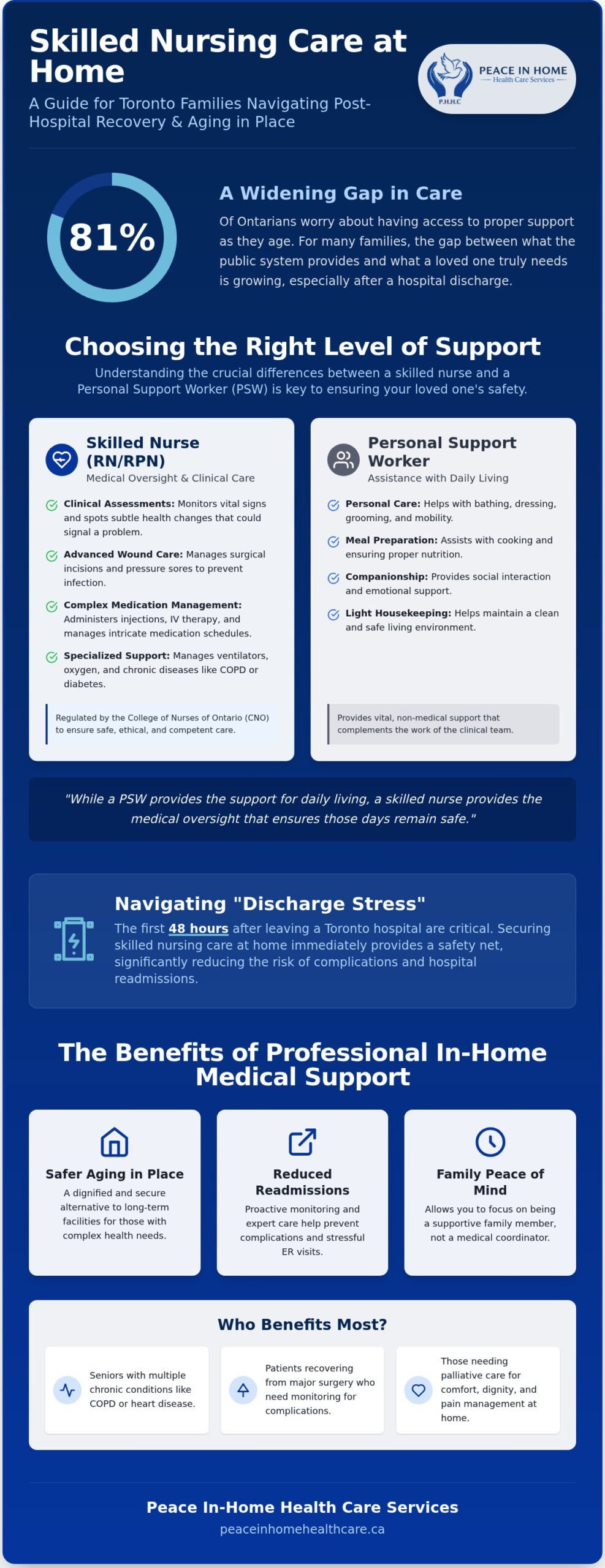
Did you know that 81% of Ontarians worry they won’t have access to proper support as they grow older? For many families in the GTA, the gap between what the public system provides and what a loved one actually needs is widening. When a family member is discharged from the hospital with complex medical requirements, finding reliable skilled nursing care at home Toronto becomes more than a convenience; it is a necessity for safety.
You likely feel the weight of this responsibility every time you double-check a medication dose or worry about a healing wound. It’s exhausting to act as a medical coordinator while trying to remain a supportive daughter, son, or spouse. We understand that you want your loved one to recover with dignity in a familiar environment, free from the risk of hospital readmission. This 2026 guide will help you navigate the current Ontario healthcare landscape, explaining how professional in-home nursing provides the clinical monitoring and expert advocacy your family deserves. We will look at the differences between care levels and how to build a support plan that offers true peace of mind.
Key Takeaways
- Understand the clinical differences between Registered Nurses and Personal Support Workers to ensure your loved one gets the precise medical monitoring they need.
- Discover how to manage “discharge stress” from Toronto hospitals by securing skilled nursing care at home Toronto during the critical first 48 hours of recovery.
- Learn why aging in place with professional medical support is a safer and more dignified alternative to long-term facility stays for complex health needs.
- Identify the essential criteria for choosing a private agency, including CNO registration and finding a nurse who truly connects with your family’s unique personality.
- Gain insights into how a tailored approach to nursing can reduce hospital readmissions while allowing you to focus on being a supportive family member.
Understanding Skilled Nursing Care at Home in Toronto
When we talk about skilled nursing care at home Toronto families often wonder how it differs from standard home help. Unlike personal care, which focuses on daily living tasks, skilled nursing is medically necessary care provided by licensed professionals. In Ontario, this means care is delivered by either a Registered Nurse (RN) or a Registered Practical Nurse (RPN). These individuals bring the clinical expertise of a hospital setting directly into your living room, ensuring that medical needs are met with precision and empathy.
In Toronto, the desire for “aging in place” has moved from a preference to a priority. Families want their loved ones to remain in familiar neighbourhoods, surrounded by their own belongings and memories. The primary goal of this professional support is to create a safety net that prevents hospital readmissions. By managing chronic conditions and monitoring health changes in real time, nurses help seniors avoid the stress of emergency room visits. Whether it’s a short-term recovery after a fall or long-term medical maintenance for a progressive illness, the focus remains on preserving dignity and health.
The Scope of Private Nursing in Ontario
The College of Nurses of Ontario (CNO) sets the rigorous standards that every nurse must follow. This regulation ensures that your family receives care that is safe, ethical, and competent. This home health nursing overview describes how these professionals adapt clinical skills to the home environment. Private nursing services often act as a vital complement to the support provided by Ontario Health atHome. While the public system offers essential baseline care, private nursing fills the gaps by providing longer, more consistent visits that the provincial budget may not cover.
Common medical tasks performed by home nurses include:
- Wound Care: Managing surgical incisions or pressure sores to prevent infection.
- Medication Administration: Handling complex injections or IV therapies that require clinical oversight.
- Ventilator and Oxygen Support: Monitoring respiratory equipment and ensuring proper oxygen levels.
- Chronic Disease Management: Tracking vital signs for conditions like heart failure or diabetes.
Who Benefits Most from In-Home Nursing?
We often find that families reach out when they feel they’ve reached the limit of what they can safely manage alone. Seniors living with multiple chronic conditions, such as COPD or heart disease, benefit immensely from regular professional monitoring. Patients who have just undergone major surgery also require the watchful eye of a nurse to spot early signs of complications. Finally, for those in the final stages of life, palliative nursing provides the comfort and pain management necessary for a peaceful, dignified journey at home, allowing family members to focus on being present rather than managing medical charts.
Skilled Nursing vs. Personal Support Workers (PSWs)
Choosing the right level of support often feels like a puzzle for families. You want the best for your loved one, but the titles and roles in the Ontario healthcare system can be confusing. It’s helpful to view home care as a “Care Team” model where different professionals work together to provide a seamless safety net. While both Personal Support Workers (PSWs) and nurses are vital, their legal scopes of practice and training differ significantly. “While a PSW provides the support for daily living, a skilled nurse provides the medical oversight that ensures those days remain safe.”
When you arrange for skilled nursing care at home Toronto, you’re bringing in a professional who performs clinical assessments that a PSW isn’t trained to handle. A nurse looks beyond the immediate task to spot subtle changes in health that could signal a problem. This Understanding Home Care Services in Ontario resource provides a helpful foundation for how these roles interact within our provincial system. By understanding these distinctions, you can better advocate for the specific level of attention your family member requires.
The Clinical Duties of an RN or RPN
Registered Nurses (RNs) and Registered Practical Nurses (RPNs) manage the complex medical aspects of recovery. They don’t just remind a senior to take their pills; they manage intricate medication schedules and watch for dangerous drug interactions. Their role includes advanced wound care for surgical sites, ensuring that healing progresses without infection. Nurses also serve as a professional bridge, monitoring vital signs and reporting clinical changes directly to the primary physician. This high-level monitoring is what makes skilled nursing care at home Toronto a reliable alternative to a hospital stay.
When Personal Care is the Priority
There are many times when the physical routine of the day is the biggest challenge. This is where personal care assistance for seniors becomes the primary focus. PSWs excel at tasks like bathing, dressing, and meal preparation for elderly at home. These services are the foundation of a dignified life, but they work best when they support a broader nursing plan. Many Toronto families find that a hybrid approach is the most effective solution. In this model, a nurse provides the clinical oversight while a PSW handles the daily rhythms of home life. If you’re unsure which level of support fits your current situation, you can always speak with a care coordinator to explore a personalized plan.
Navigating the Transition: From Toronto Hospitals to Home
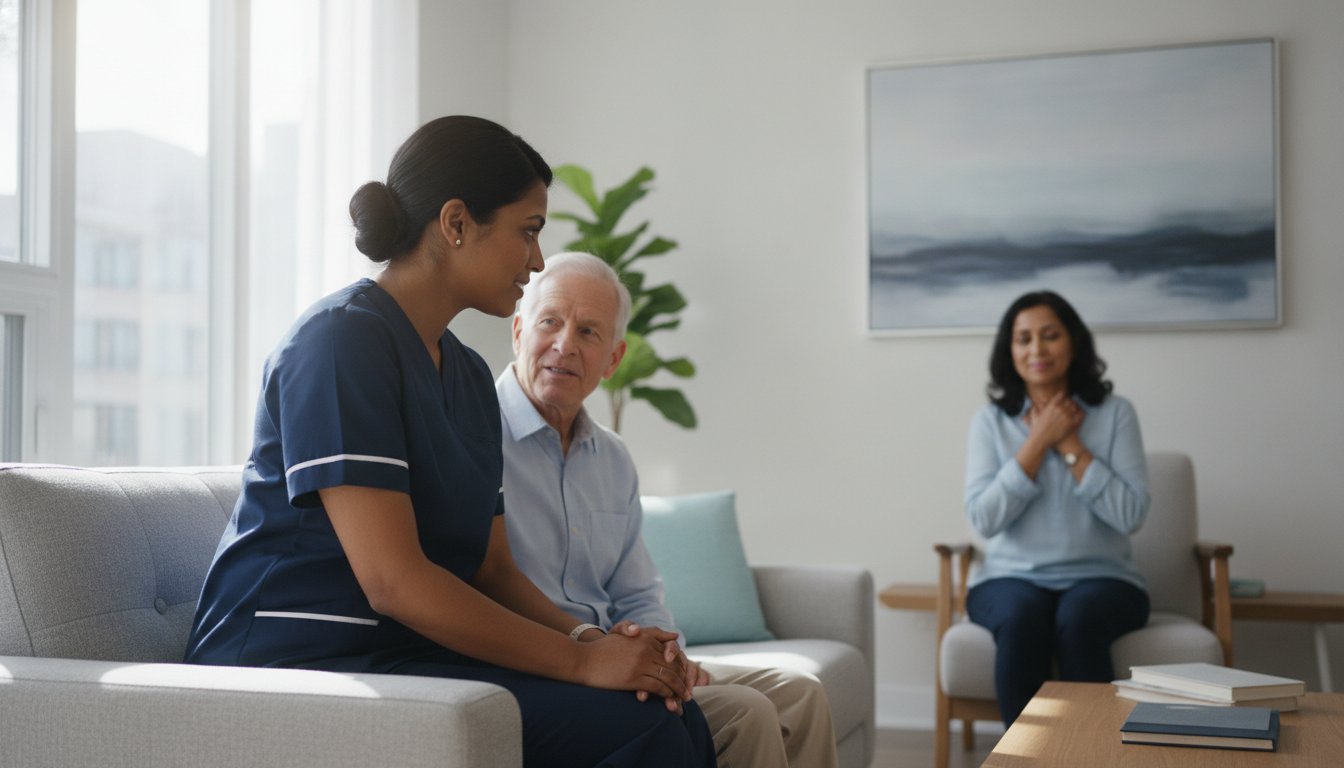
Leaving the structured environment of facilities like North York General or St. Michael’s Hospital can feel like stepping off a cliff. While you’re eager to get your loved one back to their own bed, the “discharge stress” that follows is a heavy burden for any family. You’re suddenly responsible for complex medical equipment, new prescriptions, and monitoring symptoms you might not fully understand. This transition period is where skilled nursing care at home Toronto proves most valuable. The first 24 to 48 hours after arriving home are the most critical for recovery success. A professional nurse acts as a clinical navigator, ensuring that medical equipment is set up correctly and that the pharmacy has filled every necessary order.
A nurse doesn’t just provide care; they manage the logistics that often overwhelm family caregivers. They bridge the gap between the hospital’s fast-paced environment and the quiet reality of home life. By having a professional present during those first few days, you ensure that the recovery plan created by the hospital is actually followed. This level of oversight provides a sense of security that allows the patient to rest and the family to breathe.
Post-Hospital Care at Home in Toronto
One of the most dangerous moments in a senior’s recovery happens at the kitchen table when they try to sort through their medications. A nurse performs a comprehensive medication reconciliation, comparing hospital discharge orders with the prescriptions already in the medicine cabinet. This process prevents life-threatening drug interactions. Beyond the medicine cabinet, a nurse coordinates follow-up appointments with specialists and monitors for early signs of infection. They also evaluate the home for new fall risks, as a patient’s mobility often changes significantly after a hospital stay.
Chronic Disease Management and Monitoring
The goal isn’t just to recover; it’s to stay healthy and out of the hospital long-term. Regular nursing visits are the best way to prevent a “crisis” trip back to the Emergency Room. For families managing progressive conditions, professional medication reminders for seniors at home ensure that dosages are never missed. When a patient lives with cognitive decline, nurses implement specialized protocols for dementia care at home Toronto, blending clinical safety with the patience and routine these individuals need. This attentive monitoring allows for small adjustments in care before a minor issue becomes a medical emergency.
Choosing a Trusted Private Nursing Agency in the GTA
Finding the right provider for skilled nursing care at home Toronto is a decision that carries significant emotional weight. While clinical skills are essential, you’re also looking for a partner who understands the local landscape. In the GTA, public home care wait times can be unpredictable; this often leaves families without support during critical recovery windows. A private agency provides a faster, more reliable path to care, but you must do your due diligence. Start by verifying that every nurse is in good standing with the College of Nurses of Ontario (CNO) and that the agency carries comprehensive liability insurance. Agencies with deep roots in Toronto, Vaughan, and Richmond Hill often have better established relationships with local pharmacies and specialists, which simplifies your loved one’s care.
Beyond the paperwork, look for a “human-first” approach. Personality matching is just as important as medical expertise. A nurse who shares a similar temperament or interests with your loved one will achieve better clinical results because they’ve built a foundation of trust. You want a professional who feels like a steady hand in a time of uncertainty. Trust is the foundation of every successful care plan.
Questions to Ask During the Initial Consultation
When you first speak with an agency, their responsiveness tells you a lot about how they’ll handle a crisis. Don’t be afraid to ask direct questions about their emergency protocols. You need to know how they handle sudden changes in a patient’s medical status and what their process is for communicating those updates to you. If your family member has specific needs, ask if the staff can provide specialized care for Alzheimer’s or Parkinson’s. A transparent agency will be happy to explain their training and communication methods in detail.
Evaluating the Continuity of Care
Continuity is the secret to safe medical outcomes. When a nurse visits consistently, they notice the tiny shifts in appetite or mood that a rotating staff member might miss. This consistent relationship prevents “care gaps” where important medical details fall through the cracks. Ask the agency if they use digital care logs; these provide transparent, real-time reporting that you can check from your own phone or computer. Finally, ensure the agency offers flexibility. Your needs might change from a few hourly visits a week to full live-in nursing, and you want an agency that can grow with your family.
How Peace In-Home Health Care Restores Security
At Peace In-Home Health Care, we believe that medical support shouldn’t feel like an intrusion into your private life. Our philosophy of “Compassionate Expertise” is built on more than 17 years of experience serving families across the GTA. We understand that when you seek skilled nursing care at home Toronto, you aren’t just looking for someone to perform clinical tasks. You’re looking for a partner who can restore a sense of normalcy and security to your household. By integrating professional medical oversight with companionship care for seniors Toronto, we ensure that your loved one’s emotional well-being is nurtured alongside their physical health.
Our process begins with the creation of a “Peace of Mind” care plan. This isn’t a static document; it’s a living roadmap that we develop together. We identify the specific medical needs, daily preferences, and personality traits that make your family unique. Whether we’re managing complex wound care or providing the quiet reassurance of professional monitoring, our goal is to make the healthcare journey feel manageable again. We take the weight of clinical coordination off your shoulders so you can focus on being a family.
Our Human-First Approach to Nursing
Our nurses prioritize the dignity and familiar lifestyle of every senior they serve. We recognize that healing happens best in an environment where a person feels respected and in control of their own space. By stepping in to handle complex clinical requirements, we also provide essential support to the whole family. This intervention is often the key to preventing caregiver burnout in the GTA, allowing children and spouses to return to their roles as loved ones rather than exhausted medical coordinators. Our customized care models are designed to adapt as a senior’s needs evolve, providing a steady hand through every stage of the aging process.
Getting Started with a Compassionate Consultation
Taking the first step toward professional support shouldn’t be a source of stress. We’ve made our initial assessment process simple and low-stress, focusing on listening to your concerns and understanding your long-term goals. Our team is committed to serving diverse communities across Mississauga, Oakville, and North York, as well as the wider Toronto area. We bring deep-rooted experience and a high-integrity approach to every home we enter. You don’t have to navigate this transition alone. We’re here to stand alongside you, offering the expert navigation and steady presence your family deserves.
Creating a Safer Path Forward for Your Family
Choosing the right support means understanding the clinical difference between a nurse and a personal support worker. It also means recognizing that the first few days after a hospital stay are the most critical for a successful recovery. With over 17 years of experience in the GTA, Peace In-Home Health Care provides the professional oversight needed to bridge this gap between hospital safety and home comfort.
Our Registered Nurses and RPNs create customized care plans that adapt to your family’s unique situation. This ensures that skilled nursing care at home Toronto remains both dignified and clinically effective. We take the medical burden off your shoulders so you can focus on being a supportive presence for your loved one rather than a clinical coordinator.
You’ve carried this heavy responsibility alone for long enough. Let us provide the steady hand and expert guidance you need to make aging in place a safe, comfortable, and reliable reality for your family.
Frequently Asked Questions
Does OHIP cover skilled nursing care at home in Toronto?
OHIP does not directly pay for private nursing services. Provincial funding is managed through Ontario Health atHome, which provides a limited number of nursing hours based on a physical assessment. Many families find these public hours are not enough to manage complex medical needs or provide consistent monitoring. Private skilled nursing care at home Toronto is typically funded through long-term care insurance or out-of-pocket to ensure a higher, more reliable level of clinical support.
What is the difference between an RN and an RPN for home care?
The primary difference lies in the complexity and stability of the patient’s medical condition. Registered Nurses (RNs) generally handle more complex, unpredictable health situations that require advanced clinical decision-making. Registered Practical Nurses (RPNs) provide excellent care for patients with stable and predictable health outcomes. Both are licensed professionals regulated by the College of Nurses of Ontario. We help GTA families determine which professional is best suited for their loved one’s specific recovery goals and medical requirements.
Can I hire a private nurse if I already have government-funded home care?
Yes, you can absolutely supplement government-funded support with private nursing. Many families in North York and Scarborough use a hybrid model to fill the gaps left by public service limits. While the public system might provide occasional check-ins, a private nurse offers the dedicated, consistent hours needed for intensive wound care or complex medication management. This ensures your loved one never faces a care gap during their most vulnerable recovery periods after a hospital stay.
How quickly can nursing care be started after a hospital discharge?
We aim to begin support as quickly as possible, often within 24 to 48 hours of your initial request. Rapid response is vital when transitioning a senior from a facility like Sunnybrook or North York General. Our team works efficiently to conduct a clinical assessment and match a nurse to your family’s specific needs. This speed helps manage discharge stress and ensures that the first critical hours at home are safe and professionally monitored by an expert.
Do in-home nurses provide 24/7 care for seniors?
Yes, 24-hour care is available through various flexible models tailored to your family’s needs. Depending on the medical necessity, we can arrange for shift nursing where multiple professionals provide round-the-clock clinical monitoring. For seniors who require a constant presence but have more stable medical needs, our live-in care model offers a dignified and safe alternative. This level of support provides total peace of mind for families in Mississauga and Oakville who cannot be present overnight.
What medical equipment do I need for home nursing in the GTA?
The required equipment depends entirely on your loved one’s specific medical condition and recovery plan. Common items include hospital beds, mobility aids, or specialized wound care kits. While Peace In-Home Health Care does not sell medical equipment, our nurses act as trusted guides to help you identify exactly what is needed for a safe environment. We can coordinate with local GTA suppliers to ensure everything is properly set up before the first nursing visit begins.
How does skilled nursing help a senior with dementia?
Skilled nursing provides a layer of clinical safety that standard memory care often lacks. For seniors with dementia or Alzheimer’s, a nurse monitors for secondary issues like infections or medication side effects that the patient might not be able to communicate clearly. We integrate medical oversight with specialized dementia support to manage both the cognitive and physical health of the individual. This approach ensures that the senior remains safe and comfortable in their familiar Toronto home environment.
What happens if our primary nurse is unavailable?
Consistency is our priority, but we always have reliable contingency plans in place. If your primary nurse is unavailable due to illness or personal leave, we provide a qualified backup professional who is fully briefed on your loved one’s care plan. Our digital care logs ensure that any replacement nurse has immediate access to medical history and daily routines. This seamless transition maintains the high standard of skilled nursing care at home Toronto families have relied on for years.