
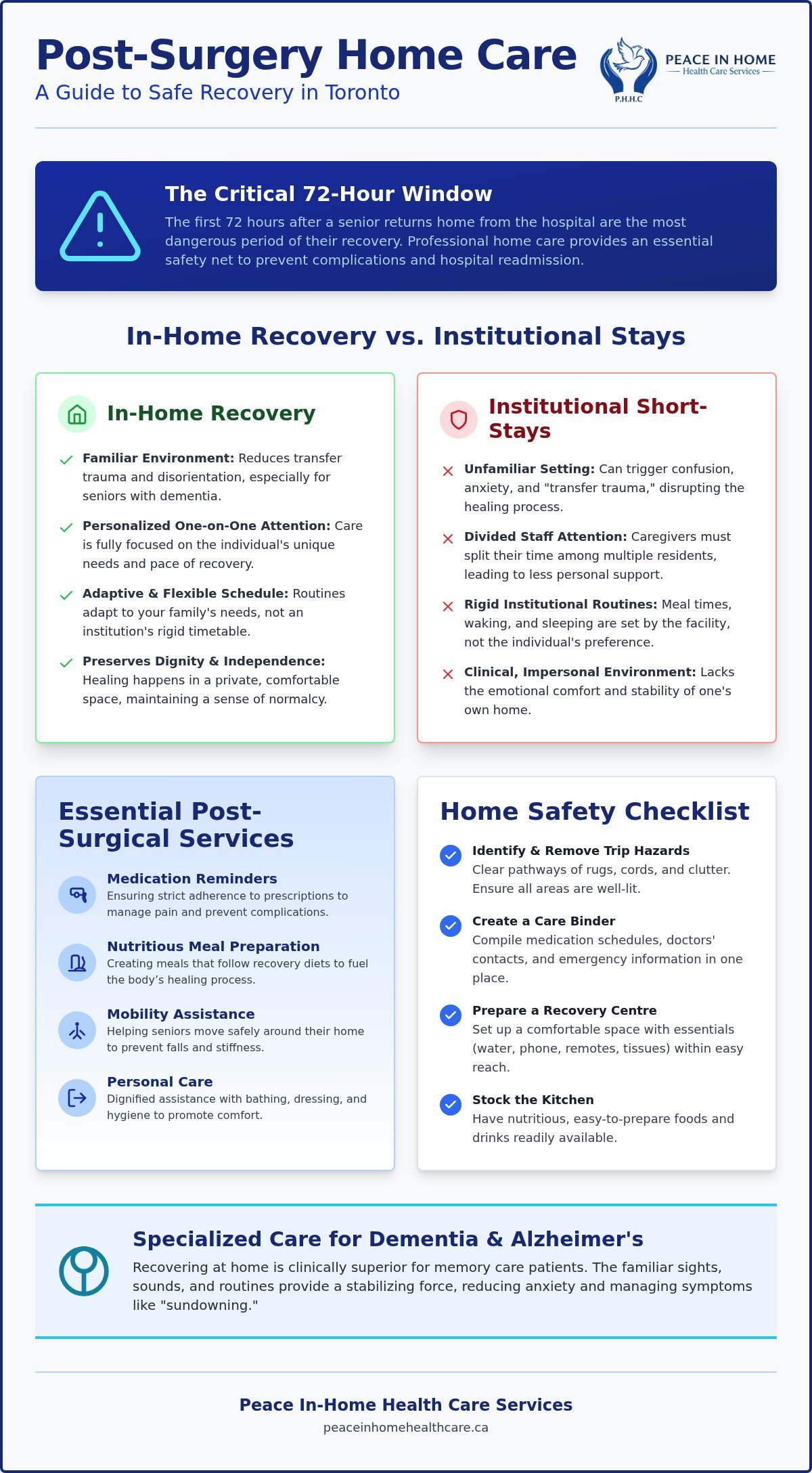
Did you know that the first 72 hours after a senior returns home from the hospital are considered the most dangerous period of their surgical recovery? It’s a heavy realization for any family in your Toronto neighbourhood, and many find that professional post-surgery home care Toronto services are the only way to navigate this critical window safely. You want your loved one to heal in the comfort of their own home, yet the fear of a medical complication or a middle-of-the-night fall can be paralyzing. Juggling a career and your own household while trying to provide round-the-clock support often leads to bone-deep exhaustion and a lingering sense of guilt that you simply can’t do it all.
We understand that you want a complication-free recovery that preserves your parent’s dignity. This guide will show you how tailored support ensures a safe transition while providing essential relief for family caregivers. We’ll explore the professional monitoring options available in 2026 that offer emotional peace of mind for the whole family. From specialized nursing to daily personal care, you’ll learn how to create a supportive environment that prioritizes both physical healing and the preservation of a familiar lifestyle.
Key Takeaways
- Learn why professional post-surgery home care Toronto services provide the essential safety net needed during the first 72 hours to help prevent hospital readmission.
- Understand how recovering in a familiar environment reduces transfer trauma and disorientation for seniors living with Alzheimer’s or dementia.
- Discover the benefits of personalized one-on-one attention compared to institutional settings, allowing for a recovery schedule that adapts to your family’s unique needs.
- Get a practical checklist for preparing your home, from identifying trip hazards to creating a comprehensive Care Binder for seamless medication management.
- Find out how a human-first approach to caregiver matching ensures your loved one receives dignified, compassionate support that restores peace of mind for the whole family.
What is Post-Surgery Home Care and Respite in Toronto?
Post-surgery home care Toronto is more than just a convenience; it’s a clinically supported bridge between the hospital and a successful return to independence. When a senior is discharged after a procedure, the transition can be overwhelming for both the patient and their family. This type of care provides temporary, professional support tailored to the specific needs of the individual during their postoperative recovery. The primary focus is always on safety, ensuring that healing happens correctly while preventing the risks that lead to hospital readmission, such as infections or mobility-related setbacks.
Many families also rely on this service for its respite component. While some organizations define respite as a temporary stay in a facility, we view it as a way to provide essential relief for family members in the comfort of the senior’s own home. It allows daughters, sons, and spouses to step back from the intense demands of caregiving without the guilt of leaving their loved one alone. The flexibility of this support is a significant advantage. Whether you need a professional caregiver for a few hours a day to assist with morning routines or require 24/7 overnight monitoring to manage pain levels, the care adapts to your family’s schedule.
Who Should Consider Temporary Post-Op Care?
Choosing professional support is a wise step for several groups within the GTA. Seniors recovering from orthopaedic, cardiac, or general surgeries often face mobility challenges that make daily tasks risky. Additionally, family caregivers who need to return to their jobs often find themselves torn between professional responsibilities and the fear of a loved one falling while home alone. Professional care also serves as a vital bridge for families who are currently waiting for government-funded services to begin but need immediate, reliable support today.
Essential Services Included in Post-Surgical Support
A comprehensive recovery plan involves several layers of attentive care. Our caregivers provide personal care assistance for seniors, which includes dignified help with bathing, dressing, and hygiene. This is paired with other critical tasks, such as:
- Medication Reminders: Ensuring strict adherence to post-operative prescriptions to manage pain and prevent complications.
- Nutritious Meal Preparation: Creating meals that follow specific surgical recovery diets to fuel the body’s healing process.
- Mobility Assistance: Helping seniors move safely around their home to prevent stiffness while avoiding overexertion.
By integrating post-surgery home care Toronto into the recovery process, families can focus on emotional support while experts handle the physical complexities of healing. This professional presence ensures that the home remains a place of recovery rather than a source of stress.
Specialized Recovery: Dementia and Post-Hospital Care
Surgery represents a profound disruption to the carefully balanced world of a senior living with Alzheimer’s or dementia. The bright lights, unfamiliar faces, and sterile environment of a hospital often trigger intense confusion and anxiety. For these individuals, the risk of “transfer trauma” is significant. This term describes the physical and emotional stress experienced when moving between care settings. Recovering at home is often clinically superior for memory care patients because the familiar sights and sounds of their own Toronto neighbourhood provide a stabilizing force that medical facilities cannot replicate. This familiarity is a cornerstone of effective post-surgery home care Toronto services.
Managing the post-operative phase also requires a deep understanding of “sundowning,” where confusion and agitation increase as daylight fades. This phenomenon can interfere with essential rest and healing. Professional caregivers specialize in maintaining the familiar routines that anchor a senior’s day. By keeping meal times, sleep schedules, and evening activities consistent, they reduce the anxiety that often follows a major medical event. If you are feeling overwhelmed by these challenges, our team can help you navigate this transition with a personalized care plan tailored to your family’s needs.
Memory Care During Recovery
Recovery isn’t just about physical wounds; it’s about cognitive engagement. Caregivers integrate activities for dementia patients at home to stimulate the mind and encourage a positive mood. This companionship is a vital tool in reducing post-surgical delirium, a common complication for seniors with cognitive decline. We also implement strict safety protocols to manage wandering or disorientation, ensuring your loved one remains safe while their body heals. While some families explore the Convalescent Care Program for short-term facility stays, many find that the one-on-one attention of being home offers a more peaceful path.
Skilled Nursing for Complex Needs
When recovery involves more than just companionship, coordinating with skilled nursing care at home Toronto becomes essential. This higher level of support is crucial for complex tasks that require professional medical oversight. Our team focuses on several key areas to ensure a safe recovery:
- Wound Management: Professional dressing changes and careful monitoring to prevent infection at the surgical site.
- Vital Sign Monitoring: Regularly tracking blood pressure, heart rate, and oxygen levels to identify early signs of complications.
- Mobility and Transfers: Using expert techniques to assist with movement, which significantly reduces the risk of falls during the most vulnerable weeks of healing.
By providing this level of specialized attention, we ensure that the recovery process is not just about survival, but about maintaining the highest possible quality of life and dignity for your loved one.
In-Home Recovery vs. Institutional Short-Stays in the GTA
Choosing between a facility and your own living room is a pivotal decision for any family. In a Toronto care home, staff ratios are often shared among dozens of residents; this means your loved one might wait a significant amount of time for assistance with basic needs. Professional post-surgery home care Toronto provides a dedicated 1-on-1 relationship. This attentive presence ensures that mobility help or pain management is always available the moment it’s needed. While facilities have fixed intake dates and rigid schedules, home care is entirely flexible. It adapts to your family’s unique timeline, whether you need help for a single weekend or several months of support.
Beyond the level of attention, there is a clinical advantage to staying home. Facilities are high-traffic environments where the risk of community-acquired infections is naturally higher. Recovering in a private residence significantly lowers this exposure, which is vital when the immune system is already taxed by surgery. There’s also the profound emotional value of staying in a familiar Toronto neighbourhood. Being near friends and family without the restriction of institutional visiting hours helps seniors maintain their social connections. This emotional stability is a powerful driver for physical healing.
The Reality of Waitlists in Toronto
Many families hope to access government-funded “convalescent care” beds, but the reality is often met with lengthy waitlists. When a hospital discharge is imminent, you don’t always have the luxury of waiting weeks for an opening. Private post-surgery home care Toronto providers offer an immediate solution for these urgent transitions. We provide rapid response services across the GTA, including Vaughan, Markham, and Richmond Hill, so that no senior has to stay in a hospital bed longer than necessary. Before the discharge date, reviewing a home-prep checklist can help ensure the environment is ready for a seamless arrival.
Preserving Dignity and Independence
Aging in Place is more than a trend; it’s a preference for the vast majority of GTA seniors who value their autonomy. In a facility, routines like meal times and wake-up calls are dictated by the institution. Home care reverses this dynamic. The senior remains in control of their daily life, choosing what they eat and when they receive visitors. This sense of agency provides a significant psychological boost. Recovering in one’s own centre of comfort allows a person to feel like themselves again, rather than just another patient in a ward. This familiarity helps reduce the confusion that often accompanies post-operative medications. It’s about maintaining dignity during a time when one might otherwise feel quite vulnerable.
Preparing Your Toronto Home for a Safe Post-Operative Transition
Transitioning from a clinical setting to a familiar residence requires more than just a ride home. It starts with a comprehensive safety walkthrough of your living space. Look for loose area rugs, trailing electrical cords, or uneven flooring that could cause a trip. Proper lighting is equally essential, especially in hallways leading to the bathroom. Setting up a ground-floor recovery area is a smart clinical choice; it eliminates the risk of navigating stairs during the first few weeks when balance and strength are often compromised. This proactive approach is a cornerstone of effective post-surgery home care Toronto.
Organization is your best ally against stress. We recommend creating a “Care Binder” to keep in a central location, such as the kitchen island. This binder should house discharge papers, a list of current medications, and contact details for your local Toronto pharmacy. Having this information in one place ensures that any family member or professional providing post-surgery home care Toronto can find what they need instantly. It also establishes a clear communication channel. This allows everyone involved to stay on the same page regarding the senior’s daily progress and changing needs.
Essential Information for Your Caregiver
A professional caregiver is a partner in the healing process. To support them, provide a detailed medication schedule that includes specific dosages and the exact timing required for each pill. Beyond medical needs, share your loved one’s personal preferences. Knowing their favourite nutritious meals or preferred TV channels helps create a soothing, dignified atmosphere. Finally, include a list of emergency contacts and the nearest hospitals, such as North York General or Sunnybrook. Having these details ready provides quiet confidence during the recovery period.
The Transition Day: What to Expect
The first few hours at home are often the most anxious for a family. We suggest using the “overlap” technique. This involves spending the initial hours together with the professional caregiver to ensure a smooth handoff of responsibilities. Confirm that all medical equipment, like walkers or specialized cushions, is delivered and ready for use before the senior arrives. Remember that effective preventing caregiver burnout Toronto strategies begin on day one. By letting a professional handle the monitoring and physical tasks from the start, you protect your own well-being while ensuring your loved one receives the highest standard of attentive care.
Restoring Peace of Mind with Peace In-Home Health Care
At Peace In-Home Health Care Services, we believe that recovery is a deeply personal journey that deserves more than just a clinical checklist. Our human-first philosophy ensures that every Toronto senior is treated with the utmost respect and dignity. We understand that inviting someone into your home is a significant decision. That’s why we’ve spent over 17 years refining our approach to post-surgery home care Toronto. We act as a steady hand for families managing the complexities of the GTA healthcare system, providing a reliable presence in every neighbourhood from Etobicoke to Scarborough.
A successful recovery often depends on the relationship between the patient and the provider. We don’t just assign a staff member; we use a rigorous caregiver matching process. We look for the right personality and temperament to complement your loved one’s unique needs. This attentive approach helps reduce the stress of the transition. Providing post-surgery home care Toronto is as much about emotional connection as it is about physical safety. Whether you are in the heart of the city or in the surrounding York Region, our goal is to foster a supportive environment where healing can truly flourish.
A Trusted Guide for GTA Families
Every surgical recovery is different, which is why we don’t offer one-size-fits-all solutions. Our tailored care plans are designed to evolve alongside the patient. As strength returns and mobility improves, the level of support can be adjusted accordingly. We also prioritize flexibility by offering our services without the burden of long-term contracts. This is particularly helpful for short-term recovery needs where families only require assistance for a few weeks. It’s this commitment to personalized, dignified care that has earned the trust of families in Oakville, Burlington, and Mississauga.
Taking the First Step Toward a Safe Recovery
The most effective way to ensure a smooth transition is to plan ahead. We encourage families to book their initial home care assessment well before the scheduled hospital discharge date. This allows us to coordinate with your medical team and have everything in place the moment your loved one arrives home. There is an immense sense of relief that comes from knowing a professional is handling the logistical details of medication reminders, meal preparation, and wound monitoring. You can focus on being a supportive family member while we manage the technicalities of the recovery process.
Securing a Peaceful Path to Recovery
You’ve seen how professional support bridges the gap between hospital discharge and long-term healing. By prioritizing one-on-one attention and preparing your home environment with a safety walkthrough, you ensure your loved one avoids the risks of “transfer trauma” and infections often found in institutional settings. With 17+ years of compassionate senior care experience, our dementia-certified caregivers and skilled nursing staff provide the quiet confidence families need during this vulnerable time. Whether you’re in Toronto, Vaughan, Markham, or across the GTA, our mission is to protect the dignity of your loved one while giving you the space to breathe.
Choosing professional post-surgery home care Toronto means you don’t have to navigate this complex transition alone. We’re here to stand alongside your family as a trusted guide, offering the personalized care and stability your parent deserves. Your peace of mind is just as important as their physical healing; together, we can create a safe, supportive environment for a successful recovery.
We look forward to helping your family navigate this journey with kindness and expert care.
Frequently Asked Questions
Is post-surgery home care covered by OHIP in Toronto?
OHIP typically provides limited support through Ontario Health at Home, but these services are often restricted to a few hours of strictly medical tasks. Many families choose private post-surgery home care Toronto services to bridge the gaps, such as overnight monitoring or consistent daily personal care. While public funding is a helpful start, private support offers the flexibility to choose your own schedule and ensure your loved one is never left alone.
How soon can a caregiver start after my loved one is discharged from the hospital?
We strive to begin support as quickly as possible, often within 24 to 48 hours of your initial assessment. Ideally, you should contact us a few days before the scheduled hospital discharge. This proactive planning allows our team to coordinate with medical staff and match a caregiver to your loved one’s personality. We ensure everything is ready the moment they arrive home in Toronto, Vaughan, or Mississauga.
Do post-surgery caregivers help with physical therapy exercises?
Yes, our caregivers provide mobility and transfer assistance to help seniors follow the recovery plan established by their physiotherapist. While we don’t create new exercise routines, we act as a steady hand during walking practice and prescribed stretches. Having a professional present during these movements significantly reduces the risk of falls. This attentive support ensures your loved one stays active enough to heal without overexerting themselves or risking a setback.
What is the difference between a PSW and a registered nurse for post-op care?
A Personal Support Worker (PSW) focuses on daily living tasks such as personal care, meal preparation, and companionship. In contrast, a registered nurse provides skilled nursing care services. This higher level of support includes complex wound management, tracking vital signs, and identifying early clinical signs of infection. For many seniors, a combination of both ensures physical comfort and professional medical oversight are maintained throughout the entire healing process.
Can I book overnight care for the first few days after surgery?
You can certainly book overnight care or even 24/7 live-in support during the initial recovery phase. The first few nights at home are often the most stressful for family members. Having a professional present to assist with middle-of-the-night bathroom trips or medication reminders provides immense peace of mind. Our flexible care models allow you to start with intensive monitoring and gradually reduce hours as your loved one regains their independence.
How do you handle medication management for seniors with complex prescriptions?
We prioritize safety through a structured medication reminder system that ensures every dose is taken at the correct time. For seniors with complex prescriptions, our skilled nursing staff can oversee the process to prevent dangerous errors. We record these details in a central Care Binder to keep the family informed. This organization is a vital component of successful post-surgery home care Toronto, ensuring pain management remains consistent and effective.
Do you provide post-surgery support for dementia patients in the GTA?
We specialize in dementia and Alzheimer’s support across the entire GTA, including North York, Scarborough, and Etobicoke. Surgery is uniquely disorienting for those with cognitive decline, so our caregivers use specialized techniques to reduce anxiety and manage sundowning. We focus on maintaining familiar routines and providing a stabilizing presence. This specialized care helps prevent the confusion and transfer trauma that often occurs after a senior leaves a sterile hospital environment.
What happens if my loved one needs to return to the hospital unexpectedly?
If a medical concern arises, our caregivers are trained to follow a clear emergency protocol immediately. Because we monitor vital signs and wound sites closely, we often identify potential complications before they become critical. In the event of an emergency, we contact 911 and the family’s designated contact person right away. We also ensure that the Care Binder containing all surgical discharge papers is ready to go with the patient back to the hospital.