

Imagine waking up at 3:00 AM to find your father startled by a visual hallucination, or watching his sharp clarity from breakfast vanish into a confusing fog before lunch. You likely already realize that Lewy body dementia (LBD) isn’t a straight line; it’s a relentless rollercoaster of fluctuating alertness and physical challenges that can leave you feeling completely exhausted. Learning how to care for someone with lewy body dementia at home requires more than just patience. It demands a specialized toolkit that addresses both the cognitive shifts and the unique REM sleep behaviour disorders that often keep families awake all night.
We’re here to provide practical strategies and professional insights to help you safely manage these unpredictable symptoms while protecting your loved one’s dignity and your own mental health. In this guide, we’ll explore ways to create a safer home environment, master communication techniques that reduce agitation, and develop a clear plan for accessing expert support in Toronto or Mississauga. You don’t have to manage this complex journey alone. There’s a steady path forward that prioritizes peace and security for your entire family, ensuring you have the reliable assistance needed to maintain a familiar lifestyle at home.
Key Takeaways
- Learn to navigate the “rollercoaster” of LBD by identifying periods of peak alertness and adjusting your daily routine to match these natural fluctuations.
- Discover essential environmental adjustments, like shadow reduction and simplified layouts, that show you how to care for someone with lewy body dementia at home with greater safety.
- Master the “Validation Method” to respond to hallucinations with empathy rather than correction, helping to reduce anxiety and preserve your loved one’s dignity.
- Recognize the importance of professional respite care as a necessary strategy for managing the unique exhaustion caused by REM sleep behaviour disorders.
- Gain insights into managing physical symptoms like dysphagia and movement challenges through specialized support available across Toronto and Mississauga.
Understanding Lewy Body Dementia: The “Rollercoaster” of Symptoms
Lewy body dementia is the second most common form of progressive dementia after Alzheimer’s. It’s a complex condition that impacts how a person thinks, moves, and behaves, often presenting a confusing mix of symptoms that can change by the hour. Unlike Alzheimer’s, which usually begins with noticeable memory loss, Dementia with Lewy bodies primarily affects executive function and attention. This distinction is vital because families often find that traditional memory care approaches don’t quite fit the specific needs of their loved one.
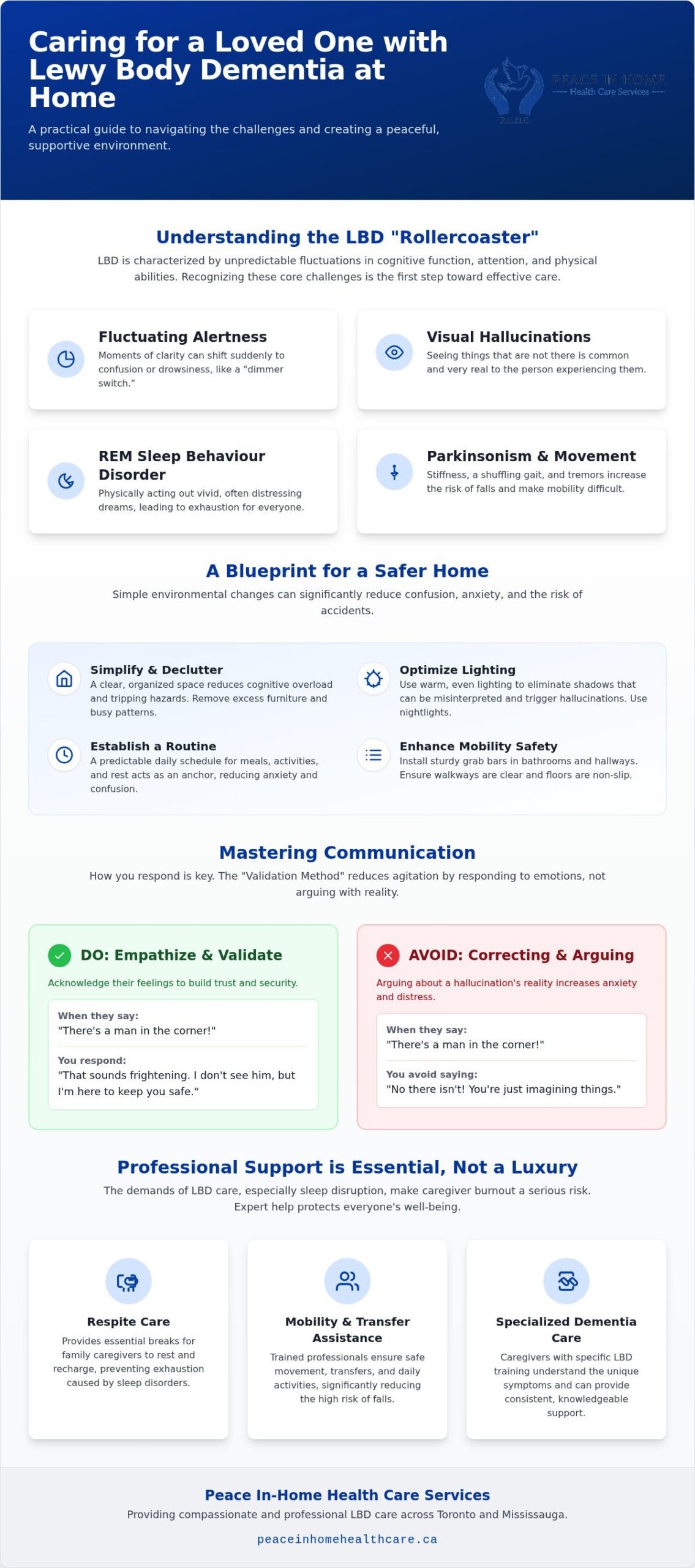
The hallmark of LBD is fluctuating alertness, often described by caregivers as a “rollercoaster” or a “dimmer switch.” One moment, your loved one may be perfectly lucid and engaged; the next, they might appear drowsy, confused, or almost trance-like. Understanding these shifts is the first step in learning how to care for someone with lewy body dementia at home. When you realize that these changes are part of the disease and not a lack of effort, it becomes easier to respond with the patience and compassion they deserve.
The Unique Challenges of LBD Fluctuations
Managing these daily “on” and “off” periods requires a flexible approach. Keeping a simple log of when your loved one is most alert can help you plan demanding activities, such as bathing or medical appointments, for their “good hours.” You should also prepare for visual hallucinations, which are common in LBD. These aren’t just “tricks of the mind” to the person seeing them. Reacting calmly and acknowledging their feelings helps reduce the resulting anxiety. Many families also struggle with REM sleep behaviour disorder, where the individual physically acts out vivid dreams. This often leads to extreme caregiver exhaustion, making reliable support a necessity for everyone’s well-being.
Parkinsonism and Movement Issues
LBD often involves physical symptoms similar to Parkinson’s disease, known as Parkinsonism. You might notice a shuffling gait, muscle stiffness, or tremors that make daily movements difficult. These physical changes significantly increase the risk of falls, often more so than in other types of dementia. Because balance can be so unpredictable, professional mobility and transfer assistance is frequently required to ensure safety. Having a trained hand nearby provides the security your loved one needs to move around their home with confidence and dignity.
Creating a Safe and Supportive Home Environment
When considering how to care for someone with lewy body dementia at home, simplicity is your most powerful tool. A cluttered room isn’t just a physical hazard; it’s a cognitive one. People with LBD often struggle to interpret complex visual information, so a busy environment can lead to increased confusion or distress. Reducing the number of objects in a room helps the brain focus on what’s essential, creating a sense of calm and order that benefits both the individual and the caregiver.
Lighting plays a pivotal role in managing LBD at home. Shadows are often misinterpreted as figures or animals, which can trigger frightening hallucinations. Ensure rooms are evenly lit with soft, warm light and use nightlights in hallways and bathrooms to eliminate dark corners. For more detailed clinical advice on managing these sensory challenges, you might find the National Institute on Aging’s guide to LBD care particularly helpful as you organize your living space.
A predictable routine acts as an anchor for a mind that feels like it’s drifting. Consistency in meal times, activities, and rest periods reduces the anxiety that often accompanies LBD fluctuations. Part of maintaining this stability involves keeping the physical space clear and organized. Professional light housekeeping can be a lifesaver here, ensuring that walkways remain free of tripping hazards while you focus on providing direct emotional support.
Modifying the Living Space for Mobility
LBD often brings Parkinson’s-like stiffness and a shuffling gait, making standard home layouts dangerous. You should install sturdy grab bars in the bathroom and place non-slip mats in all high-moisture areas. Depth perception is another common hurdle for those with LBD. Using high-contrast colours, such as a dark toilet seat on a white floor, helps your loved one navigate the home more safely. It’s also wise to avoid rugs with busy patterns, as these can look like holes in the floor or moving objects to a person with impaired visual processing.
Managing Sleep and Night-time Safety
Night-time can be the most challenging period for families due to REM sleep behaviour disorder. Creating a soothing bedtime ritual helps signal to the brain that it’s time to rest, which may reduce night-time agitation. Because LBD often involves acting out vivid dreams, you might consider using floor mats or specialized bed rails to prevent injury during the night. If you find yourself losing sleep due to these behaviours, speaking with a care coordinator about overnight support can provide the peace of mind you need to stay healthy and present for your loved one.
Communication Strategies and Medication Safety
Communication is the heartbeat of care. When you’re learning how to care for someone with lewy body dementia at home, you’ll soon realize that what you say is often less important than how you say it. Because LBD affects the brain’s ability to process logic, traditional reasoning often fails. Instead, we use the “Validation Method.” This approach focuses on the emotions behind a person’s words rather than the factual accuracy of their statements. If your loved one is frightened by something they see, arguing that it isn’t there only increases their distress. Acknowledging their feelings helps them feel heard and safe.
Your non-verbal cues carry immense weight. A person with LBD is often hyper-aware of your body language and tone of voice. If you’re rushed or frustrated, they will mirror that anxiety. Maintaining eye contact, using a gentle touch, and keeping your voice low can prevent a minor misunderstanding from escalating into a crisis. Consistency is equally vital when it comes to treatment. Professional medication reminders ensure that essential prescriptions are taken at the exact same time every day, which is crucial for stabilizing fluctuating symptoms.
De-escalating Hallucinations and Delusions
Hallucinations can be vivid and startling. Instead of contradicting them, try phrases like, “I don’t see the person you’re describing, but I can see that you’re worried. I’m here to keep you safe.” Once they feel validated, use gentle distraction. Moving to a different room or starting a familiar activity, like listening to a favourite song, can help the brain reset. You don’t always need to intervene. If a hallucination is pleasant or neutral, such as seeing a cat in the corner, it’s often best to let it pass. Only step in if the vision causes fear or leads to dangerous behaviour.
The LBD Medication “Red Flags”
Safety in LBD care includes a critical warning about medications. Many people with LBD have extreme, life-threatening sensitivities to traditional antipsychotic medications, also known as neuroleptics. These drugs can cause a rapid worsening of movement issues, severe sedation, or even permanent damage. It’s vital to document every side effect and fluctuation in a daily journal to share with your neurologist. Ensure that every member of the care team, including emergency responders, is aware of these sensitivities. Being a prepared advocate is one of the most important ways you can protect your loved one’s health.
Daily Living and Caregiver Self-Care in the GTA
Managing the daily routine is often the most taxing part of the journey. When you are determining how to care for someone with lewy body dementia at home, timing is everything. Because LBD involves those “on” and “off” periods of alertness we discussed earlier, you should schedule physically or mentally demanding tasks during their peak hours. This might mean moving a bath to mid-morning or planning engaging activities when they are most lucid and engaged.
Nutrition also requires careful attention. Many individuals with LBD develop dysphagia, or difficulty swallowing, as the disease progresses. You may need to adjust food textures or provide smaller, more frequent meals to ensure safety. It is also common for appetites to fluctuate based on medication side effects or mood. Having a reliable partner to assist with specialized meal preparation ensures your loved one stays nourished without the process becoming a source of frustration for you both.
We often tell families that you cannot pour from an empty cup. The extreme exhaustion from managing REM sleep behaviour disorder and constant vigilance can lead to physical and emotional burnout. Recognizing that you need help is a sign of strength, not a failure. Accessing respite care in Toronto is a practical way to preserve your own health while ensuring your loved one remains in a safe, familiar environment.
Practical Help with Daily Tasks
Dignity is at the heart of our approach. During “off” periods, simple tasks like dressing or bathing can become overwhelming for someone with LBD due to muscle stiffness or confusion. Using adaptive clothing and maintaining a calm, slow pace helps reduce the risk of agitation. Professional companionship care also plays a vital role by providing social interaction and mental stimulation, which helps prevent the isolation so many seniors feel when staying at home.
Building Your Toronto Support Network
Learning how to care for someone with lewy body dementia at home involves building a local support network that shares the load. Whether you are in Mississauga, Oakville, or North York, local support groups offer a safe space to share experiences with others who truly understand the LBD rollercoaster. Resources like the Alzheimer Society of Toronto provide excellent education and advocacy for families. While public PSW support is available through Ontario Health at Home, many families find that private, specialized care offers the consistency and deep LBD expertise necessary to manage complex behavioural changes effectively.
How Peace In-Home Health Care Services Supports LBD Families
At Peace In-Home Health Care Services, we understand that LBD isn’t just a medical diagnosis; it’s a journey that affects the entire family. Our “Human-First” philosophy ensures that we don’t just assign a staff member; we match caregivers based on personality and specific LBD expertise. This creates a stable, dignified relationship where your loved one feels safe and understood. With over 17 years of experience in senior care, we’ve developed specialized training that addresses both the Parkinsonism and the cognitive shifts unique to this condition. If you’re wondering how to care for someone with lewy body dementia at home while maintaining your own well-being, our team is here to act as your trusted guide. Whether you need 24-hour live-in support or just a few hours of respite relief, our flexible care models serve families throughout Toronto, Vaughan, Markham, and the broader GTA.
Tailored Care Plans for Unpredictable Needs
We realize that LBD symptoms don’t follow a predictable schedule. Our care plans are highly personalized to account for the “on” and “off” periods discussed earlier in this guide. If your loved one is more alert in the morning, our caregivers can facilitate engaging activities then, while providing gentle, attentive support during more confused afternoon periods. We’re committed to preserving independence at home for as long as possible. A major part of this involves reliable medication monitoring. Given the extreme sensitivities LBD patients have to certain medications, having a professional ensure prescriptions are followed exactly provides vital peace of mind for the whole family.
Getting Started with a Free Assessment
The first step toward a more manageable home life is our initial in-home consultation. During this meeting, we listen to your concerns and observe the home environment to identify potential safety improvements. We don’t work in a vacuum; we prioritize coordinating with your existing medical team and neurologists to ensure our care aligns with their clinical recommendations. This collaborative approach ensures that your loved one receives the most attentive and personalized support available in the GTA. We’re here to stand alongside you, offering a steady hand and expert navigation through every transition.
Contact Peace In-Home Health Care Services today for a compassionate consultation.
A Steady Path Forward for Your Family
Managing the unique challenges of Lewy body dementia requires a blend of specialized knowledge and deep compassion. By focusing on environmental simplicity to reduce hallucinations and using validation to ease anxiety, you’ve already begun building a safer foundation for your loved one. You now have a clearer understanding of how to care for someone with lewy body dementia at home while protecting your own well-being through essential respite. You don’t have to carry this responsibility alone.
Peace In-Home Health Care Services offers 17+ years of expertise in senior care, providing certified dementia and Alzheimer’s specialists who understand the complexities of LBD. We proudly serve families in Toronto, Mississauga, Vaughan, and the surrounding GTA with a human-first approach that prioritizes dignity and independence. Our team is ready to stand alongside you, ensuring your loved one remains safe while you find the rest you need to stay healthy and present.
You’ve shown incredible strength in seeking out these strategies for your family. We’re here to offer a steady hand and expert guidance so you can focus on the moments of connection that truly matter. There is a path toward peace and security, and we’re honoured to help you find it.
Frequently Asked Questions
What is the life expectancy of someone with Lewy body dementia?
On average, the life expectancy for someone with LBD is between 5 and 8 years after the onset of symptoms, though individual experiences vary widely. Some people live for up to 20 years with the condition. Factors like age and physical health influence this timeline. Focusing on personalized dementia care and a supportive home environment helps maximize comfort and dignity throughout the progression of the disease.
How is Lewy body dementia different from Alzheimer’s?
Alzheimer’s primarily targets memory, while LBD first impacts attention, executive function, and physical movement. LBD is unique for its fluctuating alertness and visual hallucinations, which are less common in early Alzheimer’s. People with LBD often develop Parkinson’s-like symptoms, such as stiffness or tremors, much sooner. Understanding these differences is essential when learning how to care for someone with lewy body dementia at home and managing their daily needs.
Can someone with LBD stay at home safely?
Yes, staying at home is possible with a plan that prioritizes safety and professional support. This includes modifying the environment to prevent falls and using specialized mobility assistance. Establishing a consistent daily routine helps anchor a confused mind. Many families in the GTA utilize live-in care or overnight respite to manage symptoms like REM sleep behaviour disorder, ensuring their loved one remains safe in a familiar, comfortable setting.
What triggers hallucinations in Lewy body dementia?
Hallucinations are caused by the disease’s impact on the brain, but environmental factors often act as triggers. Poor lighting, shadows, and complex patterns on rugs can lead the brain to misinterpret what it sees. Dehydration, urinary tract infections, or sensitivities to certain medications can also increase these episodes. Keeping the home well-lit and clutter-free is a practical step in learning how to care for someone with lewy body dementia at home.
Is there a specific diet for Lewy body dementia patients?
There is no specific diet, but nutritional care must account for physical symptoms like dysphagia, or difficulty swallowing. Serving softer foods and ensuring proper hydration are vital for safety. Since motor issues can make using cutlery difficult, finger foods or weighted utensils are helpful. Professional meal preparation ensures your loved one receives balanced nutrition while accommodating their changing appetite and any physical challenges they face during meal times.
How can I find LBD-trained caregivers in Toronto or Mississauga?
You can find specialized support through agencies like Peace In-Home Health Care Services, which serves Toronto, Mississauga, and the surrounding GTA. When interviewing providers, ask about their experience with Parkinsonism and dementia-related behavioural changes. Our team has over 17 years of experience and matches caregivers based on their LBD expertise and personality. We offer free in-home assessments to help you coordinate a care plan that supports your loved one’s dignity.
What should I do if an LBD patient becomes aggressive?
If a loved one becomes aggressive, stay calm and avoid arguing or trying to reason with them. Aggression is often a reaction to fear, pain, or a confusing hallucination. Try to redirect their attention to a soothing activity or a different room. If these behaviours become frequent, specialized dementia care can provide the expert techniques needed to de-escalate situations safely. Always consult with a neurologist if you notice sudden, sharp changes in behaviour.
Are there grants or subsidies for home care in Ontario for dementia?
Families in Ontario can access support through Ontario Health at Home for basic personal care. The provincial government is also investing in programs like the Improving Dementia Care Program, which began in 2025. You may also qualify for federal tax credits like the Disability Tax Credit. Many families find that private respite care is a necessary addition to these public resources to manage the intensive daily demands of LBD safely.