
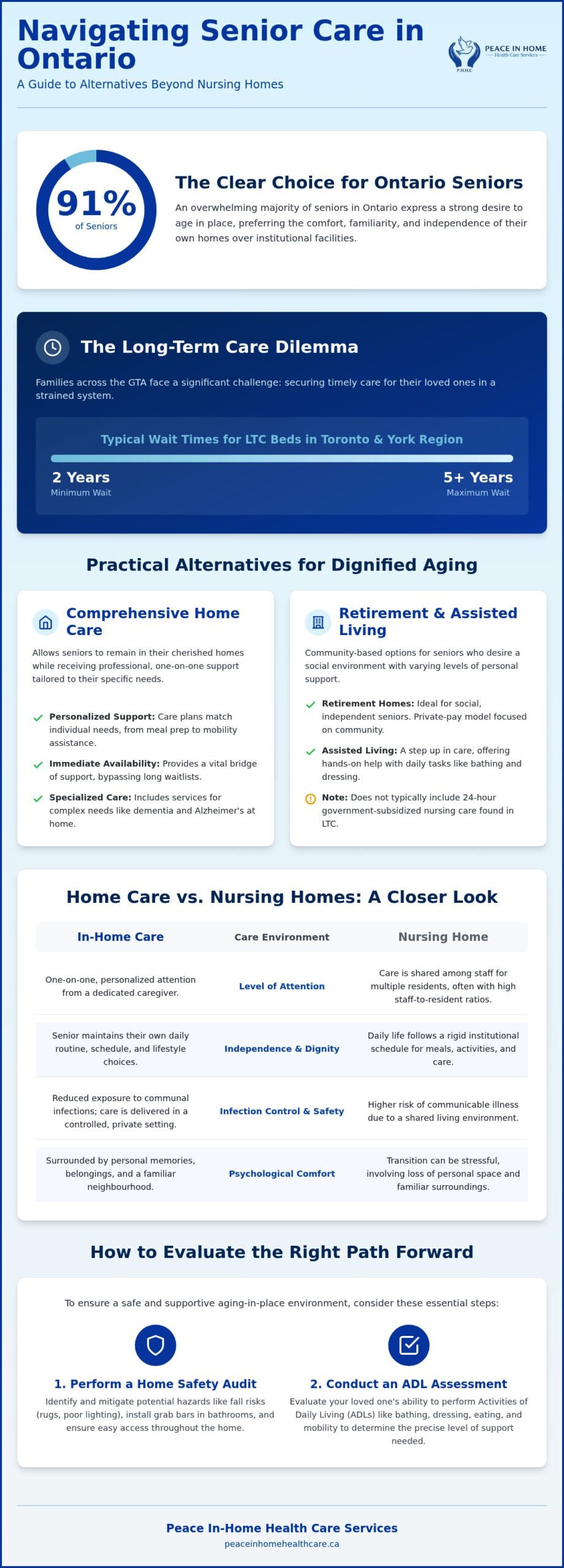
Did you know that 91% of Ontario seniors would prefer to stay in their own homes rather than move into a facility? Despite this overwhelming preference, many families across the GTA feel pressured to join waitlists for long-term care that often stretch between two and five years. It’s a stressful position to be in, but you don’t have to settle for institutional care when looking for alternatives to nursing homes for seniors. You deserve a solution that honours your parent’s wish for independence while ensuring their safety.
We understand the heavy weight of guilt and the fear that your loved one might not receive the attentive, personalized care they deserve in a crowded setting. You want them to age in place with dignity, but you also need the peace of mind that comes with professional support. This article will show you how to keep your parent comfortable at home while avoiding the stress of institutional long-term care. We’ll provide a clear roadmap of five local care options in Toronto and the surrounding areas, helping you realize a future where your family feels supported, secure, and confident in the quality of care provided.
Key Takeaways
- Understand why professional home care is a premier choice among alternatives to nursing homes for seniors, prioritizing one-on-one attention over institutional routines.
- Learn how to bypass the stress of Ontario’s multi-year long-term care waitlists by exploring immediate, flexible care options available across the GTA.
- Discover the essential steps for performing a home safety audit and an ADL assessment to ensure a secure and supportive aging-in-place environment.
- Identify the key differences in infection control and personalized safety that make a home setting a protective choice for your loved one.
- Explore how tailored support plans, including medication reminders and specialized dementia care, can help seniors maintain their dignity and independence.
The Nursing Home Dilemma: Why Ontario Families Are Seeking Alternatives
The decision to move a parent into a facility is rarely easy. It’s an emotional journey filled with guilt, uncertainty, and a deep desire to do what’s best. For many in Toronto, the conversation begins when a loved one’s safety starts to feel precarious. Yet, as families explore elderly care options, they often realize that institutional settings aren’t the only answer. In fact, 91% of Ontario seniors report they’d much rather stay in their own homes as they age. This preference has fuelled a massive shift toward finding viable alternatives to nursing homes for seniors that prioritize comfort and familiar surroundings.
The Reality of Long-Term Care Waitlists in the GTA
In 2026, the state of Long-Term Care (LTC) in Ontario remains a significant challenge. Families in Toronto and York Region frequently encounter waitlists that span two to five years. This crisis status for LTC beds means that even when a senior needs immediate help, a facility might not be ready for them. Many families find themselves forced into interim solutions that don’t feel quite right. Professional home care acts as a vital bridge during these times by:
- Providing immediate safety through mobility and transfer assistance.
- Offering specialized support for Alzheimer’s and dementia care at home.
- Allowing families to wait for their preferred facility without compromising on care quality.
Preserving Dignity and Personal Choice
Institutionalization can have a profound psychological impact. When a senior is moved into a facility, they often lose the colour and personality of a life they’ve built over decades. Their daily routine is suddenly dictated by a rigid schedule designed for the convenience of the institution rather than the individual. Choosing alternatives to nursing homes for seniors allows for a human-first approach. Personalized care plans focus on the specific needs of the individual, whether that’s help with meal preparation or specialized nursing services. It’s about maintaining a familiar lifestyle where the senior remains the author of their own day. The breaking point often arrives when mobility or memory issues make total independence unsafe. With the right professional support, that safety can be restored without sacrificing the dignity of one’s own front door.
5 Practical Alternatives to Nursing Homes for Seniors
Finding the right fit for a parent means looking beyond institutional walls. There are several alternatives to nursing homes for seniors that offer varying levels of support while keeping independence at the forefront. Whether your loved one needs a few hours of help each week or more intensive daily support, the goal is to find a solution that feels like home because it is home. These options range from professional medical support to creative living arrangements that bring families closer together.
Comprehensive Home Care: Professional Support in Your Own Living Room
Comprehensive home care is often the most popular choice for families in the GTA. This model allows seniors to stay in their familiar neighbourhoods while receiving one-on-one attention. It combines essential personal care assistance with skilled nursing care services for those with more complex health needs. Personal Support Workers (PSWs) become a reliable part of the daily routine, helping with everything from meal preparation to mobility. This tailored approach aligns with the Aging in Place Challenge program, which focuses on using support and innovation to help seniors live safely at home. If you’re exploring this path, our home care services for seniors Toronto guide offers a deep dive into structuring these supports effectively.
Retirement Homes vs. Assisted Living in Ontario
Many people use these terms interchangeably, but they offer different levels of care. In Ontario, retirement homes are private-pay residences regulated by the Retirement Homes Regulatory Authority (RHRA). They’re excellent for social seniors who want to trade lawn care for community events. Assisted living is a step up, providing more hands-on help with daily tasks like bathing or dressing. While these communities offer a vibrant social life, they don’t provide the 24-hour government-subsidized nursing found in long-term care homes. The cost typically covers a private suite, meals, and basic support, making it a predictable monthly expense for many families.
Beyond these traditional choices, other creative solutions are gaining traction in Toronto:
- Adult Day Programs: These provide socialization and professional supervision during work hours. In 2026, many local programmes cost around $31 per day, offering a cost-effective way to keep seniors engaged while giving family caregivers a necessary break.
- Co-housing and ‘Granny Flats’: Many GTA families are now building garden suites or laneway houses. These architectural solutions provide privacy for the senior while keeping them only a few steps away from family support.
- Respite Care: This is a strategic, short-term support system. It allows family caregivers to rest and recharge, knowing a professional is providing attentive care for their loved one for a few days or weeks.
If you’re feeling overwhelmed by these choices, you can always reach out to a care coordinator for a gentle conversation about which path might be best for your family’s unique situation.
Home Care vs. Nursing Homes: Safety, Cost, and Care
When comparing different care models, the most significant differentiator is the level of individual attention. In a traditional facility, a single staff member often manages the needs of several residents at once. This can lead to a “one-size-fits-all” approach to daily life. Conversely, professional home care provides a one-on-one caregiver-to-client ratio. This dedicated focus ensures that your loved one’s unique preferences, from the way they like their tea to the specific timing of their morning walk, are always respected. It’s this attentive relationship that makes home-based support one of the most effective alternatives to nursing homes for seniors.
Health safety and infection control have also become top priorities for GTA families over the past decade. Lessons learned from recent years show that a private home environment naturally limits exposure to community-spread illnesses. In a personal residence, you have total control over who enters and the sanitization standards maintained. This inherent safety, combined with the comfort of a familiar setting, often leads to better mental health outcomes and a more stable routine for seniors who might otherwise feel overwhelmed by the bustle of a large institution.
Medical Safety and Skilled Nursing at Home
Many families worry that staying at home means sacrificing medical oversight, but that isn’t the case. With skilled nursing care at home Toronto, seniors can manage complex conditions like diabetes, heart disease, or post-surgical recovery in their own living rooms. Personalized medication management systems replace the rigid “medication carts” used in facilities, reducing the risk of errors. Additionally, a professional caregiver can help implement fall prevention strategies by identifying and modifying hazards in the home, such as loose rugs or poor lighting, ensuring the environment remains a sanctuary rather than a risk.
Cost-Effectiveness for GTA Families
The financial side of care is often where misconceptions live. While retirement homes have a fixed monthly fee, they often include “hidden” costs like transition fees or charges for additional support services as needs change. Home care offers a more flexible financial model. Families can realize significant savings by scaling support hours based on actual, real-time needs. For example, you might start with a few hours of companionship and only increase to live-in support if the situation evolves. Utilizing respite care is another strategic way to manage costs. It provides professional relief for family caregivers, preventing burnout and ensuring the primary care bond remains strong and healthy without the immediate need for a permanent facility move.
How to Evaluate if an Alternative is Right for Your Loved One
Choosing between different alternatives to nursing homes for seniors requires a clear-eyed look at your loved one’s daily reality. It isn’t just about their medical needs; it’s about their environment and the people surrounding them. A thorough “Home Safety Audit” is the first step for families in Toronto, where older homes often feature steep stairs, narrow hallways, or high-threshold bathtubs that can become significant mobility obstacles. Simple modifications, like adding grab bars or improving lighting in hallways, can often make the difference between a safe home and a risky one.
You should also conduct a structured ADL (Activities of Daily Living) assessment. This involves observing whether your parent can still manage essential tasks like bathing, dressing, and eating without significant struggle. When cognitive health enters the picture, such as with a dementia diagnosis, you must evaluate if the home remains a safe sanctuary. Risks like wandering or forgetting to turn off the stove are critical factors that might necessitate more intensive, professional supervision to maintain their safety and dignity.
Finally, address the legal and financial foundations of care. Having a Power of Attorney (POA) for personal care and property in place is essential for any senior aging in Ontario. It provides a clear roadmap for their care funding and ensures their specific wishes are respected, even if their health changes. Organizing these documents early prevents high-stress decisions during a medical crisis.
Assessing the Level of Care Required
It’s vital to differentiate between social companionship and clinical support. Some seniors simply need a friendly face to help with meal preparation or light housekeeping, while others require specialized nursing for chronic conditions. Recognizing that personal care assistance for seniors is the missing piece can prevent a premature move to a facility. Respite care serves as an ideal trial run, allowing families to experience professional support on a short-term basis before making a permanent decision.
The Caregiver’s Mental Health Check
The health of the primary family caregiver is just as important as the senior’s well-being. Signs of burnout, such as persistent fatigue, irritability, or neglecting your own health, shouldn’t be ignored. Understanding how preventing caregiver burnout Toronto impacts the senior’s quality of life is the first step toward a sustainable solution. Building a “Care Team” that includes family members, professional PSWs, and nurses ensures that the weight of care is shared, allowing you to return to being a daughter or son rather than just a medical manager.
Dignified Aging with Peace In-Home Health Care Services
Peace In-Home Health Care Services has spent over 17 years acting as a trusted guide for families across the GTA. We understand that searching for alternatives to nursing homes for seniors is often born out of a deep desire to protect a parent’s dignity and independence. Our philosophy is rooted in a human-first approach; we prioritize the person, not just the patient. Whether your loved one requires gentle companionship or specialized skilled nursing care services, we design a path forward that feels like a natural extension of their existing life.
Our care plans are never generic because no two families are the same. We recognize that every senior has a unique rhythm and set of needs. For some, this means simple medication reminders and light housekeeping to keep the home running smoothly. For others, it involves 24/7 live-in care that provides constant security and mobility assistance. We hold specialized expertise in dementia and Alzheimer’s care at home. This ensures that those facing cognitive challenges can remain in a familiar, soothing environment rather than dealing with the disorientation often found in institutional settings.
Serving Our Communities from Oakville to Barrie
Our roots run deep across the Greater Toronto Area. We provide local expertise in neighbourhoods like Richmond Hill, Markham, and Scarborough, ensuring that our support is always close at hand. Our staff reflects the rich diversity of GTA families, which allows us to provide care that respects various cultural backgrounds and specific languages. We also offer errands and appointment accompaniment to major Toronto hospitals. This takes the logistical stress out of transportation and navigating complex medical campuses, providing a steady hand when it is needed most. This localized presence means we aren’t just a service provider; we’re your neighbours.
Your First Step Toward Peace of Mind
The transition to professional support should be a source of relief, not a cause for more anxiety. During our initial in-home assessment, we take the time to listen to your concerns and understand your loved one’s personality. We don’t just look at medical charts; we look at the individual. This allows us to match caregivers based on both specific skill sets and temperament, fostering a relationship built on trust and genuine connection. We want you to feel confident that your parent is being watched over by someone who truly cares for their well-being. It’s the first step toward a clear, low-stress path forward for your entire family.
Contact Peace In-Home Health Care for a compassionate consultation
Embracing a Safer Path to Aging in Place
Choosing a care model is about more than just medical support; it’s about honouring the life your parent has built. By exploring professional alternatives to nursing homes for seniors, you can bypass institutional waitlists while ensuring your loved one receives the one-on-one attention they deserve. Whether it’s through skilled nursing or tailored companionship, aging in place allows for a level of dignity and comfort that only a familiar home environment can provide.
Peace In-Home Health Care Services brings over 17 years of dedicated experience to families across Toronto, York, and Peel Regions. Our specialized Dementia and Alzheimer’s certified caregivers are here to act as your trusted guide, offering the security and peace of mind you’ve been searching for. You don’t have to navigate this complex transition alone.
We’re here to help you create a tailored plan that prioritizes your parent’s happiness and safety every single day.
Frequently Asked Questions
What are the best alternatives to nursing homes for seniors with dementia?
Professional dementia and Alzheimer’s care at home is often the most dignified choice. Staying in a familiar environment reduces the confusion and anxiety that often triggers difficult behaviours. Other effective alternatives to nursing homes for seniors include adult day programs and live-in care. These options provide constant supervision and specialized support while allowing your loved one to maintain their routine in a place where they feel secure.
Is home care cheaper than a nursing home in Ontario?
Home care is often more flexible and cost-effective than private retirement homes because you only pay for the hours required. While facility fees are fixed monthly expenses, home-based support can be scaled up or down based on your parent’s actual needs. This prevents you from paying for services they don’t yet use, while avoiding the hidden transition fees often associated with moving into an institutional setting.
How do I know if my parent is safe staying at home alone?
You can determine safety by observing their ability to manage Activities of Daily Living (ADLs). Watch for frequent falls, unmanaged medication, or a fridge full of expired food. A professional Home Safety Audit can identify risks like poor lighting or steep stairs. If these challenges become overwhelming, personal care assistance or mobility support can bridge the gap, ensuring they remain safe without leaving their home.
Can a senior receive skilled nursing care at home in Toronto?
Yes, seniors can absolutely receive skilled nursing care services in their private residences across Toronto. This includes management for complex medical conditions like heart disease or diabetes, as well as wound care and post-hospitalization recovery. Having a professional nurse come to the home ensures high-level medical oversight while maintaining the comfort and privacy of a personal living space, avoiding the stress of an institutional setting.
What is the difference between home care and a retirement home?
The main difference lies in the setting and the ratio of care. Home care provides one-on-one attention in the senior’s own house, focusing on personalized routines. A retirement home is a communal, private-pay residence where staff manage multiple residents at once. While retirement homes offer social activities, they don’t provide the same level of tailored, individual focus found in professional home-based alternatives to nursing homes for seniors.
How long are the waitlists for long-term care in the GTA?
In 2026, waitlists for government-subsidized long-term care beds in the GTA typically range from two to five years. This significant delay often leaves families in a crisis during a sudden medical decline. Professional home care serves as a reliable bridge during this waiting period, providing immediate safety and support while your family navigates the provincial healthcare system at a manageable pace.
Does the Ontario government provide any funding for home care alternatives?
Publicly funded support is accessible through Ontario Health atHome, though hours provided are based on assessed need and are often limited. Families can also explore the Ontario Seniors Care at Home Tax Credit, which is a refundable credit for eligible medical expenses for those aged 70 and older. Combining these public resources with private home care is a common strategy to ensure comprehensive, 24-hour support.
What should I look for when choosing a home care agency in Vaughan or Markham?
Prioritize agencies with deep local roots and at least 17 years of experience in the GTA. It’s essential they offer specialized support for conditions like Alzheimer’s and can match caregivers to your parent’s unique personality. Ensure they serve your specific neighbourhood, whether in Woodbridge or Unionville, and provide a clear, empathetic communication style that makes you feel like a partner in your loved one’s care.