

You walk into your mother’s kitchen in North York and notice the kettle has been left on a cold burner, or perhaps there is a new, unexplained dent in the car parked in the driveway. It’s a quiet, heavy realization that hits many of the eight million Canadians currently providing care for a loved one. You want to protect their independence, but the nagging worry about their safety keeps you up at night. Learning how to talk to elderly parents about getting a caregiver is one of the most difficult hurdles you’ll face, especially when you’re trying to balance your own career and family with their growing needs.
It’s completely normal to feel a mix of guilt and confusion when the line between natural aging and genuine safety risks begins to blur. You aren’t alone in wanting to preserve their dignity while ensuring they stay safe in the home they love. This guide will help you recognize the subtle physical and cognitive red flags that indicate it’s time for extra support. We’ll also provide a compassionate roadmap for starting that conversation without sparking an argument, helping you return to being a supportive son or daughter rather than just a worried coordinator.
Key Takeaways
- Identify subtle “kitchen and calendar” red flags, such as expired food or scorched pots, that signal a need for extra support at home.
- Learn the most effective strategies for how to talk to elderly parents about getting a caregiver by using “I” statements to reduce defensiveness.
- Differentiate between normal aging and safety risks by monitoring changes in personal hygiene and checking for unexplained bruising or frequent near-miss falls.
- Discover how tailored home care services in the GTA allow seniors to age in place while preserving their dignity and familiar daily routines.
- Transition from being an overwhelmed primary caregiver back to your natural role as a son or daughter by introducing professional support.
The Emotional Transition: Recognizing When Home Safety Changes
The transition from total independence to needing a helping hand rarely happens overnight. Instead, it’s a slow accumulation of small worries: a missed pill here, a bruise there, or a driveway in Markham that didn’t get cleared after a heavy snowfall. If you feel a knot of uncertainty in your stomach, you aren’t alone. Many families across the GTA struggle to define that tipping point where natural aging becomes a genuine safety risk. If you’re searching for how to talk to elderly parents about getting a caregiver, you likely already know that the current situation isn’t sustainable for your family’s well-being.
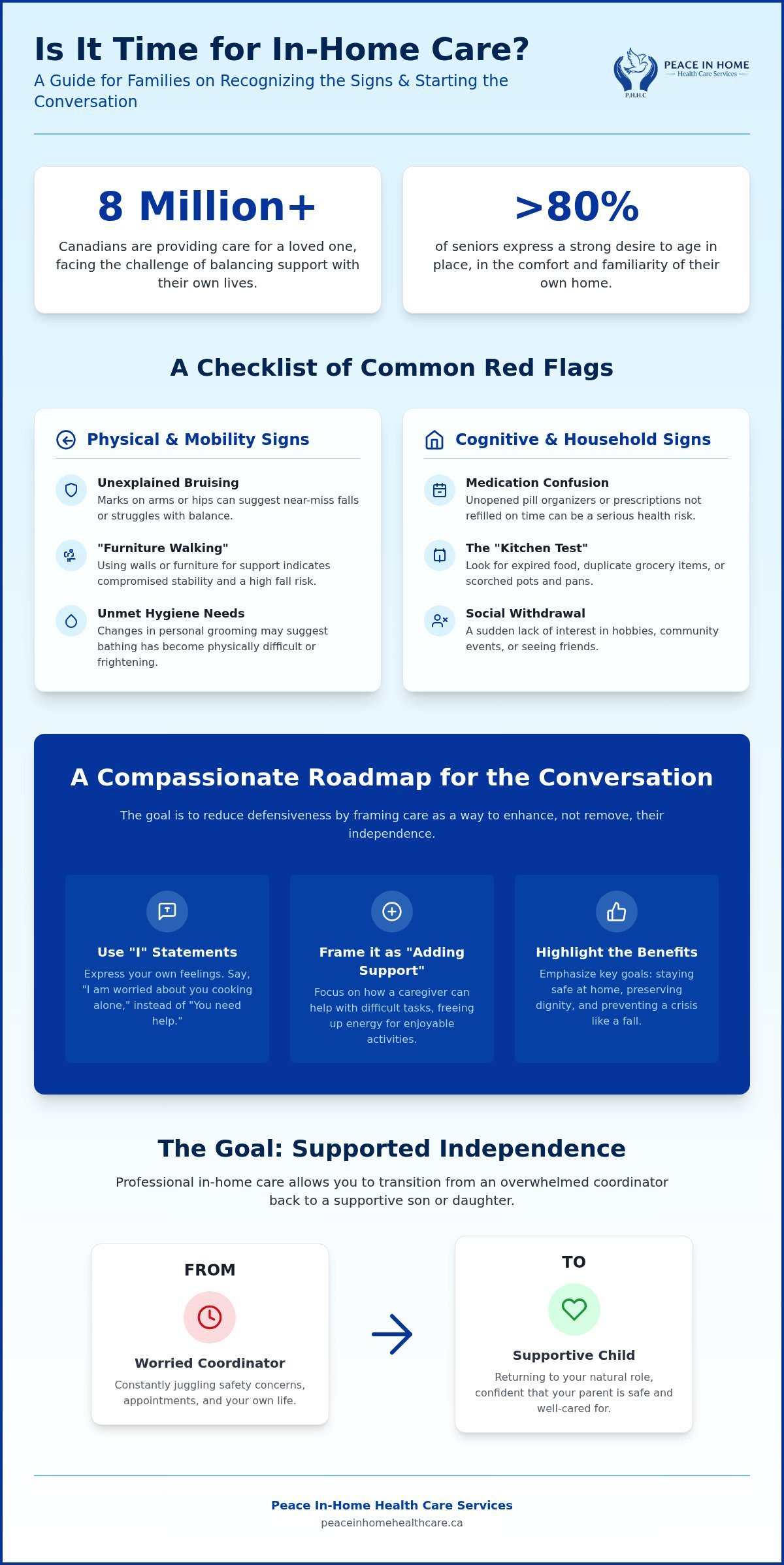
In Canada, more than 80% of seniors express a deep desire to age in place. The common fear among our elders is that admitting they need help is the first step toward leaving their home forever. In reality, introducing a professional caregiver is often the very thing that makes staying home possible. A caregiver acts as a partner in maintaining a dignified, familiar lifestyle, ensuring that safety concerns don’t force a sudden, stressful move to a long-term care facility. They provide the support needed to keep the front door key in your parent’s hand for as long as possible.
Why Families Often Wait Too Long
It’s easy to normalize a parent’s decline because we see them so often. We tell ourselves that Mom’s scorched pots are just a sign of being distracted, or that Dad’s messy house is simply a change in priorities. However, overlooking these red flags often leads to a preventable crisis, such as a fall during a slick Ontario winter. This delay doesn’t just affect the senior; it takes a heavy toll on the adult child. Balancing a career in downtown Toronto with constant worry can lead to chronic stress. Understanding the importance of preventing caregiver burnout Toronto is vital for your own health and for maintaining a loving relationship with your parent.
Independence vs. Safety: Finding the Balance
Finding the middle ground between autonomy and safety is a central theme in the study of aging. Your parent’s desire for independence is deeply tied to their sense of self, but when that desire leads to missed medical appointments or poor nutrition, safety must take priority. Learning how to talk to elderly parents about getting a caregiver involves reframing the conversation from “taking away” to “adding support.” Professional care provides “supported independence.” A caregiver handles the heavy lifting, such as mobility assistance or meal preparation, which allows your parent to focus their energy on the activities they still enjoy. Often, a professional third party can navigate these changes with less friction than a family member, preserving the peace in your home.
Physical and Cognitive Red Flags: A Checklist for Families
While the emotional shift discussed earlier is often subtle, physical changes provide tangible evidence that a parent’s needs are changing. You might notice your mother, who was always meticulous about her appearance, wearing the same tea-stained blouse for three days in a row. Or perhaps your father has lost a noticeable amount of weight because meal preparation has become too exhausting. These aren’t just “part of getting older”; they’re signals that the daily routine is becoming unmanageable. Identifying these signs early allows you to intervene before a minor struggle turns into a household crisis.
Keep a watchful eye for these common red flags during your next visit:
- Unexplained bruising: Marks on the arms or hips often suggest a near-miss fall or a struggle with balance.
- Medication confusion: Pill organizers that are still full or prescriptions that haven’t been refilled on time.
- Social withdrawal: A sudden lack of interest in community events, church, or long-held hobbies.
- Unmet hygiene needs: Strong body odour or unkempt hair that suggests bathing has become difficult or frightening.
Mobility and Physical Safety Concerns
Furniture walking is one of the most significant warning signs of a pending fall. If you see your parent gripping the edge of the dining table or using the hallway walls for balance as they move through the house, their stability is compromised. Stairs and high-sided bathtubs become major hazards, especially during the long, icy Ontario winters. Accessing personal care assistance for seniors provides the physical support needed to prevent hospitalizations, ensuring they stay mobile and safe in their own environment.
Early Signs of Cognitive Decline
Cognitive decline often hides behind “senior moments,” but there are ways to distinguish between the two. Use the repetition test: if your parent asks the same question three times in a single conversation, it may indicate more than just forgetfulness. Safety risks like leaving the stove on or becoming disoriented in a familiar neighbourhood, such as North York or Etobicoke, suggest that staying alone is no longer a safe option. Understanding these specific signs gives you the concrete evidence you need when deciding how to talk to elderly parents about getting a caregiver. It’s easier to have a productive conversation when you can focus on safety and facts rather than feelings alone. If you’ve noticed these changes, you can speak with a care coordinator to learn about tailored support options.
The Kitchen and Calendar Test: Subtle Signs of Decline
The kitchen often tells a story that your parents might try to hide. While physical red flags are often visible, environmental signs are more discreet. Open the refrigerator during your next visit to their home in Vaughan or Markham. You might find three identical cartons of milk or jars of jam tucked behind yogurt that expired weeks ago. This repetition suggests they’re forgetting what they already have, while the expired items show a decline in the attention to detail required for food safety. These subtle shifts are the building blocks of a larger conversation about safety. Knowing these details provides the objective proof you need when deciding how to talk to elderly parents about getting a caregiver.
During your visit, look for these specific environmental cues:
- The state of the appliances: Scorched pots or a thick layer of grease on the backsplash indicate that cooking has become a distraction or a burden.
- The mail pile: Piles of unopened letters or aggressive “final notice” envelopes on the counter suggest administrative overwhelm.
- Housekeeping standards: A home that is noticeably less tidy than usual, with dusty surfaces or laundry that hasn’t been moved in days.
- The calendar: Blank pages where social engagements used to be, or a series of crossed-out appointments that were missed or cancelled.
If you notice these changes, it’s often because the physical or mental load of maintaining a household is simply too much. It isn’t a failure on their part; it’s a sign that the environment they once managed with ease is now working against them.
Nutritional Health and Dehydration
Many seniors stop cooking for themselves because they fear the stove or feel too fatigued to stand for long periods. When a parent switches to a diet of tea and toast, their nutritional health suffers. Poor nutrition and dehydration are directly linked to increased confusion and a higher risk of falls. Professional meal preparation services ensure your loved one receives consistent, healthy meals, which can significantly improve their energy levels and mental clarity. It’s about more than just food; it’s about maintaining the fuel their body needs to stay strong.
Financial and Administrative Red Flags
Managing a household budget requires complex cognitive steps that can become overwhelming as we age. You might notice unusual spending patterns or evidence of phone scams that target vulnerable seniors in the GTA. A companion caregiver often acts as a second set of eyes, noticing these paperwork stresses before they become a financial crisis. By addressing these administrative hurdles early, you help protect your parent’s hard-earned security. This proactive approach keeps their finances stable and reduces the anxiety that comes with falling behind on bills.
How to Start the Conversation Without Overstepping
Starting the conversation is often the most daunting step for families in the GTA. It requires a delicate balance of honesty and deep respect for your parent’s history of independence. When you are learning how to talk to elderly parents about getting a caregiver, the first rule is to choose the right moment. Avoid high-stress situations like family holidays or immediate medical crises. Instead, find a quiet, neutral afternoon when everyone is well-rested and the house is calm. Learning how to talk to elderly parents about getting a caregiver is a process of building trust, not winning an argument.
“I” statements are your most powerful tool. Using “you” often sounds accusatory and triggers immediate defensiveness. For example, saying “You aren’t eating enough” feels like a critique of their ability to care for themselves. Contrast that with “I feel concerned when I see the fridge is empty because I want you to stay strong and healthy.” This shift in language keeps the focus on your love and concern rather than their perceived failings. It’s equally important to listen more than you speak. Acknowledge their fears about privacy and the loss of control over their own space, as these feelings are often the root of their resistance. Frame the support as a way to extend their time at home, not as a step toward leaving it.
Scripts for a Dignified Discussion
If a recent fall has occurred, try a gentle opening: “I felt so much anxiety when you tripped in the kitchen last week, and I want to make sure we have a supportive plan so you can keep living in this home safely.” For parents who value their time, frame the caregiver as a personal assistant for chores they dislike. You could suggest, “What if we brought in someone to handle the heavy laundry and meal prep so you have more energy for your bridge club?” When they object to a stranger in the house, acknowledge the loss of privacy. “I understand it feels intrusive to have a new person here. Why don’t we try a two-week trial period to see if it actually makes your daily routine feel more peaceful?”
Involving the Professionals Early
Sometimes, the parent-child power struggle is too deep for a simple chat. Bringing in a professional for a home safety assessment provides a neutral, expert perspective that removes the emotional weight from the family. A third-party guide can identify specific needs without the baggage that often accompanies long-standing family dynamics. This shifts the focus toward a collective goal of safety. It allows you to return to your role as a son or daughter while the professional helps organize the necessary support. Ultimately, this transparency leads to a sense of security and peace of mind for the entire family.
In-Home Care: Preserving Independence in the GTA
Once you’ve navigated the initial hurdle of how to talk to elderly parents about getting a caregiver, the next step is finding a partner who respects their home as much as you do. In the Greater Toronto Area, home care isn’t a one-size-fits-all service. A dignified approach means creating a personalized care plan that adapts to your parent’s unique routine, personality, and even their cultural background. Whether they live in a high-rise in North York or a quiet street in Markham, the goal is to provide a reliable presence that feels like a natural extension of the family rather than a clinical intrusion.
The transition works best when the caregiver is matched to the senior’s specific temperament. This careful pairing helps overcome the “stranger in the house” anxiety by building a genuine relationship based on trust and attentive support. Moving from recognizing the signs of decline to booking a consultation is a proactive way to ensure your loved one remains the master of their own environment while receiving the help they need to stay safe.
Tailored Support for Every Stage
Support needs often evolve over time, and a flexible care plan should grow with them. For many, companionship care and light housekeeping provide the social connection and order needed to stay happy at home. As physical or cognitive needs increase, personal care assistance or specialized dementia and Alzheimer’s care become essential for daily safety. For families who are already providing significant support, respite care offers a vital opportunity to rest and prevent burnout. In more complex situations, accessing skilled nursing care at home Toronto ensures that medical requirements are met by professionals in a familiar, comfortable setting.
Peace In-Home Health Care Services: Your Partner in the GTA
Peace In-Home Health Care Services has spent over 17 years serving families across the GTA, including Toronto, Vaughan, Markham, Richmondhill, and Mississauga. Our human-first approach prioritizes the dignity of every individual we serve, ensuring they feel empowered rather than diminished by the help they receive. We’re a traditional, high-integrity provider that values consistency and patience above all else. If you’ve spent weeks wondering how to talk to elderly parents about getting a caregiver, remember that you don’t have to navigate this transition alone. We stand alongside you as a trusted guide, offering a steady hand to help your parent age in place with the respect they deserve.
Take the First Step Toward Peace of Mind
Recognizing that a parent needs extra support isn’t a sign of failure for you or them. It’s a proactive step toward ensuring their safety while preserving the dignity of their daily routine. By identifying subtle red flags in their environment and physical health, you can address safety risks before they lead to a preventable crisis. Learning how to talk to elderly parents about getting a caregiver is the bridge that allows you to transition from being an overwhelmed family member back to a supportive son or daughter.
Peace In-Home Health Care Services brings over 17 years of experience to families across Toronto, Vaughan, Markham, and Mississauga. Our human-first approach ensures that every care plan is tailored to the individual, prioritizing their comfort and independence at every stage of the journey.
You don’t have to navigate this transition on your own. Expert support is here to help your loved one age in place with the respect and security they deserve.
Frequently Asked Questions
What is the first sign that a senior needs help at home?
Usually, the first sign is a subtle change in baseline behaviour or their environment. This might look like a sudden lack of interest in personal grooming or a kitchen that is noticeably less tidy than usual. While one scorched pot might be an accident, a pattern of neglected household tasks or unexplained weight loss often signals that the physical or mental load of daily living has become unmanageable.
How do I convince my parent to accept a caregiver if they are resistant?
Focus on the concept of supported independence rather than taking away their autonomy. When learning how to talk to elderly parents about getting a caregiver, use “I” statements to express your own worry rather than critiquing their abilities. Suggesting a short trial period or framing the caregiver as a personal assistant for difficult chores can lower their defences and help them see the service as a way to stay home longer.
Is home care safer than a nursing home for a parent who falls often?
Home care can be exceptionally safe because it provides one-on-one attention that is often unavailable in institutional settings. In the GTA, professional caregivers provide mobility and transfer assistance tailored to the specific layout of your parent’s home. This personalized focus reduces the risk of falls by identifying environmental hazards and providing steady physical support during high-risk activities like bathing or navigating stairs.
What is the difference between a companion and a personal support worker (PSW)?
A companion focuses on social engagement, light housekeeping, and errands to prevent isolation. In contrast, a Personal Support Worker (PSW) provides hands-on personal care assistance. This includes help with bathing, dressing, toileting, and more complex mobility needs. Both roles are vital for aging in place, but a PSW is necessary when your parent requires direct physical help with their daily routine to stay safe.
Can a caregiver help my parent with their medication and doctor appointments?
Yes, caregivers provide essential medication reminders to ensure prescriptions are taken accurately and on time. They also offer errands and appointment accompaniment, which is particularly helpful for seniors in Toronto who find navigating traffic or transit stressful. A caregiver can stay with your parent during the visit, take notes for the family, and ensure they return home safely and comfortably after the appointment concludes.
How much does home care typically cost in the Toronto area?
In Ontario, the average cost for a private personal support worker ranges between C$35 and C$43 per hour as of late 2026. While publicly funded home care is available through Ontario Health atHome, many families supplement these hours with private care to ensure consistent support. Eligible seniors aged 70 and over may also use the Ontario Seniors Care at Home Tax Credit to help offset these expenses.
What should I do if my parent is showing signs of dementia but refuses to see a doctor?
Avoid arguing about the diagnosis and focus on a specific, non-threatening symptom like sleep issues or fatigue. You can also involve a trusted third party, such as a long-time family physician or a professional care coordinator, to suggest a routine check-up. Understanding how to talk to elderly parents about getting a caregiver in these situations requires patience and a focus on keeping them safe while you gently seek a professional assessment.
Can we hire a caregiver for just a few hours a week to start?
Absolutely, starting with just a few hours a week is an excellent way to introduce help without overwhelming your parent. This slow start approach allows them to build a relationship with the caregiver through companionship or light housekeeping. As they become more comfortable with the presence of a professional in their home, the level of support can be gradually increased to meet their changing needs over time.