

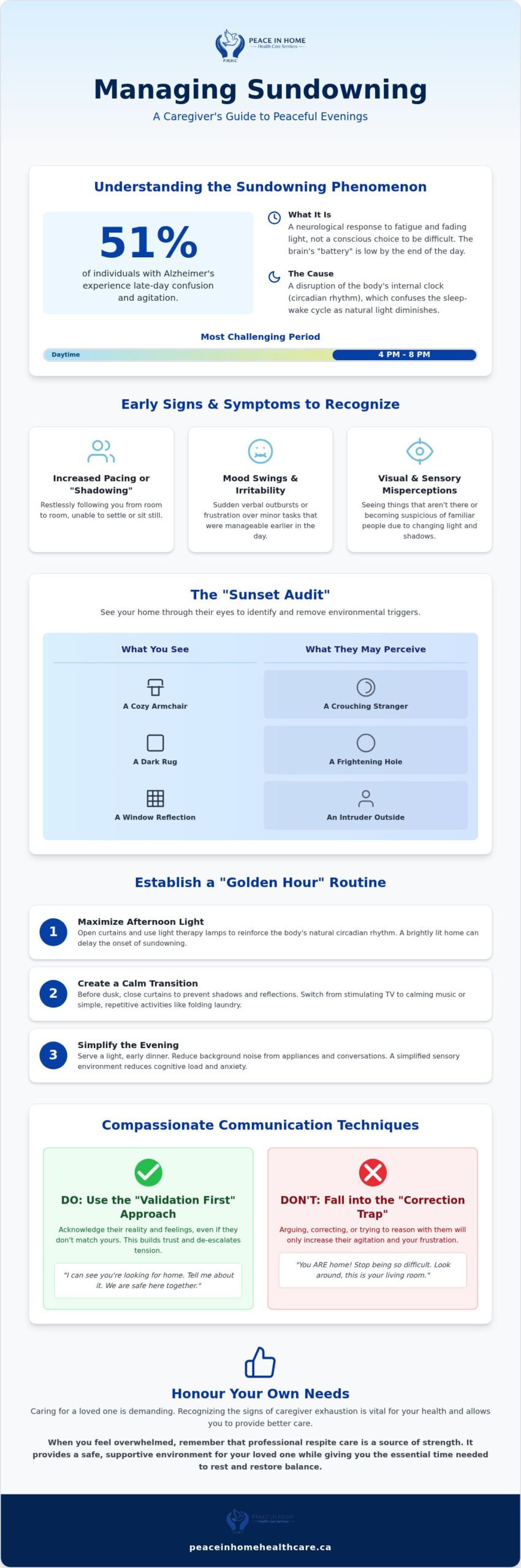
The clock strikes 4:00 PM, and you feel a familiar tightening in your chest as the shadows begin to lengthen across the floor. You watch your mother become increasingly restless, her gentle questions turning into frantic demands to “go home” even though she is sitting in her own living room. You aren’t alone; a 2026 study found that over 51% of Alzheimer’s patients experience these distressing late-day symptoms. Learning how to manage sundowning in dementia patients at home isn’t about finding a medical cure, but about curating a personalized environment that honours their dignity.
It’s natural to feel exhausted or guilty when the sunset brings tension instead of rest. You want the best for your loved one, but the fear of wandering or aggression can be emotionally draining. This guide provides the practical, empathetic strategies you need to reduce confusion and restore peace to your evenings. We will explore environmental adjustments, de-escalation techniques, and how to recognize when professional respite care can support your family’s well-being while ensuring your loved one remains safe and supported.
Key Takeaways
- Recognize how disruptions to the body’s internal clock trigger late-day confusion and learn to spot the early signs of evening restlessness.
- Discover practical strategies for how to manage sundowning in dementia patients at home, including a “sunset audit” to identify and remove environmental triggers.
- Establish a “Golden Hour” routine that uses light therapy and calming activities to create a soothing transition as the day ends.
- Master the “Validation First” approach to de-escalate tension by acknowledging your loved one’s feelings instead of falling into the “correction trap.”
- Identify the signs of caregiver exhaustion and learn how professional respite care can help restore balance and safety to your family home.
Understanding Sundowning: Why Late-Day Confusion Happens
Sundowning isn’t just a difficult time of day; it’s a specific cluster of behaviours that typically emerge as the afternoon light begins to fade. For many families, this period between 4:00 PM and 8:00 PM is the most challenging part of the caregiving journey. You might see your loved one become suddenly anxious, aggressive, or prone to pacing. To understand What is Sundowning, we must look at it as a biological shift. It’s not a choice your loved one is making to be difficult. Instead, it’s a neurological reaction to a brain that is simply exhausted from trying to make sense of the world all day.
The primary driver of this confusion is the disruption of the circadian rhythm. This is the body’s internal clock that tells us when to wake and when to sleep. In a brain affected by dementia, this clock often becomes “un-synced.” As the sun goes down, the brain struggles to process the transition. When you are looking for ways on how to manage sundowning in dementia patients at home, recognizing this biological reality is the first step toward empathy. By the time evening arrives, cognitive fatigue has set in. The brain’s “battery” is low, making it nearly impossible for them to filter out noise or stay calm in low-light environments.
Common Symptoms to Recognize
Every individual experiences this differently, but certain patterns are very common. Recognizing these early signs helps you intervene before a situation escalates. Watch for these changes as the afternoon progresses:
- Increased pacing or “shadowing”: Your loved one may follow you from room to room, unable to settle or sit down.
- Mood swings and irritability: A gentle afternoon can turn into a period of verbal outbursts or sudden frustration over minor tasks.
- Visual hallucinations: As the light changes, they might see things that aren’t there or become suspicious of family members they usually trust.
The Biological Connection to Light
The lack of natural sunlight late in the day sends a confusing signal to the brain’s “master clock.” When the environment grows dim, it doesn’t just make things harder to see; it creates frightening distortions. Shadows in the corner of a room can look like intruders. Reflections in a window might seem like someone is watching from outside. Sundowning is a neurological response to fading light and rising fatigue. By understanding how to manage sundowning in dementia patients at home through environmental control, you can help soothe these biological triggers before they cause distress. Keeping the home brightly lit during the afternoon can often delay the onset of these symptoms.
Identifying and Eliminating Common Triggers in Your Home
To truly understand how to manage sundowning in dementia patients at home, you must first see the world through their eyes. A powerful tool for any family caregiver is the “Sunset Audit.” At approximately 4:00 PM, walk through your living space and observe every corner. What looks like a cozy armchair to you might look like a crouching stranger in the dimming light. Dark rugs can appear as deep holes, and shadows stretching across the hallway can become sources of intense fear. Identifying these visual distortions allows you to make simple changes that prevent a crisis before it starts.
Beyond the visual, consider the “clutter noise” that fills many Canadian households during the late afternoon. The combination of a television news broadcast, the hum of a dishwasher, and a lively family conversation can be physically painful for someone with dementia. Their brain can no longer filter out background sounds, leading to sensory overload. Research from the Mayo Clinic highlights several factors that may worsen late-day confusion, including fatigue and low-light environments. By simplifying the sensory input in your home as the day ends, you create a safer, more predictable environment.
The Impact of the Physical Environment
Small environmental adjustments often yield the most significant results. Mirrors are a common trigger; your loved one may not recognize their own reflection and believe a stranger is standing in the room. Closing the drapes before the sun actually sets prevents this “stranger” from appearing in the window glass. Additionally, keep an eye on the thermostat. Seniors often struggle to regulate body temperature, and a room that is slightly too cold can trigger physical restlessness that mirrors agitation. If you find these environmental shifts difficult to maintain alone, you might consider speaking with a care coordinator to discuss a professional home environment assessment.
Internal Triggers: Pain and Fatigue
Sometimes the trigger isn’t in the room, but inside the person. Hunger, thirst, or a full bladder are common sources of distress that a person with dementia may not be able to articulate. Instead of asking for a glass of water, they may pace or become irritable. Sudden behavioural changes can also signal a physical issue, such as a urinary tract infection (UTI), which often presents as increased confusion in seniors. Managing late-afternoon caffeine and sugar intake is also essential to prevent energy crashes. Finally, don’t overlook the “boredom trigger.” If your loved one has been inactive all morning, they may have pent-up energy that manifests as evening agitation. Gentle engagement throughout the day is a key part of how to manage sundowning in dementia patients at home effectively.
Creating a Calming Evening Routine to Minimize Agitation
Establishing a reliable structure is one of the most effective ways to lower the emotional temperature in your home as the day ends. When a person with dementia can predict what comes next, their brain doesn’t have to work as hard to interpret the environment, which significantly reduces the risk of a “fight or flight” response. A proactive approach is the cornerstone of how to manage sundowning in dementia patients at home. Instead of waiting for restlessness to begin, we recommend establishing a “Golden Hour” routine that starts approximately two hours before your loved one’s typical symptoms usually emerge. If agitation typically begins at 5:00 PM, your calming activities should be well underway by 3:00 PM.
Light therapy plays a vital role in this transition. During the morning and early afternoon, keep your home as brightly lit as possible by opening curtains and using high-wattage bulbs. This helps reinforce the body’s internal clock, signaling that it’s time to be alert. As the afternoon progresses, you should shift the energy of the household. Schedule high-intensity tasks like bathing, doctor appointments, or exercise for the morning hours. By the time the “Golden Hour” arrives, the focus should shift entirely to low-stimulation activities that honour their need for quiet and security.
The Power of Predictability
Consistency is a form of kindness for a brain struggling with memory loss. Maintaining the same meal times and bedtimes, even on weekends, provides a sense of rhythm that anchors the day. You can support this by using visual cues like a large, digital clock that clearly states the day and time, or a simple calendar that outlines the evening’s flow. Many families find that activities for dementia patients at home, such as folding towels or sorting familiar items, can be adapted for the late afternoon to provide a gentle sense of purpose without causing overstimulation.
Sensory Soothing Techniques
When the world feels confusing, sensory comfort can bridge the gap where words fail. Comfort objects, such as a soft weighted blanket or a familiar photo album, offer tactile reassurance that can ground a restless senior. If your loved one becomes resistant to guidance, using a “hand-under-hand” approach can feel less controlling and more supportive. We also recommend the use of soft, lyric-free music to reduce background noise anxiety and create a peaceful auditory environment. Incorporating gentle aromatherapy, such as lavender or vanilla, can further signal to the brain that the day is winding down and it’s time to rest. These small, personalized touches are key when learning how to manage sundowning in dementia patients at home with dignity and grace.
Compassionate Communication: Handling Aggression and Anxiety
When the shadows lengthen, logic often takes a backseat to emotion. For a family caregiver, learning how to manage sundowning in dementia patients at home requires a fundamental shift in how you speak and listen. It’s no longer about the accuracy of the conversation, but the comfort it provides. If your loved one is insistently asking to “go home” while sitting in their own living room, a factual correction will only increase their panic. Instead, adopt a “Validation First” approach. Acknowledge the underlying feeling by saying, “You feel like you’re in an unfamiliar place, and that’s scary. I’m right here with you.”
Avoiding the “Correction Trap” is essential for maintaining peace in the evening. Arguing about what is real or what time it is triggers a defensive response in a brain already struggling with sensory overload. Use short, simple sentences and keep your voice calm and low-pitched. If the tension continues to rise, practice redirection. Gently suggest moving to a different room or ask for help with a simple, rhythmic task like folding towels. This shifts their focus away from the source of anxiety and provides a sense of quiet accomplishment without the pressure of complex decision making.
De-escalation Strategies for Outbursts
Sometimes, despite your best efforts, a verbal or physical outburst occurs. In these moments, give the patient physical space while staying close enough to ensure they are safe from falls or wandering. Using “I” statements can help express your own needs without sounding like you are blaming them. For example, “I’m finding it hard to hear you when your voice is loud; let’s try to speak softly together.” In cases of extreme distress, “therapeutic fibbing” can be a kind tool to reduce immediate panic. If they are frantic about a work task from thirty years ago, tell them it has been taken care of for the night so they can finally rest.
Preserving Dignity During Confusion
Maintaining dignity is the heart of compassionate care. Always try to stay at eye level and maintain gentle eye contact. This simple physical adjustment reduces the feeling that they are being “managed” or talked down to. Remember that a sharp “no” from your loved one often translates to “I am scared” or “I am tired.” By looking past the words to the emotion, you can respond with the patience they deserve. This philosophy of respect is exactly how personal care assistance for seniors is delivered by professionals who understand the complexities of dementia and the importance of preserving the individual’s sense of self.
Professional Support and Respite Care in Toronto: Finding Peace
Caring for a loved one with dementia is a deeply personal journey, but when the shadows lengthen each day, the emotional and physical toll can become overwhelming. Recognizing the signs of caregiver burnout is not a failure; it’s a vital step in preserving the health of your entire family. When sundowning behaviours like wandering or intense agitation become a safety risk, you may find yourself wondering how to manage sundowning in dementia patients at home without sacrificing your own well-being. This is where respite care Toronto families trust becomes a necessary tool for preservation, allowing you to step back and recharge while your loved one remains in a familiar, dignified setting.
Professional dementia caregivers bring specialized training to the home, identifying subtle triggers that might go unnoticed during a busy afternoon. For many families, the nights are the hardest part of the experience. Exploring overnight respite care for dementia patients ensures that your household can sleep safely, knowing a compassionate expert is awake and attentive to your loved one’s needs. This professional presence doesn’t just manage symptoms; it restores a sense of security to the home environment.
Tailored Care Plans in the GTA
At Peace In-Home Health Care Services, we develop specific evening protocols tailored to the unique needs of families in Vaughan, Markham, and throughout Toronto. Having a Personal Support Worker (PSW) present during the critical 4:00 PM to 8:00 PM transition period can change the entire atmosphere of your home. They can implement the calming routines we’ve discussed, such as managing light levels and providing gentle, rhythmic redirection. Transitioning to professional help is often met with guilt, but it’s helpful to frame this as “extra support” for your loved one. It’s a gift of consistency for them and a breath of air for you, ensuring that the quality of your relationship isn’t lost to the exhaustion of late-day confusion.
Accessing Local Resources
Local resources like the Alzheimer Society of Toronto provide excellent community support and education, but for more complex medical needs, you may need to integrate skilled nursing care at home Toronto providers offer. Whether you need a few hours of companionship or comprehensive nursing support, a personalized plan is the best way to determine how to manage sundowning in dementia patients at home effectively. Contact Peace In-Home Health Care Services today for a personalized consultation on navigating these complex transitions with confidence and peace of mind.
Restoring Peace and Safety to Your Evenings
Understanding that sundowning is a biological response rather than a personal choice allows you to respond with the patience your loved one deserves. By performing a home audit to remove environmental triggers and establishing a predictable evening routine, you can significantly lower the emotional temperature of your household. You now have the foundational tools for how to manage sundowning in dementia patients at home, focusing on validation and sensory comfort to preserve dignity during difficult hours.
At Peace In-Home Health Care Services, we’ve spent over 17 years supporting families across the GTA. Our caregivers receive specialized Dementia and Alzheimer’s training to handle late-day agitation with expert care. Whether you need flexible respite support during the afternoon transition or overnight assistance to ensure everyone sleeps safely, we’re here to be your trusted guide and partner.
You don’t have to navigate these complex transitions alone. With the right support and tailored strategies, it’s possible to reclaim a sense of calm and security for your family and your home.
Frequently Asked Questions
Is sundowning a sign that dementia is getting worse?
Sundowning is generally associated with the middle and late stages of dementia, but its presence alone doesn’t mean the condition has suddenly worsened. It is a biological response to fatigue and fading light rather than a marker of rapid decline. If these symptoms appear suddenly or with new intensity, it is wise to rule out underlying physical issues like a urinary tract infection or uncontrolled pain.
Can certain medications help with sundowning symptoms?
Medications can sometimes assist, but they are typically considered after non-drug strategies have been exhausted. Physicians in Ontario may suggest melatonin to regulate the sleep-wake cycle or low-dose anti-anxiety medications for severe agitation. It’s essential to consult with a medical professional to ensure any prescription doesn’t increase fall risks or cause further confusion for your loved one during the night.
How long does a typical sundowning episode last?
A typical episode usually begins in the late afternoon and can last for several hours until the person falls asleep. For many families in the GTA, this window occurs between 4:00 PM and 8:00 PM. While the intensity varies, the restlessness often subsides once the individual feels safe and settled in a dark, quiet sleeping environment that reinforces their natural circadian rhythm.
Why does my loved one only get aggressive with me and not others?
It is common for dementia patients to direct their frustration toward their primary caregiver because that person represents their “safe harbour.” They feel comfortable enough to release the stress they’ve been suppressing all day. While this feels personal and hurtful, it is actually a sign of the deep bond and trust they have in you during their most vulnerable and confusing moments.
What should I do if my loved one tries to wander out of the house at night?
Immediate safety is the priority, so installing door alarms and using specialized locks can provide essential protection. If wandering becomes a frequent nighttime challenge, it may be time to consider professional support. Learning how to manage sundowning in dementia patients at home often involves bringing in overnight respite care to ensure your loved one stays safe while you get the rest you need.
Are there specific foods that can worsen late-day confusion?
High levels of caffeine and refined sugars in the afternoon can lead to energy crashes that worsen evening irritability. Large, heavy meals late in the day can also cause physical discomfort that prevents restful sleep. Instead, offer a light, protein-rich snack in the early evening and ensure they remain well-hydrated throughout the morning to prevent thirst-related agitation as the sun sets.
How can I explain sundowning to other family members or children?
You can describe it as a “tired brain” that has lost its ability to tell the difference between day and night. For children, explaining that their grandparent’s internal clock is broken can help them understand the sudden mood changes without feeling frightened. Emphasize that the behaviour is part of the illness and not a reflection of how the person feels about the family.
When is sundowning a medical emergency that requires a doctor?
Sundowning becomes a medical emergency if the behaviour changes overnight or if the person becomes a danger to themselves or others. A sudden spike in confusion often signals a physical infection or a reaction to a new medication. If you cannot keep the environment safe or if the patient is experiencing extreme physical distress, contact your healthcare provider or local Toronto emergency services immediately.