

Imagine sitting at your desk in North York or commuting on the GO Train, constantly checking your phone because you’re worried your father hasn’t eaten or might’ve tripped. It’s a heavy emotional weight to carry, especially when you want him to stay in the family home he loves. You’ve likely asked yourself, what does a companion caregiver do to bridge that gap? This role is about much more than just supervision; it’s a personalized partnership that focuses on social engagement and the small, daily tasks that keep a senior’s spirit and independence intact.
We know that the guilt of being unable to visit every day is painful, and the fear of a missed medication or a lonely afternoon keeps you up at night. You deserve the reassurance that your parent is safe and truly cared for. This guide will help you discover the essential duties, life-changing benefits, and practical differences of companion care. We’ll explore how these tailored services help Toronto seniors age safely and happily at home while providing your family with the lasting peace of mind you need.
Key Takeaways
- Understand how non-medical support preserves a senior’s independence and provides the vital emotional connection they need to thrive at home.
- Discover what does a companion caregiver do to manage daily household tasks and offer cognitive stimulation through engaging conversation and activities.
- Clearly distinguish between “hands-off” companionship and “hands-on” personal care to ensure your family chooses the right level of tailored assistance.
- Learn about the significant health benefits of professional companionship, including a reduced risk of social isolation and cognitive decline.
- Find out how 17+ years of local expertise in the Greater Toronto Area helps families transition from constant worry to lasting peace of mind.
The Role of a Companion Caregiver: More Than Just a Helping Hand
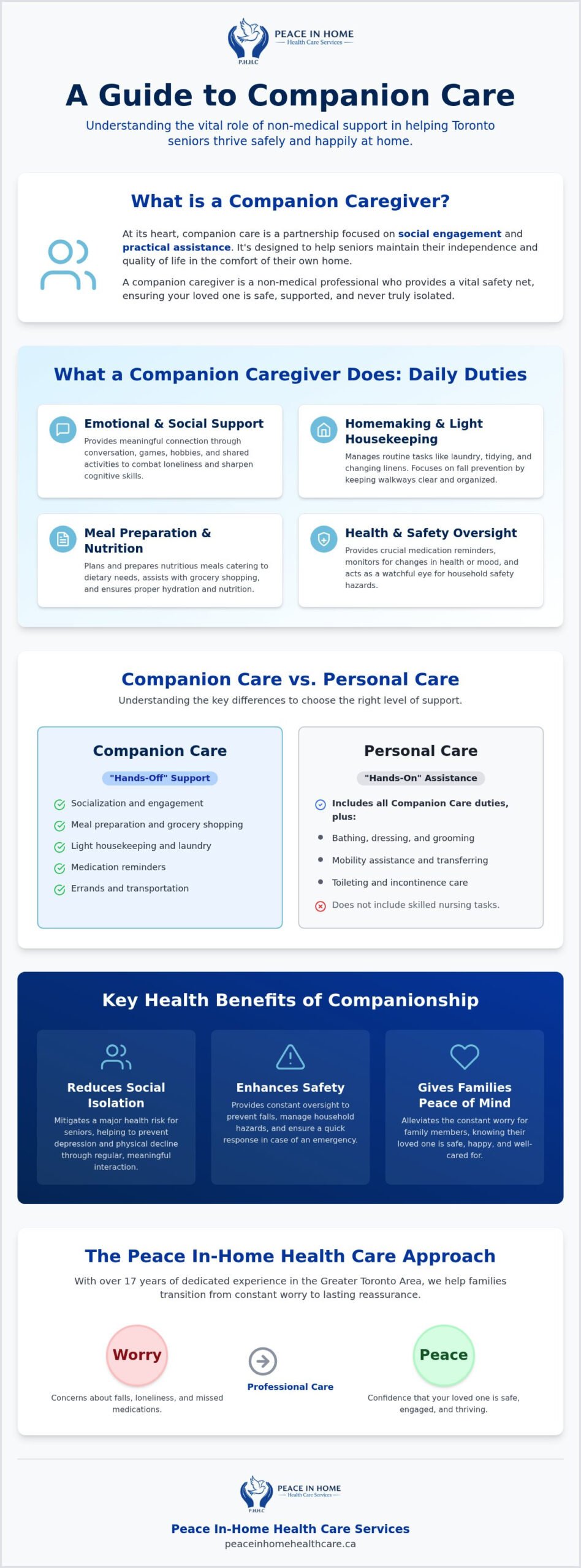
Understanding the nuances of senior support starts with a simple question: what does a companion caregiver do to improve a loved one’s daily life? At its heart, companion care is a seamless blend of social engagement and proactive household management designed to help seniors thrive in their own homes. These professionals are non-medical experts who provide the emotional support and practical assistance that often becomes difficult for families to manage alone. While they don’t provide clinical treatments, they act as a vital safety net, ensuring your parent is never truly isolated.
A foundational definition of What is a companion caregiver? often describes a role that spans various settings, but for Toronto families, it’s about preserving the familiar rhythm of home life. The primary goal is to alleviate the heavy weight of loneliness while ensuring safety and independence. Although these caregivers aren’t nurses, they’re trained to recognize subtle changes in a senior’s health or mood. This “human-first” vigilance offers families an incredible sense of relief, knowing that a reliable professional is watching over their loved one’s well-being every day.
The Emotional Connection: Why Companionship Matters
Social isolation is a significant health risk for seniors across the GTA, often leading to physical decline or depression. A companion caregiver steps into this gap by providing a meaningful social outlet. Whether it’s discussing the morning news, playing a favourite card game, or sharing a hobby like gardening, these interactions are tailored to the individual’s personality. This attentive approach does more than just pass the time; it preserves the senior’s dignity and keeps their cognitive skills sharp through regular, joyful conversation.
Non-Medical vs. Medical Support
It’s vital to understand the boundaries of this role to ensure your family has the right level of support. Companion caregivers focus on “hands-off” assistance. They don’t perform clinical tasks such as wound care, injections, or catheter management. However, they play a crucial role in health maintenance by providing medication reminders, ensuring your parent never misses a dose. If your loved one requires more intensive clinical intervention, you may need to explore skilled nursing care at home Toronto. For many, companion care is the first step in a supportive journey, providing the reliable presence needed to age in place safely.
Daily Duties: What a Companion Caregiver Does for Seniors
What does a companion caregiver do on a typical Tuesday morning in a Toronto home? Their day starts with more than just a checklist; it begins with a warm greeting and an attentive check on the senior’s physical and emotional well-being. These professionals provide vital cognitive stimulation through activities like puzzles, reading together, or discussing current events. They also manage the “invisible” tasks of home management, such as checking for expired food in the fridge or ensuring the telephone is within reach, which often go unnoticed until they become a safety concern.
Beyond the four walls of the home, a caregiver ensures the senior remains a vibrant part of their community. This might involve a stroll through a local park or attending a social event at a community centre. By acting as a watchful eye for safety hazards, the caregiver allows the senior to navigate their day with confidence while providing the family with the reassurance that their loved one is never alone or at risk.
Homemaking and Light Housekeeping
A clean environment is essential for both health and morale. Caregivers manage routine tasks like laundry, changing linens, and keeping living areas tidy. This proactive approach to light housekeeping for seniors Toronto focuses heavily on fall prevention. By organizing cupboards and clearing clutter from walkways, the caregiver removes physical obstacles that could lead to injury. This support allows seniors to enjoy their familiar surroundings without the physical strain of heavy chores.
Meal Preparation and Nutrition
Maintaining proper nutrition is a cornerstone of aging well, yet many seniors find the effort of cooking for one to be overwhelming. Caregivers plan and prepare nutritious meals that cater to specific dietary requirements, such as low-sodium or heart-healthy recipes. They assist with grocery shopping to ensure the kitchen is stocked with fresh, safe produce. Beyond the plate, the social benefit of having someone to share a meal with often improves a senior’s appetite and overall outlook on the day.
Errands and Appointment Accompaniment
Navigating the GTA can be a significant challenge, particularly during the icy Canadian winters. Caregivers provide safe transportation and accompaniment to medical appointments in Toronto, Markham, or Mississauga. They assist with pharmacy trips and local errands, providing a steady arm and a watchful eye on slippery sidewalks or in busy shopping centres. This local expertise ensures that essential errands are completed safely, regardless of the weather. If you are struggling to balance these logistics with your own schedule, you can reach out to our team to see how a tailored care plan can help.
Companion Care vs. Personal Care: Which Is Right for Your Family?
Choosing between companion care and personal care is a pivotal decision for many families across the GTA. While both services share the same goal of supporting a senior at home, the level of physical involvement differs significantly. Companion care is primarily “hands-off” support, focusing on the social and emotional aspects of aging alongside practical household help. In contrast, personal care involves “hands-on” assistance with what professionals call Activities of Daily Living (ADLs). Understanding these boundaries ensures your loved one receives the right support without compromising their sense of independence.
To truly grasp what does a companion caregiver do, it helps to view them as a supportive partner in home management and socialization. They’re there to bridge the gap when a senior is still physically capable but requires a watchful eye or a helping hand with daily logistics. However, many families find that their needs are fluid. It’s common to start with companionship and naturally transition to personal care assistance for seniors as a loved one’s mobility or cognitive health changes. By clarifying what does a companion caregiver do versus a personal support worker, you can create a care plan that evolves with your parent’s unique journey.
When Companion Care is Sufficient
Companion care is often the ideal starting point for seniors who are still mobile but are becoming forgetful or socially withdrawn. You might notice that while your parent can still manage their own hygiene, the housework is beginning to pile up or they’ve stopped attending their usual local social groups. In these instances, a caregiver provides a vital social outlet and manages the chores that have become a burden. This also offers essential “respite” for family members who may feel the emotional weight of being the sole source of social engagement for their parent.
When to Consider Adding Personal Care
The need for personal care usually becomes apparent when physical safety or basic dignity is at risk. Signs that it’s time to add “hands-on” support include neglected hygiene, difficulty with mobility and transferring, or challenges with toileting. If your loved one is experiencing more advanced cognitive decline that requires intensive supervision to prevent wandering or accidents, a higher level of care is necessary. This ensures that even as their needs become more complex, they can continue to live in a familiar, comfortable environment with the professional support they require.
The Health Benefits of Professional Companionship
Professional companionship is a powerful health intervention that goes far beyond simple social visits. While the daily chores are helpful, the real value lies in the long-term wellness outcomes for your loved one. Research consistently shows that social isolation in seniors is a primary driver of heart disease and cognitive decline. By providing consistent mental stimulation through puzzles or meaningful conversation, a caregiver helps keep the mind active and sharp.
What does a companion caregiver do to safeguard a senior’s health on a deeper level? They act as a vital early warning system. This “Observer Effect” is one of the most significant benefits for families in the GTA. A professional caregiver notices subtle shifts before they escalate into a medical crisis, such as:
- A sudden drop in appetite or a lack of interest in nutritious meals.
- Subtle changes in mood or increased social withdrawal.
- Increased unsteadiness or a new fear of walking alone.
Sharing the emotional load also protects the well-being of family members. Caregiver burnout is a serious risk for adult children who try to manage everything alone. Having a trusted guide to lean on reduces your daily stress, allowing you to focus on being a daughter or son rather than a manager of logistics. This partnership ensures that both the senior and the family can enjoy a higher quality of life.
Cognitive Health and Dementia Support
For those in the early stages of memory loss, a predictable routine is a source of immense comfort. Caregivers use “reminiscence therapy,” which involves sharing stories and looking at old photographs to validate a senior’s life experience. This simple act of daily conversation provides profound mental engagement. If you’re looking for more ways to support a loved one’s memory, you can explore our guide on activities for dementia patients at home.
Physical Safety and Fall Prevention
Safety at home often depends on having a second set of eyes to spot potential dangers. A companion caregiver proactively identifies trip hazards like loose area rugs or cluttered hallways that a senior might overlook. They also encourage light movement, such as walking to the mailbox or gentle stretching, to maintain muscle tone and balance. This attentive presence is a cornerstone of fall prevention, and it’s a key part of what does a companion caregiver do to help seniors age in place with dignity.
Choosing the Right Companion Care in Toronto: The Peace In-Home Approach
Finding the right support for a parent is a deeply personal journey that requires more than just a list of services. At Peace In-Home Health Care Services, we’ve spent over 17 years refining our “Human-First” approach to senior care across the Greater Toronto Area. We understand that when you ask, what does a companion caregiver do, you’re really asking if they’ll treat your parent with the same respect and warmth that you would. Our “Compassionate Experts” aren’t just staff; they’re individuals chosen for their patience, deep-rooted experience, and a genuine desire to protect the dignity of those they serve.
We believe that high-quality care is built on a foundation of trust and reliability. Our selection process is rigorous, ensuring that every caregiver we send into a home is someone we would trust with our own family members. This commitment to excellence has made us a trusted guide for families navigating the complex transitions of aging. By focusing on the emotional well-being of the senior, we help transform the home from a place of worry into a sanctuary of comfort.
Personalized Matching for Long-Term Success
Success in home care depends heavily on the strength of the relationship between the caregiver and the senior. We don’t believe in a one-size-fits-all approach. Instead, we prioritize personalized matching to ensure a successful, long-term connection. This process includes several vital considerations:
- Personality and Temperament: We match caregivers based on their social style to ensure they’re a comfortable fit for your loved one’s home environment.
- Shared Interests: Whether it’s a love for gardening or a passion for local history, shared hobbies help spark genuine engagement and conversation.
- Language and Cultural Needs: In a diverse city like Toronto, being able to communicate in a preferred language is essential for a senior’s comfort and dignity.
Consistency is our priority. By ensuring your loved one sees the same primary caregiver, we help them build a trusting bond that provides immense emotional security for both the senior and the family.
Serving the Entire GTA Community
Our roots are deep in the local community, and we’re proud to serve families throughout Toronto, Vaughan, Markham, Richmond Hill, and the surrounding regions. This local expertise is a significant advantage when it comes to navigating the GTA. We understand the logistics of getting to medical appointments at Sunnybrook or Mount Sinai, and we know the best times to manage local errands to avoid the stress of heavy traffic. This familiarity ensures that every outing is handled with the calm, methodical pacing that seniors require.
Companion care is about much more than just a helping hand; it’s about restoring a sense of “peace” to the home. If you’re ready to take the next step, we recommend booking a consultation to discuss a tailored care plan. This gentle transition allows your loved one to maintain their independence while giving your family the reassurance that they’re never alone. Our goal is to stand alongside you as a reliable partner, offering a steady hand through every stage of the aging journey.
Restoring Peace of Mind and Independence at Home
We’ve explored how companion care serves as much more than a helping hand; it’s a vital emotional lifeline that preserves a senior’s dignity and quality of life. By understanding what does a companion caregiver do, from managing light housekeeping to providing essential cognitive stimulation, you can make an informed choice that supports your loved one’s independence. Whether it’s preventing the physical risks of falls or alleviating the heavy weight of social isolation, professional support offers a reliable bridge to a safer and more joyful life at home.
With over 17 years of experience serving families across Toronto and the GTA, we’re here to guide you through this transition with quiet confidence and expertise. You don’t have to navigate these complex life changes alone. Let our compassionate experts help you create a personalized care plan that brings security and comfort back to your family home.
Frequently Asked Questions
Is companion care covered by OHIP in Ontario?
OHIP does not cover private companion care services in Ontario. While the provincial government provides some publicly funded home care through Ontario Health atHome, this support is strictly based on assessed medical needs and often has significant limits on hours. Most families in the GTA choose to pay for companionship services out-of-pocket to ensure their loved one receives consistent, personalized attention that goes beyond the basic clinical requirements provided by the public system.
How is a companion caregiver different from a Personal Support Worker (PSW)?
The primary difference lies in the level of physical assistance provided. A companion caregiver focuses on “hands-off” support like socialization, meal preparation, and light housekeeping. In contrast, a Personal Support Worker (PSW) provides “hands-on” care for Activities of Daily Living, such as bathing, dressing, and toileting. While both roles aim to improve a senior’s life, families often start with companionship and naturally add PSW services as mobility or health needs become more complex.
Can a companion caregiver stay overnight?
Yes, companion caregivers can stay overnight to provide safety and peace of mind for both the senior and their family. We offer live-in care and respite services for families who need a consistent presence during the night. This is particularly helpful for seniors who may become anxious after dark or those at risk of wandering. Having a trusted professional in the home overnight ensures that help is immediately available if your loved one feels unsettled.
What happens if my parent does not get along with their caregiver?
We prioritize a successful match through our personalized selection process, but we understand that personalities don’t always click. If your parent feels uncomfortable or doesn’t bond with their caregiver, we’ll work closely with you to identify the issue and provide a different professional who better suits their temperament. Building a trusting, dignified relationship is essential for the success of home care, and we’re committed to finding the right fit for every family in our care.
Can a companion caregiver drive my parent to appointments in Toronto?
Yes, our caregivers provide safe transportation and accompaniment for errands and medical appointments throughout Toronto, Vaughan, and the wider GTA. Beyond just driving, we assist your parent from the front door to the car and stay with them throughout their visit. This level of support is vital during the icy winter months when navigating slippery sidewalks or busy parking lots at hospitals like Sunnybrook or North York General becomes hazardous for seniors walking alone.
Is companion care suitable for someone with early-stage Alzheimer’s?
Companion care is an excellent choice for individuals in the early stages of Alzheimer’s or dementia. At this stage, maintaining a familiar routine and engaging in cognitive stimulation are crucial for slowing decline. Caregivers focus on social engagement to keep the mind active and sharp. This specialized support helps your loved one stay grounded in their own home while providing the watchful eye needed to ensure they remain safe, well-nourished, and socially connected to their community.
How many hours a week of companion care do most seniors need?
There is no set number of hours, as every care plan is tailored to the individual’s unique needs and family schedule. Some Toronto families find that a few hours twice a week is sufficient to manage errands and provide social interaction. Others require daily support to help with meal preparation and evening routines. We recommend starting with a thorough assessment to determine the right balance that ensures safety without overwhelming the senior’s sense of independence.
Do companion caregivers help with medication?
Companion caregivers provide vital medication reminders to ensure your loved one never misses a dose. While they don’t perform clinical tasks like injections or pill sorting, they play a crucial role in health maintenance by prompting the senior to take their prescribed medication at the correct times. This proactive approach is a key part of what does a companion caregiver do to prevent health crises and provide families with the reassurance that essential daily routines are being followed.