

Imagine spending the afternoon preparing a nutritious dinner, only to have your mother turn her head away or seem frightened by the plate in front of her. This experience is incredibly common for families, yet it never feels any less stressful when you’re worried about malnutrition or dehydration. Effective meal prep for seniors with dementia requires more than just following a recipe; it’s about understanding how cognitive changes affect the simple act of eating. You aren’t alone in feeling exhausted by the constant cycle of cooking and the terrifying fear of swallowing difficulties.
We believe that mealtime should be a moment of connection rather than a source of anxiety. In this guide, you’ll discover practical strategies and nutritious meal prep techniques to support the health and dignity of your loved one living with dementia. We’ll show you how to create a stress-free routine that prioritizes safety and sensory recognition. From adapting textures to prevent choking to organizing a kitchen that supports independence, you’ll gain the tools needed to ensure your loved one thrives while you find much-needed relief.
Key Takeaways
- Understand how cognitive changes affect hunger and use the “Colour Contrast” rule to make meals more visible and inviting for your loved one.
- Learn why finger foods are the preferred choice for maintaining independence and how to easily adapt traditional favourites into handheld portions.
- Discover a simplified 5-step system for meal prep for seniors with dementia that uses batch cooking and clear labeling to reduce daily stress.
- Explore how professional caregivers in the GTA can manage complex dietary needs while providing the companionship necessary to improve nutritional intake.
Understanding the Unique Challenges of Nutrition in Dementia
Dementia changes more than just a person’s memory; it fundamentally alters how the brain communicates with the body. One of the most difficult shifts for families to witness is the breakdown of the relationship between nutrition and cognition. As cognitive decline progresses, the brain often loses the ability to interpret internal signals for hunger and thirst. This can lead to “forgotten meal” syndrome, where a senior might eat a full lunch and then ask for it again ten minutes later, or conversely, go an entire day without realizing they haven’t touched their plate. These inconsistencies make meal prep for seniors with dementia a vital part of daily care.
It’s not just about memory, though. Sensory changes often mean that a lifelong favourite dish suddenly tastes “wrong” or looks unappealing. This confusion can trigger agitation or a complete refusal to eat. Establishing a rigid routine becomes a protective shield for your loved one. It helps them feel safe because they know exactly what to expect when they sit at the table, which can significantly reduce mealtime anxiety.
Common Barriers to Healthy Eating
Many seniors experience “utensil frustration,” a distressing moment where they look at a spoon or fork and no longer realize how to use it. This often leads to them pushing the plate away in embarrassment or anger. Distractions play a massive role too. A loud television or a busy room can make it impossible for someone with dementia to focus on the task of chewing and swallowing. Physical challenges like dysphagia, or difficulty swallowing, also become a serious safety concern that requires meals to be prepared with specific textures in mind.
Why Meal Prep is a Caregiver Lifesaver
Caring for a loved one is a full-time commitment that often leads to profound exhaustion. Using a dedicated system for meal prep for seniors with dementia is one of the most effective ways to reduce daily decision fatigue. When the fridge is stocked with ready-to-eat, nutritious options, you don’t have to scramble during a high-stress “sundowning” period. This level of organization ensures that the nutritional quality remains high even on your most difficult days. It also allows you to create a predictable environment. When the same colourful, easy-to-see plate appears at the same time every day, it signals to the senior’s brain that it’s time to eat, which helps maintain their health and dignity.
Nutritional Essentials and Sensory-Friendly Meal Planning
Nutrition is the foundation of cognitive support. When we plan meal prep for seniors with dementia, we prioritize Omega-3 fatty acids found in salmon and walnuts, alongside antioxidant-rich berries that help protect brain cells. Because seniors often have smaller appetites, we focus on calorie density. Adding a drizzle of olive oil or a spoonful of nut butter ensures they receive the energy they need even if they only manage a few bites. These small, nutrient-dense additions help maintain weight and muscle mass, which are often at risk as dementia progresses.
One often overlooked aspect of dining is visual perception. Many seniors experience a loss of contrast sensitivity, making it difficult to distinguish objects. A common mistake is serving white fish and cauliflower on a white plate; the senior simply cannot see the food. By using the “Colour Contrast” rule, you can use vibrant vegetables like sweet potatoes or broccoli to make the meal stand out against the dish. This simple change can drastically improve food intake and reduce the frustration of not being able to find the food on the plate.
Hydration is equally critical for cognitive clarity. Since the brain’s thirst signals often weaken with age and illness, we recommend incorporating “wet” foods like soups, stews, and melon into the daily routine. For more practical tips on managing daily dining challenges, the Alzheimer’s Association offers excellent resources on Food and Eating that align with these supportive strategies.
Sensory Considerations in the Kitchen
The smell of a meal can be a powerful appetite stimulant. Familiar aromas like slow-cooked beef or cinnamon can trigger positive memories and signal to the brain that it’s time to eat. As dementia progresses, texture modification becomes essential. You may need to transition from solid foods to soft, minced, or pureed textures to ensure safety and prevent choking. Always test the temperature yourself; a senior may not realize a dish is too hot until they’ve already taken a bite.
Building a Dementia-Friendly Menu
Stick to familiar Canadian comfort foods that your loved one has enjoyed for decades. Adapting a classic beef stew by dicing the meat finer makes it easier to digest without losing the emotional connection to the meal. To prevent decision paralysis, follow the 3-choice rule: offer only three distinct items on a plate at once. If you feel overwhelmed by these daily requirements, reaching out for a personalized care plan can provide the professional support your family needs to ensure your loved one eats safely and well.
Meal Formats: Finger Foods vs. Traditional Dining
As dementia progresses, the physical act of eating often becomes more complex than the nutritional content itself. While we previously discussed the sensory impact of colours and aromas, the physical format of the meal plays a massive role in whether a senior actually consumes their food. Finger foods have emerged as the gold standard for maintaining independence in late-stage dementia. When a person can no longer navigate the mechanics of a fork or spoon, being able to use their hands allows them to eat with a sense of control and dignity that being spoon-fed simply cannot provide.
Adapting traditional recipes into handheld portions is a cornerstone of effective meal prep for seniors with dementia. Instead of a traditional Sunday roast that requires careful slicing, you might prepare seasoned chicken strips or small, tender beef medallions. This shift doesn’t mean sacrificing the flavours they love; it simply means reimagining the presentation to suit their current abilities. Maintaining dignity is paramount, so we focus on making these modified formats look as appetizing and intentional as any gourmet appetizer platter.
The Finger Food Revolution
Finger foods are particularly beneficial for seniors who experience “wandering” or restlessness during mealtimes. If your loved one finds it difficult to sit still for a full meal, having “grab-and-go” options ensures they still receive adequate nutrition. Consider these practical ideas for your weekly prep:
- Protein Bites: Small meatballs, fish sticks, or hard-boiled egg quarters.
- Veggie Sticks: Steamed broccoli florets, roasted carrot batons, or cucumber slices.
- Fruit Wedges: Apple slices with the skin removed or melon chunks.
- Handheld Grains: Small triangles of toast with nut butter or mini savoury muffins.
These options reduce the stress of failing to use a knife and fork, turning a potentially frustrating experience into a successful one.
Safe Swallowing and Texture Management
While independence is the goal, safety must always come first. You may notice signs that your loved one is struggling with traditional textures, such as coughing during meals, clearing their throat frequently, or “pocketing” food in their cheeks. These are often indicators of dysphagia, which may require a move toward a soft-food or minced diet. Meal prep for seniors with dementia in these cases involves using natural thickeners like mashed potatoes or avocado to improve the safety of liquids and ensure consistent sizing of all food particles. By keeping pieces uniform and moist, you significantly reduce the risk of choking while keeping the meal enjoyable.
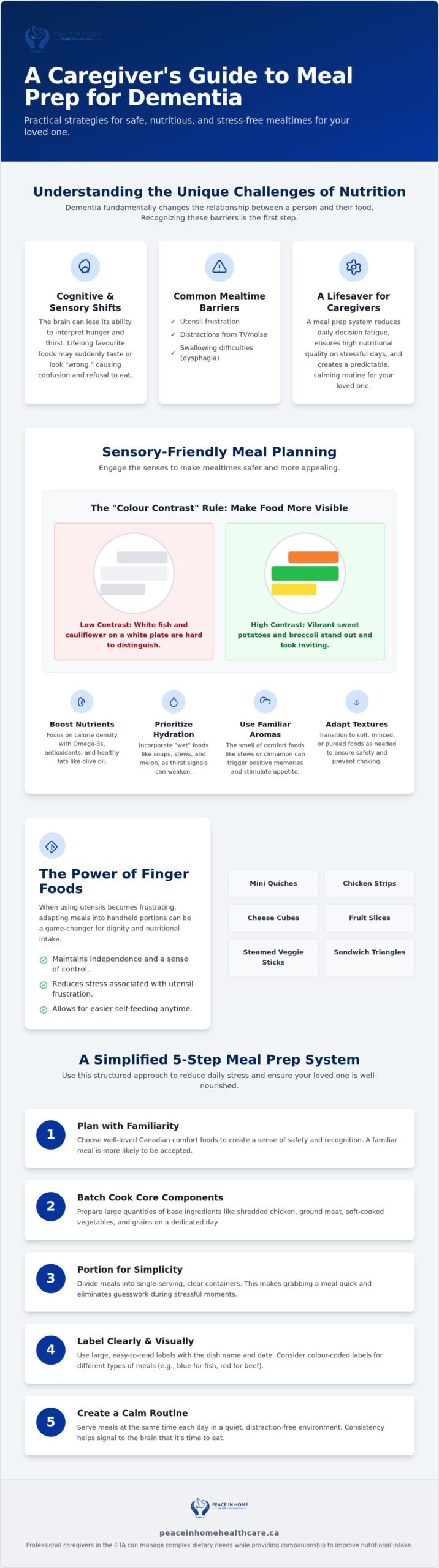
The 5-Step Meal Prep System for Caregivers
Managing daily nutrition doesn’t have to be an overwhelming chore. A structured approach to meal prep for seniors with dementia can transform a chaotic kitchen into a calm, predictable space for both you and your loved one. By organizing your efforts into a repeatable system, you ensure that every meal serves a dual purpose: providing high-quality nutrition and maintaining a sense of safety. This system focuses on reducing the immediate workload during mealtime, allowing you to focus on the person rather than the stove.
- Step 1: Batch cooking proteins and grains. Prepare large quantities of versatile bases like shredded chicken, soft-cooked lentils, or quinoa. These can be easily repurposed into different flavour profiles throughout the week.
- Step 2: Portioning into clear, labeled containers. Use transparent containers so the senior can see the colours of the food. Label each with large, clear text and visual cues, such as a picture of a carrot, to help with recognition.
- Step 3: Creating a “Hydration Station.” Set up a dedicated area with a brightly coloured water pitcher and clear glasses. Adding a slice of lemon or cucumber makes the water more visible and inviting.
- Step 4: Pre-cutting and “par-cooking” vegetables. Steam or roast vegetables halfway so they are soft but hold their shape. This allows for quick assembly and ensures every bite is easy to chew.
- Step 5: Setting a dignified, distraction-free table. Prepare the dining area before the senior arrives. A calm setting signals that it’s time to eat and helps prevent the agitation often associated with busy kitchens.
Batch Cooking for Efficiency
The best foods for freezing and reheating are those that maintain their moisture, such as stews, casseroles, and thick soups. Using a slow cooker is a reliable way to create tender, easy-to-chew meats that won’t become tough when reheated. Organize your fridge so that healthy snacks are at eye level. If your loved one can still find a small container of pre-cut fruit independently, it reinforces their autonomy and ensures they stay nourished between meals.
The Dining Environment
A successful meal is as much about the atmosphere as it is about the food. Remove all clutter from the table, including salt shakers or decorative centrepieces that might be confusing. Use plain, solid-coloured tablecloths to provide a clear background for the plate. Remember that loneliness is a common cause of appetite loss. Integrating companionship care into your routine can turn eating into a social highlight of the day, encouraging the senior to stay focused and enjoy their meal.
Professional Meal Support in Toronto and the GTA
For families across Vaughan, Markham, and Oakville, the daily demands of specialized nutrition can become a source of significant exhaustion. While you’ve learned the mechanics of meal prep for seniors with dementia, executing these routines perfectly every single day is a heavy burden to carry alone. This is where professional support makes a profound difference. Peace In-Home Health Care Services has spent over 17 years supporting families across the GTA. We understand that mealtime isn’t just about nutrition; it’s about the security of a familiar, dignified routine. Our professional Personal Support Workers are trained to handle complex dietary restrictions while maintaining the emotional well-being of your loved one.
Transitioning from family-led preparation to professional dementia care at home often provides the relief you need to focus on your relationship again. It allows you to return to being a family member rather than a full-time cook and cleaner. We integrate mealtime into a broader holistic care plan. This means we don’t just put a plate down; we ensure the senior is comfortable and hydrated throughout the process. This attentive care helps reduce the agitation often seen during evening meals.
Tailored Care for Local Families
The GTA is a vibrant mosaic of cultures, and we believe food should reflect that. Whether you are in North York, Scarborough, or downtown Toronto, our caregivers respect and prioritize culturally familiar ingredients. Our staff specialize in meal prep for seniors with dementia by sourcing fresh ingredients that resonate with the senior’s personal history. Our team also incorporates engaging activities in the kitchen. If a senior can safely help wash a vegetable or stir a bowl, it provides a sense of purpose that improves their appetite and overall well-being.
Next Steps: Booking a Consultation
Reaching out for help is a sign of strength. During an initial in-home nutritional assessment, we listen to your concerns about weight loss or meal refusal. We then match your loved one with a caregiver whose personality and culinary skills align with your family’s needs. This personalized approach ensures a dignified experience for the senior and true peace of mind for you. You don’t have to handle the stress of malnutrition or dehydration alone. Contact Peace In-Home Health Care Services today to begin creating a supportive, reliable care plan tailored to your neighbourhood and your home.
Restoring Peace to Your Family Table
Supporting a loved one through cognitive changes requires more than just a recipe; it requires a specialized approach to daily nourishment. By implementing the sensory-friendly techniques and the 5-step system we’ve explored, you’re doing more than providing calories. You are preserving their independence and reducing the daily friction that often leads to caregiver burnout. Effective meal prep for seniors with dementia is a vital tool in maintaining their health and your own peace of mind.
You don’t have to navigate these complex life transitions alone. With 17+ years of compassionate experience, Peace In-Home Health Care Services provides specialized dementia care training to ensure every meal is a safe, positive experience. We are proud to serve families in Toronto, Mississauga, Oakville, and the surrounding areas, offering a reliable partner to stand alongside you as a trusted guide.
Brighter, stress-free mealtimes are possible with the right support. We look forward to helping you find the balance and security your family deserves.
Frequently Asked Questions
How can I get my parent with dementia to drink more water?
Offer beverages in weighted, non-spill cups to provide a sense of stability and security. Some seniors respond better to room-temperature water or herbal teas rather than ice-cold drinks. Using a straw can sometimes help with coordination, though you should check for any swallowing issues first. Consistently offering a drink every hour, rather than waiting for them to ask, helps prevent the confusion and headaches associated with mild dehydration.
What are the best finger foods for seniors with memory loss?
Choose items that hold their shape but remain soft enough to gum or chew easily. Savoury mini-muffins, cheese cubes, and steamed sweet potato wedges are excellent choices. When organizing meal prep for seniors with dementia, focus on bite-sized pieces that don’t require any cutting. This approach allows the senior to focus entirely on the flavour and texture of the food without the physical frustration of handling heavy cutlery.
Is it safe to let someone with dementia help with meal prep?
Yes, but only with tasks that match their current abilities. Setting the table with unbreakable plates or folding napkins are dignified ways to involve them in the daily routine. Avoid any tasks involving heat, sharp knives, or heavy lifting. This involvement helps maintain their motor skills and provides a sense of accomplishment. Constant supervision is necessary to ensure they don’t accidentally ingest raw ingredients or cleaning supplies.
What should I do if my loved one refuses to eat what I have prepared?
First, check for physical discomfort like ill-fitting dentures or mouth sores. If they aren’t in pain, try offering smaller, more frequent “grazing” snacks throughout the day instead of three large meals. Sometimes a change of scenery, like moving to a brighter chair, can spark interest. If refusal persists, it may be a sign that the current textures are too difficult to manage, requiring a softer or more moist menu approach.
How does dementia affect a person’s sense of taste and smell?
Dementia can cause a “fading” of the senses, leading many seniors to crave much sweeter or saltier foods than they once enjoyed. This happens because the brain requires stronger signals to register flavour. Instead of adding salt, try using lemon juice or mild spices to brighten the dish. Understanding this shift helps you adjust your meal prep for seniors with dementia to include more flavour-forward ingredients that stimulate their appetite naturally.
Can professional home care help with specialized dementia diets in Toronto?
Absolutely. Peace In-Home Health Care Services provides professional caregivers who specialize in preparing meals that meet specific medical and cognitive needs. Whether your family is in North York, Etobicoke, or Scarborough, our team can manage everything from grocery shopping to texture-modified cooking. This support ensures that your loved one receives consistent, high-quality nutrition while following the personalized guidance of their healthcare providers and dedicated nutritionists.
Are there specific foods that can help reduce dementia-related agitation?
Avoid high-sugar snacks that cause energy spikes and subsequent “crashes,” which can worsen irritability. Instead, focus on magnesium-rich foods like spinach or pumpkin seeds, which have a naturally calming effect. Maintaining a steady intake of complex carbohydrates helps keep blood sugar levels stable throughout the day. This stability is particularly helpful during the late afternoon hours when many seniors experience increased confusion or “sundowning” symptoms in the home.
How do I know if my loved one has swallowing difficulties (dysphagia)?
Beyond coughing, look for subtle signs like watering eyes during meals or a tendency to hold food in the mouth without swallowing. Unexplained weight loss or a persistent “gurgling” sound in the throat after drinking are also significant indicators. If you notice these cues, it’s important to seek a professional assessment. Transitioning to a minced or moist diet can prevent the dangerous risk of aspiration while keeping mealtimes safe and enjoyable.