
Did you know that approximately one in four seniors falls every year, making it the leading cause of injury-related death for adults aged 65 and older? In 2024 alone, over 43,000 older adults died from preventable falls. It’s a terrifying reality that keeps many families awake at night. You want your loved one to remain independent in the house they love, yet you likely feel a heavy weight of guilt whenever you aren’t there to help.
This guide will show you that fall prevention for seniors at home doesn’t have to mean turning a family home into a clinical facility. We’ll help you identify hidden hazards, navigate the confusion of safety products, and implement simple modifications that preserve dignity. You’ll learn how to leverage professional support and medication reminders to create a secure environment. By the end of this article, you’ll have a clear checklist to organize your home and the peace of mind that comes from knowing your loved one is supported.
Key Takeaways
- Master the proactive strategies for fall prevention for seniors at home to help your loved ones maintain their independence and avoid unnecessary hospital visits.
- Learn how to conduct a thorough room-by-room audit to identify and resolve the “Big Three” hazards: loose rugs, poor lighting, and household clutter.
- Discover the vital connection between stability and proper footwear, along with simple ways to focus on lower-body strength as a foundation for safety.
- Understand how professional medication reminders and an extra set of eyes can prevent the dizziness and fatigue that often lead to accidental trips.
- Explore how tailored, dignified support from experienced caregivers in the GTA can provide your family with peace of mind while your loved ones age in place.
Why Fall Prevention for Seniors at Home is Critical in 2026
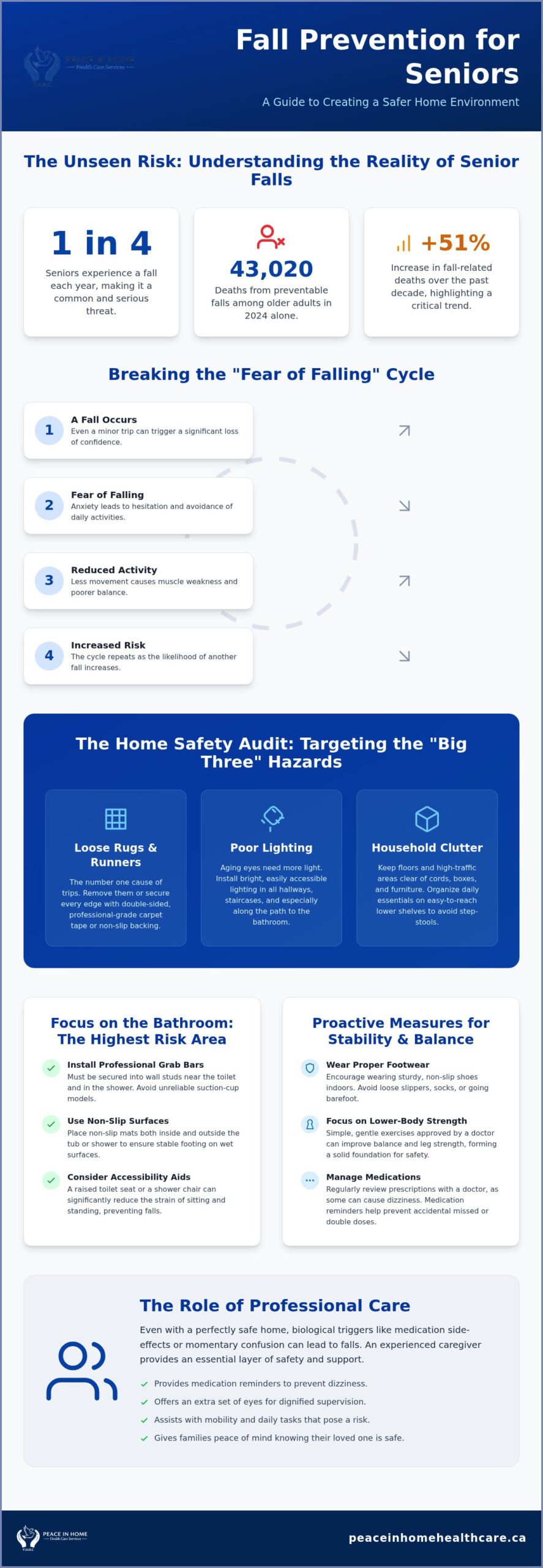
Falling isn’t just an unfortunate accident; it’s a significant turning point that can alter the course of a senior’s life. Effective fall prevention for seniors at home is a proactive strategy designed to protect the independence and dignity your loved ones have worked a lifetime to build. In 2026, the data shows we’re at a critical crossroads. Current statistics indicate that one in four seniors falls every year, and the consequences are becoming more severe. Over the past decade, fall-related deaths among adults 65 and older have risen by 51%. In 2024 alone, 43,020 older adults died from preventable falls. In Ontario, these incidents often lead to lengthy hospitalizations that strain both the healthcare system and the family unit.
A single trip often triggers the “Fear of Falling” cycle. When a senior loses their footing, even if they aren’t seriously hurt, they often become hesitant to move or engage in daily activities. This reduced movement leads to muscle atrophy and poorer balance, which ironically makes another fall much more likely. We also see a high risk during the “Golden Hour”: those early morning moments when waking up or late-night bathroom trips occur in low light and a state of grogginess. Implementing comprehensive fall prevention strategies can break this cycle before it starts, ensuring the home remains a place of safety rather than a source of anxiety.
The Hidden Biological Triggers of Falls
Balance is a complex internal conversation between the eyes, the brain, and the muscles. Natural vision changes can make it difficult to spot a rug’s edge or a doorway’s threshold, especially in the evening. Even more critical is the impact of certain medications. Many prescriptions for blood pressure or sleep can cause sudden dizziness or a drop in blood pressure when standing up. This is why [medication reminders for seniors at home](https://peaceinhomehealthcare.ca/home-care-services-for-seniors-in-toronto-the-complete-2026-buying-guide/) are a foundational safety tool. For those living with dementia, spatial awareness can become fragmented. A familiar hallway can suddenly feel like a confusing obstacle course, making professional oversight a vital layer of protection.
The Emotional Impact of a Fall
Beyond the physical bruises, a fall can shatter a person’s confidence. It often causes seniors to withdraw from their social circles in Toronto or Mississauga, fearing they’ll have an accident in public. For families across the GTA, the weight of care often shifts overnight from companionship to constant monitoring. Choosing to prioritize prevention isn’t just about physical safety; it’s a gift of peace for the entire family. It allows you to focus on quality time and meaningful connection, knowing that your loved one is supported by a reliable and attentive presence that values their independence as much as you do.
The Ultimate Room-by-Room Home Safety Audit
A home should be a sanctuary, but for many older adults, it’s filled with invisible risks. Effective fall prevention for seniors at home begins with a critical look at the environment. We start with the “Big Three” hazards that cause the majority of incidents: loose rugs, poor lighting, and household clutter. In many high-traffic Toronto homes, beautiful area rugs are often placed over polished hardwood. While they look lovely, they’re the primary culprit for slips. Removing these rugs or securing them with professional-grade non-slip backing is a non-negotiable first step.
Lighting is just as vital. As we age, our eyes require significantly more light to distinguish between shadows and physical obstacles. Ensure every hallway and staircase is brightly lit. You should also organize daily essentials, like mugs and medications, on lower shelves. This simple change eliminates the need for step-stools, which are notoriously unstable. Pay special attention to the path from the bedroom to the bathroom. This is the most dangerous route in any home because it’s often travelled in the dark when a senior is groggy. If you’re feeling overwhelmed by where to start, you can always speak with a care coordinator for a professional perspective.
Bathroom Modifications: Creating a Safe Oasis
The bathroom is the most frequent site of serious injuries. To make this space safer, grab bars are essential. However, they must be installed directly into the wall studs to support a person’s full weight; suction-cup models are unreliable and can detach without warning. You might also consider a raised toilet seat or a walk-in tub to reduce the physical strain of sitting and standing. Standardizing your water temperature is another helpful tip. By setting the water heater to a safe maximum, you prevent the sudden flinch from a scald that often leads to a slip. For more detailed advice on structural changes, the National Institute on Aging’s guide to preventing falls offers excellent structural recommendations.
Living Areas and Bedrooms: Comfort Without Risk
Safety in the living room often comes down to the furniture. Chairs should be at a height that allows for easy transfers, meaning the hips stay slightly higher than the knees when seated. You should also clear “cord clutter” from your living spaces. With the rise of modern tablets, chargers, and medical devices, floors are often criss-crossed with tripping hazards. Tucking these away behind furniture or using cord organizers makes a world of difference. Finally, install motion-sensor nightlights that lead from the bedside to the ensuite. These provide an immediate, soft glow the moment a senior steps out of bed, lighting the way without the need to fumble for a switch.
Improving Senior Mobility and Balance at Home
While a safe environment is essential, the physical foundation of stability is what truly empowers a senior to move with confidence. Lower-body strength acts as the engine of balance. Without it, even the most modified room can still present risks. Sarcopenia, the natural loss of muscle mass as we age, can quietly reduce a person’s ability to recover from a small stumble. Encouraging daily movement isn’t about intense workouts; it’s about maintaining the functional strength needed for everyday tasks like rising from a favourite chair or reaching for a cupboard.
Footwear is another critical factor that families often overlook. Many seniors prefer loose house slippers for comfort, but these are frequently a hidden hazard. Slippers without back support or those with worn-out grips can easily slide off or fail to catch on a smooth floor. Choosing sturdy, rubber-souled shoes for indoor use can significantly improve fall prevention for seniors at home. It provides the traction and ankle support necessary to navigate corners and transitions between different flooring types safely.
Simple Balance Exercises for Daily Routines
You can help your loved one build strength through simple, low-impact activities right in the living room. The “Sit-to-Stand” challenge is a fantastic way to strengthen the quadriceps; it involves rising from a sturdy chair without using the armrests for help. For balance, “heel-to-toe” walking, often described as a tightrope walk, helps the brain and body stay aligned. You can also use a sturdy kitchen counter as a support beam for side leg lifts. Unlike generic exercise lists, having a professional caregiver present ensures these movements are done safely. They provide the physical reassurance and “extra set of eyes” needed to practise these routines without the fear of a stumble. For more structured ideas, Mayo Clinic’s simple tips to prevent falls offers a wonderful starting point for planning daily activities.
Assistive Devices: Choosing the Right Support
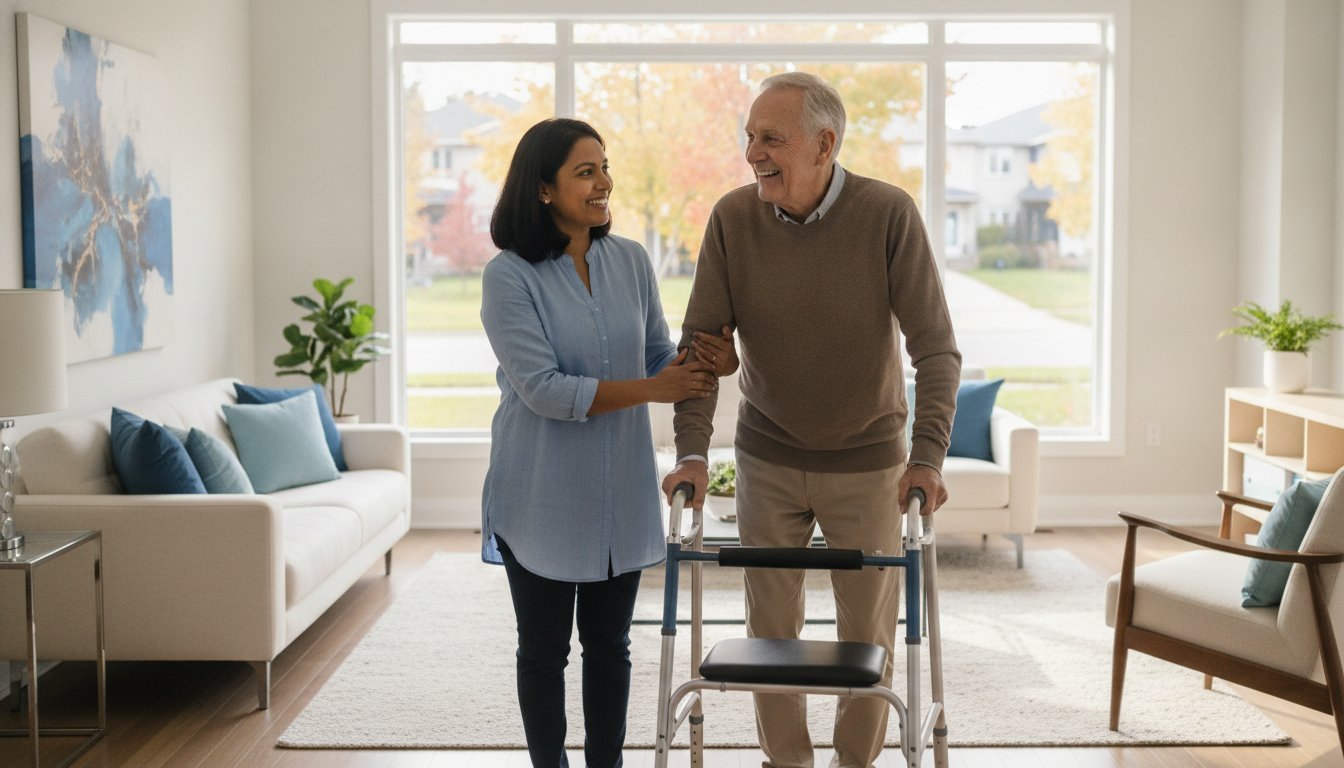
Accepting a cane or a walker can be a difficult emotional hurdle for many seniors. It can feel like a surrender of independence, but we view these devices as tools that actually preserve freedom. A cane might be enough for those who need a bit of extra confidence on uneven ground, while a walker provides a broader base of support for those who tire easily. It’s vital that these devices are fitted to the senior’s height to prevent slouching or wrist strain. If you aren’t sure which device is appropriate, specialized mobility assistance for seniors Toronto families rely on can provide the expert guidance needed to choose and use these aids correctly, ensuring they become a reliable part of a successful fall prevention for seniors at home plan.
The Role of Professional Care in Fall Prevention
Home modifications provide the physical infrastructure for safety, but a professional caregiver provides the active oversight that makes fall prevention for seniors at home truly effective. We often call our caregivers a “Safety Set of Eyes.” They notice the small details that a busy family member might miss, such as a slightly curled rug edge or a spill on the kitchen tile. Beyond just watching, they provide essential support for Activities of Daily Living (ADLs). Tasks like bathing or getting dressed involve significant weight shifting and balance; these are high-risk moments where a steady hand makes all the difference.
Proper nutrition and hydration are also silent heroes in preventing accidents. When a senior is dehydrated or hasn’t had a balanced meal, they are much more likely to experience fainting spells or sudden weakness. Caregivers ensure that nutritious meals are prepared and that water is always within reach. This keeps energy levels stable and minds sharp, reducing the likelihood of a trip caused by simple fatigue.
Medication Management and Fall Risk
Many seniors manage multiple prescriptions, a situation known as polypharmacy. When several drugs interact, the side effects often include drowsiness or a sudden drop in blood pressure. This is where medication reminders for seniors at home become a critical safety tool. A caregiver ensures that doses are taken exactly as prescribed and at the right time of day. This is especially important during the adjustment period of a new prescription, when the body’s reaction is still unpredictable. Standardizing pill organizers and monitoring for adverse reactions is a cornerstone of fall prevention for seniors at home.
Companion Care as a Safety Strategy
The “rush” is a common cause of trips. Whether it’s hurrying to answer the phone or rushing to the door for a delivery, these sudden movements are dangerous for anyone with mobility challenges. A companion caregiver removes that pressure by handling the door or phone, allowing the senior to move at their own pace. For families in the GTA, having a professional for errands and appointment accompaniment provides an extra layer of security outside the home. Caregivers also stay attentive to subtle cognitive changes. If a senior starts to show signs of confusion or poor judgement regarding their own physical limits, a trained professional can intervene gently to maintain their safety while preserving their dignity.
Dignified Safety Solutions with Peace In-Home Health Care
At Peace In-Home Health Care, we understand that suggesting changes to a loved one’s routine can be a delicate process. With over 17 years of experience supporting families across Toronto, Mississauga, and Vaughan, we’ve learned that the most effective way to implement fall prevention for seniors at home is through a partnership built on trust. We don’t just see a set of environmental risks; we see a person who values their history and their home. Our “Human-First” approach ensures that safety measures feel like supportive enhancements rather than restrictions on freedom.
Many families struggle with how to start this conversation, especially with a parent who prizes their independence. The key is to frame safety as the very tool that preserves their autonomy. Instead of focusing on what they can’t do, we focus on how a tailored plan allows them to keep doing what they love without the fear of a life-altering injury. By positioning a caregiver as a supportive partner rather than a supervisor, we help seniors accept help while maintaining their dignity.
Personalized Care Plans for Toronto Families
Every home has a different rhythm, which is why we begin every relationship with a thorough initial consultation. During this time, we assess the home environment to identify specific challenges unique to your loved one’s layout. We don’t believe in one-size-fits-all solutions. Instead, we carefully match our caregivers with the right skills to meet your family’s specific mobility needs. This includes providing personal care assistance for seniors that prioritizes safety during the most vulnerable parts of the day. Whether it’s help with morning routines or evening transfers, our team is there to provide a steady, reliable presence.
Taking the First Step Toward a Safer Home
One of the most common mistakes families make is waiting for a fall to happen before seeking professional support. Proactive fall prevention for seniors at home is far more effective than reactive crisis management. Procrastination often leads to the very hospitalizations that families are trying to avoid. We offer a “Peace of Mind” guarantee to families across the GTA, providing the confidence that comes from having an expert navigation partner by your side. Our compassionate team is ready to help you explore your options with a no-pressure assessment. You don’t have to carry the weight of worry alone; we are here to offer a steady hand and a clear path forward for your family.
Empowering Independence Through Proactive Safety
Securing a loved one’s home is a journey of both practical changes and emotional transitions. By combining a thorough room-by-room audit with a focus on physical strength, you’re building a foundation for lasting independence. Effective fall prevention for seniors at home relies on this delicate balance of a safe environment, improved mobility, and the watchful presence of professional care.
Peace In-Home Health Care brings over 17 years of trusted experience across the GTA to your doorstep. Our dedicated Personal Support Workers and Nurses provide personalized care plans tailored to your family’s unique needs. We offer a steady hand and expert navigation, ensuring your loved one receives the attentive support they deserve while aging in place with dignity. You don’t have to navigate these complex life transitions alone.
Take the first step toward a safer, more confident future for your loved one today. True peace of mind is possible when you have a reliable partner standing alongside your family.
Frequently Asked Questions
What is the number one cause of falls for seniors at home?
Environmental hazards like loose rugs, clutter, and poor lighting are the most common causes of accidents. These risks are amplified by physical factors such as muscle weakness or poor balance. For many, the transition between different flooring types or a lack of sturdy handrails leads to a trip. Effective fall prevention for seniors at home starts with clearing these pathways and ensuring every room is brightly lit to compensate for natural vision changes.
How can I make my bathroom safer for a senior on a budget?
You can improve bathroom safety significantly without a major renovation. Start by adding high-traction, non-slip mats inside the tub and on the floor. Replace standard light bulbs with brighter LEDs to eliminate shadows. Organizing toiletries so they’re within easy reach prevents the need to bend or overextend. While permanent grab bars are ideal, even simple changes like using a sturdy shower chair can provide immediate stability for your loved one at a minimal cost.
Do medication reminders really help with fall prevention?
Medication reminders are a critical component of fall prevention for seniors at home because they prevent the dizziness and confusion caused by missed or incorrect doses. Many prescriptions for blood pressure or sleep have side effects that impact balance. By ensuring medications are taken exactly as prescribed, you reduce the risk of sudden fainting spells or “polypharmacy” interactions. A consistent routine helps maintain a steady physical state, making accidental trips much less likely to occur.
What kind of shoes are best for preventing falls in the house?
The best shoes for indoor safety are sturdy, closed-back footwear with non-slip rubber soles. You should avoid loose-fitting house slippers or walking in socks, as these provide very little traction and can easily slide off. Look for shoes with a low heel and a firm back that supports the ankle. This type of footwear helps the wearer feel the ground more clearly, which is essential for maintaining balance on hardwood or tile surfaces common in GTA homes.
Is home care better than a nursing home for fall prevention?
Home care offers the unique advantage of one-on-one attention in a familiar environment, which often reduces the confusion that leads to falls. While nursing homes provide 24-hour monitoring, professional home care focuses on your loved one’s specific household hazards. Caregivers provide a “Safety Set of Eyes” tailored to the senior’s individual routine. This personalized approach often results in better mobility outcomes and allows the individual to maintain their dignity and independence while aging in place safely.
How do I convince my parent to use a walker or cane?
Frame the conversation around independence rather than limitation. Explain that a walker or cane is a tool that allows them to keep doing what they love, like visiting the park or walking through the garden, without the fear of a fracture. It’s often helpful to have a professional caregiver or a doctor introduce the idea. When they see the device as a way to stay active and mobile, they’re much more likely to accept it as a reliable partner.
Does Peace In-Home Health Care provide service in Scarborough and North York?
Yes, Peace In-Home Health Care provides comprehensive services across the entire Greater Toronto Area, including Scarborough and North York. Our team of dedicated Personal Support Workers and Nurses is familiar with these communities and ready to provide personalized support right in your neighbourhood. We also serve families in Mississauga, Vaughan, and Markham, ensuring that high-quality, dignified care is accessible to seniors throughout the region. Our 17 years of experience help us navigate local needs with ease.
What should I do immediately after my elderly parent has a fall?
If your parent falls, stay calm and check for consciousness and pain before trying to move them. Don’t rush to pull them up, as this can worsen a fracture. If they aren’t hurt, help them move slowly to a sturdy chair. If they’re in pain or can’t get up, call 911 immediately. Afterward, it’s vital to contact their doctor to identify the cause and prevent a future occurrence. Professional care can then help manage the recovery process.