

Imagine sitting with your father in his Toronto living room; one moment he is sharing a clear memory of a walk through High Park, and the next, he is distressed by a “visitor” in the corner that you cannot see. This unpredictable shift is one of the most taxing lewy body dementia symptoms for local families to witness. It’s incredibly draining to manage the constant fluctuations between lucidity and confusion, especially when you’re also worried about the physical risk of falls. You want to protect his independence, but the fear of what might happen during an unsupervised hour can be overwhelming.
We understand the heavy emotional weight you carry as a caregiver in the GTA. It’s exhausting to provide constant monitoring while trying to maintain your own well-being. This guide will help you recognize the complex signs of LBD and explain how specialized home care can support your loved one’s safety and dignity. We’ll look at the key differences between Lewy body dementia and other conditions, offer actionable tips to manage visual hallucinations, and show you how to find reliable professional support right here in Ontario.
Key Takeaways
- Understand why Lewy body dementia is often misdiagnosed and how alpha-synuclein protein deposits uniquely affect cognitive and physical health.
- Recognize the core lewy body dementia symptoms, including the “good hours and bad hours” of fluctuating alertness and detailed visual hallucinations.
- Learn actionable strategies to modify your home environment, such as using lighting to eliminate shadows and establishing predictable daily routines.
- Identify the autonomic and behavioural signs of LBD, from blood pressure regulation issues to increased anxiety or apathy.
- Discover how specialized dementia care and respite services in Toronto and the GTA can provide your family with essential peace of mind and safety.
What is Lewy Body Dementia (LBD)?
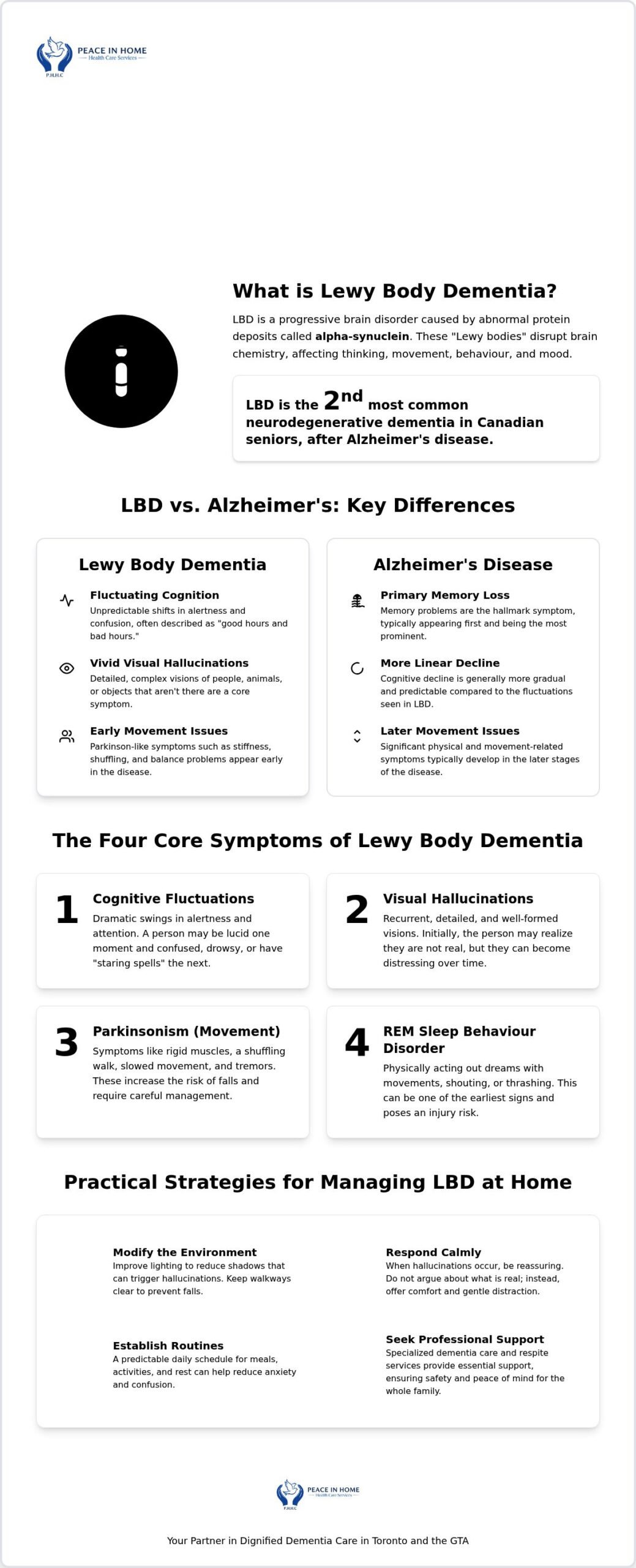
Lewy body dementia is more than just memory loss; it is a progressive brain disorder that fundamentally changes how a person interacts with the world. It occurs when abnormal deposits of a protein called alpha-synuclein build up in the brain. These deposits, known as “Lewy bodies,” disrupt the brain’s natural chemistry, leading to a complex array of lewy body dementia symptoms that affect thinking, movement, behaviour, and mood simultaneously. Understanding What is Lewy body dementia helps families realize that this isn’t just simple forgetfulness. It is a whole-body experience that requires a specialized kind of patience and care.
Families often find the diagnostic process frustrating because LBD frequently mimics other conditions. In its early stages, it’s often misdiagnosed as Alzheimer’s due to cognitive changes or Parkinson’s because of tremors and stiffness. Clinically, LBD is an umbrella term covering two specific diagnoses. Dementia with Lewy bodies (DLB) is diagnosed when cognitive symptoms appear before or at the same time as movement issues. Parkinson’s disease dementia (PDD) is the term used when a person already living with Parkinson’s begins to experience cognitive decline. The difference usually comes down to the timing of when lewy body dementia symptoms first emerge, but both require a tailored, attentive approach to care.
LBD vs. Alzheimer’s: Key Differences
While memory loss is the hallmark of Alzheimer’s, LBD presents a different set of hurdles. In LBD, the primary cognitive challenge is “fluctuation,” where a person’s alertness and clarity can change significantly from one hour to the next. They might be perfectly lucid during breakfast but completely disoriented by lunch. Movement symptoms, like a shuffling gait, balance issues, or rigid muscles, also show up much earlier in the LBD journey than they do with Alzheimer’s. Perhaps most distinctively, detailed visual hallucinations are a core part of the LBD experience. These aren’t just simple shadows; they are often vivid, complex images that can be quite startling for both the individual and their family.
The Prevalence of LBD in Canada
As the population ages in Toronto and across the GTA, more families are encountering this challenging diagnosis. LBD is the second most common neurodegenerative dementia in Canadian seniors, following only Alzheimer’s. Because the condition progresses unpredictably, recognizing symptoms early is vital for safety. Early planning allows families to establish a reliable support system, ensuring their loved ones can remain in a familiar environment while managing the risks associated with falls or sudden confusion. Having a steady hand to guide you through these transitions makes all the difference for your peace of mind.
The Four Core Symptoms of Lewy Body Dementia
Identifying the core symptoms of Lewy body dementia is often the first step toward finding peace of mind for your family. Unlike other forms of cognitive decline, LBD presents a unique combination of mental and physical challenges that can change rapidly. While every person’s journey is different, clinicians look for four primary pillars when making a diagnosis. These include fluctuating alertness, visual hallucinations, parkinsonism, and REM sleep behaviour disorder. Recognizing these lewy body dementia symptoms early allows you to build a supportive environment that prioritizes safety without stripping away your loved one’s dignity.
The visual hallucinations associated with LBD are often remarkably detailed. Your father might see a small animal resting on the rug or a child standing in the hallway. In the early stages, these visions are frequently non-threatening, and the person may even realize they aren’t real. However, as the condition progresses, these hallucinations can become more frequent, leading to increased anxiety. Similarly, REM sleep behaviour disorder causes individuals to physically act out their dreams, often involving vivid shouting or thrashing. This can result in accidental injuries for both the individual and their spouse, making nighttime safety a primary concern for Toronto families.
Cognitive Fluctuations and Attention
One of the most confusing aspects of LBD is the “good hours and bad hours” phenomenon. You might find that your loved one is perfectly lucid and engaged during breakfast, only to experience “staring spells” or profound lethargy by mid-afternoon. These periods of reduced consciousness can look like daydreaming or extreme drowsiness. Because these shifts are so unpredictable, many families find that personal care assistance for seniors is essential to ensure someone is always present to provide guidance during these sudden dips in clarity.
Understanding Movement Symptoms and Fall Risks
Parkinsonism in LBD often manifests as a shuffling gait, rigid muscles, and a noticeable slowing of movement. Unlike Parkinson’s disease, where tremors are a hallmark, LBD patients are more likely to experience “freezing” while walking or a significant loss of balance. These physical lewy body dementia symptoms create a high risk for falls, especially in homes with stairs or uneven flooring. Utilizing professional mobility assistance can help mitigate these risks, providing the steady hand needed to navigate daily routines safely. If you are feeling overwhelmed by these physical changes, please reach out to us to discuss a personalized support plan for your family.
Autonomic and Behavioural Symptoms to Watch For
Lewy body dementia doesn’t just affect what a person sees or how they walk; it also disrupts the “automatic” functions of the body. These autonomic and behavioural symptoms can be just as debilitating as the cognitive ones we discussed earlier. You might notice your loved one struggling with sudden changes in body temperature, digestive issues, or significant blood pressure drops when they stand up. This internal instability is a hallmark of lewy body dementia symptoms and requires a vigilant eye to prevent complications. It’s a heavy burden for families to manage alone, but recognizing these signs is the first step toward a safer daily routine.
A particularly critical safety concern is the extreme sensitivity many LBD patients have to certain medications. Traditional antipsychotics, which are often used to treat hallucinations in other forms of dementia, can cause severe or even life-threatening reactions in those with Lewy bodies. It is vital to work with a medical team that understands this nuance to avoid accidental harm. Additionally, some families encounter the distressing “Capgras Syndrome.” This is a rare belief where a loved one becomes convinced that a familiar person, like a spouse or child, has been replaced by an identical imposter. While this is profoundly painful to experience, remember that it is a direct result of the protein deposits in the brain, not a reflection of your relationship.
The Emotional Toll of Behavioural Changes
It is perfectly normal to feel a sense of grief or frustration when you see your loved one’s personality shift. Many people with LBD experience deep apathy, appearing withdrawn or uninterested in hobbies they once loved. This is often a biological symptom of the disease rather than a choice or simple depression. To help maintain their emotional well-being, many Toronto families rely on companionship care to provide gentle social engagement and stimulation. When hallucinations or delusions occur, try using “validation therapy” instead of correcting them. Acknowledging their feelings, rather than arguing about what is “real,” often de-escalates anxiety and preserves their sense of security.
Physical Safety and Autonomic Issues
The physical manifestations of autonomic dysfunction can lead to dangerous situations in the home. Fainting, or syncope, often occurs because the brain cannot properly regulate blood pressure during movement. When combined with the shuffling gait and balance issues mentioned earlier, the risk of a serious fall increases significantly. Digestive challenges like chronic constipation and urinary incontinence also add layers of complexity to daily care. Because these lewy body dementia symptoms involve both medical and physical needs, they often require the expertise of skilled nursing care at home. Having a professional who can monitor vital signs and manage these complex needs provides a level of security that allows you to focus on the quality of your time together.
Managing LBD Symptoms at Home: Practical Strategies
Daily life with LBD is often a balancing act between providing safety and maintaining a sense of normalcy. While the medical side of the diagnosis is complex, the practical side often comes down to small, intentional changes in your Toronto home. By adapting the environment and your communication style, you can significantly reduce the distress caused by lewy body dementia symptoms for both you and your loved one. These strategies aren’t just about safety; they’re about preserving the dignity of the person you care for while making the caregiving journey more manageable.
One of the most effective ways to manage visual hallucinations is to enhance the lighting in every room. Shadows and dark corners can easily be misinterpreted by a brain struggling with LBD, turning a simple coat rack into a frightening figure. Using high-wattage, non-glare bulbs and ensuring hallways are well-lit can prevent unnecessary anxiety. Similarly, establishing a rigid daily routine provides a sense of predictability that reduces cognitive load. When you speak, use short, clear sentences and offer only one instruction at a time. This helps your loved one process information more easily during those “off” periods when their attention may be wavering.
Environmental Modifications for Safety
Small changes to your home’s décor can have a massive impact on physical safety. Remove any patterned rugs, especially those with dark or high-contrast designs, as they can look like holes or obstacles to someone with LBD. This visual confusion often leads to “freezing” or falls. Installing reliable grab bars and improving visibility in high-traffic areas like the bathroom provides essential support. To keep their mind focused and reduce late-afternoon agitation, try incorporating engaging activities for dementia patients that are tailored to their current abilities and interests.
Communicating Through Fluctuations
When your loved one is experiencing a period of confusion, it’s vital to remain calm and use a gentle, reassuring tone. Avoid the urge to “reorient” them by arguing about reality; if they see a hallucination, acknowledge their feelings rather than the vision itself. Arguing often backfires, leading to increased agitation and distrust. For managing sleep disturbances or nighttime wandering, keep the path to the washroom clear and use motion-sensor nightlights to provide a safe, guided path. This reduces the risk of injury during the night when cognitive clarity is often at its lowest.
Caring for someone with LBD is a 24/7 commitment that can quickly lead to exhaustion. It’s essential to recognize that preventing caregiver burnout isn’t a luxury; it’s a necessity for providing high-quality care over the long term. Taking regular breaks allows you to return to your caregiving role with the patience and energy your loved one deserves.
Specialized Home Care Solutions in Toronto and the GTA
When you are managing the daily unpredictability of lewy body dementia symptoms, you need a partner who understands that care isn’t a one size fits all solution. Peace In-Home Health Care provides that steady hand for families across Toronto and Vaughan, offering a specialized approach that respects the dignity of your loved one. Our caregivers are more than just helpers; they are trained observers who monitor the subtle cognitive and physical fluctuations that define this condition. We believe that by providing reliable, compassionate support, we can give your family the greatest gift of all: the peace of mind to focus on being a daughter, son, or spouse again.
As the condition progresses, your needs will naturally change. This is why we develop customized care plans that evolve alongside your loved one’s journey. Whether it is providing medication reminders to ensure safety or assisting with mobility to prevent falls, our team is dedicated to maintaining a familiar and secure environment. We recognize that the “good hours and bad hours” require a flexible and patient caregiver who knows how to navigate sudden shifts in clarity without causing distress. By choosing a provider with 17 plus years of experience in senior care, you are ensuring that your family has the expert navigation needed for this complex transition.
Why Specialized LBD Care Matters
Standard senior care often misses the nuances of LBD, particularly when it comes to the extreme medication sensitivities we discussed earlier. Our professional caregivers and nurses are specifically trained to identify these risks and work closely with your medical team. We prioritize preserving a sense of self through attentive personal care, ensuring that daily routines like bathing or dressing are handled with the utmost respect. This specialized focus allows us to catch small changes in movement or mood before they become larger safety concerns, keeping your loved one safe in the comfort of their own home.
Getting Started with Care in Your Community
We are proud to serve families in Markham, Richmond Hill, Mississauga, Oakville, and across the wider GTA. We know that every family’s situation is unique, which is why we offer a thorough assessment to discuss your loved one’s specific lewy body dementia symptoms and your goals for their care. This no pressure conversation is the first step toward building a reliable support system that protects your loved one’s independence while alleviating the weight of 24/7 monitoring. You don’t have to navigate this path alone; we are here to stand alongside you with expertise and kindness.
Contact us today to find the right support for your family
Finding Peace and Support for Your Family’s Journey
Navigating a diagnosis of Lewy body dementia is a profound life transition that no family should have to face alone. By understanding the core lewy body dementia symptoms, from cognitive fluctuations to visual hallucinations, you’ve already taken a vital step toward creating a safer and more supportive environment. Implementing practical home modifications and adopting compassionate communication strategies can significantly improve your loved one’s quality of life while preserving their dignity and independence.
At Peace In-Home Health Care, we bring 17 plus years of compassionate care experience to families across Toronto, Vaughan, Markham, and the wider GTA. Our caregivers receive specialized dementia and Alzheimer’s training, ensuring they can provide the attentive, expert support your family deserves. We are committed to standing alongside you as a trusted guide, offering a reliable hand to navigate the complexities of this condition with quiet confidence and respect.
You have the strength to navigate this journey, and with the right partner, you can find the security and peace of mind your family needs to move forward with confidence and hope.
Frequently Asked Questions
How long can a person live with Lewy body dementia?
A person living with Lewy body dementia typically survives five to eight years after the onset of symptoms, though individual timelines vary significantly. Some families navigate this journey for two years, while others provide care for up to twenty. Because the progression is unpredictable, focusing on a tailored care plan early on helps maintain a high quality of life throughout these stages. Professional support can assist in managing the evolving needs that arise over these years.
What is the first sign of Lewy body dementia?
The first sign of Lewy body dementia often appears as REM sleep behaviour disorder or vivid visual hallucinations. Families in Toronto frequently report that their loved ones begin acting out dreams or seeing detailed figures that aren’t there. These early lewy body dementia symptoms are often followed by subtle cognitive fluctuations, such as staring spells or sudden periods of confusion that seem to come and go throughout the day.
Is Lewy body dementia fatal?
Yes, Lewy body dementia is a progressive and terminal neurodegenerative disorder. While the disease itself affects the brain’s ability to function, complications such as pneumonia, fall-related injuries, or swallowing difficulties are often the ultimate cause of death. This reality makes professional mobility assistance and attentive daily monitoring essential to ensure the individual remains as safe and comfortable as possible throughout the entire progression of the disease.
How is Lewy body dementia different from Parkinson’s?
The primary difference lies in the timing of cognitive and movement symptoms. In LBD, cognitive decline and visual hallucinations usually appear within one year of movement issues. With Parkinson’s, significant cognitive changes typically don’t occur until many years after the initial tremors and motor challenges. Both involve alpha-synuclein protein deposits, but the sequence of how they manifest determines the specific clinical diagnosis provided by a physician.
Can a person with Lewy body dementia live alone?
Living alone is generally not safe for someone with LBD due to the high risk of sudden confusion and falls. Because lewy body dementia symptoms can fluctuate wildly within a single day, a person may be perfectly safe one hour and completely disoriented the next. Having a professional caregiver or live-in support ensures that someone is always present to manage these unpredictable shifts and prevent accidental injuries in the home.
Are there specific medications to avoid with LBD?
Yes, individuals with LBD must avoid traditional antipsychotic medications, also known as neuroleptics. These drugs can cause severe, life-threatening reactions, including extreme muscle rigidity, increased confusion, and a dangerous condition called neuroleptic malignant syndrome. Always consult with a specialist who understands LBD sensitivities before starting any new medication to treat hallucinations, as the wrong prescription can be highly detrimental to their health.
How can home care help with visual hallucinations?
Specialized home care helps manage hallucinations through environmental modifications and gentle validation therapy. Caregivers are trained to improve lighting to eliminate confusing shadows and remove patterned décor that might trigger a vision. Instead of arguing about reality, a trained professional uses a calm, reassuring tone to acknowledge the person’s feelings. This approach effectively de-escalates anxiety and helps the individual feel secure in their familiar surroundings.
Does OHIP cover in-home dementia care in Ontario?
OHIP does not directly cover private in-home health care, but the Ontario government provides some support through Home and Community Care Support Services (HCCSS). While HCCSS may offer a limited number of hours for personal care or nursing based on an assessment, many Toronto families find these hours insufficient for the complex needs of LBD. Consequently, families often choose to supplement this with private professional care to ensure consistent safety.