

You pull into your parent’s driveway in North York and notice a fresh, unexplained dent on their car’s bumper, or perhaps you open the fridge to find expired milk and very little else. These small moments often spark a nagging worry that something isn’t quite right. It’s difficult to know if you’re overreacting or if these are the definitive signs elderly parent needs home care. You aren’t alone in this uncertainty; many families across Ontario struggle to distinguish between the natural slowing of age and the genuine need for professional support.
We understand the heavy weight of this responsibility and the quiet anxiety that follows you throughout the workday. You want to honour your parent’s independence while ensuring they remain safe and healthy in the home they love. This 2026 guide will help you identify the subtle physical, cognitive, and environmental red flags that indicate it’s time for a supportive hand. We’ll provide a clear checklist to validate your concerns, explain how the Ontario Seniors Care at Home Tax Credit can help manage costs, and offer gentle advice on starting the conversation with the dignity your loved one deserves.
Key Takeaways
- Learn to distinguish between typical age-related changes and the specific signs elderly parent needs home care to ensure their continued safety and well-being.
- Discover why changes in personal grooming and unexplained weight loss are critical signals that a loved one is struggling with daily activities.
- Identify environmental red flags, such as unpaid bills or household neglect, that suggest it is time to consider professional support.
- Gain gentle, effective strategies for starting a conversation about support that preserves your parent’s dignity and reduces family conflict.
- Explore how tailored home care services in the GTA provide peace of mind for families while allowing seniors to age in place comfortably.
Recognizing the Subtle Shift: Is it Normal Aging or a Need for Support?
Many families across the GTA experience what experts call the “slow slide.” This is a gradual decline in a senior’s ability to manage daily life that often goes unnoticed during quick Sunday dinner visits. Because parents often “rally” or “show up” well for short durations, you might miss the subtle signs elderly parent needs home care until a minor crisis occurs. Recognizing these shifts early is the most effective way to ensure your loved one can successfully age in place rather than being forced into a sudden, stressful transition.
It helps to view professional support through a different lens. Home care is a proactive strategy to maintain a parent’s dignity and self-reliance, not just a reactive response to a fall or a diagnosis. To get a better sense of the scope of these services, it’s helpful to look at What is Home Care? and how it functions as a supportive bridge between independent living and clinical care.
The Emotional Burden of the Watchful Child
If you feel a sense of guilt or constant low-level anxiety after visiting your parent in Mississauga or Vaughan, your feelings are valid. Adult children often find themselves trapped in a “caregiver-patient” dynamic that creates friction and resentment. You want to be the daughter or son, not the person nagging about medication or unwashed dishes. Introducing professional support restores your relationship. It allows you to focus on meaningful connection while a trusted professional handles the daily essentials. Trust your intuition; if something feels “off” during a visit, it usually is.
Normal Aging vs. Red Flags
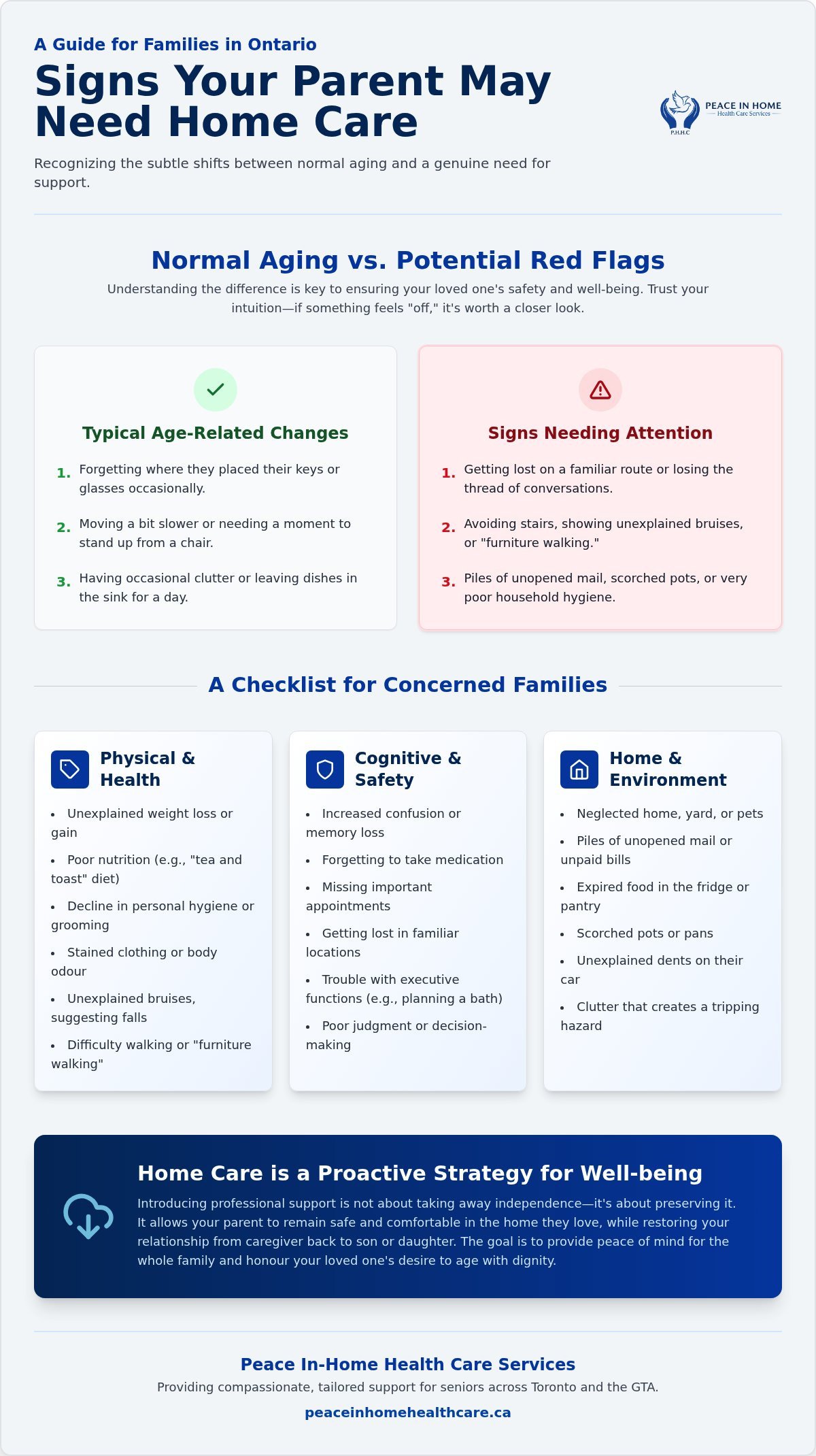
Distinguishing between the typical slowing of age and a genuine safety concern is the first step in identifying the signs elderly parent needs home care. Use these comparisons to help gauge the situation:
- Cognitive Health: Forgetting where the car keys are is normal aging. Losing the thread of a familiar conversation or getting lost on a well-known route to the local grocery store are red flags for cognitive impairment.
- Physical Mobility: Moving a bit slower or needing a hand to stand up is common. Avoiding stairs entirely, stopping favourite hobbies like gardening, or showing unexplained bruising are signs that mobility is becoming a risk.
- Household Management: Occasional clutter or a sink full of dishes happens to everyone. A total breakdown in organization, such as piles of unopened mail, scorched pots, or laundry that hasn’t been touched in weeks, indicates a struggle with daily tasks.
Physical and Cognitive Indicators: Monitoring Health and Hygiene
When you visit your parent’s home in Etobicoke or Scarborough, the physical changes you see can be startling. These aren’t just quirks of getting older; they’re often the most visible signs elderly parent needs home care. Perhaps you’ve noticed a faint body odour or hair that hasn’t been washed in a week. When a parent begins skipping baths or wearing stained clothes, it signals a struggle with Activities of Daily Living (ADLs) that requires immediate attention. These changes often happen so slowly that your parent may not even realize they’ve stopped maintaining their usual standards.
Nutrition is another critical area to monitor. You might notice your parent has lost weight or that their pantry is filled with nothing but crackers and tea. This “tea and toast” diet often stems from an inability to stand long enough to cook or a lack of motivation to prepare a nutritious meal for one. Similarly, medication mismanagement, such as finding expired pills or a half-empty pill organizer on a Wednesday afternoon, indicates a high risk for medical emergencies. These are clear signs elderly parent needs home care and shouldn’t be ignored for the sake of politeness.
Mobility issues often manifest as “furniture walking,” where your parent grabs onto chairs and walls to move through the house. If you see unexplained bruises on their arms or legs, or if they express a sudden fear of walking on uneven ground, the risk of a life-altering fall is high. Following official safety guidelines can help secure the home, but physical assistance often becomes necessary to ensure they can move safely between rooms.
The Hygiene-Cognition Connection
Forgetting to bathe isn’t usually about laziness. It’s often a failure of executive function; the brain struggles to sequence the many steps required for a shower, from checking the water temperature to finding a clean towel. Professional personal care assistance for seniors provides a dignified way to manage these tasks. It protects skin health and maintains the self-esteem that comes with looking and feeling your best. Poor grooming or dental neglect are often the first quiet indicators that a parent can no longer manage on their own.
Cognitive and Mood Changes
You might notice repetitive questioning or a parent getting lost in familiar places like their local grocery store in Toronto or Markham. These cognitive shifts are often accompanied by sudden irritability or personality changes. A parent who was once social may withdraw from their circle due to cognitive fatigue or the frustration of declining abilities. If these changes feel overwhelming, you can speak with a care coordinator to discuss a supportive path forward that prioritizes your parent’s safety and comfort.
Environmental Red Flags: Assessing Home Safety and Daily Management
The home environment often acts as a quiet mirror reflecting your parent’s internal state. While physical changes are telling, the way a house is managed provides deep insight into a senior’s executive function. Walking into a family home in Toronto and seeing piles of unopened mail on the kitchen table or laundry that has been sitting in the washer for days is unsettling. These are clear signs elderly parent needs home care. Scorched pots or pans are particularly concerning because they suggest that a parent has forgotten a burner was on, which is a major fire hazard that puts their safety at immediate risk.
Financial mismanagement is another red flag that often goes unnoticed until it reaches a crisis point. You might discover unpaid utility bills or notice your parent has become unusually secretive about their finances. Unfortunately, seniors are frequently targeted by phone and internet scams. If your parent can no longer distinguish a legitimate call from a fraudster, they’re at significant risk. These lapses aren’t just mistakes; they’re indicators that the complex task of managing a household is becoming too much to handle alone.
In Canada, we must also consider seasonal safety. A driveway that remains covered in snow days after a storm or a home that feels uncomfortably cold in January suggests your parent can no longer manage the demands of our climate. Failure to clear ice or keep the home at a safe temperature can lead to slips or hypothermia. These environmental shifts indicate that the “slow slide” is accelerating and professional support is needed to maintain a safe living space.
The “Fridge Test” and Kitchen Safety
One of the simplest ways to assess safety is the “fridge test.” Open the refrigerator and look for expired milk, multiple jars of the same condiment, or a total lack of fresh produce. These patterns often hide a fear of the grocery store or a lack of energy to cook. Utilizing meal preparation services can prevent malnutrition and eliminate the risk of kitchen fires. A professional caregiver ensures your parent eats well while handling the stove and appliances safely, providing you with immense peace of mind.
Driving and Community Navigation
Check the car for new dents or scratches that your parent can’t explain. Navigating heavy GTA traffic on the 401 or QEW requires quick reflexes and sharp vision. If your parent expresses anxiety about driving at night or in the rain, it’s a sign their world is becoming smaller. Professional errands and appointment accompaniment ensures they can still visit friends or attend doctor’s visits without the stress of driving. This support keeps them connected to their community in Markham or Mississauga while keeping everyone on the road safe.
Navigating the “Refusal” Hurdle: How to Discuss Care with Your Parent
Talking to your parent about the signs elderly parent needs home care is one of the most challenging conversations you’ll ever have. It’s common for seniors to view any offer of help as a direct threat to their independence. To avoid a defensive reaction, start small. Instead of suggesting they need a “nurse” or “caregiver,” frame the support as a “helper for the house” or someone to assist with “the heavy chores.” This subtle shift in language preserves their dignity and makes the idea of a stranger in their home feel less intrusive.
Using “I” statements is another effective strategy. Instead of pointing out their perceived failures, focus on your own feelings. Say something like, “I worry about you being alone in this big house during the winter,” or “It would give me such peace of mind to know someone is checking in on you while I’m at work in Mississauga.” This approach prevents the parent from feeling attacked. Additionally, giving them choices in the process, such as picking the days of the week or interviewing the caregiver, helps them feel in control of their own life. Sometimes, professional validation is necessary to break the deadlock. A recommendation from a family doctor can depersonalize the situation. If a physician suggests that home support is a medical necessity for safety, it shifts the “blame” away from you and onto a trusted medical authority.
Dealing with Resistance and Denial
If your parent seems completely unaware of their struggles, they might be experiencing “anosognosia.” This is a physiological condition where the brain cannot recognize its own impairment. It isn’t stubbornness; it’s a lack of insight. In these cases, suggesting a “trial period” of respite care for a week can be a low-pressure way to introduce help. You can frame it as a favour to you, giving you a chance to catch up on your own life while they “test out” the service. When faced with irrational anger, respond with patience and redirection rather than argument.
Involving the Whole Family
It’s vital for siblings to present a united front. If one child in Toronto agrees with the parent that everything is fine while another in Vaughan pushes for help, it creates “splitting” and confusion. Organize a family meeting beforehand to ensure everyone is on the same page. Starting with companionship care is often the easiest entry point. It feels more like a social visit than a medical intervention, making it easier for a parent to accept the transition while ensuring they feel heard and respected.
Personalized Home Care Solutions in Toronto and the GTA
Peace In-Home Health Care Services understands that every family’s journey is unique. Once you recognize the signs elderly parent needs home care, the next step is finding a partner who values your loved one’s dignity as much as you do. For over 17 years, we’ve acted as a trusted guide for families across the GTA, from the quiet neighbourhoods of Scarborough to the lakeside communities of Oakville. Choosing to age in a familiar environment avoids the significant emotional stress and physical decline often associated with a sudden move to a nursing home. It allows your parent to keep their cherished routines while receiving the exact level of support they need to stay safe.
Finding the right balance of care is essential for your parent’s long-term well-being. Some seniors only need help with personal care, such as bathing or dressing, while others require more intensive medical support. We provide both, ensuring that as your parent’s needs change, their care can evolve with them. Our local, reliable caregivers are available in Toronto, Vaughan, Markham, and Mississauga, providing a steady hand and a compassionate presence that restores peace of mind to the entire family.
Tailored Care Plans for Every Need
We don’t believe in one-size-fits-all solutions. Our approach involves matching caregivers based on personality and specific requirements, such as specialized dementia care. Whether your parent requires a few hours of companionship to combat loneliness or 24/7 live-in support for safety, our plans are fully flexible. We also bridge the gap between daily assistance and medical needs by providing professional skilled nursing care at home. This ensures your parent receives high-level medical attention without the trauma of leaving their favourite armchair.
Next Steps for Your Family
Taking the first step doesn’t have to be overwhelming. We offer a free in-home assessment in Toronto, Mississauga, and throughout the GTA to help you understand the best path forward. During this visit, we’ll discuss your concerns and observe your parent’s daily routine in their own space. It’s a chance for you to ask questions and for us to understand the subtle shifts you’ve noticed. During the first week of services, our focus is on building trust and establishing a rhythm that feels supportive rather than intrusive. We’re here to stand alongside you as you navigate this transition.
Empowering Your Parent to Age with Dignity
Recognizing the signs elderly parent needs home care is a vital step in protecting your loved one’s health and independence. By identifying subtle changes in hygiene, cognitive function, and home safety now, you can prevent the “slow slide” from becoming a medical crisis. Transitioning from being a primary caregiver back to being a supportive child allows you to focus on the relationship that matters most while professionals handle the daily complexities.
Peace In-Home Health Care brings over 17 years of dedicated experience to families across Toronto, Vaughan, Markham, and Mississauga. Our team of Registered Nurses and highly trained PSWs specializes in creating tailored environments where seniors feel safe and respected. We understand the emotional weight of these transitions and offer the reliable, compassionate support needed to navigate them successfully.
You don’t have to navigate this journey alone. Taking action today ensures your parent remains safe, comfortable, and dignified in the home they love for years to come.
Frequently Asked Questions
How do I know if my parent is just being stubborn or actually needs help?
Distinguishing between stubbornness and a genuine need for help usually comes down to objective safety and health. If your parent is simply refusing to change their routine, it might be personality; however, if they are skipping essential medications or losing weight, it’s a functional decline. Stubbornness is about preference, but a need for help is about the inability to perform daily tasks safely without assistance.
What is the most common sign that a senior can no longer live alone safely?
Medication mismanagement is often the most critical indicator that a senior requires professional support. Finding disorganized pill organizers or expired prescriptions suggests a high risk for medical emergencies or rapid health decline. When a parent can no longer track their own health needs, these are definitive signs elderly parent needs home care to prevent a life-threatening mistake.
How can I convince my elderly parent to accept home care?
Start by framing the conversation around your own needs and peace of mind rather than their perceived failures. Use “I” statements like, “I would feel so much better knowing someone is checking in on you while I’m at work.” Suggesting a short trial period for non-intrusive help, such as meal preparation or light housekeeping, often makes the idea feel less threatening to their independence.
Is home care in Toronto covered by OHIP or private insurance?
OHIP typically only covers home care services that are deemed medically necessary and arranged through Ontario Health atHome. Most private home care services are paid out-of-pocket, though some private insurance plans may provide partial coverage depending on your policy. Families in Ontario should also look into the Ontario Seniors Care at Home Tax Credit, which can help offset some of these costs.
What is the difference between companionship care and personal care?
Companionship care focuses on social interaction and emotional well-being, including activities like going for walks, playing games, or light housekeeping. Personal care is more hands-on and involves assistance with “Activities of Daily Living” such as bathing, dressing, and grooming. Many families in the GTA start with companionship to build trust before eventually transitioning to more comprehensive personal care as needs evolve.
Can home care help if my parent has early-stage Alzheimer’s?
Specialized dementia care is incredibly beneficial during the early stages of Alzheimer’s by establishing a calming, predictable routine. Caregivers provide cognitive stimulation and ensure safety in the home, which helps manage the anxiety often associated with memory loss. This professional support allows your parent to remain in their familiar surroundings while giving you the confidence that they are protected from household hazards.
What should I do if I live in another city and my parent is in Toronto?
If you live outside the GTA, a professional home care agency acts as your local partner and primary point of contact. Caregivers provide regular updates on your parent’s health and well-being, ensuring you aren’t trying to manage care needs from a distance. This “eyes and ears” approach is vital for long-distance children who want to ensure their parent remains safe and dignified in Toronto.
How quickly can home care services be started in the GTA?
Most agencies can begin providing support shortly after a comprehensive in-home assessment is completed. This initial visit is essential for identifying safety risks and matching a caregiver to your parent’s specific personality and needs. While the process is methodical to ensure the highest quality of care, it is designed to be responsive to families who may be facing an urgent transition.