

Every single day, more than 414 people in Canada develop dementia, leaving their families to face a future that can suddenly feel uncertain and heavy. If you’ve recently noticed your parent or spouse struggling with memory, you’re likely searching for a map to help you understand the stages of dementia. It’s completely natural to feel overwhelmed by medical terminology or to worry about how you’ll manage as their needs grow. You want to protect their dignity, but the path forward often feels hidden behind a cloud of anxiety and unanswered questions.
We understand that your priority is to keep your loved one safe and comfortable in the home they love. This guide will help you navigate the complex progression of the condition with clarity and steady, practical care strategies. We’ll explore how symptoms evolve through each phase, offer ways to maintain a familiar routine that honours their history, and help you recognize the right moment to transition to professional in-home support. Our goal is to replace the fear of the unknown with a reliable plan, allowing you to focus on the quality of the time you spend together.
Key Takeaways
- Understand how to recognize the progression of memory loss through a simplified framework that helps you plan for daily care and future transitions.
- Learn to identify subtle signs in the early stages of dementia, allowing your family to prioritize independence and make important decisions together while there is still time to plan.
- Discover practical strategies for managing behavioural changes like sundowning while maintaining your loved one’s dignity and sense of security at home.
- Gain insight into prioritizing specialized support during the final stages to ensure a peaceful and respectful environment for your parent or spouse.
- Find out how tailored in-home care in the GTA can evolve with your needs, allowing you to focus on your relationship rather than just the demands of daily caregiving.
The Framework of Memory Loss: Defining the Stages of Dementia
When a loved one receives a diagnosis of Dementia, it often feels like the world has shifted overnight. However, it’s helpful to remember that this condition is a progressive journey rather than a single, sudden event. Understanding the stages of dementia provides your family with a roadmap, helping you anticipate changes before they become overwhelming. While every individual’s timeline is unique, having a shared language with healthcare providers ensures your loved one receives the most appropriate support at every turn.
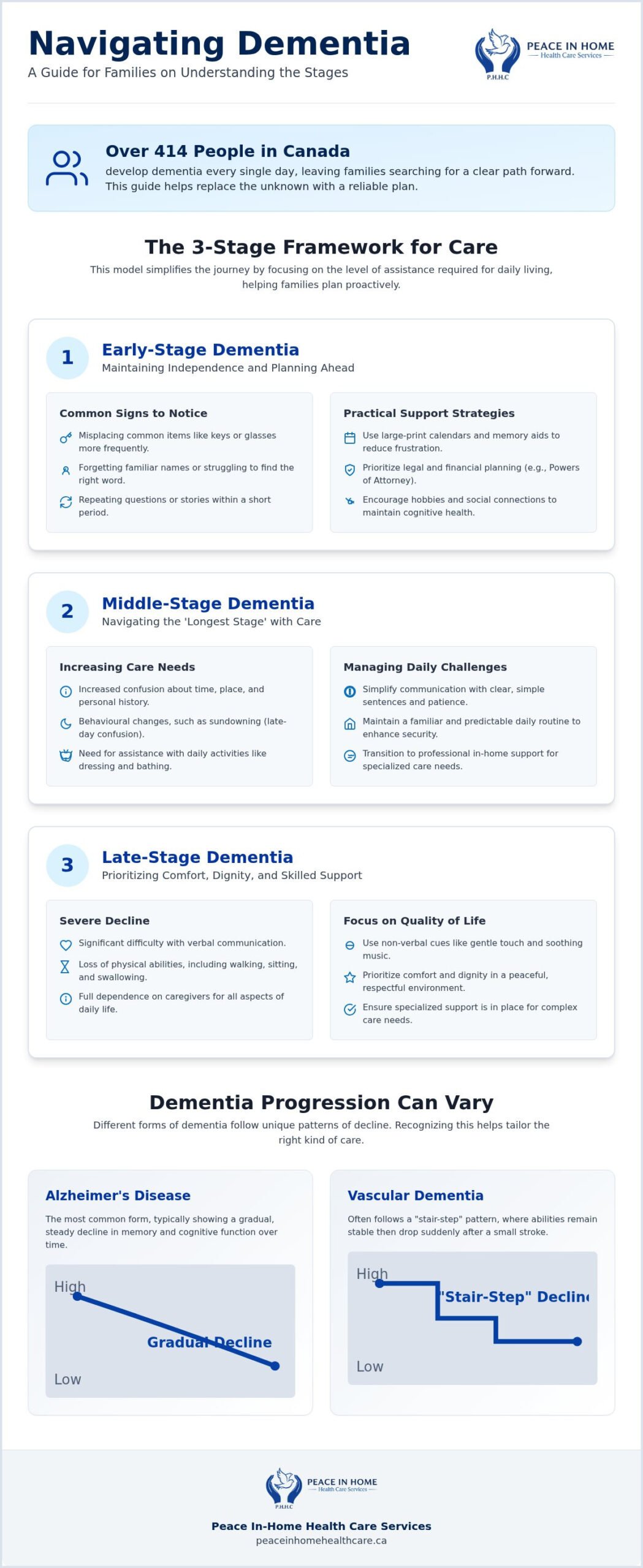
Most families find it easiest to use a simplified 3-stage model for daily care planning: early, middle, and late. This framework focuses on the level of assistance required for daily living. In contrast, your family doctor or specialist in Ontario may use the 7-stage Reisberg Scale, also known as the Global Deterioration Scale. This clinical tool offers a more granular look at cognitive decline, from “no impairment” to “very severe decline.” Doctors use these detailed markers to track the effectiveness of treatments or to determine eligibility for specific provincial support programs. It’s common for these stages to overlap; your parent might struggle with complex finances (a middle-stage trait) while still maintaining their social grace and personal grooming (an early-stage trait).
Why Understanding the Stage Matters for Toronto Families
Knowing where your loved one stands helps you move from reactive crisis management to proactive, dignified planning. In the busy GTA, accessing resources can take time, so mapping out future needs early is essential. This understanding allows you to:
- Match the right level of support, such as companionship care, to their current cognitive abilities.
- Set realistic expectations for family members, reducing the guilt that often comes from misunderstanding a loved one’s limitations.
- Avoid making rushed decisions about care during a medical emergency or a sudden decline.
Common Forms of Dementia and Their Unique Patterns
While Alzheimer’s disease is the most common cause of dementia in Canada, other types follow distinct paths. Alzheimer’s typically presents as a gradual, steady decline in memory and function. Vascular dementia, however, often follows a “stair-step” pattern where abilities remain stable for a period and then drop suddenly following a small stroke. Other forms, like Lewy Body or Frontotemporal dementia, may prioritize changes in movement or personality long before memory loss becomes obvious. Recognizing these unique stages of dementia ensures that the care provided is truly tailored to the specific challenges your family is facing.
Early-Stage Dementia: Maintaining Independence and Planning Ahead
Receiving an early-stage diagnosis is often a period of mixed emotions, ranging from relief at finally having an answer to deep concern about the future. During this phase, your loved one may still be quite independent, yet you might notice them misplacing their keys more often, forgetting familiar names, or repeating the same question within a few minutes. It’s a time to focus on “living well” by encouraging the hobbies and social connections that bring them joy. At the same time, it’s wise to quietly assess the home for early safety risks, such as checking that smoke detectors are working and discussing whether driving remains a safe option. Resources like the Canadian Hospice Palliative Care Association emphasize the value of advance care planning during these initial months.
Practical Support Strategies for the Early Stage
Simple tools like large-print calendars, digital memory aids, and a consistent daily routine can make a world of difference in reducing daily frustration. In Ontario, it’s vital to prioritize legal and financial planning, such as establishing Powers of Attorney, while your loved one can still fully participate in these meaningful conversations. Companionship care also plays a pivotal role here; it isn’t just about safety, but about providing the social stimulation that helps maintain cognitive health as the stages of dementia progress. Keeping the mind active through shared stories or light walks can significantly improve emotional well-being for everyone involved.
How In-Home Care Supports Early-Stage Independence
Many families find that introducing professional support early on makes the transition much smoother as time goes on. Our team provides errands and appointment accompaniment, which takes the logistical pressure off family caregivers and allows you to simply be a son, daughter, or spouse again. This subtle assistance with meal planning or organizing bills helps your loved one stay in their own home longer while maintaining their sense of self. By building a reliable relationship with a caregiver now, you ensure they have a trusted, familiar face by their side when care needs eventually become more intensive. If you’re wondering how to start these conversations with your parent, reaching out for a gentle consultation can help clarify your next steps and provide the peace of mind you need.
Middle-Stage Dementia: Navigating the ‘Longest Stage’ with Care
The middle stage is frequently described as the “longest stage” because it can last for several years. During this time, the symptoms of the stages of dementia become more pronounced. You might notice your loved one becoming confused about where they are or what day it is. They may struggle to remember significant details of their own personal history, leading to moments of frustration for both of you. This period also introduces “Sundowning,” a phenomenon where agitation and confusion increase as the sun sets, often leading to restless evenings for everyone in the home.
Communication becomes a delicate dance during this phase. As your loved one struggles to find the right words, you’ll need to shift from logical conversations to emotional ones. It helps to use short, clear sentences and give them plenty of time to respond. It’s about maintaining their dignity even when the words don’t come easily. By focusing on the feeling behind the words rather than the accuracy of the facts, you can maintain a deep connection even as their cognitive abilities shift.
Managing Daily Life and Behavioural Changes
In the middle stage, Activities of Daily Living (ADLs) like dressing, grooming, or bathing become more challenging. Creating a “dementia-friendly” home is essential to prevent wandering and falls. This might involve removing trip hazards or installing better lighting in hallways. Safety also extends to health management; utilizing medication reminders for seniors at home ensures that prescriptions are taken correctly, preventing dangerous errors. Beyond safety, it’s about quality of life. Structuring the day with engaging activities for dementia patients helps reduce boredom and anxiety, providing a sense of purpose and accomplishment that brightens their daily routine.
The Vital Role of Respite Care for Families
The middle stage is often when caregiver burnout peaks. The constant vigilance required can be exhausting, and it’s okay to admit that you need a helping hand. This is where respite care Toronto becomes a lifeline. It provides family members with a necessary break to recharge, knowing their loved one is in safe, professional hands. Many families find that transitioning from occasional help to daily personal care assistance helps preserve their relationship with their loved one. Instead of spending every moment on care tasks, you can go back to being a companion, sharing a quiet tea or a favourite song while a professional handles the more demanding physical needs. This support allows you to navigate the stages of dementia with more patience and peace of mind.
Late-Stage Dementia: Prioritizing Comfort, Dignity, and Skilled Support
The late stage represents the final chapter in the progression of the stages of dementia. During this time, cognitive decline becomes severe, often resulting in a total loss of verbal communication and significantly limited mobility. It’s a deeply emotional period for families as they witness their loved one becoming increasingly vulnerable. Physical changes, such as difficulty swallowing and a higher risk of infections, require a shift in focus toward comfort and the preservation of dignity. Dignity remains the priority. While conversation may fade, connection doesn’t have to; it simply changes form.
Connecting with a parent or spouse in this phase often moves into the sensory realm. The sound of a favourite piece of music, the warmth of a hand held during a quiet afternoon, or the familiar scent of a home-cooked meal can provide immense comfort. Ensuring a dignified environment through 24/7 attentive care means that your loved one is never alone and their needs are met with the utmost respect and gentleness. This level of presence helps alleviate the anxiety that often accompanies the loss of familiar cognitive markers.
Skilled Nursing and Personal Care Requirements
At this point, your loved one will likely require total personal care, including help with bathing, grooming, and incontinence support. These tasks are physically and emotionally demanding for family members to handle alone. Professional mobility and transfer assistance is critical here to prevent the development of painful bedsores and to ensure safety during daily movements. Professional nursing oversight at home allows for the management of complex health needs, such as monitoring for respiratory issues or managing specialized diets, ensuring that medical safety and personal comfort go hand in hand as the stages of dementia reach their conclusion.
Emotional Support for the Family During the Final Stage
Focusing on palliative goals within the home setting allows your loved one to remain in a familiar environment surrounded by the people they love. This approach prioritizes pain management and quality of life over aggressive medical interventions. Many GTA families find that live-in care provides the ultimate peace of mind, offering constant supervision and immediate response to any changes in condition. Even when cognitive loss is severe, moments of connection still exist. A smile in response to a familiar voice or a relaxed posture during a gentle massage are small but powerful reminders of the person you love.
Peace at Every Stage: Choosing the Right Care in the GTA
Choosing a care partner is one of the most significant decisions a family can make. In the GTA, where options can feel overwhelming, Peace In-Home Health Care stands as a stable and experienced presence. With over 17 years of experience in senior care, we’ve guided countless families through the various stages of dementia with a focus on preserving the dignity and independence of their loved ones. We don’t believe in one-size-fits-all solutions; instead, we offer personalized care plans that are designed to grow and change as your parent or spouse’s needs evolve.
A key part of our approach is the value we place on consistency. We know that for someone living with memory loss, a familiar face is more than just a convenience; it’s a source of profound security. Our caregivers take the time to learn your loved one’s history, their favourite songs, and their daily preferences. This deep-rooted relationship allows us to spot subtle changes in health or mood that a rotating staff might miss, providing a higher level of attentive support throughout the progression of the condition.
Our Specialized Dementia Care Services
Our team of professional Personal Support Workers (PSWs) receives specialized dementia training to handle the unique communication and safety challenges that arise in the home. Whether it’s managing medication reminders or providing skilled nursing care for more complex late-stage needs, our staff is equipped to handle every situation with quiet confidence. We provide flexible support across Toronto, Vaughan, Markham, and Scarborough, including:
- Respite care to give family members a vital window of rest.
- Specialized live-in care for those who require constant, 24/7 supervision.
- Mobility assistance and personal care that honours the individual’s comfort.
Taking the First Step Toward Peace of Mind
Starting the process begins with a compassionate home assessment. During this consultation, we don’t just look at medical charts; we listen to your family’s concerns and goals. We coordinate closely with your existing medical team and Ontario’s Home and Community Care Support Services to ensure that our care is a seamless extension of your loved one’s overall health plan. We’re here to stand alongside you, offering a steady hand as you navigate the stages of dementia and other complex life transitions. Choosing expert care that prioritizes your loved one’s dignity and comfort is, at its heart, a profound act of love.
Moving Forward with Confidence and Support
Understanding the journey ahead is the first step toward reclaiming a sense of calm for your family. By recognizing the specific stages of dementia, you can move from a place of uncertainty to one of proactive, dignified planning. Whether your loved one is currently navigating early memory shifts or requires the intensive support of the late stage, remember that you don’t have to carry this responsibility alone. Expert care isn’t just about managing symptoms; it’s about preserving the quality of your relationship and ensuring your parent or spouse feels safe and respected in their own home.
With over 17 years of dedicated experience, our specialized dementia and Alzheimer’s care experts are here to provide a steady hand. We proudly serve families across Toronto, Mississauga, Oakville, and the entire GTA, offering the reliable support needed to age in place with grace. You’ve already taken an important step by educating yourself on what to expect. Now, let us help you turn that knowledge into a personalized plan that brings peace back to your household.
You’re doing an incredible job navigating this transition for your family. We’re here to walk beside you every step of the way.
Frequently Asked Questions
What are the first signs that dementia is progressing to the next stage?
The first signs of progression usually involve a noticeable decline in the ability to handle daily tasks independently. You might see your loved one struggle with things they previously managed, like following a recipe or using the television remote. Increased confusion about the time of day or getting lost in a familiar neighbourhood are also common indicators that the condition is moving forward.
How long does each stage of dementia typically last?
The duration of each stage varies significantly for every person, though the middle stage is generally the longest, often lasting several years. While the average lifespan after diagnosis is eight to ten years, some individuals live with the condition for much longer. Factors such as the type of dementia, overall physical health, and the quality of care provided play a major role in this timeline.
Can someone stay at home through the late stage of dementia?
It’s entirely possible to stay at home through the late stages of dementia with the right professional support. Specialized services like live-in care or skilled nursing oversight ensure that your loved one remains safe, comfortable, and dignified in a familiar environment. Aging in place allows them to stay surrounded by their personal history while receiving the high level of physical care they need.
What is the difference between Alzheimer’s and other forms of dementia?
Dementia is an umbrella term for cognitive decline, while Alzheimer’s is a specific disease that accounts for the majority of cases in Canada. Other forms, such as vascular dementia or Lewy body dementia, often have different causes and progression patterns. For example, vascular dementia might cause sudden drops in ability following a small stroke, whereas Alzheimer’s typically involves a more gradual fading of memory.
When is the right time to hire a professional caregiver for dementia?
The right time to hire help is when safety risks increase or when family caregivers begin to feel overwhelmed by the daily demands of care. If you notice missed medications, unexplained falls, or wandering, it’s time to consider professional assistance. Introducing a caregiver early also helps your loved one build a trusted relationship before their needs become more intensive and complex.
Does the Ontario government provide support for dementia care at home?
The Ontario government provides support through Home and Community Care Support Services, which offers assessments and some funded hours for personal care. While these services are a helpful starting point, many families find they need to supplement government hours with private care to ensure consistent, specialized support. We coordinate with these existing services to create a seamless care plan for your family.
How can I tell if my loved one is in the middle or late stage?
The transition from the middle to late stage is usually marked by a shift from cognitive confusion to significant physical vulnerability. In the middle stage, a person might still be mobile but very confused about their personal history. By the late stage, they often lose the ability to communicate verbally and require total assistance with physical tasks like swallowing, moving, or personal grooming.
What is ‘Sundowning’ and at what stage does it usually begin?
Sundowning refers to a state of increased agitation, confusion, and restlessness that occurs in the late afternoon or early evening. It typically begins or becomes more prominent during the middle stages of dementia as the brain’s internal clock becomes disrupted. Providing a calm, well-lit environment and sticking to a predictable daily routine can help reduce the stress associated with this challenging time of day.