

Did you know that 68% of Ontario caregivers report having reached their breaking point? When you’re managing 24/7 duties, the weight of chronic fatigue and constant anxiety can feel like an invisible shadow. It’s natural to feel protective of your loved one, but pushing yourself to the limit often leads to a decline in your own health, making it harder to provide the dignified, personalized care they deserve.
We understand that the thought of leaving a family member with someone you don’t know can be daunting, especially when you’re already navigating the confusion of government waitlists. This guide is designed to help you find a sustainable balance while preventing caregiver burnout Toronto families often face. You’ll learn how to identify the early warning signs of exhaustion and how to access professional respite care that prioritizes safety and comfort.
We’ll walk through the practical steps of finding a trustworthy caregiver and compare private support with public programs, ensuring you find a path that lets you recharge while your loved one receives attentive, personalized support at home.
Key Takeaways
- Recognize the unique pressures facing Toronto’s “Sandwich Generation” and why professional support is a vital intervention for family health.
- Identify five critical warning signs for preventing caregiver burnout Toronto families often overlook, including persistent fatigue and emotional resentment.
- Explore flexible respite options tailored to your routine, ranging from hourly companionship and meal preparation to 24/7 live-in care.
- Learn the essential vetting questions to ask regarding background checks and specialized training to ensure your loved one receives dignified, professional support.
- Discover how a personalized “Meet and Greet” helps find a reliable caregiver who matches your loved one’s personality and specific care needs.
Understanding Caregiver Burnout: The Reality for Toronto’s “Sandwich Generation”
Caregiver burnout is more than just a bad day or a week of poor sleep. It is a state of physical, emotional, and mental exhaustion caused by the weight of chronic stress. Many families across the Greater Toronto Area experience what experts call caregiver burden, where the relentless demands of looking after a loved one eventually outweigh the available support. While normal fatigue usually lifts after a restful weekend, burnout is a deeper, more persistent sense of being completely drained. Focusing on preventing caregiver burnout Toronto families often experience requires a shift in how we view rest and self-care.
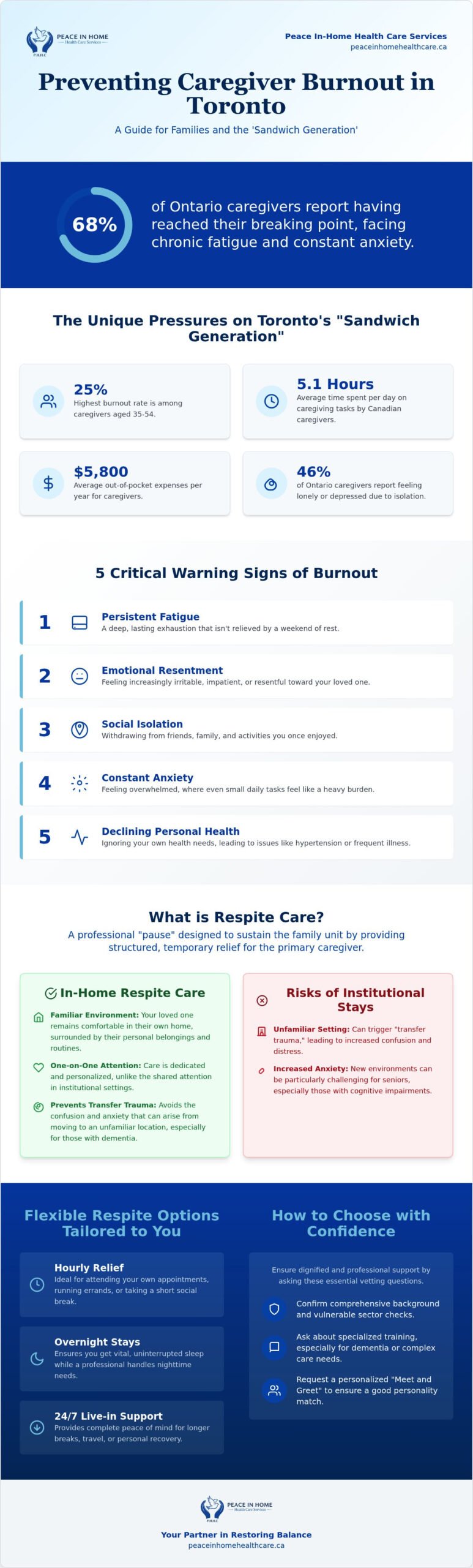
In a high-cost city like Toronto, the “Sandwich Generation” faces unique and intense pressures. These are adults caught between the needs of their growing children and the care requirements of their aging parents. Data shows that caregivers aged 35 to 54 show the highest rates of burnout at 25%. Balancing these dual roles in a fast-paced environment frequently leads to a “caregiver crisis” where the stability of the entire family is threatened. When the primary caregiver is pushed to their limit, the ripple effect impacts everyone in the home.
The Stressors of Caregiving in the GTA
Living in Toronto often means managing a demanding career alongside home care duties. The financial strain is a significant factor; Canadian caregivers spend an average of 5.1 hours per day on care tasks and often face out-of-pocket expenses averaging $5,800 per year. This constant pressure leads to social isolation. When your evenings and weekends are consumed by medication schedules and errands, you lose the vital connection to your local community and friends. This isolation is a major contributor to the 46% of Ontario caregivers who report feeling lonely or depressed.
Why “Pushing Through” is Not a Sustainable Strategy
Many people believe they can simply work harder to manage their responsibilities. However, unmanaged stress directly impacts the quality of personal care assistance for seniors. When you are running on empty, your patience wears thin and small daily tasks can feel overwhelming. With 68% of Ontario caregivers reporting they have reached their breaking point, the need for proactive support is clear. This is why preventing caregiver burnout Toronto is so essential; it protects the dignity of the senior and the health of the caregiver. Ignoring these symptoms often leads to chronic health issues like hypertension or anxiety for the person providing care. Burnout is a clinical risk factor for both the caregiver and the senior.
What is Respite Care? Exploring Your Options in Toronto
Respite care is often misunderstood as a luxury or a service reserved only for emergencies. In reality, it is a professional “pause” designed to sustain the family unit. It allows the primary caregiver to step back and recharge while a trained professional steps in to provide continuity of care. This structured relief is one of the most effective tools for preventing caregiver burnout Toronto families can access. Whether you need a few hours to attend your own medical appointments or a full week to take a restorative break, respite care ensures your loved one’s safety and dignity remain the top priority.
Support is not one-size-fits-all. Relief can be tailored to your specific schedule through various formats:
- Hourly Relief: Perfect for managing daily errands or social engagements.
- Overnight Stays: Essential for caregivers who need to catch up on vital sleep while a professional manages nighttime wandering or medication needs. Families caring for a loved one with cognitive decline can learn more about overnight respite care for dementia patients and how it can restore the restorative sleep both you and your loved one need.
- 24/7 Live-in Support: Provides around-the-clock peace of mind for longer periods, such as when the primary caregiver is travelling or recovering from their own illness.
In-Home Respite vs. Institutional Care
Many families feel pressured to consider institutional short-stays in long-term care facilities. However, moving a senior to an unfamiliar setting can trigger “transfer trauma,” leading to increased confusion and anxiety, particularly for those living with dementia. Choosing in-home respite allows your loved one to remain in their familiar environment, surrounded by their own belongings and routines. This model offers dedicated one-on-one attention that facility staff simply cannot provide. It results in a truly personalized senior care in Toronto experience where the care plan revolves entirely around the individual’s preferences and daily habits.
Government-Funded vs. Private Respite Services
Navigating the local healthcare landscape often involves a choice between public and private support. Ontario Health atHome (formerly LHIN) provides funded respite hours, but high demand in the GTA often leads to significant waitlists and limited flexibility in scheduling. Private respite services offer an immediate alternative with no wait times and the ability to hand-pick a caregiver who matches your loved one’s personality. While government programs are a helpful foundation, many families find that private care is necessary to fill the gaps in a sustainable way. Learning about 7 ways to help prevent caregiver burnout often starts with recognizing that your time is valuable and that waiting for public funding shouldn’t come at the cost of your health.
Finding the right balance for your family doesn’t have to be a solo journey. If you’re feeling overwhelmed by the options, reaching out for a gentle conversation about your specific situation can help clarify the best path forward.
5 Critical Signs You Need Immediate Caregiver Relief in the GTA
Recognizing the transition from “busy” to “burnt out” isn’t always easy. It often happens gradually; one day you’re managing fine, and the next, you feel like you’re drowning. Identifying these red flags early is the most effective way of preventing caregiver burnout Toronto families can use to protect their well-being. If you find yourself checking off more than one of these signs, it’s time to consider professional respite support.
- Unrelenting Exhaustion: You wake up feeling just as tired as when you went to bed. This isn’t normal fatigue; it’s a deep physical drain that affects your ability to function.
- Growing Resentment: You feel a sharp increase in irritability or even resentment toward your loved one. These emotions are often a symptom of being overextended rather than a reflection of your relationship.
- Self-Neglect: You’ve started skipping your own dental cleanings, medication doses, or routine check-ups because there simply isn’t enough time in the day.
- Shrinking Social Circles: Your life in North York or Scarborough has narrowed to the four walls of your home. If you’ve stopped seeing friends or participating in community events, you’re at high risk for isolation.
- Safety Risks: You realize your loved one’s physical or medical needs have become too complex for one person to handle. This might include difficulty with transfers or managing complex medication schedules.
The Physical Warning Signs
The body often speaks before the mind realizes something is wrong. Chronic pain, particularly back strain from mobility assistance, is a common indicator that you need help. Sleep deprivation does more than make you grumpy; it actively impairs your decision-making and reaction times, which can lead to accidents in the home. When medical needs escalate beyond basic support, seeking skilled nursing care at home Toronto ensures both you and your loved one stay safe. Professional nurses can manage technical tasks, allowing you to return to your role as a supportive family member.
Emotional and Behavioural Red Flags
Mental health is just as critical as physical safety. Feelings of hopelessness or being “trapped” in a never-ending cycle are serious indicators that the current situation is unsustainable. You might find yourself withdrawing from friends in Vaughan or Mississauga, avoiding phone calls because you don’t have the energy to talk. It’s also vital to remember that your stress isn’t a secret. Seniors are often highly sensitive to the emotional state of their caregivers; unmanaged stress can negatively impact their own emotional well-being and sense of security. Taking proactive steps toward preventing caregiver burnout Toronto isn’t just for you; it’s a gift of peace for your loved one as well.
How to Choose and Prepare for a Respite Caregiver
Inviting a new person into your home to care for a parent or spouse is a deeply personal decision. It’s natural to feel a mix of relief and hesitation. However, finding a professional who aligns with your family’s values is a vital part of preventing caregiver burnout Toronto families frequently encounter. The goal is to move from a place of constant worry to a partnership built on trust and reliable support. This transition works best when you combine thorough vetting with a gentle introduction for your loved one.
Before you commit to a schedule, start with a “Meet and Greet.” This isn’t just an interview; it’s an opportunity to see how the caregiver interacts with the senior. Look for a “human-first” approach where the caregiver speaks directly to your loved one with dignity and respect. If the personality match feels right, start small. Introducing a professional for just two or three hours while you stay in the home can help everyone feel more comfortable before you move toward longer shifts or overnight stays.
Vetting Toronto Home Care Agencies
When evaluating providers, look beyond the basic list of services. Ask specific questions about their insurance coverage, the depth of their background checks, and how they train their staff for specialized conditions like Alzheimer’s or Parkinson’s. It is also essential to understand their backup plan; if a caregiver is unwell, how does the agency ensure your loved one isn’t left without support? Part of this evaluation should include understanding the differences between skilled nursing vs non-medical home care, so you can confirm the agency offers the precise level of clinical expertise your loved one requires. Evaluating an agency’s reputation for home care services for seniors Toronto can provide the professional reassurance you need to step away with confidence.
Preparing Your Loved One for the Transition
The way you frame the arrival of a caregiver can significantly impact your loved one’s receptivity. Instead of using clinical terms, try using person-centred language. Introduce the caregiver as a “companion” or a “helper” who is there to assist with daily routines so you can focus on being a daughter, son, or spouse. For families seeking home care Etobicoke, finding local staff who understand the rhythm of the neighbourhood can add a layer of comfort and familiarity.
Finally, create a “Care Binder” to serve as a reliable guide for the professional. This should include:
- Updated medication lists and dosage times.
- Emergency contact numbers for family and family physicians.
- Daily preferences, such as favourite meals, preferred nap times, and topics of conversation that bring them joy.
- A brief overview of their typical routine to ensure continuity and reduce confusion.
By organizing these details, you aren’t just passing on information; you’re ensuring that the high standard of personalized care you provide is maintained while you take the time you need for preventing caregiver burnout Toronto.
Peace In-Home Health Care Services: Your Partner in Restoring Balance
Choosing a care partner is about more than just filling a schedule; it’s about finding someone who understands the emotional weight of your journey. Peace In-Home Health Care Services has spent over 17 years acting as a trusted guide for families across the GTA. We believe that preventing caregiver burnout Toronto requires a compassionate approach that treats your loved one with the same dignity and respect we would offer our own family. Our legacy is built on providing professional reassurance when you need it most, allowing you to step back without the burden of guilt or anxiety.
Our approach is never one-size-fits-all. We develop tailored respite plans that evolve alongside your family’s changing needs. Whether you require a few hours of companionship or more complex support, our team is here to ensure your peace of mind remains intact. By booking a free in-home assessment, you can begin the process of rediscovering your own health and balance while knowing your loved one is in safe, attentive hands.
Comprehensive Support Beyond Basic Relief
We understand that a senior’s needs are multifaceted. This is why Peace In-Home Health Care Services focuses on integrating companionship care for seniors Toronto with practical and medical support. Our caregivers don’t just sit in a room; they actively engage with your loved one while managing essential daily tasks. This includes meal preparation, light housekeeping, and medication reminders, ensuring the home remains a comfortable and organized environment. For families dealing with cognitive decline, we offer specialized respite care for dementia caregivers. Our staff is trained to manage the specific challenges of wandering and sundowning with patience and deep-rooted experience.
Expert Care Across Toronto and the GTA
Our local expertise extends across the entire region, providing reliable support to families in Markham, Richmond Hill, and Mississauga. Peace In-Home Health Care Services prides itself on being a steady presence in a time of uncertainty, maintaining the highest standards of safety for every senior we serve. We aren’t just a service provider; we are advocates for aging in place and protectors of your loved one’s independence. If you are ready to take the first step toward preventing caregiver burnout Toronto, we are here to walk that path with you. Our goal is to restore the “peace” in your home through consistent, high-integrity care.
Take the First Step Toward Restoring Your Peace of Mind
Caring for a loved one is a profound act of devotion, but it shouldn’t require you to sacrifice your own well-being. As we’ve explored, recognizing the subtle red flags of exhaustion and choosing a reliable partner are the most effective strategies for preventing caregiver burnout Toronto families can implement. By shifting from a state of constant, isolated stress to a supported partnership, you ensure your parent or spouse receives the dignified, person-centred care they deserve while you regain the capacity to simply be their family member again.
With over 17 years of experience across the GTA and a dedicated team of specialized dementia care experts, Peace In-Home Health Care Services is here to act as your trusted guide. You don’t have to navigate these complex life transitions alone. We are committed to providing the professional reassurance you need to finally take a breath and focus on your own health, ensuring you have the strength to be present for the moments that truly matter.
You deserve to feel supported while you care for those you love. Let’s work together to find a sustainable balance that brings lasting peace back to your daily life.
Frequently Asked Questions
How much does respite care cost in Toronto?
The cost of respite care in the GTA depends on the level of specialized support your loved one requires. Basic companionship or light housekeeping usually involves a different hourly rate than complex dementia care or skilled nursing. We recommend a personalized assessment to determine a plan that fits your family’s specific needs and budget while ensuring you receive the rest you need.
Is respite care covered by OHIP or insurance in Ontario?
OHIP does not directly pay for private in-home respite services, but you may be eligible for funded hours through Ontario Health atHome. Many private insurance providers and employee benefit plans offer coverage for home care services. You can also explore the Canada Caregiver Credit and the Ontario Seniors Care at Home Tax Credit to help manage your annual expenses.
Can I get respite care on short notice in the GTA?
Private agencies offer much more flexibility than government programs and can often arrange support within a few days. While public waitlists for developmental or senior support can be quite long, private care provides an immediate solution. This quick response is vital for preventing caregiver burnout Toronto families experience when an unexpected illness or emergency arises.
What is the difference between respite care and home care?
The difference is primarily the goal of the service rather than the tasks performed. Respite care is a specific type of support intended to give the primary caregiver a temporary break. Home care is a broader category that includes any professional service provided in the residence, such as personal care assistance or medication reminders, which can all be part of a respite plan. Families who are unsure whether their loved one needs clinical oversight or daily assistance can benefit from reviewing a detailed comparison of skilled nursing vs non-medical home care to make the most informed decision.
How many hours of respite care can I receive through government funding?
Government-funded hours are determined by an individual assessment and are often limited based on local demand. For those using short-stay options in a long-term care home, the province allows up to 90 days of respite per year. Since public hours may not cover every need, many families use private services to fill the gaps and ensure consistent, reliable support.
Will my loved one have the same caregiver every time?
We prioritize consistency because we know that a familiar face brings comfort and security to a senior. Our goal is to match your loved one with a reliable caregiver who stays with them for every scheduled visit. This allows a genuine relationship to form, which makes the transition much easier for both the senior and the family.
Do you provide overnight respite care for dementia patients?
Yes, we provide specialized overnight care designed to keep individuals with dementia safe and comfortable. Our caregivers are experienced in managing nighttime wandering, confusion, and sundowning. Families who want to understand exactly what this service involves and how it can help are encouraged to explore our dedicated resource on overnight respite care for dementia patients in the GTA. This attentive support allows you to get the restorative sleep you need, which is a critical part of preventing caregiver burnout Toronto.
What areas of the GTA do you serve for respite services?
We provide dignified, person-centred care across a wide range of local communities. Our primary service areas include Toronto, Vaughan, Markham, and Mississauga. We also provide support to families in Richmond Hill, Scarborough, and Etobicoke. If you live in a surrounding area, please reach out to us to confirm our current availability in your neighbourhood.