

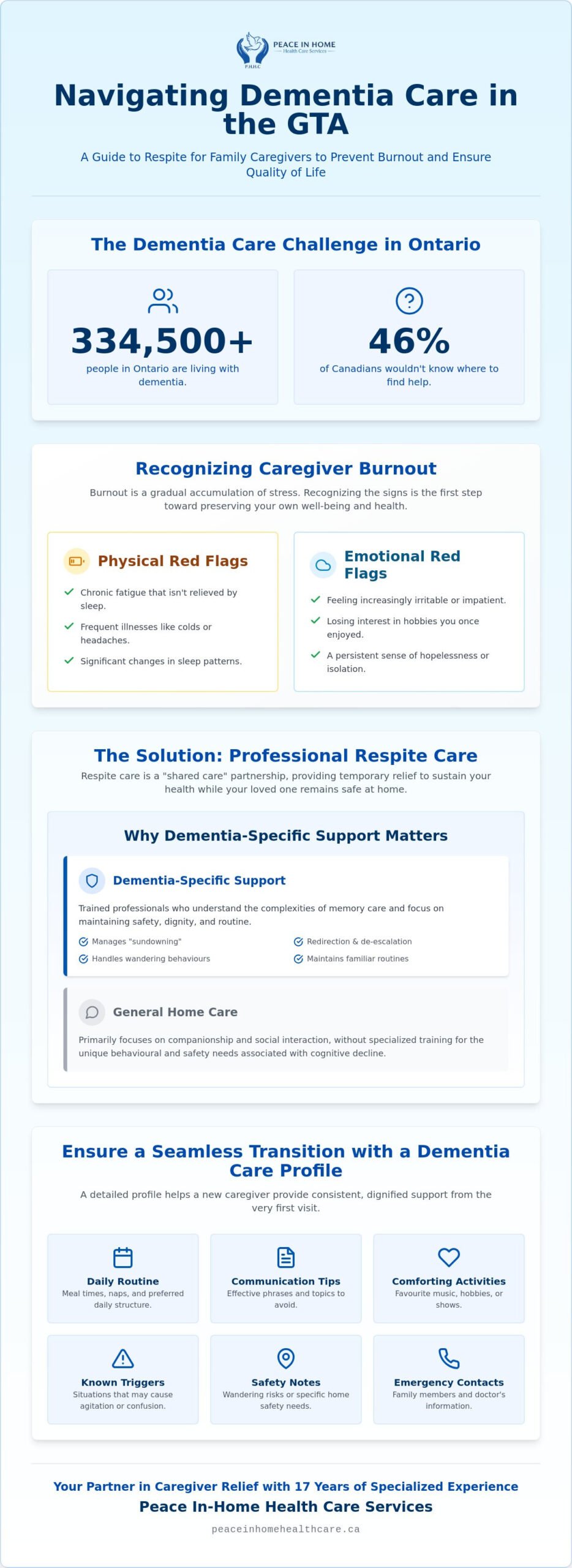
Did you know that over 334,500 people in Ontario are currently living with dementia, yet 46% of Canadians admit they wouldn’t know where to find help if they needed it? If you’re a family member in the Greater Toronto Area providing around-the-clock support, you’ve likely felt the weight of this statistic firsthand. You want the best for your loved one, but the physical exhaustion and constant worry can quickly lead to burnout. It’s natural to feel a sense of guilt when thinking about taking a break, but your health is just as vital as the care you provide. Choosing respite care for dementia caregivers isn’t about stepping back; it’s about ensuring everyone in the home can thrive.
You deserve to feel confident that your loved one is safe and respected while you take time to recharge. This guide will help you understand how professional support can enhance your quality of life and prevent the physical toll of caregiving. We’ll walk you through the differences between Ontario Health atHome and private care, explain how to find a PSW who truly understands dementia-specific behaviours, and provide a clear path toward finding peace of mind for your entire family. Discover how a little extra support can help you maintain your own health while keeping your loved one safely in the comfort of their own home.
Key Takeaways
- Understand how a shared care model allows you to partner with professional PSWs while remaining the heart of your loved one’s support system.
- Learn to identify the subtle physical and emotional red flags of caregiver burnout before they impact your own long-term health.
- Explore the specific differences between community programmes and personalized respite care for dementia caregivers to find the best fit for your family’s routine.
- Discover how creating a detailed Dementia Care Profile ensures a new caregiver provides seamless and dignified support from the very first visit.
- See how 17 years of specialized experience across the GTA can help you transition from feeling overwhelmed to having a reliable, compassionate partner.
What is Respite Care for Dementia Caregivers?
Respite care for dementia caregivers is a professional service designed to provide a temporary, supportive break for those who act as the primary source of support for a loved one. It isn’t a permanent transition or a sign that you can no longer manage; rather, it operates on a “shared care” model. In this setup, a professional Personal Support Worker (PSW) steps in to assist with daily tasks, allowing you to step back and recharge. When families ask, What is Respite Care?, they’re often searching for a way to sustain their own health while keeping their loved one at home. In Ontario, these services are incredibly flexible. You might only need a few hours on a Tuesday afternoon to run errands, or you might require 24/7 overnight support during a family emergency. The goal is to provide a seamless bridge of care that maintains the dignity and safety of the person living with dementia.
The Vital Role of Caregiver Relief in the GTA
Living in busy urban centres like Toronto, or growing suburban areas like Vaughan and Markham, presents unique challenges for families trying to help a senior age in place. The fast pace of the city and the logistical hurdles of traffic can make even a simple doctor’s appointment for yourself feel like an impossible task. Respite care for dementia caregivers provides the essential freedom to attend to your own medical needs, rest, or simply enjoy a quiet afternoon without the constant pressure of monitoring a loved one. This relief is a clinical necessity that helps prevent the physical exhaustion often associated with long-term caregiving. By utilizing local support, you ensure that you aren’t carrying the entire weight of responsibility alone, which ultimately allows you to be a more patient and present caregiver when you return.
Dementia-Specific Support vs. General Home Care
It’s vital to recognize that memory care requires a much higher level of specialized training than general companion care. While a companion might provide wonderful social interaction, a dementia-trained respite worker understands the complexities of redirection and de-escalation. They’re equipped to manage “sundowning,” a period of increased confusion and agitation that often occurs in the late afternoon, or wandering behaviours that can pose a safety risk. These professionals focus on maintaining a familiar routine, which is the cornerstone of comfort for someone with cognitive decline. By using person-centered techniques, they can manage difficult transitions and ensure your loved one feels secure and respected in their own home, even when their primary caregiver is away for a few hours.
Recognizing Caregiver Burnout: Why You Need a Break
Caring for a family member with cognitive decline is an act of profound love, but it’s also one of the most physically and emotionally demanding roles a person can undertake. Many people don’t realize they’re reaching their limit until they’re already in the midst of a crisis. Burnout doesn’t happen overnight; it’s a slow accumulation of stress that eventually impacts every facet of your life. When you reach this point, finding respite care for dementia caregivers isn’t just a helpful option. It’s a necessary step to preserve your own well-being and the quality of care you provide.
The physical symptoms of burnout often manifest as chronic fatigue that sleep doesn’t fix, frequent illnesses like colds or headaches, and significant sleep disturbances. Emotionally, you might find yourself feeling increasingly irritable with your loved one, losing interest in the hobbies you once enjoyed, or experiencing a sense of hopelessness about the future. Many families fall into “Martyr Syndrome,” believing they’re the only ones who can truly understand or care for their loved one. This mindset often leads to isolation and prevents you from seeing that a rested caregiver is a more patient, present, and effective advocate for their family member.
The Health Impacts of Long-Term Dementia Caregiving
Caregiver burnout is a clinical state of physical and emotional exhaustion that occurs when the stresses of caregiving outweigh the resources available to the individual. Research consistently shows that primary caregivers face a significantly higher risk of developing depression and heart disease compared to their non-caregiving peers. There is also the phenomenon of “stress contagion,” where the person living with dementia senses and reacts to your internal anxiety. If you’re feeling overwhelmed, your loved one may become more agitated or confused in response. Understanding the Benefits of Respite Care can help you see that taking a break actually creates a calmer environment for everyone in the home.
Reframing Respite: From Guilt to Professional Support
It’s common to feel a pang of guilt when you first consider “handing over” your responsibilities to a professional. You might worry that no one else can manage their unique behaviours or that you’re somehow failing in your duty. However, professional support is a sign of proactive management, not a sign of weakness. Think of respite as a vital “recharge” that prevents a total collapse or the need for a premature move to a long-term care facility. By inviting a professional into your home, you’re ensuring that your loved one remains safe while you take the time needed to sustain your own health. If you’re feeling the weight of these responsibilities, you can reach out to a care coordinator to discuss how a tailored plan can support your family’s specific needs.
Types of Respite Care Available in Ontario
Every family’s journey with memory loss is different, which is why respite care for dementia caregivers comes in several forms to suit various schedules and needs. Finding the right fit depends on your loved one’s comfort level and the specific type of break you require. Whether you need a few hours to handle groceries or a few weeks to recover from an illness, there’s a supportive solution available in the GTA. Common options include:
- In-Home Respite: A professional caregiver visits your home in neighbourhoods like Scarborough, Etobicoke, or North York to provide one-on-one support.
- Adult Day Programmes: Your loved one spends the day in a community centre setting, participating in social and therapeutic activities designed for seniors.
- Short-Stay Care: This involves a temporary placement in a long-term care home, often used when a primary caregiver needs an extended break of a few days or weeks.
- Overnight Care: This is specialized support for families who struggle with “sundowning” or for seniors who become active and confused during the night.
The Benefits of In-Home Respite Care
For many families, in-home care is the preferred choice because it allows the senior to remain in a familiar, comfortable environment. People living with dementia often rely on environmental cues to feel safe; a move to a new facility, even temporarily, can sometimes trigger increased confusion or anxiety. When a professional PSW comes to you, they can provide personal care assistance for seniors while maintaining the household’s natural rhythm. This flexibility is invaluable. You can schedule a four-hour block to attend a family event or arrange for full-time live-in support if you need to travel. It’s a dignified way to ensure your loved one receives attentive care without the stress of a major transition. Families in western Toronto communities can also explore home care Etobicoke residents trust to understand how local, specialized support can bring both safety and peace back to daily family life.
Navigating Government Funding vs. Private Care
In Ontario, the system can feel complex to navigate while you’re already under pressure. Publicly funded hours are managed through Ontario Health atHome, where a care coordinator assesses your eligibility for a limited number of respite hours. While this is a helpful starting point, many families in the GTA find that government-allotted time doesn’t fully cover their needs. You might find yourself supplementing these hours with private agency support to ensure consistent coverage. Private care offers the added advantage of more personalized matching; you have more control over choosing a caregiver whose personality and experience align with your loved one’s specific behaviours. Recent Ontario government support for dementia caregivers has aimed to expand these resources, but a mix of public and private support remains the most reliable path for many local families.
How to Prepare Your Loved One for a New Caregiver
Bringing a new face into the home is a sensitive transition for someone living with cognitive decline. To ensure that respite care for dementia caregivers remains a positive experience for everyone, a thoughtful introduction is essential. Start by arranging a short “meet and greet” session where the new PSW can observe the household dynamic without the pressure of immediate care tasks. This gradual approach helps build trust and allows your loved one to become familiar with the caregiver’s voice and presence while you’re still nearby to offer reassurance.
Beyond the initial introduction, creating a “Dementia Care Profile” is one of the most effective tools for a successful hand-off. This document should go beyond medical history to include personal preferences, such as specific likes and dislikes, and known triggers that might cause agitation. Organizing the home environment is equally important; ensure that medical supplies are easily accessible and that pathways are clear to prevent falls. By providing these details, you empower the professional to provide tailored support that respects your loved one’s unique personality and dignity.
Creating a Familiar Routine for the PSW
Consistency is the cornerstone of comfort for those with memory loss. Documenting the “daily flow” helps the caregiver maintain a sense of normalcy in your absence. This includes preferred meal times, favourite television shows, and specific phrases that you’ve found helpful for calming your loved one during difficult moments. It’s also the perfect time to review the protocol for medication reminders to ensure doses are documented and never missed. Finally, keep a “Crisis Contact List” in a visible spot, including the family doctor and your preferred hospital in Toronto, so the PSW feels confident and prepared for any situation.
Managing the First Respite Visit
When the first scheduled visit arrives, try leaving for a short walk or a quick errand during the first hour. This allows the senior and the caregiver to establish their own rapport without you acting as a middleman. If your loved one experiences separation anxiety, try to avoid long, emotional goodbyes, which can sometimes escalate the situation. Instead, leave a “comfort item,” like a familiar photo album or a pre-recorded video message they can watch if they feel unsettled. These small touches go a long way in ensuring respite care for dementia caregivers is a source of peace rather than stress. If you’re ready to create a personalized plan for your family, speak with a care expert today to get started.
Peace In-Home Health Care: Your Partner in Caregiver Relief
Peace In-Home Health Care has spent over 17 years serving families across the Greater Toronto Area. We’ve seen firsthand how the right support can transform a household from a place of stress to one of stability. Our “Compassionate Expert” philosophy means we don’t just send a worker; we carefully match a caregiver to your loved one’s unique personality and specific clinical requirements. This ensures the respite care for dementia caregivers we provide feels like a natural, respectful extension of your own family’s care. From light housekeeping and meal preparation to specialized overnight support and skilled nursing, our models are designed to be as flexible as your life demands. We’re here to be a steady partner, offering guidance that is as professional as it is kind.
Our local focus allows us to provide a high level of attentive service to families from Burlington to Barrie. We believe in a human-first approach that prioritizes the emotional well-being and dignity of the individual. This means our caregivers aren’t just there to complete a checklist of tasks; they’re there to build a meaningful connection. By choosing a provider with deep-rooted experience in the GTA, you’re gaining a partner who understands the local healthcare landscape and can help you navigate the complexities of aging in place with quiet confidence and reliability.
Tailored Support for Families in Toronto and Beyond
We understand that every community has its own specific needs. Whether you’re in Richmond Hill, Markham, or Oakville, our team provides a local presence you can truly rely on. Our companionship care is often woven into our respite services to help reduce the feelings of loneliness and isolation that sometimes accompany cognitive decline. By focusing on the whole person rather than just their diagnosis, we’re able to preserve the dignity and independence of every senior we serve. We’re proud to be a trusted guide for families, offering a supportive hand that ensures your loved one feels safe and respected in their own home.
Taking the First Step Toward Peace of Mind
You don’t have to wait until you’re at the point of total physical or emotional exhaustion to ask for help. In fact, the most successful care journeys often begin when families are still feeling relatively stable and are looking to maintain that balance. Our process is designed to be low-stress and straightforward, mirroring the calm we aim to bring into your home. It starts with a simple inquiry, followed by a thorough, supportive discussion of your family’s needs. From there, we develop a personalized care plan that evolves as your situation changes. This proactive approach ensures that respite care for dementia caregivers is always available when you need it most, providing a clear path forward. When you’re ready for a partner you can trust, Contact Peace In-Home Health Care for a compassionate consultation today and let us help you find the peace of mind you deserve.
Securing a Brighter Future for Your Family
Taking the first step toward professional support is a powerful act of advocacy for both yourself and your loved one. You’ve seen how recognizing the early signs of burnout and preparing a detailed care profile can create a sustainable, peaceful home environment. By choosing a partner with over 17 years of compassionate home care experience, you ensure that your family member receives support from staff who’ve undergone specialized Alzheimer’s and dementia training. This expertise is vital for maintaining the safety and dignity of seniors across the entire Greater Toronto Area.
Reliable respite care for dementia caregivers allows you to prioritize your own health without sacrificing the quality of support your loved one receives. You don’t have to navigate these complex transitions alone. Our team is here to provide the steady hand and expert guidance you need to reclaim your energy and focus on your relationship. We’re committed to helping you find a balance that works for your unique situation.
Book a Free Respite Care Consultation for Your Loved One today and take the first step toward lasting peace of mind.
Frequently Asked Questions
Is respite care for dementia caregivers covered by OHIP?
Publicly funded home care is not covered directly by OHIP; instead, it is managed through Ontario Health atHome. If your loved one qualifies after a professional assessment, the government may provide a specific number of hours at no cost to you. Many families in the GTA choose to supplement these limited hours with private care to ensure they have consistent, reliable support that meets their full schedule.
How do I know if it is time to hire respite care for my parent?
It is time to seek support when your own physical or emotional health begins to decline. If you find yourself feeling constantly exhausted, socially withdrawn, or increasingly irritable with your parent, these are clear signs of burnout. Proactively arranging respite care for dementia caregivers before you reach a point of total collapse ensures you can continue providing high-quality care over the long term.
Can respite care happen overnight for dementia patients who wander?
Yes, specialized overnight respite is specifically designed to support seniors who are active or confused during the night. This service is essential for families managing “sundowning” or wandering behaviours, as it allows the primary caregiver to sleep soundly knowing a professional is awake to ensure safety. A trained PSW can provide gentle redirection and monitoring throughout the night to prevent falls or elopement.
What qualifications should a dementia respite caregiver have in Ontario?
A qualified caregiver should be a certified Personal Support Worker (PSW) with additional specialized training in Alzheimer’s and dementia care. This training ensures they understand clinical techniques for de-escalation, redirection, and managing cognitive changes with dignity. You should also look for a provider who emphasizes personality matching to ensure the caregiver can build a genuine, supportive rapport with your loved one.
How do I introduce a stranger to a loved one who is suspicious or fearful?
Start with a gradual introduction, perhaps by inviting the caregiver over for a short “meet and greet” while you are still present. If your loved one is suspicious, it sometimes helps to introduce the professional as a “friend” or a “household assistant” rather than a caregiver. Focusing on a shared activity, like looking at old photos or preparing a light snack, can help bridge the gap and build trust naturally.
What is the difference between a PSW and a respite care worker?
A Personal Support Worker (PSW) is a professional designation, while a respite care worker describes the specific role being filled. In most reputable GTA agencies, the person providing respite care is a trained PSW. This means they have the clinical skills to assist with personal hygiene and mobility, while the “respite” aspect of their job focuses on giving the family caregiver a much-needed temporary break.
How many hours of respite care can I get through Ontario Health atHome?
The number of hours you receive is determined by a Care Coordinator’s assessment and depends on the senior’s needs and local resource availability. Publicly funded hours are often limited to a few hours per week, which may not cover all your requirements. Because of these limits, many Toronto families use private services to gain more control over their schedule and the consistency of their caregiver.
Can I use respite care only for emergencies, or can it be a regular schedule?
You can use respite care for both sudden emergencies and as a part of your regular weekly routine. While emergency care is vital for unexpected illnesses or family obligations, a regular schedule is often more effective for preventing long-term burnout. Having a dependable, recurring block of time for yourself allows you to maintain your own health and appointments with confidence and consistency.