

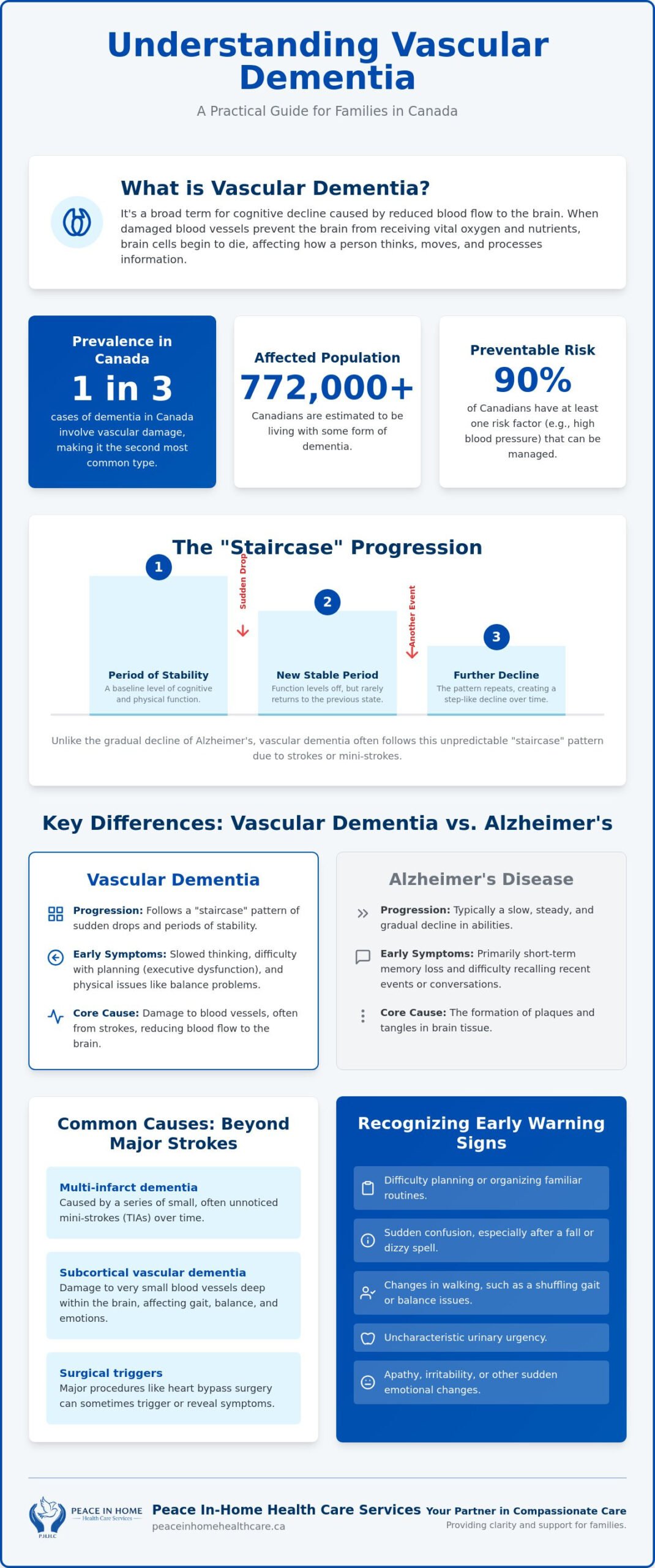
Did you know that vascular damage in the brain accounts for at least one-third of all dementia cases in Canada? While many families are familiar with the gradual, steady decline often associated with Alzheimer’s, vascular dementia frequently follows a confusing “staircase” pattern. This means a sudden drop in cognitive or physical function is often followed by a period of stability, leaving you unsure of what to expect next. It’s completely natural to feel anxious about the risk of future strokes or overwhelmed by the challenge of managing new mobility issues alongside memory loss.
We understand that your priority is helping your loved one stay safe and independent in their own home for as long as possible. This guide provides the clarity you need to understand the symptoms and causes of this condition while offering practical home care strategies tailored for families in the GTA. You’ll learn how to manage preventable risk factors to help slow the disease’s progression and discover how to adapt an Ontario home for better safety. From daily routine tips to finding reliable local respite and personal care support, we’re here to help you find a steady, supportive path forward.
Key Takeaways
- Learn why vascular dementia often follows a “staircase” pattern of sudden changes and how to recognize these shifts early.
- Understand the critical differences between memory loss and executive function to better support your loved one’s daily challenges.
- Discover practical home safety modifications and routine-based strategies to help maintain independence and reduce the risk of falls.
- Identify the vital connection between heart health and brain function to help manage and stabilize cognitive symptoms.
- Find out how to access personalized respite and professional care support within the GTA when your family’s needs begin to evolve.
What is Vascular Dementia? Defining the Second Most Common Type of Dementia
Vascular dementia is a condition where damaged blood vessels prevent the brain from receiving vital oxygen and nutrients. It isn’t a single, isolated disease but rather a broad spectrum of cognitive impairment caused by reduced blood flow to various regions of the brain. When these vessels become blocked, narrowed, or leaky, the brain cells they support begin to die. This leads to noticeable changes in how a person thinks, moves, and processes information. For many families, this journey begins with vascular mild cognitive impairment, where a loved one might struggle with complex tasks but still maintains their independence. If the underlying vascular issues aren’t managed, this often progresses to major dementia.
The damage often stems from strokes or “silent” mini-strokes, known as transient ischaemic attacks (TIAs). While a major stroke causes sudden, obvious changes, these mini-strokes can occur without immediate symptoms. Over time, the cumulative effect of these small blockages causes significant brain tissue damage. Understanding this process is the first step toward finding a reliable path forward for your family.
The Prevalence of Vascular Dementia in Canada
As of June 2026, approximately 772,000 Canadians are living with some form of dementia. Research shows that vascular damage accounts for at least one-third of all these cases, making it the second most common type after Alzheimer’s disease. In the aging Canadian population, the link between heart health and brain health is undeniable. Since 90% of Canadians have at least one preventable risk factor, such as high blood pressure or diabetes, an early diagnosis is essential. Identifying the condition early allows for a tailored care plan that focuses on stabilizing symptoms and preventing further damage through lifestyle changes and attentive monitoring.
Common Causes: Beyond Just Strokes
While a single major stroke is a frequent cause, other variations exist that require different approaches to care:
- Multi-infarct dementia: This occurs when a series of small, often unnoticed blockages happen over time, leading to a “step-like” decline in abilities.
- Subcortical vascular dementia: This involves damage to the very small blood vessels deep within the brain. It often impacts a person’s gait, balance, and emotional control more than their memory.
- Surgical triggers: In some cases, major procedures like heart bypass surgery can trigger or reveal symptoms in seniors who already have underlying vascular vulnerabilities.
By recognizing these causes, families in the GTA can better anticipate their loved one’s needs and seek the dignified, professional support required to maintain a familiar and safe lifestyle at home.
The Symptoms and “Staircase” Progression of Vascular Dementia
One of the most challenging aspects of vascular dementia for GTA families is its unpredictable nature. While Alzheimer’s usually presents as a slow, steady decline, this condition often follows what clinicians call a “staircase” progression. You might notice your loved one remains stable for months, only to experience a sudden, sharp drop in their abilities following a small stroke or a “silent” vascular event. After this drop, they may level off again, but they rarely return to their previous level of function. This pattern can be incredibly stressful to witness, as it feels like you’re constantly waiting for the next step down.
Cognitive changes often show up as slowed thinking or difficulty with focus rather than simple forgetfulness. A person might struggle to follow a conversation or find it impossible to complete complex tasks like balancing a chequebook or organizing a grocery list. Physically, you might notice a shuffling gait or frequent balance issues that weren’t there before. A sudden, uncharacteristic urinary urgency is also a common physical symptom that sets this condition apart. Emotionally, many seniors experience deep apathy or irritability, which can be a direct result of the damage to the brain’s emotional centres.
Recognizing the Early Warning Signs
Difficulty planning or organizing a familiar daily routine is often the first sign of executive dysfunction. You might also see confusion that seems to worsen suddenly after a minor health event, like a brief period of dizziness or a fall. Watch for changes in walking speed or “freezing” while trying to move through a doorway or transition between floor surfaces. If you’re noticing these shifts, connecting with a professional can help you establish a baseline for care and safety.
Understanding the Stages of Dementia
Understanding how these shifts fit into the broader stages of dementia is vital for long-term planning. When looking at vascular dementia vs. Alzheimer’s, the primary difference lies in that steady downward slope versus the sudden “steps.” In vascular cases, the primary goal of management is stability. By monitoring for new steps in the decline, you can adjust your home care plan quickly to ensure your loved one remains safe and dignified in their familiar environment.
Vascular Dementia vs. Alzheimer’s: Key Differences for GTA Caregivers
Distinguishing between these two conditions is essential for providing the right support at home. While Alzheimer’s is often a disease of memory “recording,” vascular dementia is more accurately described as a disease of “processing” speed. This explains why your loved one might still remember your name or childhood stories clearly but find it impossible to follow a simple three-step recipe. Their memory is largely intact, but their brain struggles to organize the steps required to complete the task. This loss of executive function makes daily life feel chaotic for them, even if they can still recall details about their past with startling clarity.
In Alzheimer’s, physical symptoms like balance issues and a shuffling gait usually appear in the later stages of the disease. However, with vascular dementia, these mobility challenges often show up much earlier. You might notice your parent walking more slowly or losing their balance long before they show significant memory loss. This physical decline mirrors the “staircase” pattern where sudden drops in mobility follow a vascular event. It is quite different from the steady, predictable downward slope seen in Alzheimer’s, where the decline happens so gradually that it is often hard to pin down exactly when a change occurred.
The Complexity of Mixed Dementia
It is very common for seniors in Toronto to be diagnosed with mixed dementia. This occurs when the brain shows signs of both Alzheimer’s and vascular damage at the same time. Managing this dual diagnosis requires a unified approach that addresses both cognitive confusion and physical safety. This is where home care services for seniors Toronto families often rely on become invaluable. These tailored services adapt to cover both the cognitive support needed for memory loss and the physical assistance required for mobility and balance, ensuring a dignified lifestyle despite the complex symptoms.
Risk Factors and Prevention Strategies
The “Big Four” risks, which include high blood pressure, high cholesterol, diabetes, and smoking, are the primary drivers of vascular damage in the brain. Since 90% of Canadians have at least one preventable risk factor for vascular cognitive impairment, focusing on these areas is vital. The encouraging news is that managing these conditions can often “freeze” or significantly slow the progression of vascular dementia. By working closely with a healthcare team to control blood sugar and blood pressure, you can help preserve your loved one’s remaining brain function. A heart-healthy diet and regular, safe exercise are not just good for the body; they are essential for protecting the mind and maintaining independence.
Practical Strategies for Managing Vascular Dementia at Home
Managing vascular dementia at home requires a shift in how we view the living space and daily interactions. Because this condition often impacts physical mobility and balance earlier than other types of dementia, fall prevention is your first priority. Start by removing all loose rugs and clutter that could catch a shuffling foot. Installing sturdy grab bars in the bathroom and along hallways provides the physical reassurance your loved one needs to move confidently through their home. These small changes help maintain a sense of independence while reducing the anxiety that often comes with a fear of falling.
Routine and structure are equally vital for managing executive function gaps. A predictable daily schedule reduces the cognitive load on the brain, making it easier for a senior to navigate their day without feeling overwhelmed. When you communicate, try using shorter sentences and allow ample time for them to process what you’ve said. Rushing a person with vascular damage often leads to frustration or withdrawal. For many families, personal care assistance for seniors becomes a cornerstone of this routine, ensuring that hygiene and daily needs are met with a dignified, professional touch.
Environmental Modifications for Safety
Improving lighting throughout the home is one of the simplest ways to reduce confusion during the evening hours. Bright, consistent light helps minimize shadows that might look like obstacles to someone with visual processing issues. You should also simplify the home layout to accommodate a shuffling or “magnetic” gait, ensuring there are wide, clear paths between rooms. Using clear labels on drawers and visual cues, like a picture of a plate on the kitchen cupboard, can bridge the gap when executive function makes finding everyday items difficult. For a broader look at adapting your home and daily routines, the guide on living with dementia for GTA families offers practical strategies that complement these modifications.
Managing Emotional and Behavioural Changes
Many seniors experience “sundowning,” a period of increased restlessness as the sun sets. You can often manage this through light therapy or by keeping the home well-lit until bedtime. If agitation occurs, try de-escalation techniques like redirection or soft music rather than relying on heavy sedation. Isolation often fuels depression in those with cognitive decline, so the role of companionship care for seniors Toronto families trust cannot be overstated. Regular social interaction keeps the mind engaged and provides the emotional stability needed to age in place safely. If you’re feeling overwhelmed by these daily care requirements, reach out to our team for a supportive conversation about your options.
Navigating Home Care and Professional Support in Toronto and the GTA
Many families across Ontario begin this journey with the best intentions, hoping to manage every aspect of their loved one’s care. However, the sudden and unpredictable “steps” of vascular dementia can quickly turn a manageable routine into one that feels overwhelming. Recognizing when care needs have exceeded what you can provide alone isn’t a failure; it’s a vital decision that prioritizes your family member’s safety and your own well-being. When the physical challenges of a shuffling gait or the emotional toll of irritability become too much to handle, bringing in a trusted guide can restore a sense of calm to your household.
Professional caregivers do more than just assist with daily tasks. They provide a watchful eye, monitoring vitals such as blood pressure and blood sugar to help prevent the secondary strokes that cause further brain damage. At Peace In-Home Health Care Services, we understand the unique pressures facing families in Mississauga, Oakville, and North York. Families in that area can explore dementia home care North York families rely on to reclaim precious time with their loved ones while ensuring professional safety and support. Our skilled nursing care services are specifically designed to bridge the gap between a hospital discharge and long-term stability at home. We ensure that the transition is methodical and low-stress, focusing on the preservation of a familiar lifestyle in the community your loved one knows best.
The Peace In-Home Health Care Services Difference
We believe that every senior deserves a care plan as unique as their own life story. Our approach focuses on a balance of physical mobility assistance and meaningful cognitive engagement, helping to slow the progression of vascular dementia while maintaining personal dignity. Whether we are serving families in Scarborough or Burlington, our caregivers are committed to providing a stable, experienced presence. We don’t just provide a service; we build a supportive relationship that advocates for the independence of every GTA senior we serve.
Taking the Next Step for Your Family
If you’re unsure where to begin, a professional assessment is a valuable first step. This process helps identify hidden safety risks in your home and determines the exact level of support needed to keep your loved one safe. Having a reliable care partner allows you to step back from the role of “manager” and return to being a daughter, son, or spouse. It provides the peace of mind that comes from knowing a compassionate expert is standing alongside you through every transition. Contact Peace In-Home Health Care Services today for a compassionate consultation on managing vascular dementia at home.
Finding Stability and Peace of Mind for Your Family
Caring for a loved one with vascular dementia is a journey that requires both heart and strategy. You’ve learned how the unique “staircase” progression differs from other conditions and why managing cardiovascular health is key to stabilizing cognitive function. By adapting your home environment and establishing a predictable routine, you’re already taking the most important steps toward preserving their dignity and independence in the GTA.
You don’t have to navigate these complex transitions alone. With over 17 years of expertise in specialized senior care, Peace In-Home Health Care serves as a reliable partner for families in Toronto, Mississauga, Vaughan, and the surrounding areas. We provide personalized, person-centred care plans that adapt as your family’s needs change over time. Taking the next step toward professional support can bring the security and comfort your family deserves. Book a Compassionate In-Home Assessment for Your Loved One today. We’re here to help you find a clear, low-stress path forward, ensuring your loved one remains safe and supported in the home they love.
Frequently Asked Questions
Is vascular dementia the same as Alzheimer’s disease?
No, they are different conditions with distinct causes. Alzheimer’s is typically caused by the build-up of proteins in the brain, whereas this condition results from damaged blood vessels that reduce oxygen flow. While Alzheimer’s often begins with memory loss, vascular issues usually start with executive dysfunction, such as difficulty planning or organizing. Many seniors in Ontario actually have mixed dementia, showing signs of both conditions simultaneously.
Can vascular dementia be reversed or cured?
No cure currently exists for the brain damage already caused by vascular events. However, the progression of the disease can often be stabilized by managing underlying health conditions like high blood pressure and diabetes. By focusing on heart-healthy lifestyle choices and medication management, you can help prevent further “steps” in the staircase decline, preserving your loved one’s remaining cognitive and physical abilities for longer.
What is the life expectancy for someone with vascular dementia?
Life expectancy varies significantly based on the individual’s overall health and the severity of their vascular damage. On average, many people live for several years following a diagnosis, with some statistics suggesting three to five years, though many seniors live much longer with attentive care. The focus is usually on quality of life and preventing secondary strokes, which are the primary factors in determining long-term outcomes for those with vascular dementia.
How can I prevent vascular dementia from getting worse?
Managing preventable risk factors is the most effective way to slow the progression. This includes working with healthcare providers to control blood pressure, manage cholesterol, and regulate blood sugar levels. Encouraging a heart-healthy diet and safe, regular physical activity can also help protect existing brain tissue. Consistent monitoring by professional caregivers ensures that any sudden changes in health are addressed before they lead to further cognitive decline.
Does the Ontario government provide funding for vascular dementia home care?
Yes, some support is available through Home and Community Care Support Services (HCCSS). The Ontario government provides subsidized personal care and nursing for those who qualify, though waitlists can be long and hours are often limited. Families may also explore the Ontario Caregiver Tax Credit or the Disability Tax Credit to help offset the costs of private home care services that fill the gaps in provincial funding.
What are the final stages of vascular dementia like?
In the advanced stages, individuals often experience significant physical and cognitive decline. This may include a total loss of verbal communication, severe mobility issues, and difficulty swallowing. During this time, the focus of care shifts entirely to comfort and dignity. Families often find that live-in care or specialized nursing becomes necessary to manage complex needs while ensuring the individual remains in a peaceful, familiar environment.
Can a person with vascular dementia live at home safely?
Yes, many seniors continue to live at home safely with the right support systems in place. Success depends on making environmental modifications, such as installing grab bars and improving lighting, alongside a structured daily routine. Professional companionship and personal care assistance provide the extra layer of safety needed to manage gait issues and prevent falls, allowing your loved one to maintain their independence in a dignified way.
Why does my loved one with vascular dementia have trouble walking?
Walking difficulties occur because the vascular damage often affects the brain’s motor control centres. This can result in a “magnetic gait,” where a person’s feet seem stuck to the floor, or a shuffling walk that increases fall risks. Unlike Alzheimer’s, where balance issues usually appear later, these physical symptoms often show up early in vascular dementia. Specialized mobility assistance can help your loved one navigate their home safely despite these changes.