

More than 414 people in Canada receive a new dementia diagnosis every day. For many families in the Greater Toronto Area, this news brings a wave of overwhelming uncertainty and a sudden, heavy weight of responsibility. It’s completely normal to feel confused when you’re trying to tell the difference between typical aging and the actual stages of dementia. You might worry about the loss of independence or feel frustrated by the complex clinical language used in medical offices.
We believe that understanding the path ahead is the first step toward finding peace. It’s important to realize that you don’t have to face this alone. This guide is here to help you recognize the 7 stages of dementia with clarity, moving past medical jargon to honour your loved one’s dignity. We’ll explore the progression from early signs to advanced care needs, providing a clear roadmap for when you might need to transition from family care to professional support. You’ll also discover local GTA resources designed to help your family manage aging in place with confidence and reliable support.
Key Takeaways
- Learn how to use the Global Deterioration Scale to anticipate your loved one’s future care needs and organize medication management effectively.
- Gain clarity on the seven stages of dementia, helping you distinguish between typical age-related forgetfulness and the early signs of cognitive decline.
- Understand the transition into middle-stage dementia, where sequential tasks like managing finances become difficult and professional support often becomes essential for safety.
- Discover how to maintain dignity and comfort during the late stages of decline through attentive personal care and specialized mobility assistance tailored to your family’s needs.
- Find out how to access reliable GTA resources and start important conversations about home care support before a health crisis occurs.
The 7 Stages of Dementia: Understanding the Global Deterioration Scale (GDS)
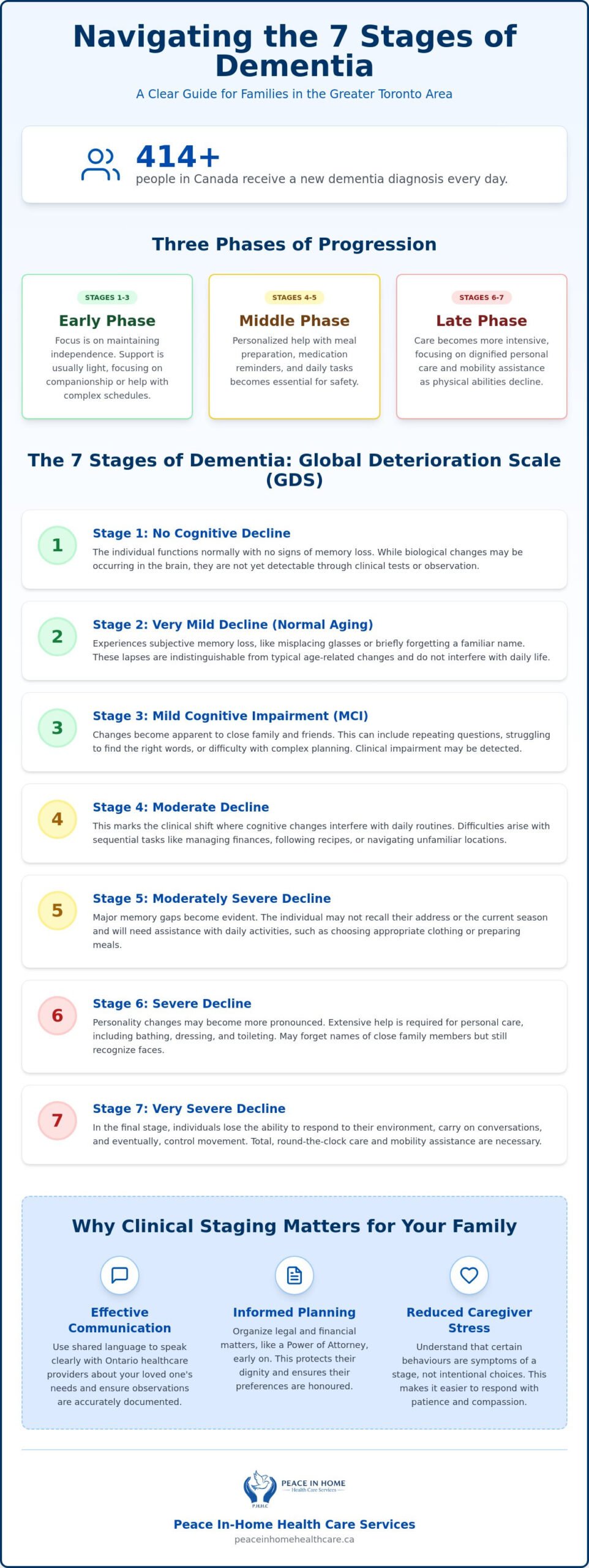
The Reisberg Scale is a seven-stage clinical framework used to track the progression of primary degenerative dementia. Often referred to by doctors as the Global Deterioration Scale for dementia, it provides a shared language for families and healthcare professionals. While these milestones offer a helpful map for the future, it’s vital to remember that every person’s experience is deeply personal. Your loved one might move through these phases at their own pace, and their strengths will often shine through even as their needs change. Understanding the stages of dementia isn’t about putting someone in a box; it’s about preparing your family to provide the best possible support at every turn.
One of the most common sources of anxiety for families is distinguishing between typical aging and the onset of a condition. Stages 1 and 2 are generally classified as “Normal Aging.” During these early steps, a person might misplace their glasses or forget a name occasionally, but these lapses don’t stop them from living a full, independent life. The clinical shift usually happens at Stage 4. This is when cognitive changes become more apparent to observers and start to interfere with daily routines, signaling that more attentive care may soon be required.
Why Clinical Staging Matters for Families
Having a clear understanding of where your loved one sits on the scale helps you communicate more effectively with Ontario healthcare providers. When you speak with doctors in the GTA, using clinical terms ensures that your observations are heard and documented accurately. This clarity is also essential for organizing legal and financial matters. Setting up a Power of Attorney early, while your family member can still express their wishes clearly, protects their dignity and ensures their preferences are honoured. On an emotional level, staging helps reduce caregiver stress. When you realize that certain behaviours are symptoms of a specific stage rather than intentional choices, it becomes easier to respond with the patience and compassion they deserve.
The Three-Phase Alternative: Early, Middle, and Late
While the seven-stage clinical scale is excellent for medical tracking, many families prefer to group these into three broader phases for daily care planning. This simplified view makes it easier to realize when it’s time to transition from “Self-Management” to “Assisted Living” at home.
- Early Phase (Stages 1-3): The focus is on maintaining independence. Support is usually light, focusing on companionship or help with complex schedules.
- Middle Phase (Stages 4-5): This is often when families seek personalized help with meal preparation or medication reminders to ensure safety and nutrition.
- Late Phase (Stages 6-7): Care becomes more intensive, focusing on dignified personal care and mobility assistance as physical abilities decline.
Early-Stage Dementia: Recognizing Mild Cognitive Changes (Stages 1-3)
The beginning of this journey is often so subtle that it’s easily missed. Stage 1 is essentially the pre-symptomatic phase. While biological changes may be occurring in the brain, there’s no visible sign of cognitive decline. Your loved one remains fully functional and independent. By Stage 2, many seniors experience very mild decline, which clinicians often call “subjective memory loss.” You might notice them misplacing their reading glasses or momentarily forgetting a familiar name. At this point, these lapses are usually indistinguishable from the normal aging process and don’t interfere with their daily life.
The transition to Stage 3, or Mild Cognitive Impairment (MCI), is when the stages of dementia often become apparent to those who know the individual best. This phase can last for several years. Friends and family might notice their loved one repeating the same question within a short timeframe or struggling to find the right word during a dinner conversation. Stage 3 is often the first point where clinical impairment can be detected through intensive testing. Recognizing these shifts early allows families to start the dementia & Alzheimer’s care planning process with a focus on preservation and comfort.
Is it Normal Aging or Early Dementia?
Distinguishing between typical senior forgetfulness and early cognitive decline is a common source of anxiety for GTA families. Forgetting where you parked the car in a busy mall is often just a lapse in focus. However, forgetting the route to the local grocery store you’ve visited for decades is a more significant sign. If you feel uneasy, a proactive medical check-up is a wise step. Sometimes, symptoms that mirror the progression of Alzheimer’s disease are actually caused by treatable issues, such as a B12 deficiency or a thyroid imbalance. Getting a clear picture early on helps you move forward with confidence rather than fear.
Supporting Independence in the Early Stages
Preserving a senior’s dignity means helping them stay independent for as long as possible. Simple routines and memory aids can reduce daily frustration. You might suggest using a centralized family calendar or setting up digital reminders for appointments. Social health is also vital during this time. Introducing companionship care early on provides more than just a helping hand; it offers meaningful engagement that helps prevent the isolation often felt after a diagnosis. If you’re starting to notice these subtle shifts in a parent or spouse, feel free to reach out for a gentle conversation about how to best support their independence at home.
Middle-Stage Dementia: Navigating Moderate Decline (Stages 4-5)
The middle phases of cognitive decline represent a significant shift for both the individual and their family. In Stage 4, often called moderate cognitive decline, you might notice your parent struggling with sequential tasks that were once second nature. Balancing a chequebook, planning a grocery list, or managing complex monthly bills becomes increasingly difficult. By the time a person reaches Stage 5, they’ve entered the middle of the three stages of Alzheimer’s, where they can no longer survive safely without some form of daily assistance. They may begin to forget their own address or become confused about the day of the week.
It’s common for families to hesitate during this phase because their loved one still appears healthy. You might think, “Mom is still physically fine, so she doesn’t need help yet.” However, the stages of dementia at this level are more about cognitive safety than physical frailty. A person may be able to walk for miles but might not remember how to get home or realize they’ve left the stove on. This “safety gap” is often the most precarious period for seniors living alone, as their judgment declines faster than their mobility. It’s also worth noting that not all cognitive decline follows the same pattern — for example, vascular dementia often progresses in a “staircase” pattern of sudden drops followed by periods of stability, which can make it especially difficult for families to anticipate the next stage of care needs. Families in the North York area who find themselves managing this safety gap at home may benefit from learning how dementia home care in North York can provide the specialized, consistent support needed to keep a loved one safe during these unpredictable middle stages.
The “Sandwich Generation” Challenge
Many families in the Greater Toronto Area find themselves squeezed between the needs of their growing children and the increasing requirements of an aging parent. This dual pressure creates a unique kind of exhaustion. Realizing that you can’t do it all isn’t a failure; it’s an honest assessment of a difficult situation. This is where respite care becomes a vital lifeline for GTA families. It allows you to step back and recharge, knowing your parent is safe and supported. This support prevents caregiver burnout and ensures that you can remain a loving daughter or son rather than just a task manager.
Managing Behavioural Symptoms and Sundowning
As daylight fades, especially during our long, dark Canadian winters, many families notice a phenomenon known as “Sundowning.” This is a period of increased confusion, agitation, or even wandering that typically begins in the late afternoon. It’s an exhausting part of the stages of dementia for families to manage without support. The lack of natural light can disrupt the internal clock, leading to restlessness and anxiety just when the rest of the household is trying to wind down.
To help ease this transition, try to keep the home well-lit as the sun goes down and reduce background noise like loud televisions or clattering dishes. Professional caregivers often use person-centred care techniques to calm this agitation. Instead of relying on heavy sedation, we focus on identifying the underlying need, whether it’s hunger, thirst, or simply the need for a reassuring, attentive presence. This approach preserves dignity while ensuring the evening hours remain peaceful for everyone in the home.
Late-Stage Dementia: Providing Dignity in Severe Decline (Stages 6-7)
Entering the final stages of dementia is a profound transition for any family. In Stage 6, your loved one may experience significant personality changes, often rooted in fear or confusion about their surroundings. They now require consistent help with daily activities like dressing and bathing. By Stage 7, the decline becomes very severe. At this point, the individual may lose the ability to speak, walk, or even swallow. While these changes are difficult to witness, this period also marks a shift in care philosophy. We move away from the stress of “treatment” and focus entirely on preserving comfort, peace, and quality of life.
Specialized nursing care becomes increasingly important during these advanced phases. Complex medical needs, such as managing skin integrity and ensuring safe feeding, require a high level of expertise. When a person can no longer communicate their physical discomfort, an attentive and experienced caregiver becomes their voice. This watchful presence ensures that small issues don’t escalate into painful complications, allowing your loved one to remain in the familiar, soothing environment of their own home.
The Importance of Personal Care Assistance
Maintaining hygiene and skin health is critical during these advanced stages. Without attentive care, seniors are at high risk for skin breakdown and infections, which are common causes of hospitalization in the GTA. Our approach focuses on preserving dignity through gentle, respectful routines. A warm bath or a careful grooming session isn’t just about cleanliness; it’s an opportunity for human connection and sensory comfort. For many families, the demands of 24/7 monitoring become overwhelming. This is often the right time to consider live-in care for seniors. Having a dedicated professional in the home ensures that your loved one is never alone and that their physical needs are met with a steady, experienced hand.
Palliative Care and Emotional Support
It’s a common misconception that palliative care is only for the very end of life. In reality, it’s a supportive layer of care designed to manage symptoms and maximize comfort throughout the later stages of dementia. When verbal communication fades, we look for other ways to connect. The sound of a favourite song, the scent of a familiar flower, or simply the warmth of a hand to hold can provide immense security. This phase also brings “anticipatory grief” for family members. You’re grieving the person you once knew while they’re still here. This emotional weight is heavy; having a reliable care partner allows you to focus on being present with your loved one rather than being consumed by medical tasks.
If you’re feeling overwhelmed by the complexities of late-stage care, we’re here to help you navigate this time with grace. Please contact our team for a compassionate consultation about how we can support your family.
Planning Your Care Strategy: GTA Resources and Next Steps
Managing the various stages of dementia is a marathon, not a sprint. It’s a journey that requires patience, foresight, and a steady network of support. While the early phases might feel manageable with family help alone, the progression of the condition often brings new challenges that require a more structured approach. One of the most important steps you can take is starting the conversation about professional support early. Waiting for a crisis, such as a fall or a wandering incident, often leaves families feeling rushed and pressured. By planning ahead, you can ensure that your loved one’s transition into more intensive care is handled with the dignity and calm they deserve.
At Peace In-Home Health Care Services, we specialize in providing tailored support that evolves alongside your family’s needs. We realize that every household has a different rhythm. Our goal is to provide a reliable presence that allows you to focus on your relationship with your parent or spouse rather than the stress of medical management. Taking the first step involves an honest look at the current situation and identifying where a helping hand could make the most difference today.
Accessing Home Care in Toronto and the GTA
Families across the Greater Toronto Area often find the healthcare system difficult to understand. In Ontario, public support is available through Home and Community Care Support Services. While these services provide a vital foundation, many families find that public hours are limited and may not cover the full scope of their needs. This is where private home care plays a crucial role. We act as a dedicated partner, supplementing public support to create a comprehensive “Peace of Mind” plan.
Our team serves a wide range of communities, including North York, Scarborough, Mississauga, and Oakville. Whether you need a few hours of companionship or more intensive skilled nursing care services, we provide a consistent level of attention that the public system often cannot match. Families in North York, in particular, can explore our dedicated guide to dementia home care in North York to understand how specialized memory care support can be tailored to their community and their loved one’s specific needs. This integrated approach ensures your loved one stays safe at home as the stages of dementia progress, preventing unnecessary hospital visits and preserving their familiar lifestyle.
Why Peace In-Home Health Care Services is Your Trusted Partner
Our “Human-First” approach is what sets us apart. We don’t just see a diagnosis; we see a person with a rich history and a need for respect. Our caregivers are experts in dementia & Alzheimer’s care, focusing on practical safety measures like mobility & transfer assistance and medication reminders. These small but vital tasks are the keys to preventing the falls and complications that often lead to long-term care facility placement. We believe in the power of aging in place, and we’re here to provide the steady hand needed to make that a reality.
The best way to determine the right path forward is to book a free home assessment. This allows us to help you identify the current stage of decline and recommend a personalized care strategy that fits your budget and lifestyle. We invite you to contact our team today for a compassionate consultation. Let us help you manage this transition with the expert guidance and gentle support your family deserves.
Finding Peace and Support on the Path Ahead
Understanding the stages of dementia is about more than just tracking symptoms; it’s about reclaiming a sense of control and ensuring your loved one is always treated with the highest level of respect. By recognizing the early signs and preparing for the transitions of the middle and late phases, you can focus on making every moment count. You don’t have to navigate these complex changes alone. Reaching out for help is a sign of deep love and advocacy for your parent or spouse.
With over 17 years of expert senior care experience, our team is here to stand alongside you. We provide specially trained dementia and Alzheimer’s caregivers who understand the unique needs of families across Toronto, Mississauga, and the entire GTA. Whether you need a few hours of respite or more intensive daily support, we’re dedicated to helping your family age in place with dignity and reliable care.
Take the first step toward a more manageable future today. Book a Compassionate In-Home Assessment Today and let us help you create a personalized plan that brings your family the comfort and security you deserve. We’re here to provide the steady hand and expert guidance you need to move forward with confidence.
Common Questions About the Stages of Dementia
How long does each stage of dementia typically last?
The duration of each phase varies significantly for every individual. While some people may remain in the early stages for several years, others might see a more rapid progression. On average, the journey from diagnosis to the final stages can span anywhere from eight to ten years, though some seniors live with the condition for much longer. Factors like overall health, age at diagnosis, and the type of dementia all play a role in this timeline.
Can a person skip stages of dementia or move backwards?
Dementia is a progressive condition, meaning it generally follows a forward path through the stages. A person doesn’t skip a stage or move backwards in terms of brain changes. However, symptoms can fluctuate day to day. A senior might seem more alert and capable one morning, appearing like an earlier stage, and then experience significant confusion by evening. This variability is often related to sleep, hydration, or the “Sundowning” effect mentioned earlier.
Is it possible to slow down the progression between stages?
While there is currently no cure, certain lifestyle choices can help manage symptoms and potentially delay decline. Focusing on heart-healthy nutrition, regular physical activity, and meaningful social engagement is vital. Managing modifiable risk factors like blood pressure and hearing loss is also important. Consistent routines and professional support can reduce the stress that often exacerbates cognitive symptoms, helping your loved one maintain their current level of function for as long as possible.
When is the right time to hire professional home care for someone with dementia?
The right time to introduce professional support is often before a health crisis, like a fall or a medication error, occurs. If you notice a “safety gap” where your parent can no longer be left alone or is struggling with daily nutrition, it’s time to consider help. Introducing companionship care early on helps the senior build a trusted relationship with their caregiver, making the transition to more intensive personal care much smoother as the stages of dementia progress.
What is the difference between Alzheimer’s stages and other forms of dementia?
Alzheimer’s disease is the most common form of dementia and typically follows the predictable seven-stage scale. Other types, such as vascular dementia, may progress in a “step-wise” fashion, where a person remains stable for a long time and then experiences a sudden decline after a small stroke. Lewy Body dementia often features significant fluctuations in alertness and physical symptoms like tremors, which might not always align perfectly with the standard Alzheimer’s milestones.
How do I know if my parent is in Stage 3 or Stage 4?
The primary difference lies in the ability to manage complex daily tasks. In Stage 3, your parent might repeat themselves or lose items, but they can still handle their own affairs. Stage 4 is marked by a clear decline in “executive function.” You’ll notice they can no longer manage their monthly bills, struggle to follow a recipe, or have difficulty planning a simple outing. If their forgetfulness is interfering with their independence, they’ve likely transitioned into Stage 4.
Does the Ontario government provide support for all stages of dementia?
Ontario provides some level of support through Home and Community Care Support Services for seniors at various stages of dementia. However, public funding is often limited to a few hours of care per week, which may not be enough for those in the middle or late stages. Many GTA families use private home care to supplement these services, ensuring their loved one has the consistent, 24/7 safety and personalized attention that public programs often can’t provide.
What should I do if my loved one refuses help during the middle stages?
Resistance to care is a common symptom of the middle stages, often rooted in a fear of losing independence. Instead of framing the support as “care for them,” try introducing a professional as a “friend of the family” who is there to help with light housekeeping or meal preparation. Focus on the benefits to you, explaining that having someone help with chores gives you more quality time to spend together as a family.