

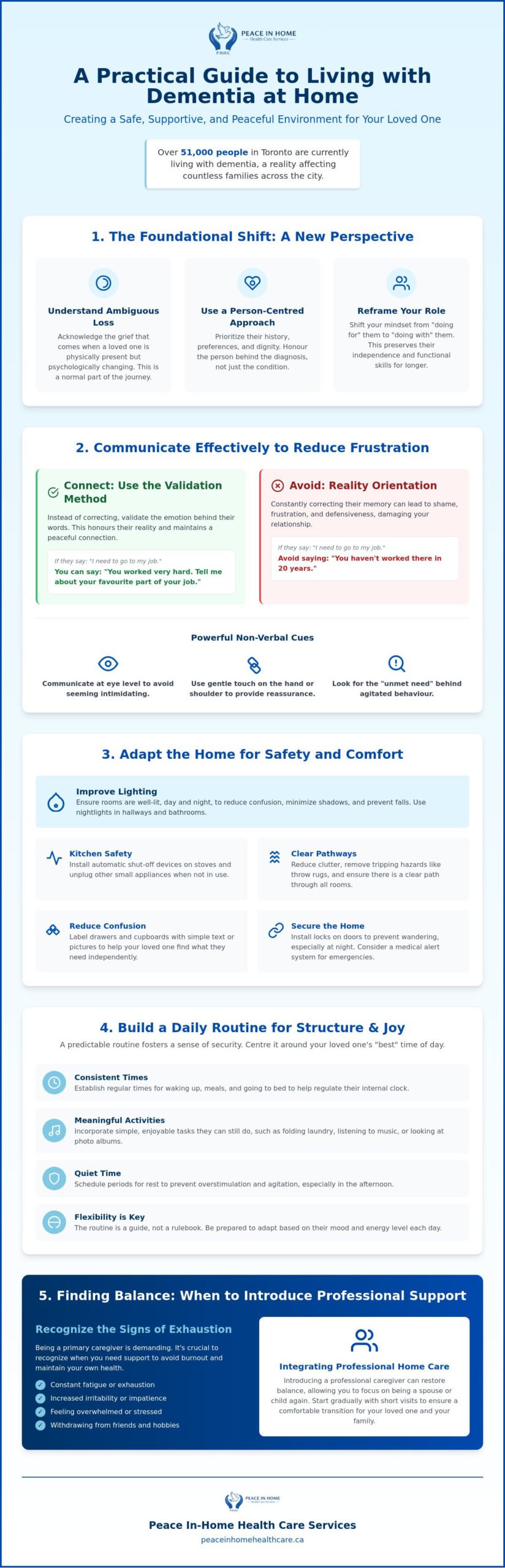
Imagine standing in your North York kitchen, heart racing because you realized the stove was left on again, or your mother didn’t recognize the way back from her local park. These moments of fear are common for the 51,000 people in Toronto currently living with dementia and the families who love them. You’re likely feeling the heavy weight of 24/7 caregiving duties, battling the constant worry of wandering or household accidents while wondering if you’re doing enough to honour their dignity.
It’s natural to feel exhausted and even a bit guilty when the demands of care start to overshadow your relationship. We believe that your home should remain a place of comfort, not a source of constant stress. This guide provides practical strategies to adapt your living space, communication, and daily routines to ensure a peaceful life for your loved one. We’ll explore how to create a safer environment, manage difficult transitions, and find a sustainable balance that lets you focus on being a daughter or spouse again instead of just a monitor.
Key Takeaways
- Reframe your perspective on living with dementia by understanding the emotional impact of ambiguous loss and focusing on your loved one’s lived experience.
- Reduce daily frustration through the Validation Method and non-verbal communication techniques that prioritize eye level and gentle touch.
- Create a safer, more comfortable environment by conducting a room-by-room home audit and modifying lighting to minimize confusion.
- Establish a predictable daily routine centered around your senior’s “best” time of day to foster a sense of security and joy at home.
- Recognize the signs of caregiver exhaustion and learn how to introduce professional support gradually to find a sustainable balance for your whole family.
Understanding What Living with Dementia Means for Your Household
Receiving a diagnosis is often a moment of profound clarity mixed with deep uncertainty. For families across the GTA, living with dementia is far more than a collection of medical symptoms; it’s a fundamental shift in the way your household functions. While a clinical definition focuses on cognitive decline, the lived experience happens at the breakfast table, in the garden, and during evening conversations. It’s about finding ways to honour the person behind the diagnosis while navigating a new reality that feels both familiar and strange.
Many family members describe a feeling of “ambiguous loss” during the early stages. This unique type of grief occurs when a loved one is physically present but psychologically changing. You might miss the person they were while they’re sitting right in front of you. Acknowledging this emotional weight is the first step toward a person-centred approach, which is the gold standard for Canadian home care. This philosophy prioritizes the individual’s history, preferences, and dignity, ensuring they remain the protagonist of their own life rather than a patient to be managed. In the first year, your goal isn’t to fix the situation, but to organize a supportive environment that accommodates these changes with patience.
Identifying the Unique Needs of Your Loved One
Distinguishing between normal aging and cognitive decline can be difficult. Forgetting a name is common; forgetting how to use a telephone or getting lost in a familiar Markham neighbourhood suggests a need for closer support. Gaining a foundational Understanding Dementia helps you realize that behaviours are often a form of communication. It’s vital to learn about the specific stages of dementia to anticipate future needs before they become crises. For instance, the progression of vascular dementia might involve sudden “steps” in decline following minor strokes, whereas Alzheimer’s typically follows a more gradual path. Recognizing these patterns allows you to tailor your home environment and expectations accordingly.
Reframing the Caregiver’s Role
The most successful care transitions happen when family members move from “doing for” to “doing with.” If your father can still help dry the dishes or choose his own clothes, let him. This preserves a sense of agency and slows the loss of functional skills. However, managing the emotional labour of being a primary care partner is exhausting. You aren’t just a nurse; you’re a daughter, a son, or a spouse trying to maintain a bond. A Compassionate Expert is a family member who balances deep emotional empathy with the practical, structured skills needed to guide a loved one through cognitive change with steady reliability.
How to Communicate Effectively to Reduce Frustration
Communication is the vital thread that keeps your family connected. When living with dementia, that thread can feel like it’s fraying under the pressure of repetitive questions and sudden mood shifts. It’s important to realize that your loved one isn’t trying to be difficult; their brain is simply working harder to process the world around them. Shifting your approach from “correcting” to “connecting” can significantly lower the temperature in your home and preserve the bond you share.
One of the most powerful shifts is moving from Reality Orientation to the Validation Method. While we naturally want to correct a loved one who says they need to go to a job they retired from decades ago, doing so often triggers shame and defensiveness. Instead, validate the feeling behind the statement. Ask about their old office or what they enjoyed most about their career. This honours their dignity and keeps the conversation peaceful. If you notice signs of agitation, look for the “unmet need.” Often, what looks like anger is actually a reaction to physical discomfort, like a scratchy sweater or a need for a glass of water, which they can no longer put into words.
Non-verbal cues are just as important as the words you choose. Always try to communicate at eye level; standing over someone can feel accidental but intimidating. A gentle touch on the hand or shoulder can provide a sense of safety and grounding when words fail. These small gestures signal that you are a partner in their journey, not just a supervisor of their daily tasks.
The Art of the Gentle Redirection
Steering a conversation away from a distressing topic requires a soft touch. If a loved one becomes fixated on “going home” while they are already there, don’t argue. Use “therapeutic fibbing” to maintain their sense of security. You might say, “The car is being serviced today, but let’s have some tea while we wait.” This isn’t about being dishonest; it’s about being kind. During the late afternoon, often called “sundowning,” use soothing phrases like, “You’re safe here, and I’m so glad we’re together.” These small verbal anchors can de-escalate tension before it turns into a crisis.
Active Listening and Patience
Patience is a skill you can build with specific techniques. The “10-second rule” is essential; after you ask a question, count to ten in your head before repeating yourself. This gives their brain the necessary time to process the sounds into meaning. You can also reduce frustration by simplifying choices. Instead of asking what they want for lunch, ask, “Would you like a tuna sandwich or a bowl of soup?” Reducing background noise, like a loud television or a dishwasher, also helps them focus on your voice. If these daily interactions feel increasingly overwhelming, reaching out for professional guidance can help you find new ways to connect without the exhaustion.
Adapting the Home Environment for Safety and Comfort
Your home should be a place of refuge, but for someone living with dementia, a familiar layout can suddenly become a maze of obstacles. Adapting your space isn’t about creating a clinical, hospital-like environment; it’s about making subtle, dignified modifications that preserve independence while preventing accidents. In the GTA, where many families live in multi-level Victorian semis or homes with narrow hallways and basement laundry rooms, these physical changes are especially crucial for long-term safety.
Start with a room-by-room safety audit. Focus heavily on lighting, as cognitive changes can alter how the brain perceives depth and space. On a grey Toronto afternoon, harsh shadows across a hallway can look like deep pits or frightening figures to a senior. Replace dim bulbs with high-wattage, warm LEDs to create an even wash of light that eliminates dark corners. Additionally, consider “wayfinding” techniques to help your loved one navigate. Simple labels with words and pictures on cupboards or a brightly coloured strip of tape on the edge of each stair can provide the visual cues they need to move confidently through their own home.
Living in Ontario also means preparing for the specific challenges of our climate. Winter safety extends beyond the front door. Ensure all walkways are professionally cleared of ice and snow, as a minor slip can lead to a significant loss of mobility. Inside, be cautious with portable space heaters, which can be a fire hazard if a loved one forgets to turn them off or places them too close to furniture. Central heating should be set to a consistent, comfortable temperature to prevent the confusion that often accompanies physical discomfort.
Kitchen and Bathroom Safety Essentials
The kitchen and bathroom are high-traffic areas where autonomy and safety must be carefully balanced. You can secure appliances by installing auto-shutoff devices on stoves or using knob covers, allowing your loved one to remain involved in meal preparation without the risk of a fire. In the bathroom, grab bars and non-slip mats are non-negotiable additions for fall prevention. Using a toilet seat or bath mat in a high-contrast colour against the floor tiles helps a senior clearly identify where to sit or step, significantly reducing the risk of a misstep.
Creating a Soothing ‘Peace Zone’
Every home needs a dedicated space for relaxation that is entirely clutter-free. This “Peace Zone” should be filled with familiar objects that provide emotional grounding, such as a favourite knitted throw or framed photos of family trips to the Toronto Islands. These items offer a sense of security when the world feels unpredictable. You can also integrate non-pharmacological interventions like soft music or lavender aromatherapy to help manage anxiety during the early evening hours. By organizing a space that prioritizes comfort, you help your loved one maintain a sense of calm and dignity throughout the day.
Creating a Daily Routine that Balances Structure and Joy
Predictability is perhaps the most effective tool in your caregiving toolkit. For a loved one living with dementia, the world often feels like a series of disconnected and confusing events. A structured daily routine acts as a reliable anchor, reducing anxiety by telling them what to expect next. However, structure doesn’t mean a rigid, military-style schedule. It means creating a gentle flow that follows their natural rhythms and preserves their sense of peace.
Start by identifying your loved one’s “best” time of day. Most seniors are more alert and cooperative in the morning, making it the ideal time for bathing, medical appointments, or complex tasks. Save quieter, more passive activities for the afternoon when energy levels dip. Nutrition also plays a significant role in mood. Mealtime can become stressful if there are too many choices or difficult utensils. Try using high-contrast plates so the food is easy to see, and offer finger foods if using a fork becomes frustrating. Keeping a water bottle nearby ensures they stay hydrated, which is crucial for preventing the sudden confusion often caused by dehydration.
Morning and Evening Rituals
Success in the morning often depends on how you present tasks. Instead of asking them to get dressed, lay out two outfits and let them choose one. This simplifies the process while maintaining their autonomy. As the day winds down, many families encounter “Sundowning,” a period of increased agitation in the late afternoon. You can manage this by closing the curtains before dusk to prevent confusing reflections and engaging them in a calming activity. Good sleep hygiene, such as a consistent bedtime and limiting caffeine after noon, helps prevent nighttime wandering and ensures everyone gets the rest they need.
Meaningful Engagement and Socialization
Meaningful activity isn’t just about passing the time; it’s about fostering a sense of purpose. Adapt past hobbies to their current abilities. If they loved gardening, they can still help with light weeding or watering indoor plants. If they were a homemaker, sorting a basket of warm towels can be deeply satisfying. For a broader range of ideas tailored to your loved one’s abilities and interests, exploring engaging activities for dementia patients at home can help you discover new ways to foster genuine connection and reduce agitation throughout the day. Social visits should be kept short and limited to one or two people at a time to avoid sensory overload. Professional companionship care for seniors in Toronto can provide these vital social connections, giving your loved one a fresh face to interact with while you take a necessary break. If you find that maintaining this balance is becoming a source of exhaustion, we invite you to speak with our care team to explore supportive options tailored to your family’s needs.
When and How to Integrate Professional Home Care
Many families feel a deep sense of obligation to manage everything on their own. However, living with dementia is a journey that eventually requires a team. Recognizing the signs of caregiver burnout is the first step in preserving your own health and the quality of care your loved one receives. If you find yourself feeling constantly irritable, withdrawing from friends, or experiencing physical exhaustion that sleep doesn’t fix, it’s time to consider a collaborative care model. This isn’t about “giving up” your role; it’s about shifting your focus so you can return to being a daughter, son, or spouse while a professional handles the complex daily tasks.
Starting with respite care is a gentle way to build trust without making a permanent commitment. It allows your loved one to get used to a new face in the home while you take a few hours to rest or attend to your own needs. In regions like Toronto and Vaughan, specialized dementia home care in North York provides access to Personal Support Workers (PSWs) who are specifically trained in the nuances of cognitive decline. These professionals understand how to manage agitation and redirect distressing behaviours with the quiet confidence that only comes from years of experience.
Introducing a Caregiver to Your Loved One
The way you introduce professional help can set the tone for the entire relationship. We often suggest the “friend of the family” approach, where the caregiver is introduced as someone coming by to help with the house or keep them company. Matching a caregiver’s personality to your loved one’s temperament is vital; a quiet, book-loving senior might thrive with a calm, soft-spoken companion, while a more social individual might prefer someone with high energy. During the first few visits, set clear boundaries and expectations, but allow the relationship to develop naturally at your loved one’s pace.
Peace of Mind for the Whole Family
Integrating professional personal care assistance for seniors significantly reduces the daily tension that often builds up in a household. When a professional manages medication reminders and mobility support, the risk of household accidents and hospital readmissions drops. This reliable presence provides a safety net that allows the whole family to breathe easier. If you’re ready to explore how tailored support can bring more tranquility to your home, please Contact Peace In-Home Health Care for a compassionate consultation across the GTA. We are here to stand alongside you as a trusted guide through every stage of this transition.
Moving Forward with Confidence and Support
Adapting your daily life when a loved one is living with dementia is a journey of profound love and constant learning. By implementing the communication strategies and home modifications discussed in this guide, you’re creating a foundation of safety and respect. It’s important to remember that asking for help is a sign of strength, not a failure of duty. A collaborative care model ensures that your loved one receives professional attention while you regain the space to be a family member again.
Peace In-Home Health Care has served families across the GTA for over 17 years. Our staff undergoes specialized Alzheimer’s and dementia training to provide the highest level of attentive, person-centred support. We create personalized care plans tailored to your family’s unique routine, ensuring that every visit brings a sense of calm and reliability to your household. You don’t have to navigate these complex transitions alone.
Book a Free In-Home Consultation for Compassionate Dementia Care today to see how we can support your family’s peace of mind. There is still much joy to be found in the quiet moments you share together.
Frequently Asked Questions
How do I know if it is safe for my parent to keep living with dementia at home?
Safety depends on a combination of cognitive assessment, physical environment, and the level of supervision available. While many seniors can remain at home indefinitely, you should monitor for signs like frequent falls, leaving the stove on, or becoming lost in the yard. Consulting with a healthcare professional or a specialized caregiver can help you determine if the current support system is sufficient to maintain their dignity and safety.
What are the first steps to take after a dementia diagnosis in Ontario?
Your first steps should include contacting the Alzheimer Society of Ontario and registering with Ontario Health atHome for an initial assessment. It’s also vital to organize legal and financial affairs, such as Power of Attorney for personal care and property, while your loved one can still participate. Establishing a relationship with a local care provider in the GTA early on ensures you have a support system ready as the condition progresses.
How can I prevent my loved one from wandering away from our home?
Preventing wandering involves a mix of environmental modifications and technology to ensure your loved one stays within safe boundaries. You can install door alarms, use GPS tracking devices, and ensure they always have identification, such as a MedicAlert bracelet. Keeping a consistent daily routine and ensuring they have plenty of physical activity during the day can also reduce the restlessness that often leads to wandering.
Is there government financial support for dementia home care in Canada?
Yes, there are several tax credits and programs available, such as the Canada Caregiver Credit and the Ontario Seniors Care at Home Tax Credit. For 2026, the Canada Caregiver Credit for an infirm spouse or dependant aged 18 or older is up to $8,773. Additionally, the Ontario Seniors Care at Home Tax Credit is a refundable credit that covers up to 25% of eligible medical expenses, including private home care, for seniors aged 70 and older.
What is the difference between home care and a memory care facility?
Home care allows a senior to remain in a familiar environment with one-on-one support, whereas a memory care facility is a residential setting with 24-hour staff and communal living. Home care is often preferred for maintaining a sense of normalcy and independence as long as possible. Facilities may be considered when the level of medical supervision required exceeds what can be safely provided in a domestic setting.
How do I handle the ‘I want to go home’ request when they are already home?
When a loved one asks to go home while they are already there, respond to the emotion of the request rather than the logic. They are often expressing a need for comfort, security, or a sense of belonging. Instead of arguing, try saying, “I know you miss home; tell me about your favourite room there,” and then gently redirect them to a familiar activity or a comforting snack.
Can a person with dementia live alone safely in the early stages?
A person living with dementia can sometimes live alone in the very early stages if they have a robust support network and minimal safety risks. However, this requires frequent check-ins, medication reminders, and a home safety audit to prevent accidents. As the condition progresses, the risk of social isolation and household emergencies usually makes some form of daily companionship or professional support necessary to preserve their well-being.
How do I find a specialized dementia caregiver in Toronto or Vaughan?
Finding a specialized caregiver for someone living with dementia in Toronto or Vaughan involves looking for agencies with deep local experience and specific training in cognitive support. You should prioritize providers that offer personalized care plans and have a long-standing reputation in the GTA. Peace In-Home Health Care has 17 years of experience and serves these regions with caregivers who are specifically trained to handle the unique challenges of Alzheimer’s and other forms of dementia.