

Last Tuesday, Sarah sat in her kitchen in Oakville, staring at her phone and feeling a heavy weight of guilt. Her mother insisted on staying in the family home, but Sarah was only just beginning to realize the life-changing benefits of in-home care for seniors as a way to keep her safe. You likely know this exhaustion well. It’s the quiet, constant worry that follows you through the grocery store and keeps you awake at night.
You want your parent to age with grace in the place they love, but the physical and emotional demands of caregiving are starting to strain your relationship. It’s okay to feel overwhelmed. We’re here to show you that professional support doesn’t replace your love; it protects it. By choosing a tailored approach, you can ensure your parent stays safe while you finally get a chance to breathe again.
In this guide, we’ll discover how personalized support across the GTA preserves dignity and fosters independence for your loved one. We’ll explore how professional care adapts to changing needs, prevents dangerous falls, and provides the essential peace of mind your family deserves in 2026.
Key Takeaways
- Understand why aging in place is the preferred choice for 2026 and how staying in a familiar environment helps preserve cognitive health and personal dignity.
- Learn how professional support can alleviate caregiver burnout, allowing you to move from the role of an exhausted provider back to being a supportive daughter or son.
- Discover the key benefits of in-home care for seniors, such as one-on-one attention and a reduced risk of illness compared to crowded long-term care facilities.
- Find out how to navigate difficult conversations about care with your loved ones and why a thorough home assessment is the first step toward a safer lifestyle.
- See how tailored care plans, including specialized dementia support, provide a reliable path to peace for families throughout the GTA.
What is In-Home Care for Seniors and Why is it Trending?
For many families in Toronto and across the GTA, the thought of a long-term care facility feels heavy and impersonal. What is In-Home Care exactly? It is a personalized alternative that brings professional support directly into a senior’s residence. Instead of moving into a clinical environment, your loved one stays where they feel most comfortable. This shift toward ‘Aging in Place’ has gained massive momentum in Canada by 2026. With a growing population of seniors, families are realizing that the best care often happens in the living room, not a hospital ward.
One of the primary benefits of in-home care for seniors is the ability to distinguish between different levels of support. You might only need companionship or light housekeeping, or you may require skilled nursing care services. This flexibility ensures that your parent isn’t ‘over-cared’ for, which helps them retain their sense of self and independence.
The Core Components of Modern Home Care
Modern care is no longer just about checking a box; it’s about life quality. It includes several essential services designed to support the whole person:
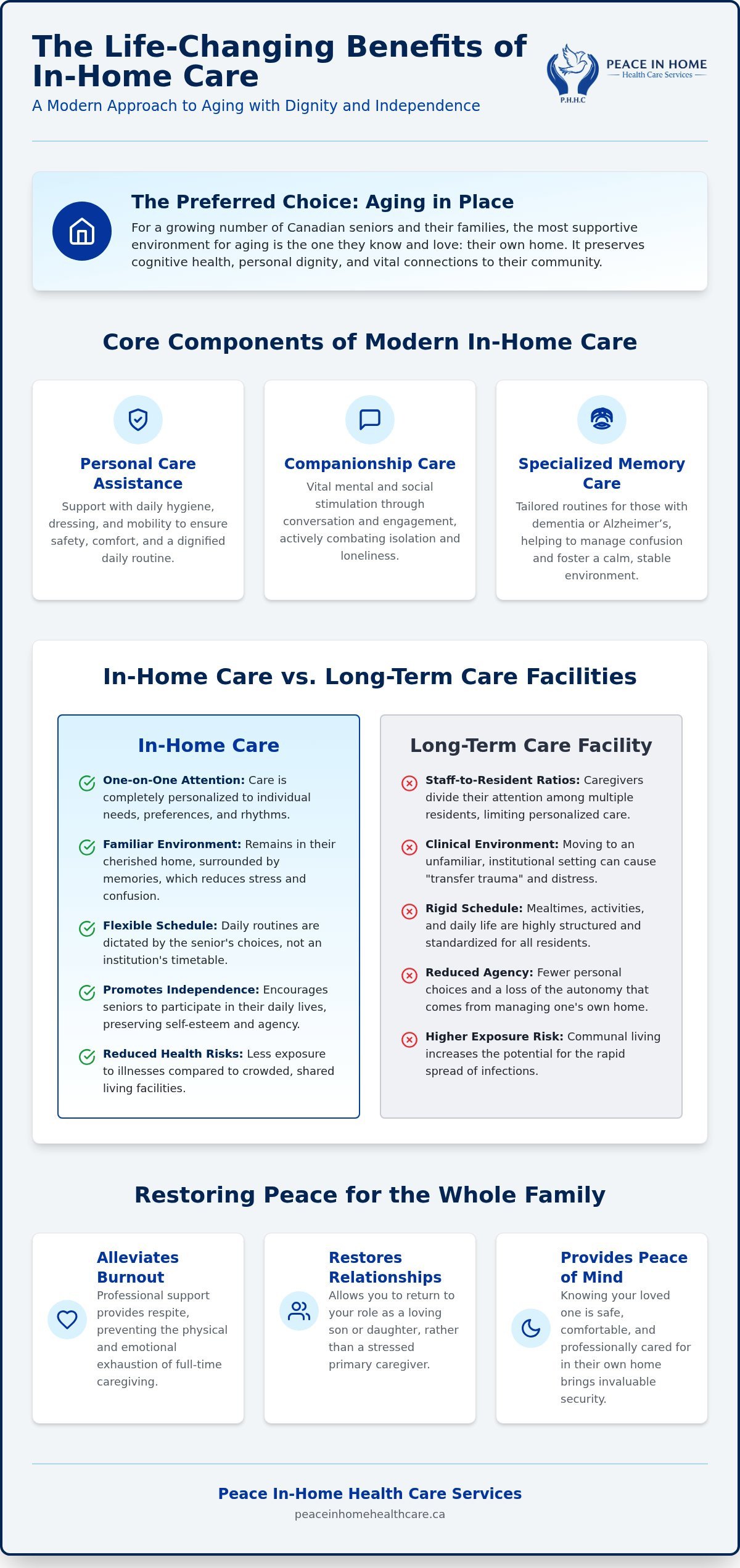
- Personal Care Assistance: This involves help with daily hygiene, dressing, and mobility to ensure safety and comfort.
- Companionship Care: Mental stimulation is vital. Caregivers provide conversation and engagement to combat the isolation many seniors feel.
- Specialized Memory Care: For those living with dementia or Alzheimer’s, tailored routines help manage confusion and provide a calm environment.
Why the GTA is Leading the Shift to Home Care
Families in neighbourhoods like North York or Richmond Hill are choosing home-based solutions for very practical reasons. There is a deep desire to stay in a familiar community close to friends and local shops. Additionally, technology in 2026 has made staying home much safer. Wearable health devices and smart home monitors allow caregivers to track health metrics in real-time, providing an extra layer of security. Finally, the flexibility is unmatched. Unlike the rigid schedules of a facility, in-home support adapts to your family’s life, offering everything from a few hours of respite care to full-time live-in support. Realizing the benefits of in-home care for seniors means acknowledging that care should fit the person, not the other way around.
The Psychological Power of Staying at Home: Preserving Dignity
For many seniors, a home isn’t just a building; it’s a living archive of their life’s journey. Every photograph on the mantel and every familiar creak in the floorboards provides a sense of continuity that a clinical facility simply cannot replicate. One of the most profound psychological benefits of in-home care for seniors is the preservation of this identity. Moving into an institutional setting often triggers transfer trauma, a state of extreme stress and confusion that can accelerate cognitive decline. By staying in their own space, your loved one remains the centre of their world, surrounded by the memories that keep them grounded.
When care is delivered at home, the dynamic shifts from being “processed” as a patient to being “supported” as an individual. In a facility, routines are often dictated by staffing schedules. At home, the senior’s preferences lead the way. This one-on-one attention ensures they are seen and heard, fostering a deep sense of security that is vital for emotional well-being.
Independence and the Preservation of Identity
The ability to make small, everyday choices is a cornerstone of mental health. Whether it’s deciding what time to have breakfast or which path to take for a morning stroll, these moments of agency reinforce a senior’s sense of self. Integrating professional personal care assistance for seniors allows these daily tasks to be handled with patience and respect. Dignity in care is the ability to age without losing one’s personal history. By focusing on what a senior can still do, rather than just their limitations, caregivers help maintain the self-esteem that often withers in more rigid environments.
Combating Loneliness Through Professional Companionship
In suburban areas across the GTA, from Mississauga to Vaughan, senior isolation has become a silent epidemic. As neighbourhoods change and mobility decreases, many elderly residents find their social circles shrinking. This is where companionship care for seniors Toronto provides a vital lifeline. Regular social interaction and the simple act of storytelling have been shown to improve cognitive outcomes and reduce the risk of depression. Caregivers don’t just provide help; they provide a meaningful human connection. Understanding the different types of in-home services available means you can choose a plan that prioritizes these social bonds, ensuring your parent stays engaged with life. If you’re worried about a loved one’s isolation, it’s a good time to speak with a care coordinator about how a friendly visitor can brighten their daily routine.
Relieving the Burden: Benefits for the Family Caregiver
Families across Toronto and Mississauga often find themselves caught in the “Sandwich Generation” struggle. You are likely managing your own career and children while simultaneously trying to ensure your parent is safe and well-fed. This dual pressure takes a heavy toll on your health and your career. One of the most overlooked benefits of in-home care for seniors is how it transforms your relationship with your loved one. When you aren’t spending every visit managing medication reminders or mobility assistance, you can finally return to your role as a son or daughter. You can focus on sharing a meal or a meaningful conversation rather than a checklist of chores.
The physical and emotional cost of long-term family caregiving is significant. It often manifests as chronic stress, sleep deprivation, and a sense of constant vigilance that never quite turns off. Professional support provides the essential peace of mind you need to function. Knowing that an experienced caregiver is handling the technicalities of daily safety allows you to step back and breathe. This shift doesn’t just help the senior; it saves the caregiver from a slow, exhausting decline in their own quality of life.
Preventing Caregiver Burnout with Respite Care
It is vital to recognize the signs of exhaustion before they lead to a family crisis. If you find yourself feeling resentful, constantly tired, or withdrawing from your own social life, you’re likely experiencing burnout. Learning about preventing caregiver burnout Toronto is a crucial step in preserving your family’s harmony. Flexible respite models offer the support you need for various situations:
- Planned Vacations: Allowing you to travel without worrying about your parent’s safety.
- Emergency Relief: Immediate support when your own health or work requires your full attention.
- Weekly Breaks: Scheduled hours that let you attend to your own appointments and self-care.
This temporary relief isn’t a sign of failure. It is a strategic choice that ensures you can continue to provide love and support over the long term without losing yourself in the process.
Professional Advocacy and Expert Navigation
Navigating the complex healthcare landscape in 2026 can feel like a full-time job. Having a “Trusted Guide” by your side changes the entire experience for a family. Professional caregivers bring an objective perspective that often reduces family conflict. Instead of siblings debating what a parent needs, a professional care plan provides a clear, evidence-based roadmap. Peace In-Home Health Care acts as a dedicated partner for GTA families, offering a steady hand and expert navigation through every life transition. This advocacy ensures that your parent’s needs are met with precision while you stay informed and supported every step of the way.
Home Care vs. Nursing Homes: A Practical Comparison
Choosing between a retirement facility and staying at home is one of the most significant decisions a family can make. While nursing homes offer a structured environment, they often operate on a “one-to-many” care ratio. In these settings, a single staff member may be responsible for the needs of ten or more residents at once. One of the primary benefits of in-home care for seniors is the dedicated “one-on-one” attention. Your parent isn’t just another room number; they’re the sole focus of a professional who understands their specific history and preferences. This level of attentive care is difficult to replicate in an institutional setting where staff must prioritize the most urgent needs across a large group.
Health outcomes also tell a compelling story. Staying at home significantly reduces the risk of exposure to infectious diseases, which can spread quickly through shared ventilation and common dining areas in facilities. Additionally, the 2026 reality of Ontario’s long-term care system includes lengthy waitlists that can span several years for preferred locations. In-home care allows your family to bypass these queues entirely, providing an immediate and safe solution that keeps your loved one in their familiar community.
Personalized Care vs. Institutional Schedules
Facilities run on rigid schedules to maintain order. Meals are served at set times, and activities follow a fixed calendar. At home, the senior remains the architect of their own day. They can wake up when they choose, enjoy their favourite tea in their own kitchen, and keep their beloved pets by their side. Maintaining a garden or staying in a familiar neighbourhood provides a sense of continuity that is vital for mental health. As life changes, home care services for seniors Toronto can easily adapt. Whether you need a few hours of help with groceries or more intensive support, the plan evolves without the trauma of a relocation.
Health and Safety: The Clinical Advantage
Many families worry that home care isn’t “medical” enough, but modern services bridge that gap effectively. Accessing skilled nursing care at home Toronto ensures that post-hospital recovery or chronic condition management happens in a low-stress environment. Professional monitoring helps lower the risk of hospital readmission by catching small health changes before they become emergencies. Safety is further enhanced through customized fall prevention strategies. Instead of a generic safety protocol, a caregiver assesses the senior’s specific floor plan, identifying trip hazards in the hallways they have walked for decades. This personalized approach creates a protective bubble that preserves independence while ensuring a high standard of clinical safety.
Designing Your Path to Peace: Selecting the Right Care Plan
Starting the conversation about support is often the most delicate step for families. Many seniors fear that accepting help means losing their independence. When you approach this transition, focus on the benefits of in-home care for seniors as a way to keep them in their own home longer, rather than a move away from it. Frame the caregiver as a personal assistant who handles the heavy lifting so your loved one can focus on the activities they truly enjoy. A comprehensive home assessment is the foundation of this journey. It allows a professional to identify safety risks and daily challenges while respecting the senior’s lifestyle and personal boundaries.
Finding the right fit goes beyond a list of qualifications. It’s about matching personalities and shared interests. Whether your parent loves discussing local history or enjoys a favourite type of music, the right caregiver becomes a trusted companion. This relationship is what turns a care plan into a path to peace. You also have the flexibility to scale support as needs change. You might start with a few hours a week for meal preparation and errands, eventually transitioning to 24/7 live-in care if a higher level of safety is required.
The Peace In-Home Health Care Approach
With over 17 years of experience serving communities from Oakville to Scarborough, we understand the unique needs of GTA families. Our approach is rooted in “Compassionate Expertise,” ensuring that every interaction is both professional and deeply kind. We create tailored plans that cover the full spectrum of daily life. This includes everything from medication reminders to specialized activities for dementia patients at home. We aren’t just providing a service; we’re standing alongside you as a dedicated partner in your parent’s well-being.
Next Steps for GTA Families
If you’re in Vaughan, Markham, or anywhere in Toronto, taking the first step is simple. You can book a consultation to discuss your family’s specific situation without any pressure. To prepare for your first meeting with a care coordinator, it’s helpful to jot down a typical daily routine and any specific safety concerns you’ve noticed. Think about the personality traits that would best complement your loved one’s temperament. Realizing the full benefits of in-home care for seniors starts with a conversation that prioritizes their comfort and your peace of mind.
Contact Peace In-Home Health Care today to realize a safer future for your loved one.
Choosing Peace for Your Family’s Next Chapter
Choosing to support a parent at home is a profound act of love that preserves their dignity and protects your family’s bond. We’ve explored how staying in familiar surroundings supports cognitive health and how professional help allows you to step back from the stress of daily caregiving. By prioritizing one-on-one attention over institutional schedules, you ensure your loved one remains the centre of their own world while you regain your role as a supportive son or daughter.
Realizing the full benefits of in-home care for seniors means choosing a partner who understands the nuances of aging in the GTA. With 17+ years of trusted experience, we provide personalized care plans for every stage of your loved one’s journey. Serving all major GTA municipalities, our team is here to act as your trusted guide through this transition.
You don’t have to navigate this transition alone. We are ready to stand alongside you, offering the steady hand and expert navigation your family deserves to find true peace of mind. Every senior deserves a safe, happy environment to age in place with the respect they’ve earned.
Frequently Asked Questions
Is in-home care safer than a nursing home for seniors with dementia?
In-home care is often safer for those with dementia because it eliminates the disorientation caused by moving to a new facility. Familiar layouts reduce the risk of falls and agitation. One-on-one support means a caregiver can respond immediately to wandering or confusion, which is difficult in a facility with a high staff-to-resident ratio. This personalized attention is one of the key benefits of in-home care for seniors living with cognitive decline.
How much does senior home care cost in Toronto and the GTA?
Costs in the GTA are determined by the specific intensity and duration of the support required. A plan involving light companionship a few times a week will differ from 24/7 live-in care or specialized nursing services. We recommend a professional assessment to establish a tailored schedule that fits your family’s needs. This allows for a predictable budget based on the actual hours of care delivered rather than a flat facility fee.
Can home care services be adjusted as my parent’s health needs change?
Yes, our services are designed to be completely flexible. As your parent’s health evolves, we can adjust the care plan to include more intensive mobility assistance or skilled nursing care services. This adaptability ensures that your loved one receives the right level of support at every stage. We regularly review care plans with families in Toronto and Mississauga to ensure the support remains effective and appropriate for their changing daily routines.
What are the specific benefits of respite care for family members?
Respite care provides a vital emotional and physical break for family caregivers. It allows you to attend to your own health, career, or other family responsibilities without the weight of guilt or worry. By stepping away temporarily, you prevent the exhaustion that often leads to caregiver burnout. This professional relief ensures you can maintain a loving, sustainable relationship with your parent rather than feeling overwhelmed by the constant demands of daily care.
Do home caregivers provide transportation to medical appointments?
Our team provides comprehensive errands and appointment accompaniment for seniors throughout the GTA. Caregivers don’t just provide a ride; they assist with getting in and out of the vehicle and offer support during the visit itself. Whether it’s a specialist appointment in North York or a trip to the pharmacy in Oakville, we ensure your loved one arrives safely and returns home comfortably without the stress of navigating transit or parking.
Is home care covered by OHIP or private insurance in Ontario?
In Ontario, OHIP may cover some medical home care services if they are coordinated through Home and Community Care Support Services. However, many non-medical services like companionship or meal preparation are typically funded privately. Many families use long-term care insurance or workplace benefit plans to help manage these costs. It’s best to check your specific policy or speak with a care coordinator to understand your available coverage options in 2026.
How do I know if my parent is ready for in-home personal care?
You might notice subtle signs like unwashed laundry, missed medication doses, or a sudden decline in home cleanliness. If your parent is becoming increasingly isolated or having difficulty with basic mobility, it’s likely time to consider support. A professional home assessment can help identify these gaps. Realizing the benefits of in-home care for seniors early can prevent a minor safety concern from turning into a serious health crisis or a dangerous fall.
What happens if our assigned caregiver is not a good personality match?
We understand that a successful care relationship relies on a strong personal connection. If the initial caregiver isn’t the right fit for your parent’s personality or interests, we will work with you to find a better match. Our goal is to ensure your loved one feels comfortable and respected. We take the time to listen to your feedback and adjust the staff until we find the “Compassionate Expert” who truly resonates with your family.