

Imagine sitting across from your father, wanting to share a simple moment of joy, but he is staring blankly at a deck of cards he no longer remembers how to use. It’s a heavy feeling to watch a loved one withdraw into themselves, especially when the things that once brought a smile now only cause frustration or agitation. You want to help them stay engaged, yet the constant search for appropriate activities for seniors with dementia at home often leads to caregiver burnout and a lingering sense of guilt.
We understand that you’re looking for more than just a way to pass the time; you’re looking for a way to bring your loved one back, even for just a few minutes. This guide provides a compassionate path toward meaningful, stage-appropriate engagement that reduces “sundowning” and fosters genuine connection. We will explore how to build a structured daily routine using failure-free tasks and local Toronto resources that prioritize dignity over distraction. You’ll discover practical ways to create a calm, supportive environment that provides both your loved one and yourself with much-needed peace of mind.
Key Takeaways
- Understand how structured, person-centred engagement preserves dignity and helps manage “sundowning” by reducing late-day agitation.
- Discover 15 failure-free activities for seniors with dementia at home that use familiar household items to foster meaningful moments of connection.
- Learn to find the “Sweet Spot” of engagement by tailoring tasks to your loved one’s current stage, ensuring activities are neither too childish nor too complex.
- Identify how minor environmental changes, such as maximizing natural light in your home, can improve focus and create a calmer atmosphere.
- See how professional companionship care provides a reliable way to keep your loved one active while offering family caregivers essential peace of mind.
Why Meaningful Activities for Seniors with Dementia are Essential
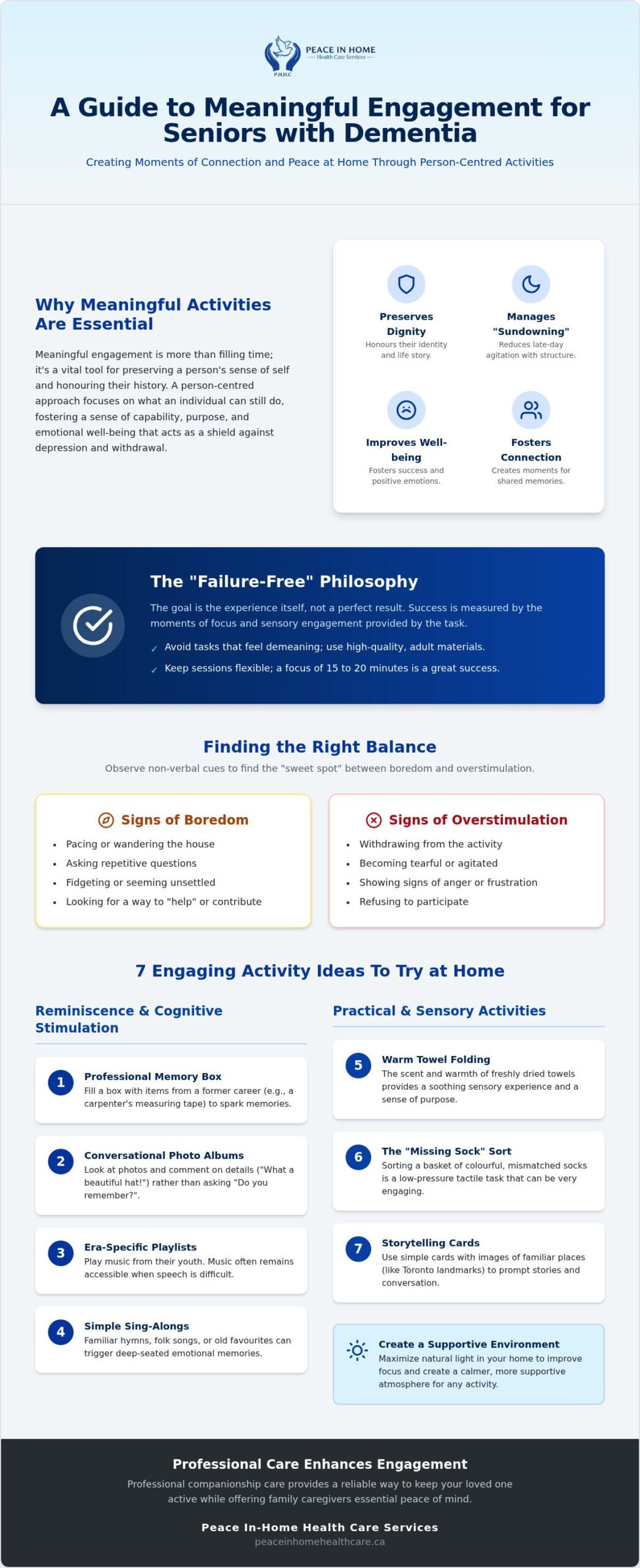
Meaningful engagement is more than just a way to fill the hours; it’s a vital tool for preserving a person’s sense of self. When we plan activities for seniors with dementia at home, we aren’t looking for “busy work.” We’re looking for ways to honour their history and maintain their dignity. This person-centred approach treats your loved one as a whole individual rather than a patient defined by a diagnosis. It’s about finding the thread that connects them to their past and their present environment.
Clinical research into stimulation-oriented treatments suggests that consistent, tailored engagement can significantly improve emotional well-being. By focusing on what a person can still do, we help them feel capable and respected. This sense of purpose acts as a powerful shield against the depression and withdrawal that often accompany memory loss. It turns a standard afternoon into an opportunity for success and connection.
Beyond emotional health, structured activities provide a calming rhythm to the day. Many families in Toronto find that a lack of structure leads to increased “sundowning,” a period of heightened confusion and agitation that often peaks in the late afternoon. Engaging the mind and body earlier in the day helps regulate sleep patterns and maintains essential motor skills. For the family, these moments offer a reprieve from the cycle of stress, replacing it with positive shared memories that provide comfort long after the activity ends.
The “Failure-Free” Philosophy
The goal of any activity should be the experience itself, not a perfect finished product. If a senior is sorting colourful fabrics, it doesn’t matter if they ever finish the pile or organize them by shade. What matters is the tactile sensation and the focus the task provides. To maintain dignity, it’s essential to avoid tasks that feel demeaning or “childish.” Instead of a child’s colouring book, use high-quality art supplies or tactile materials like wood or silk. Keep sessions flexible; a focus of 15 to 20 minutes is often a great success.
Recognizing the Signs of Boredom vs. Overstimulation
Finding the right balance requires careful observation of non-verbal cues. If your loved one is pacing, asking repetitive questions, or wandering, they may be bored and looking for a way to contribute. Conversely, if they start to withdraw, become tearful, or show signs of anger, the activity might be too difficult. It’s okay to stop immediately. Being a “trusted guide” means realizing that an activity that worked yesterday might not work today. If frustration builds, pivot to a familiar comfort, such as a favourite song or a gentle hand massage.
15 Engaging Activity Ideas to Try at Home
Finding effective activities for seniors with dementia at home doesn’t require expensive equipment or complex planning. Often, the most successful moments come from the familiar rhythms of a Toronto household. By focusing on sensory-rich experiences, you can help your loved one feel grounded and productive. These 15 ideas are designed to be failure-free, low-cost, and easily adaptable to different energy levels. They are simple yet effective.
Reminiscence and Cognitive Stimulation
Connecting with the past can provide a profound sense of security. Rather than testing their memory, use these tools to spark emotional responses. You might find more activity ideas through the Alzheimer’s Association to further personalize this experience.
- The Professional Memory Box: Fill a container with items from their former career, like a retired teacher’s chalk or a carpenter’s measuring tape.
- Conversational Photo Albums: Look at photos and ask, “What a beautiful hat, what colour was it?” instead of “Do you remember this day?”
- Era-Specific Playlists: Play 1950s or 60s radio hits. Music often remains accessible even when speech becomes difficult.
- Storytelling Cards: Use simple cards with images of Toronto landmarks to prompt stories about the city.
- Simple Sing-Alongs: Familiar hymns or folk songs can trigger deep-seated emotional memories.
Practical and Sensory Activities
Tactile tasks help maintain motor skills and provide a sense of accomplishment. These domestic activities are perfect for the “sweet spot” of engagement.
- Warm Towel Folding: The scent and warmth of freshly dried towels provide a soothing sensory experience.
- The “Missing Sock” Sort: Sorting colourful socks is a low-pressure way to engage visual and motor skills.
- Kitchen Prep: Snapping green beans or shelling peas allows them to contribute to meal preparation safely.
- Textured Play: Use kinetic sand or non-toxic clay to keep hands busy and reduce anxiety.
- Fidget Blankets: These blankets with zippers, buttons, and ribbons are excellent for restless hands.
- Herbed Windowsill Garden: Planting mint or lavender provides instant olfactory stimulation and a sense of growth.
Outdoor and Community-Linked Ideas
Toronto offers unique opportunities to stay connected to the wider world, even from home or a nearby park.
- GTA Sensory Walks: Take short walks in neighbourhoods like High Park or the Beaches to observe seasonal changes in the gardens.
- Window Bird Watching: Set up a feeder and use a simple field guide to identify local birds like cardinals or blue jays.
- TPL Memory Kits: The Toronto Public Library offers specialized “Memory Kits” that include themed books and activities for seniors.
- Digital Library Tours: Use a tablet to explore virtual exhibits from the ROM or the Art Gallery of Ontario.
Implementing these activities for seniors with dementia at home can be a joyful experience, but it also requires patience and consistency. Professional caregivers from Peace In-Home Health Care can support your family by providing the active companionship needed to keep these routines alive. If you find it challenging to maintain this schedule, you may wish to speak with a care specialist about our personalized support options.
Tailoring Activities to the Stages of Dementia
Finding the right fit for activities for seniors with dementia at home requires a keen eye and a flexible heart. As the condition progresses, the objective of an activity shifts from maintaining complex skills to providing simple sensory comfort. We call the ideal level of engagement the “Sweet Spot.” This is where a task is challenging enough to prevent boredom but simple enough to ensure success. If an activity is too hard, it leads to withdrawal; if it’s too easy, it can feel patronizing. The goal is to find that middle ground where your loved one feels capable and calm.
Observing “preserved skills” is a vital part of this process. Even when short-term memory fades, long-term abilities like singing, rhythmic movement, or a sense of humour often remain intact. By focusing on these strengths, you can create moments of genuine joy. For more detailed guidance on modifying tasks, the National Institute on Aging offers a helpful resource on Adapting Activities for People With Alzheimer’s. This approach prioritizes non-verbal connection, which becomes increasingly important as language skills decline.
Early-Stage: Maintaining Independence
In the early stages, the focus is on preserving independence and social connection. This is the time to continue complex hobbies like gardening or baking, provided there is a gentle safety net in place. If your loved one was an avid woodworker, they might still enjoy sanding or assembling simple kits with supervision. Don’t shy away from social outings. A visit to a familiar coffee shop in Markham or a senior centre in Vaughan can provide vital mental stimulation. Word games and puzzles are also excellent here, as long as they remain a source of fun rather than a test of memory.
Middle-Stage: Sensory and Rhythmic Engagement
As dementia moves into the middle stage, the brain often responds best to sensory and rhythmic engagement. Activities for seniors with dementia at home should now focus on repetitive, soothing motions that require less cognitive processing. Brushing a pet, sorting buttons by colour, or painting with water are all failure-free ways to keep hands busy. Music therapy is particularly effective during this stage. Singing familiar songs or playing simple percussion instruments like a tambourine can trigger emotional memories and reduce agitation. These short-duration tasks provide a quick, satisfying sense of accomplishment.
Late-Stage: Comfort and Connection
In the late stages, the focus moves from “doing” to “being.” Connection is found through the senses rather than through conversation. You might offer a gentle hand massage with scented lavender lotion or read poetry and scriptures aloud in a calm, steady voice. Visual stimulation remains important, but it should be passive. Watching high-definition nature documentaries or looking through art books with high-contrast images can be very grounding. At this stage, your presence is the most meaningful activity of all. It’s about providing a safe, dignified space where they feel loved and secure.
Creating a Safe and Supportive Home Environment for Activities
The success of activities for seniors with dementia at home depends heavily on the physical environment. A cluttered or noisy space can quickly turn a peaceful moment into a source of frustration. In many Toronto homes, especially during the shorter days of winter, lighting plays a critical role in preventing confusion. Maximizing natural light during the day helps regulate the body’s internal clock and reduces the risk of agitation. Similarly, reducing background noise from a television or radio allows your loved one to focus on the task at hand. When the environment is calm, the mind can follow suit. A quiet, brightly lit room creates a sense of safety that is essential for engagement.
To make daily engagement easier, organize your supplies in clear, labelled bins. This simple step reduces the cognitive load of searching for items and makes it simple to transition between tasks. When everything has a designated place, it is easier for both the senior and the caregiver to maintain a sense of order. Using large, clear text on labels ensures that the contents are easily identifiable, even if vision is slightly impaired. This level of organization helps minimize the “startup friction” that often prevents activities from happening consistently.
Establishing a Daily Routine
Consistency is perhaps the most powerful tool for reducing anxiety. When a senior knows what to expect, they feel a greater sense of security and control. You can build “Activity Anchors” into the day to provide this essential structure. This might include gentle movement in the morning, a quiet tactile task in the afternoon, and era-specific music in the evening. These anchors can be seamlessly integrated into personal care assistance for seniors, ensuring that every interaction throughout the day is purposeful and supportive. A reliable routine helps bridge the gap between necessary care and meaningful connection.
Adapting Your Space for Success
Creating a dedicated “Activity Nook” can signal to your loved one that it is time for engagement. This space should be free from clutter and distractions, featuring comfortable seating that provides proper physical support for longer tasks. Safety is always the priority when modifying your home. Before beginning any physical movement or light exercise, take a moment to remove trip hazards like loose rugs or electrical cords. A safe environment allows for a focus on connection rather than just prevention. When the space is tailored to their needs, your loved one can participate with confidence and dignity.
How Professional In-Home Care Enhances Daily Engagement
Implementing activities for seniors with dementia at home requires time, patience, and a deep understanding of the condition. While family members provide the foundation of love and history, a professional caregiver introduces the concept of “active companionship.” This approach goes beyond basic supervision. It involves a dedicated partner who arrives with the energy and training to turn every visit into a therapeutic opportunity. At Peace In-Home Health Care, we focus on making these meaningful moments a consistent part of your loved one’s day, ensuring that engagement doesn’t fall by the wayside when family schedules become overwhelming.
Many families notice a significant shift in engagement when a “new face” enters the home. Seniors often respond differently to a professional than they do to their own children or spouses. This dynamic can reduce the emotional friction that sometimes occurs when a family member tries to encourage a new routine or task. A professional caregiver provides a fresh social interaction that can spark interest and cooperation. Choosing specialized dementia care at home offers a comprehensive solution that prioritizes your loved one’s dignity while following a structured, failure-free path.
Respite for Families, Engagement for Seniors
Caring for a parent or spouse with memory loss is a marathon, not a sprint. Utilizing respite care in Toronto is a vital step in preventing the physical and emotional exhaustion of caregiver burnout. It allows you to step back and rest, knowing your loved one is not just safe, but truly stimulated. We customize every care plan to reflect the senior’s specific history, former hobbies, and current energy levels. This ensures that the activities for seniors with dementia at home are always personalized and respectful of who they are.
The Peace In-Home Health Care Advantage
Our caregivers are seasoned professionals who understand the nuances of dementia-related behaviours. They know how to pivot when an activity isn’t working and how to celebrate the small victories that occur every day. We provide reliable, compassionate support across the GTA, including the neighbourhoods of Scarborough, Etobicoke, and North York. Our mission is to champion “aging in place” with as much joy and independence as possible. We act as a steady hand and a trusted guide, helping your family navigate these transitions with quiet confidence and expert care.
Book a free home care assessment to see how we can brighten your loved one’s day and provide the reliable support your family deserves.
Supporting Your Loved One with Confidence and Care
Guiding a family member through the complexities of memory loss is a journey that requires both a compassionate heart and a steady, expert hand. By focusing on failure-free activities for seniors with dementia at home, you are doing more than just filling the hours; you are protecting their dignity and creating a predictable, calming rhythm for their day. Whether it’s through the sensory comfort of a late-stage hand massage or the cognitive engagement of a middle-stage sorting task, these moments of connection are the building blocks of a higher quality of life.
You don’t have to navigate these transitions alone. With over 17 years of experience serving families across the GTA, including Toronto, Vaughan, and Mississauga, Peace In-Home Health Care is here to act as your trusted guide. We provide personalized care plans for Alzheimer’s and dementia that prioritize the individual, ensuring they remain active and engaged in the safety of their own home. Our dedicated caregivers offer the professional reassurance and active companionship your family needs to find genuine peace of mind.
Request a Free Consultation for Compassionate Dementia Care
Take the first step toward a more structured and joyful daily routine for your loved one. We are here to support you and your family every step of the way.
Frequently Asked Questions
What are the best activities for seniors with advanced dementia?
For seniors with advanced dementia, the best activities focus on sensory comfort rather than cognitive results. You might try gentle hand massages using lavender-scented lotion, listening to familiar hymns, or looking through high-contrast picture books of nature. These “being” activities provide emotional security and connection without the pressure of having to perform a task. It’s about creating a soothing environment where they feel safe, respected, and loved.
How long should an activity last for someone with Alzheimer’s?
Most activities for seniors with dementia at home should last between 15 and 20 minutes, though this varies based on their energy levels. It is better to have several short, successful engagement periods throughout the day than one long session that causes fatigue. Always follow your loved one’s lead. If they show signs of restlessness or withdrawal after five minutes, it’s perfectly okay to stop and try again later.
What should I do if my loved one refuses to participate in an activity?
If your loved one refuses to participate, it’s important to remain calm and never force the interaction. Refusal is often a sign of fatigue, overstimulation, or simply a lack of interest in that specific task. You should acknowledge their feelings, step back for a while, and try a different approach later. Sometimes, simply changing the room’s lighting or turning off background noise can make them feel comfortable enough to engage.
Are there specific games that can help improve memory in dementia patients?
While games don’t typically “cure” memory loss, failure-free activities can maintain existing cognitive pathways and reduce anxiety. Focus on simple, familiar games like sorting a deck of cards by colour or matching large, tactile puzzle pieces. These tasks provide a sense of accomplishment without the frustration of complex rules. The goal is engagement and joy rather than testing their memory, which helps preserve their dignity and confidence.
How can I prevent my loved one from getting frustrated during crafts?
To prevent frustration during crafts, simplify every step and focus entirely on the process rather than a finished product. Use high-quality materials that feel “adult” to avoid demeaning them. If a task like painting becomes difficult, pivot to a tactile experience like folding warm towels or sorting colourful fabrics. By keeping the activity failure-free, you ensure that your loved one feels successful and capable, which significantly reduces the risk of agitation.
Is it better to do activities in the morning or the afternoon?
Morning is typically the best time for activities as most seniors have higher energy levels and better focus early in the day. Engaging the mind and body before noon can also help reduce the symptoms of “sundowning” later in the afternoon. A structured morning routine helps regulate their internal clock, leading to better sleep patterns and a calmer evening for both the senior and the family caregiver.
Can professional caregivers help with daily activities at home?
Yes, professional caregivers from Peace In-Home Health Care are specifically trained to implement daily activities for seniors with dementia at home. Our team provides active companionship, using person-centred techniques to keep your loved one engaged while you take a much-needed break. We serve families across the GTA, including Vaughan and Mississauga, ensuring that these meaningful routines are carried out consistently with patience, dignity, and expert care.
Where can I find dementia-friendly resources in Toronto?
Toronto offers several excellent resources, including the Toronto Public Library’s specialized “Memory Kits” which contain themed books and activities. The Alzheimer Society of Toronto also provides community programs and support groups throughout the city. For families in neighbourhoods like Scarborough or North York, local community centres often host dementia-friendly social events. We recommend checking these local resources to find additional ways to keep your loved one connected to their community.