

What if the persistent fatigue you feel isn’t a sign that you’re failing, but a signal that you’ve reached the limit of what one person can do alone? Many dedicated family members in Ontario find themselves trapped in a cycle of exhaustion that even a full night’s sleep cannot fix. It’s vital to recognize the specific signs of caregiver burnout for family members before your own health or the quality of care you provide begins to suffer. You aren’t alone in feeling this heavy weight, and acknowledging it is the first step toward a healthier balance for everyone involved.
You likely feel a deep sense of responsibility to your loved one, yet that commitment can sometimes lead to neglecting your own needs or feeling unexpected resentment. We promise to help you validate these complex emotions and provide a clear path forward. This guide outlines the early red flags of caregiver exhaustion, offers a checklist to help you decide if it’s time for professional support, and explains how to access compassionate respite care in the GTA. By the end, you’ll have the tools to protect your well-being while honouring the dignity of those you care for.
Key Takeaways
- Understand why caregiver burnout is a biological response to an unsustainable workload, allowing you to prioritize your health without feeling guilty.
- Identify the specific physical and emotional signs of caregiver burnout for family members to catch red flags before they lead to serious health issues.
- Discover how your exhaustion can unintentionally impact your loved one’s safety and why professional support is a protective measure for their dignity.
- Learn to create a “Caregiver First Aid” plan that includes setting healthy boundaries and recognizing when it is time to ask for help.
- See how flexible respite care options across the GTA can help you transition from being a full-time caregiver back to being a supportive family member.
Understanding Caregiver Burnout: Why It’s More Than Just Feeling Tired
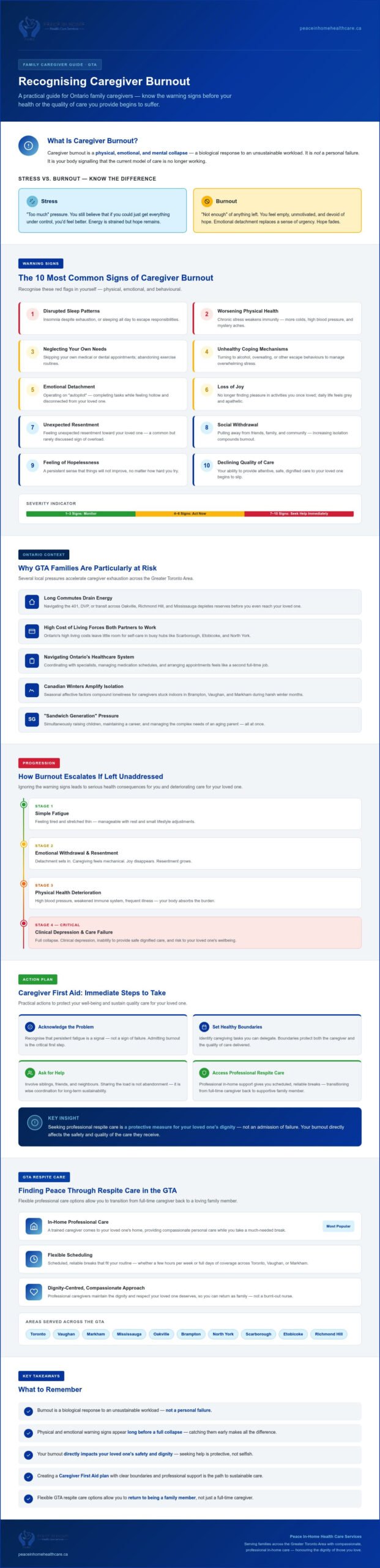
Caregiving is often born from a place of deep love and devotion. However, when the demands of care exceed your internal resources for too long, that love can be overshadowed by a state of total exhaustion. Caregiver burnout is a physical, emotional, and mental collapse. It’s a biological response to an unsustainable workload. Your body and mind aren’t failing you; they’re simply signalling that the current model of care is no longer working for your family.
Many people in the “sandwich generation” across the GTA, particularly in cities like Toronto, Vaughan, and Markham, feel this pressure most acutely. You’re likely balancing a career and raising children while managing the complex needs of an aging parent. This unique pressure is exhausting. If you ignore the signs of caregiver burnout for family members, the consequences are significant. What starts as simple fatigue can quickly transition into clinical depression, high blood pressure, or a weakened immune system that leaves you vulnerable to physical illness.
The Difference Between Stress and Burnout
It’s easy to confuse daily stress with the deeper state of burnout. Stress usually involves “too much” pressure, such as too many appointments to manage or too much laundry to do. You still feel that if you could just get everything under control, you’d feel better. Burnout is different. It’s characterized by “not enough.” You feel empty, unmotivated, and devoid of the hope that things will improve. This state of being makes it nearly impossible to provide the dignified care your loved one deserves.
You might notice that the vibrant colour of your daily life starts to fade into a heavy apathy. You no longer find joy in the activities you once loved, and even the presence of your loved one might feel like a burden rather than a blessing. The transition from stress to chronic burnout occurs when your sense of urgency is replaced by a hollow sense of detachment and emotional withdrawal.
Why GTA Families Are Particularly at Risk
Living in the Greater Toronto Area presents specific challenges that can accelerate caregiver exhaustion. Long commutes on the 401 or the DVP drain energy reserves before you even arrive at your loved one’s home in Oakville or Richmond Hill. The high cost of living in Ontario often means both partners in a family must work full-time, leaving little room for self-care in busy hubs like Mississauga or Scarborough.
Navigating the complexities of the Ontario healthcare system can also feel like a second job. Between coordinating with specialists and managing medication schedules, the mental load is immense for families in North York or Etobicoke. Additionally, our long Canadian winters play a role. Seasonal affective factors can make the isolation of caregiving feel even more profound when you’re stuck indoors during a February snowstorm in Brampton or Vaughan. Recognizing these local pressures is the first step toward realizing that you need a more sustainable path forward.
The 10 Most Common Signs of Caregiver Burnout for Family Members
Caregiving often begins as a labour of love, but it can slowly shift into a mechanical routine that leaves you feeling hollow. When you find yourself operating on “autopilot,” you might complete every task on your list while feeling emotionally disconnected from your loved one. This sense of detachment is one of the most telling signs of caregiver burnout for family members. It’s a protective mechanism your brain uses to survive chronic stress, but it ultimately robs you of the meaningful relationship you’re trying to preserve.
Physical and Behavioural Red Flags
Your body often signals burnout long before your mind is ready to admit there’s a problem. These physical shifts aren’t just “part of getting older” or “normal stress”; they’re clear indicators that your energy reserves are depleted. Pay close attention to these behavioural changes:
- Disrupted sleep patterns: You might struggle with insomnia despite being physically exhausted, or you may find yourself wanting to sleep all day to escape your responsibilities.
- Worsening health: Chronic stress weakens the immune system, leading to more frequent colds, high blood pressure, or mystery aches and pains that don’t seem to heal.
- Neglecting your own needs: You start skipping your own dentist or doctor appointments and find it impossible to maintain a regular exercise routine.
- Unhealthy coping mechanisms: An increased reliance on alcohol, tobacco, or over-the-counter sleep medications to manage your daily anxiety levels.
Emotional and Mental Indicators
The emotional toll of caregiving manifests differently depending on your relationship with the senior. Spouses often experience a profound sense of “emptiness” as they witness their partner’s health decline, which can feel like a slow, living bereavement. Adult children, conversely, are often plagued by excessive guilt. Even when you’re doing everything possible, you feel you aren’t doing “enough” while balancing your own household in Mississauga or your career in Markham.
Watch for these specific mental shifts in your daily life:
- Persistent hopelessness: A heavy feeling that your situation will never improve and that there is no light at the end of the tunnel.
- Emotional outbursts: Feeling uncharacteristic irritability or snapping at your loved one over minor inconveniences.
- Loss of interest: You stop attending social gatherings in communities like Oakville or Burlington and find no joy in the hobbies you once loved.
- Helplessness: Feeling like you’ve lost control over your schedule and your future.
Recognizing these patterns is a brave first step toward reclaiming your well-being. If these signs feel familiar, exploring personal care assistance for seniors can provide the professional support needed to restore balance to your home. It’s okay to admit that the workload has become too much. If you need a supportive ear to discuss your options, you can reach out to our compassionate team for guidance tailored to your family’s unique situation.
Assessing the Impact: How Burnout Affects Your Loved One’s Care
Recognizing the signs of caregiver burnout for family members is not just about your own health; it is a critical step in ensuring the safety of the person you love. When you are operating in a state of chronic exhaustion, the standard of care inevitably shifts. It’s difficult to maintain the high level of vigilance required for complex health needs when you’re struggling to keep your own head above water. Choosing to bring in professional support isn’t a sign of giving up. Instead, it is a powerful act of advocacy that protects your loved one’s dignity and ensures they receive the attentive care they deserve.
The Risk of Medication and Safety Errors
Mental fatigue significantly impairs your ability to process information and react quickly. In a home care setting, this often manifests as subtle but dangerous oversights. You might forget if a morning dose of heart medication was administered, or perhaps the timing of a critical injection slips by during a busy afternoon. These aren’t intentional mistakes, but they are direct consequences of a mind that has been pushed past its limit.
Vigilance regarding fall hazards also declines when you’re burnt out. You might not notice a frayed rug in the hallway or forget to assist with a transfer from the bed to a chair because you’re distracted by sheer fatigue. Simply put, a rested caregiver is a safer caregiver, as they possess the mental clarity needed to anticipate risks before they become accidents.
Strained Relationships and Communication Breakdown
One of the most painful aspects of burnout is the way it alters the family dynamic. You may find your role shifting from a loving daughter, son, or spouse into a resentful “task-manager.” When every interaction becomes about a chore or a medical requirement, the emotional bond begins to fray. Seniors are often incredibly perceptive; they sense your stress and frustration, which can lead to increased anxiety, agitation, or a sense of being a burden.
By delegating clinical and personal tasks to professionals, you can reclaim your original role in the family. Maintaining a high standard of skilled nursing care at home allows you to focus on companionship and emotional support rather than just medical management. This transition preserves the senior’s mental health and ensures that your time together is spent building memories rather than managing a crisis. Professional support provides the reliable foundation needed for your loved one to age in place with the respect they deserve.
Immediate Steps to Manage Burnout and Reclaim Your Health
If you have identified the signs of caregiver burnout for family members in your own life, your first priority must be stabilization. Think of this as “Caregiver First Aid.” You cannot pour from an empty cup, and attempting to do so only leads to deeper exhaustion. Stabilization starts with the brave act of setting firm boundaries. This might mean saying “no” to non-essential social obligations or delegating household chores that aren’t related to immediate health and safety. It’s about triage; you must protect your own energy so you can continue to provide high-quality care for your loved one.
Prioritizing Your Own Wellness
Reclaiming your health requires small, consistent actions that reset your nervous system. Start by scheduling non-negotiable “me-time” every single day. Even 15 minutes of quiet reflection, a short walk, or a hobby can make a significant difference. You must also re-organize your daily schedule to prioritize your own sleep and nutrition. Sleep deprivation often mimics the symptoms of cognitive decline, making it harder for you to realize when you’re reaching your breaking point.
If the emotional weight feels too heavy to carry alone, consider seeking professional therapy or joining a local support group. Communities like Richmond Hill and Thornhill offer various resources where you can connect with others who truly understand your journey. Speaking with a professional can help you process feelings of guilt and resentment, allowing you to return to your caregiving role with a clearer mind and a more compassionate heart.
Building a Support Network in the Community
You don’t have to be a hero who handles every task in isolation. Building a reliable support network is essential for long-term sustainability. Start by identifying friends or family members who can take over specific, manageable errands. Perhaps a neighbour in Mississauga can pick up groceries once a week, or a sibling in Scarborough can manage the financial paperwork and medical appointments. Be clear and direct when communicating your needs; most people want to help but simply don’t know where to start.
You can also explore community programs in North York, Etobicoke, or Whitby that are specifically designed to support family caregivers. These programs often provide a much-needed sense of emotional validation and practical advice on navigating the Ontario healthcare system. Distributing the load ensures that the standard of care remains high while allowing you to preserve your own dignity and health.
Finding Peace Through Respite Care in Toronto and the GTA
Choosing to seek help is often the hardest decision a family makes, yet it’s frequently the most transformative one. When you recognize the signs of caregiver burnout for family members, it’s time to shift your focus from surviving to thriving. Professional support provides the breathing room you need to reclaim your well-being while ensuring your loved one remains in the comfort of their own home. Whether you require a few hours a week to run errands in Whitby or 24/7 live-in support in Oshawa, respite care Toronto offers a flexible solution that adapts to your family’s unique rhythm.
What to Expect from Professional Respite Support
A human-first approach means that care is never a one-size-fits-all service. We create personalized care plans that mirror your loved one’s familiar routines, ensuring their day feels stable and dignified. This isn’t just about clinical tasks. It’s about companionship care that reduces loneliness. While you take a necessary break, a certified Personal Support Worker or Registered Nurse provides attentive care in the home. This professional presence offers a layer of security that family members alone often cannot sustain, especially when managing the complexities of dementia care.
Serving Families Across the Greater Toronto Area
Peace In-Home Health Care Services provides reliable support across the entire region. We understand the local needs of families in Etobicoke, Brampton, and North York. Our process focuses on matching caregivers to the senior’s personality, ensuring a harmonious relationship that feels like a natural extension of the family. Whether you’re in Mississauga, Scarborough, or Vaughan, we’re here to guide you through this transition with patience and expertise. We believe that professional care should feel like a steady hand during a time of uncertainty.
Taking the first step is often as simple as scheduling a home assessment. This allows us to understand your specific needs in Markham, Richmond Hill, or Oakville. Realizing there’s a better way forward is a gift to both yourself and your loved one. By delegating the physical demands of care, you can finally return to being a supportive son, daughter, or spouse, knowing that the professional details are handled with the highest integrity. Peace of mind is possible when you have a trusted partner standing alongside your family.
Reclaiming Your Well-being and Strengthening Family Bonds
Recognizing the signs of caregiver burnout for family members is the first step toward a healthier future for your entire household. It’s important to remember that asking for help isn’t a sign of weakness; it is a strategic decision to ensure your loved one receives the highest quality of care. By prioritizing your own health, you preserve the emotional bond that makes your family unique. When you are rested and supported, you can move away from the stress of clinical management and return to your role as a loving daughter, son, or spouse.
With over 17 years of experience across the GTA, our team understands that every situation is different. We provide personalized care plans tailored to your family’s unique needs, supported by certified Personal Support Workers and Registered Nurses available 24/7. You don’t have to navigate this transition alone. Reclaiming your well-being allows you to provide the dignified, attentive support your loved one deserves while finding your own path back to peace. You have worked hard to care for others; now, it is time to allow a trusted partner to care for you.
Frequently Asked Questions
How do I know if I am experiencing caregiver burnout or just a bad week?
Caregiver burnout is a persistent state of emotional, physical, and mental exhaustion that doesn’t improve with rest. While a bad week usually ends with a sense of recovery after a good night’s sleep, burnout leaves you feeling hollow and detached. Recognizing the signs of caregiver burnout for family members involves noticing if you have lost interest in your own life or feel a growing sense of resentment toward your daily caregiving duties.
What are the first steps to take when I realize I can’t do this alone anymore?
The first step is acknowledging that your current situation is unsustainable and that seeking help is a responsible choice. Begin by triaging your daily responsibilities and identifying which tasks, like meal preparation or medication reminders, could be handled by a professional. Next, contact a trusted agency for a home assessment. This allows you to explore personalized care plans that fit your family’s specific needs in cities like Vaughan, Markham, or Richmond Hill.
Is it normal to feel guilty about hiring a professional caregiver for my parent?
It is incredibly common to feel guilty, but it’s important to realize that professional support is actually an act of love. Hiring a caregiver allows you to step away from being a “task-manager” and return to being a supportive son or daughter. By delegating clinical needs to a certified PSW or nurse, you ensure your parent receives high-quality, dignified care while you preserve your own mental health and the family bond.
How can respite care help prevent a total breakdown for family members?
Respite care provides the essential “breathing room” required to reset your nervous system and prevent a total physical or emotional collapse. It allows you to catch up on sleep, attend your own medical appointments, or simply enjoy a quiet afternoon in Oakville or Burlington. This temporary relief reduces the chronic stress that leads to burnout, ensuring you have the energy to continue supporting your loved one over the long term without sacrificing your health.
Does the Ontario health system provide any support for caregiver burnout?
In Ontario, Home and Community Care Support Services (HCCSS) coordinates some government-funded support, but resources are often stretched thin with long waitlists. Many families in the GTA find that public support doesn’t cover all their needs, leading them to seek private home care services. These private options offer more flexibility and immediate availability for those in Mississauga or Scarborough who are already experiencing the early signs of caregiver burnout for family members.
How do I talk to my elderly parent about bringing a stranger into our home for care?
Frame the conversation around your own needs rather than their perceived limitations. You might say, “I want to make sure I can continue being there for you, but I need a little help with the housework so we can enjoy our time together.” Starting with companionship care for a few hours a week in North York or Etobicoke can help your parent adjust to a new face in the home without feeling overwhelmed.
What is the difference between companionship care and skilled nursing care?
Companionship care focuses on social interaction and daily living tasks, such as light housekeeping, meal preparation, and accompaniment to appointments. Skilled nursing care services involve medical support provided by Registered Nurses, such as wound care, injections, or complex medication management. While companionship keeps a senior engaged and safe, skilled nursing addresses specific medical conditions that require professional clinical expertise. Both services help preserve a dignified lifestyle for seniors living at home in Toronto.
Can respite care be arranged for short-term needs in the GTA, like a weekend away?
Yes, respite care is highly flexible and can be tailored for short-term needs, including weekend coverage or overnight support. Whether you live in Barrie, Woodbridge, or Thornhill, you can arrange for a professional caregiver to step in while you take a vacation or attend a family event. This ensures your loved one remains safe and comfortable in their familiar environment while you get the rest you need to return refreshed and ready to help.