
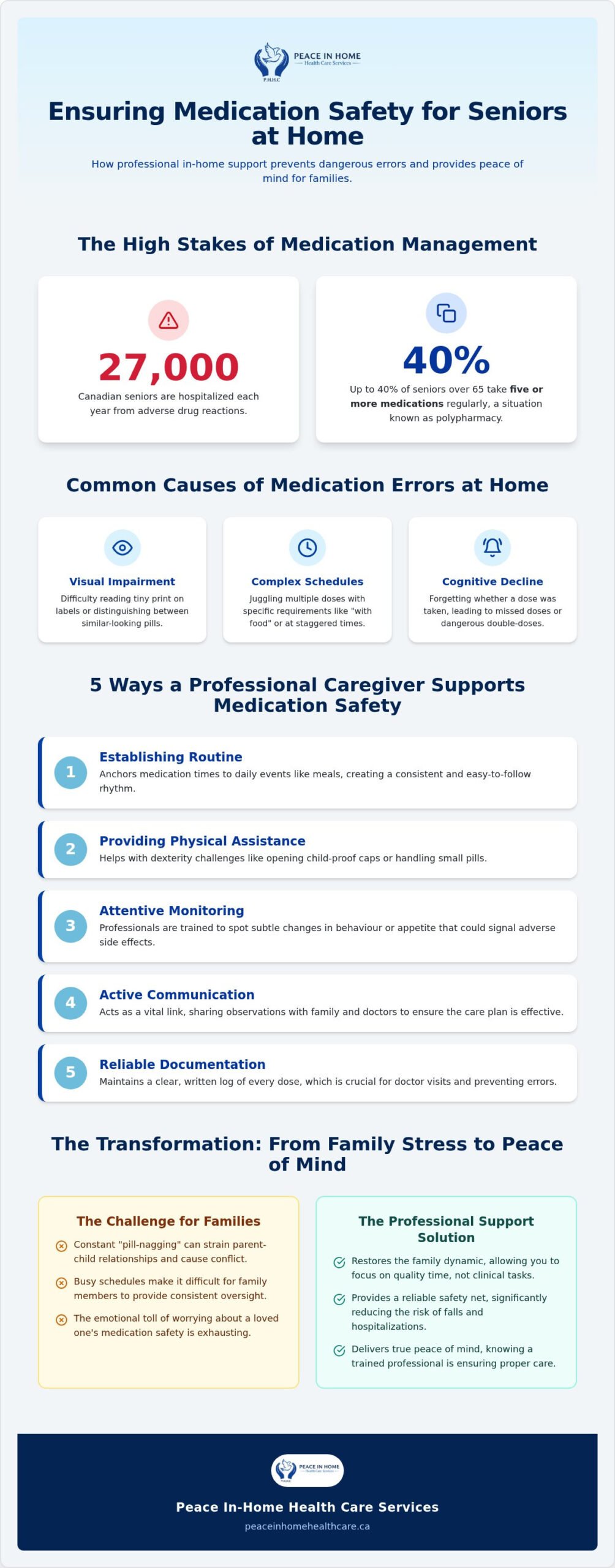
Did you know that nearly 27,000 Canadian seniors are hospitalized every year due to adverse drug reactions? It’s a staggering figure that highlights just how precarious the balance of managing multiple prescriptions can be. You likely spend your days worrying about a missed dose or the terrifying possibility of a double-dose. It’s exhausting to be the “medication police,” especially when your loved one values their independence and might even resist your well-meaning reminders. You want them to stay safe, but you also want to preserve the warmth of your relationship.
Understanding how a caregiver can help with medication management can transform this daily source of friction into a structured, safe routine. Discover how professional in-home support ensures medication safety, prevents dangerous errors, and helps your loved one maintain their independence at home. This guide explains how to establish a reliable system that prevents hospital readmission, reduces family conflict, and provides the peace of mind that comes from knowing a professional is monitoring for side effects and ensuring every dose is taken correctly.
Key Takeaways
- Understand the risks of polypharmacy and how professional oversight can help prevent adverse drug reactions in the comfort of home.
- Discover how a caregiver can help with medication management by creating reliable daily routines and assisting with the physical challenges of opening prescriptions.
- Recognize the emotional and physical signs that indicate it is time to transition from family-led care to professional Personal Support Worker assistance.
- Learn how to organize a medicine cabinet effectively and utilize local Toronto pharmacy services to streamline a complex medication schedule.
- Gain peace of mind by learning how tailored care plans protect your loved one’s dignity while ensuring they receive the exact level of support they need.
The Critical Link Between Medication Management and Aging in Place
Effective medication management is the cornerstone of a safe aging-in-place strategy. It’s the disciplined process of ensuring your loved one receives the right dose, at the right time, through the right route. While it sounds straightforward, the reality for many Toronto families is far more complex. This is where understanding how a caregiver can help with medication management becomes vital for maintaining a senior’s health and dignity.
The risk profile changes as we age. Statistics show that 30% to 40% of people aged 65 and over take five or more medications regularly, a situation known as polypharmacy. This isn’t just about keeping track of more bottles; it’s about the hidden dangers of drug-drug interactions. These interactions can cause subtle side effects, such as confusion or extreme lethargy, that are easily overlooked or misattributed to aging. Professional Medication therapy management helps bridge the gap between what a doctor prescribes and what actually happens at the kitchen table.
The emotional toll on families is equally significant. When you find yourself constantly checking pill organizers or asking, “Did you take your heart medication yet?”, the parent-child relationship can suffer. This “pill-nagging” often leads to resistance or conflict, turning what should be a supportive interaction into a source of stress. Bringing in a professional can restore the family dynamic, allowing you to focus on quality time rather than clinical oversight.
Why Medication Errors Happen at Home
The home environment, while comfortable, presents unique challenges for medication safety. Visual impairment is a common hurdle; many seniors struggle to read the tiny print on pharmacy labels or distinguish between two similar-looking white tablets. Cognitive decline also plays a role, as it becomes increasingly difficult to remember if a morning dose was already swallowed. When you add complex schedules, like juggling “with food” requirements or staggered afternoon doses, the system often breaks down without attentive support.
The Consequences of Improper Management
The fallout from medication errors is often severe. Dizziness from blood pressure fluctuations or blood sugar spikes can lead to devastating falls, which are a primary driver of hospitalizations for seniors in the GTA. In fact, approximately 27,000 Canadian seniors are hospitalized annually due to adverse drug reactions. These incidents aren’t just temporary setbacks; they are often the catalyst for a premature transition to a long-term care facility. Managing medications correctly is, quite literally, the key to staying home longer.
5 Practical Ways a Home Caregiver Supports Medication Safety
Professional support provides a layer of safety that’s difficult for busy families to maintain alone. When considering how a caregiver can help with medication management, it’s helpful to look at the specific, daily tasks that prevent a crisis. A caregiver does more than just hand over a pill; they create a protective environment where health can flourish.
- Establishing Routine: Caregivers create a consistent daily rhythm, anchoring medication times to familiar events like waking up or finishing a meal.
- Physical Assistance: They help with the dexterity challenges that come with age, such as opening child-proof caps or ensuring a full glass of water is always at hand.
- Attentive Monitoring: Professionals are trained to spot subtle changes in behaviour, appetite, or sleep patterns that might indicate an adverse reaction.
- Active Communication: They act as a vital link, sharing observations with family members and healthcare providers to ensure the care plan remains effective.
- Reliable Documentation: Maintaining a clear, written log ensures that every dose is accounted for, which is essential during follow-up doctor visits.
Following basic Medication Safety Tips for Older Adults, such as keeping an up-to-date list and properly storing prescriptions, becomes much easier when a dedicated professional manages the details. This level of organization is often the difference between a stable health journey and an unexpected emergency.
Creating a Fail-Safe Reminder System
Simple verbal prompts can make taking medicine feel like a natural part of the day rather than a clinical chore. Caregivers often integrate these reminders into meal preparation for the elderly at home, ensuring that “take with food” instructions are followed precisely. This companionship turns a potentially stressful moment into a dignified, supportive interaction that seniors actually look forward to.
Handling Resistance with Compassion
It’s common for seniors, particularly those living with dementia, to become suspicious or fearful of their medications. A professional caregiver uses a “calm approach” to avoid power struggles, often identifying the root cause of the refusal. Is the pill too large to swallow comfortably? Does it have a bitter aftertaste? By identifying “the why,” caregivers can work with the family to find solutions, such as requesting a liquid version from the pharmacist. If you’re feeling overwhelmed by these daily challenges, reaching out for a consultation can help you find a path forward that respects your loved one’s autonomy.
Professional Support vs. Family Care: Finding the Right Balance
Many Toronto families find themselves in the “sandwich generation,” caught between the demands of a career, raising children, and caring for an aging parent. This balancing act is physically and emotionally draining. When a parent’s health requires a complex regimen of pills, the pressure often leads to caregiver burnout. Understanding how a caregiver can help with medication management is often the first step in reclaiming a sense of balance and peace within the home.
It is time to consider professional help when medication reminders turn into daily arguments or when you find yourself waking up at night wondering if a dose was missed. Professional oversight reduces family conflict by removing the nagging element from your relationship. It also alleviates the heavy weight of caregiver guilt that comes from the constant fear of making a clinical mistake. For those with more intricate medical needs, skilled nursing care at home in Toronto provides the clinical expertise necessary to handle complex prescriptions safely.
PSW vs. Registered Nurse: Who Does What?
In Ontario, the distinction between a Personal Support Worker (PSW) and a Registered Nurse is important for family planning. A PSW focuses on medication reminders. This involves prompting the senior, assisting with opening containers, and observing them as they take the dose. This is a key part of personal care assistance for seniors. Conversely, a nurse is required for controlled acts. These include administering injections, managing complex wound care medications, or performing clinical assessments when a senior’s condition is unstable or unpredictable.
The Value of an Objective Third Party
There is a unique psychological benefit to having an objective professional in the home. Seniors often follow the guidance of a trained caregiver with less resistance than they would a family member. This professional reassurance factor reduces anxiety for both the senior and the family. By delegating the clinical tasks, you can transform your visits. Instead of acting as a medical monitor, your time is freed up for genuine companionship care for seniors in Toronto. This allows you to be the daughter or son again, focusing on sharing stories and enjoying quality time together.
Organizing for Success: Best Practices for GTA Families
Creating an organized environment is a simple yet powerful way to reduce the daily stress of health oversight. Start by conducting a thorough “home medicine cabinet audit.” It’s common for seniors to hold onto expired prescriptions or discontinued medications out of habit. Removing these old bottles prevents accidental ingestion of the wrong pill. By understanding how a caregiver can help with medication management, you can transform a cluttered counter into a streamlined safety system that protects your loved one from confusion.
A centralized “medication station” is essential for consistency. Choose a well-lit, easily accessible area, such as a kitchen counter or a side table in the living room. Avoid the bathroom, as humidity can degrade pill quality. For added security, we recommend the “Vial of Life” concept. This involves keeping a current medication list and critical medical history in a clear container on the fridge. GTA paramedics are trained to look for this information during emergencies, which can save precious time when every second counts.
Collaborating with your Ontario Pharmacist
Your local pharmacist is a vital partner in your care team. In Ontario, seniors taking multiple medications are eligible for an annual MedsCheck. This is a provincial-funded review where the pharmacist sits down with the patient to discuss every prescription and over-the-counter supplement. You can also request that the pharmacy synchronizes all refills so they’re ready on the same day each month. Utilizing blister packs, or dosettes, further simplifies the process by pre-sorting pills into morning, afternoon, and evening slots.
Tech Tools for Modern Management
Technology has introduced several helpful tools for 2026, from simple smartphone alerts to smart pill dispensers with cellular connectivity. These automated dispensers can sound an alarm and only release the specific dose needed at that time. If a dose is missed, some systems even send a notification to a family member’s phone. A professional caregiver can manage these tools, handling the programming and refills so the senior doesn’t have to navigate complex apps or small buttons. This ensures the technology serves the senior, rather than becoming another source of frustration.
Peace of Mind: Professional Medication Support in the GTA
Peace In-Home Health Care understands that every senior has a unique health journey. We don’t believe in one-size-fits-all care. Instead, we tailor our support to match each individual’s specific prescription list and lifestyle. Our team focuses on making medication time a positive, supportive interaction rather than a source of stress. We serve families across the entire Greater Toronto Area, including Toronto, Scarborough, Mississauga, and Vaughan, providing a steady hand during complex life transitions. Our compassionate experts bring over 17 years of experience to every home, ensuring that safety and dignity always go hand in hand.
Professional help is often the most effective way of preventing caregiver burnout in Toronto. It allows you to step back from the role of medical monitor and return to being a supportive family member. We’ve seen firsthand how a caregiver can help with medication management while simultaneously fostering a sense of security and independence for the senior. By delegating these clinical reminders to a trusted guide, you can focus on the relationship that matters most.
Our Integrated Care Model
Our integrated care model ensures that medication safety is just one part of a larger, personalized plan. By combining reminders with meal preparation, we ensure that “take with food” instructions are followed precisely. This is essential for preventing stomach upset or ensuring proper absorption. For families managing memory loss, we offer specialized support for activities for dementia patients at home. This ensures that medication time is integrated into a day filled with meaningful engagement. We also prioritize real-time communication, keeping you updated on your parent’s health status so you’re never left in the dark.
Getting Started with Professional Care
Starting professional care begins with a thorough initial home assessment. We identify safety gaps, review current routines, and understand the specific needs that make your loved one feel comfortable. This process isn’t just about checklists; it’s about matching the right caregiver to your loved one’s personality and temperament. This ensures a dignified relationship built on trust and mutual respect. Whether you need non-medical reminders from a Personal Support Worker or clinical administration from a nurse, we provide the level of care that fits your family’s needs.
Contact Peace In-Home Health Care for a free consultation. Our team is ready to help you navigate this transition with kindness, expertise, and a commitment to your family’s peace of mind.
Supporting Your Loved One’s Independence at Home
Ensuring your loved one takes the right dose at the right time is more than a clinical task; it’s an act of protection that allows them to stay in the home they love. You’ve discovered how a centralized medication station and tools like blister packs can simplify daily life. Most importantly, you’ve seen how a caregiver can help with medication management by providing the consistent, dignified support that preserves both safety and your family’s relationship.
Peace In-Home Health Care brings over 17 years of compassionate experience to families across the GTA. Whether you need a Personal Support Worker for gentle reminders or skilled nursing care for complex clinical needs, our specialized dementia care experts are here to help. We provide the steady hand and professional reassurance you need to navigate these transitions with confidence.
You don’t have to carry the weight of health oversight alone. Let’s work together to create a safer, more peaceful environment for your loved one to thrive.
Frequently Asked Questions
What is the difference between medication reminders and medication administration?
Medication reminders involve verbal prompts and physical assistance with opening bottles, which a Personal Support Worker (PSW) can provide. In contrast, medication administration is a clinical act that involves assuming control over the drug delivery, such as giving an injection. Understanding how a caregiver can help with medication management through reminders is essential for those who are still independent but forgetful. For complex medical needs, a Registered Nurse is required to handle administration tasks in Ontario.
How can a caregiver help if my parent refuses to take their medication?
If a senior resists, a professional caregiver uses a compassionate, non-confrontational approach to identify the underlying cause. Resistance often stems from difficulty swallowing, a bitter taste, or cognitive confusion. Instead of engaging in power struggles, caregivers use a “calm approach” or work with the family to request liquid alternatives from the pharmacist. This specialized support is a key way how a caregiver can help with medication management while preserving the senior’s dignity and emotional well-being.
Does OHIP cover the cost of a home caregiver for medication management?
The Ontario Health Insurance Plan (OHIP) does not cover the cost of privately arranged home care services. While some families may receive limited, publicly funded support through Ontario Health at Home, these hours are often insufficient for daily medication oversight. Most Toronto families pay for these services out-of-pocket, though you may be eligible for the Ontario Caregiver Tax Credit or the federal Canada Caregiver Credit to help offset the financial commitment at tax time.
Can a PSW (Personal Support Worker) put pills into a pillbox for my parent?
Generally, a Personal Support Worker in Ontario cannot legally pre-fill a pillbox or dosette. This task is considered a clinical responsibility that must be performed by a regulated healthcare professional, such as a nurse or a pharmacist. A PSW can, however, provide reminders from a pre-filled blister pack or a container already organized by a professional. This ensures that the senior receives the correct dose while maintaining strict safety and regulatory standards within the home.
What should a caregiver do if they notice a senior is having side effects?
When a caregiver notices potential side effects like dizziness, confusion, or a sudden loss of appetite, they immediately document the observation and notify the family. Because caregivers are the “eyes and ears” in the home, they play a critical role in early detection. They can help the family prepare for a doctor’s appointment by providing a clear log of symptoms and when they occurred, which helps the physician make informed adjustments to the prescription list.
How do I know if it’s time to hire professional help for my parent’s meds?
It’s likely time for professional help if you notice your parent is consistently missing doses, double-dosing, or feeling overwhelmed by their prescription schedule. Another major sign is the breakdown of your relationship due to “pill-nagging” and constant arguments. If the fear of a medication error is causing you significant stress or preventing your loved one from living safely at home, a professional caregiver can provide the reliable oversight needed to restore peace and safety.
Can a caregiver help with organizing refills from a Toronto pharmacy?
Yes, a caregiver can provide essential support by monitoring medication supplies and alerting the family when it’s time to request a refill. While they cannot prescribe, they can assist with the logistics of pharmacy delivery or accompany the senior to a local Toronto pharmacy to pick up their prescriptions. This proactive approach ensures that there is never a gap in the senior’s health regimen, preventing the risks associated with abruptly stopping a necessary medication.
Is medication management included in companionship care services?
Medication reminders are frequently integrated into a comprehensive companionship care or personal care assistance plan. While companionship focuses on social engagement, a caregiver’s role naturally extends to ensuring the senior follows their daily health routine. This holistic approach means your loved one receives emotional support and medication oversight simultaneously. It turns a clinical necessity into a natural, supportive part of their day, helping them maintain their independence in a dignified and comfortable way.