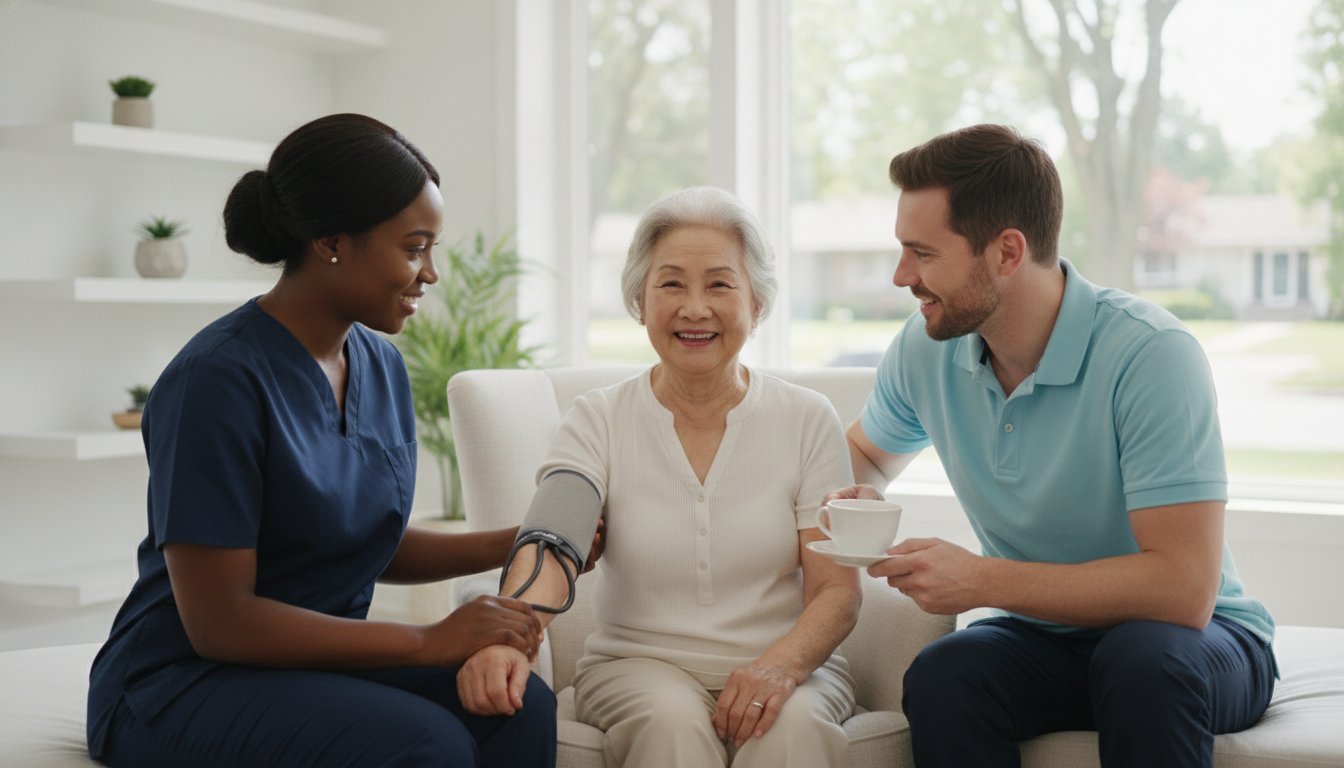
Imagine you’ve spent the last few months stopping by your mother’s home in Etobicoke to help with groceries and tea, but lately, you’ve noticed her mobility is declining and her medication needs have become more complex. You want her to stay in the house she loves, yet you’re starting to wonder if a friendly visitor is still enough or if she now requires professional medical intervention. Deciding on skilled nursing vs non-medical home care is one of the most stressful choices a family can face, especially when the terminology feels like a confusing maze of clinical jargon.
It’s completely natural to feel a heavy sense of guilt or worry that you might make the wrong safety choice for your parent. We recognize that you simply want them to live with dignity while ensuring every health requirement is handled with expertise. This guide will help you distinguish between medical and supportive care so you can build a clear roadmap for hiring the right help in Toronto. We will explore the specific duties of Registered Nurses versus Personal Support Workers and look at current care trends in Ontario to help you find lasting peace of mind.
Key Takeaways
- Understand the fundamental distinctions between skilled nursing vs non-medical home care to ensure your loved one receives the specific level of clinical or daily support they need.
- Learn how to evaluate physical mobility and medical complexity to determine if a Personal Support Worker or a Registered Nurse is the safest choice for your family’s unique situation.
- Discover why a unified care plan—combining daily assistance with periodic clinical check-ins—is often the most flexible and cost-effective way to support aging in place.
- Gain a clear roadmap for navigating the local care landscape in Toronto, Vaughan, and Mississauga with a “human-first” approach that prioritizes dignity and safety.
- Move from a place of anxiety and guilt to a position of quiet confidence, knowing you have a reliable partner to guide your family through these complex life transitions.
Understanding the Basics: Skilled Nursing and Non-Medical Home Care Explained
Choosing the right support for a parent or spouse is a deeply personal decision that often begins with a single question: what kind of help do they actually need? When you start your search, you’ll likely encounter the debate of skilled nursing vs non-medical home care. While both options aim to keep seniors safe in their own homes, they serve very different purposes. Understanding these basics is the first step toward creating a care plan that respects your loved one’s dignity while providing you with the reassurance you deserve.
What is Non-Medical Home Care?
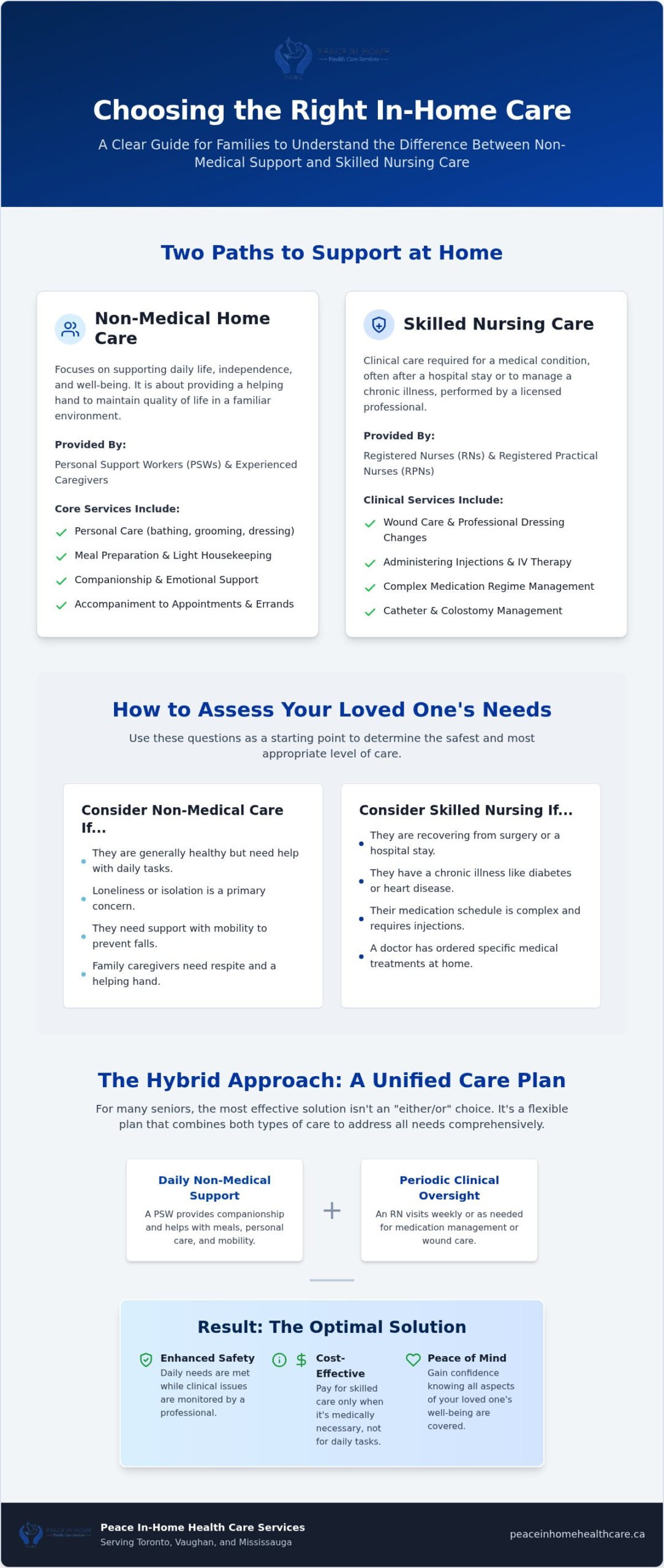
Non-medical home care is designed to help seniors manage their Activities of Daily Living, often referred to as ADLs. This type of support is perfect for individuals who are physically healthy but need a helping hand to maintain their independence and quality of life. It’s about the “little things” that make a big difference in a day. This includes:
- Personal care assistance like bathing, grooming, and dressing.
- Meal preparation and light housekeeping to keep the home running smoothly.
- Companionship and accompaniment to errands or appointments.
In Toronto and across the GTA, this care is provided by Personal Support Workers (PSWs) or experienced caregivers. As of 2026, these professionals must meet specific qualification standards, ensuring your family receives reliable and dignified assistance. It’s a relationship-based service that focuses on the individual’s lifestyle and emotional well-being.
What is Skilled Nursing Care?
Skilled nursing care is clinical in nature. It’s required when a senior has a medical condition that needs the expertise of a licensed professional. This level of care is often necessary after a hospital stay or when managing chronic illnesses like diabetes or heart disease. Tasks typically include:
- Wound care and professional dressing changes.
- Administering injections or managing complex medication regimes.
- Catheter and colostomy management.
These tasks must be performed by Registered Practical Nurses (RPNs) or Registered Nurses (RNs). As noted in the foundational definitions of home care in the United States and Canada, the primary distinction lies in whether the assistance is “custodial” or “medical.” Skilled nursing provides the clinical oversight necessary to prevent complications and hospital readmissions.
The distinction between these two levels of care is vital for your family budget and your loved one’s comfort. Skilled nursing is more intensive and carries a higher cost due to the specialized medical training required. If your mother only needs help with her morning routine and lunch, hiring a nurse might be unnecessary. Conversely, if she has a surgical wound that isn’t healing, a caregiver won’t have the training to treat it safely. By choosing the correct level, you ensure she isn’t over-medicalized but remains perfectly safe.
Clinical Oversight vs. Daily Support: Comparing the Scope of Services
When you’re trying to decide between skilled nursing vs non-medical home care, it’s helpful to look at how a typical Tuesday might unfold for your loved one. One path focuses on the rhythm of daily life, while the other prioritizes clinical stability. Both are essential, but they address different layers of safety and well-being. Understanding the specific tasks involved helps remove the guesswork from your decision.
The Scope of Non-Medical Support
Non-medical care is the foundation of a dignified life at home. It provides the supportive “scaffolding” that allows a senior to stay independent for as long as possible. According to this National Institute on Aging guide to long-term care, supportive services are often what prevent the need for a premature move to a facility. In Toronto, this might look like a caregiver accompanying your father to an appointment at Sunnybrook or helping him safely navigate the stairs after a long day. For those living with dementia, this support includes cognitive stimulation and emotional grounding, which can significantly reduce the anxiety often associated with memory loss.
- Errands and grocery shopping to ensure the pantry is stocked with fresh, nutritious food.
- Mobility and transfer assistance to minimize the risk of falls in the bathroom or bedroom.
- Companionship that battles the quiet ache of isolation, which often leads to depression in seniors.
The Scope of Skilled Nursing Services
Skilled nursing services step in when needs move beyond “help” and into “treatment.” A major point of confusion for many families is the difference between medication reminders and medication management. A caregiver provides a reminder, which is a gentle prompt to take a pill already organized in a tray. However, a nurse provides management; they monitor for side effects, adjust dosages under a doctor’s orders, and handle complex delivery systems like injections. This clinical oversight is a primary factor in preventing hospital readmissions across the GTA, as nurses can spot subtle changes in vital signs before they become emergencies.
- Monitoring vital signs like blood pressure and oxygen levels to track chronic conditions.
- Specialized post-surgical recovery, ensuring incisions heal without infection.
- Direct coordination with primary care physicians to keep the entire medical team informed.
Whether your family needs a steady hand for daily routines or an expert eye for medical stability, the goal is always to preserve your loved one’s comfort. If you aren’t sure which level fits your current situation, you can always speak with a care coordinator to discuss your specific concerns and explore a tailored approach.
Assessing Your Loved One’s Needs: Which Level of Care is Right?
Determining the right path for your family starts with a quiet, honest observation of your loved one’s daily life. It isn’t about taking away their independence; it’s about providing the right tools to protect it. When you weigh skilled nursing vs non-medical home care, think of it as a five-step evaluation process that looks at the whole person, not just their diagnosis.
Start by evaluating physical mobility. If you notice your parent is “furniture walking” or has had several near-misses in the hallway, their safety is at risk. Medical complexity is the next factor. According to Medicare’s official definition of home health services, skilled care is necessary when the treatment requires the specialized judgement and skills of a licensed professional. If your loved one needs help managing oxygen or complex injections, a nurse is the safest choice.
Don’t forget to look in the mirror and assess your own level of burnout. Caregiver fatigue is a silent crisis in many Toronto homes. If you feel constant exhaustion or find yourself losing patience, it’s a clear signal that professional support is needed to preserve your own health and your relationship with your loved one. Finally, consider their social world and the home environment. A senior who is withdrawing from their neighbourhood friends or living in a house with unreachable cupboards may simply need a companion to help them re-engage with life safely.
Signs You Need Non-Medical Care
Sometimes the signs are subtle. You might notice unopened mail piling up on the counter or a fridge full of expired milk. These are often indicators that the mental energy required for daily chores is becoming too much. Other signs include:
- Poor personal hygiene or wearing the same outfit for several days in a row.
- Noticeable weight loss due to missed meals or a lack of interest in cooking.
- Loneliness and a sudden withdrawal from hobbies or social activities they once loved.
Signs You Need Skilled Nursing
Skilled nursing is usually triggered by a specific medical event or a decline in a chronic condition. If your loved one has just been discharged from a hospital like North York General and has a complicated recovery plan, professional oversight is vital. Watch for these indicators:
- Frequent falls that result in bruising or require medical attention.
- Difficulty managing complex medical needs like diabetes, catheters, or slow-healing wounds.
- New prescriptions that require careful monitoring for side effects or interactions.
When you observe these signs early, you can make a choice from a place of calm rather than reacting to an emergency. This proactive approach ensures your loved one stays in the home they love while receiving the exact level of dignity and care they deserve.
The Hybrid Approach: Why Many Seniors Benefit from a Unified Care Plan
Many families believe they must make a definitive choice between skilled nursing vs non-medical home care. In reality, the most effective and compassionate care plans are rarely “either-or.” The health of a senior is often a moving target; some days require clinical intervention, while others simply need the warmth of a steady hand and a shared meal. A hybrid model ensures that your loved one receives professional medical oversight without sacrificing the personalized, relationship-based support that makes aging at home so vital.
Balancing the Budget and Care Quality
Managing the financial aspect of long-term support is a significant priority for families across the GTA. By utilizing non-medical care for the bulk of the daily hours, you can keep the home running smoothly and safely at a more accessible rate. This allows you to reserve skilled nursing visits for specific, high-impact tasks like wound management or complex medication adjustments. This targeted approach ensures that you aren’t paying for a registered nurse to perform light housekeeping, but you still have their expert eye when it matters most. For more details on navigating these decisions, you can read our guide on Managing Home Care Costs for Seniors in the GTA.
Specialized Dementia Care Transitions
For those living with Alzheimer’s or dementia, the “hybrid” approach is particularly beneficial for emotional health. Transitions can be jarring for seniors with memory loss. By starting with companionship and personal care, you establish a baseline of trust and routine. As the condition progresses, nursing services can be layered in seamlessly. This consistency in the care team helps reduce the agitation and “sundowning” symptoms that often occur when new, unfamiliar people enter the home during a crisis. It creates a path of dignified support that evolves alongside the individual. Learn more about these supportive options in our look at Dignified Personal Care Assistance for Seniors.
A unified care team prevents the dangerous “gaps” that can occur when medical and non-medical needs are handled by separate entities. When your Personal Support Worker and Nurse communicate daily, they can spot subtle changes, like a slight change in gait or a decrease in appetite, that might signal a medical issue before it requires an emergency room visit. This proactive coordination is the ultimate promise of home care: a safe, steady, and joyful life in familiar surroundings. It removes the burden of “detective work” from the family, allowing you to simply be a daughter or a son again.
Navigating Home Care in the GTA: How Peace In-Home Health Care Supports Your Family
At Peace In-Home Health Care, we believe that every senior in the Greater Toronto Area deserves to age with grace, safety, and a sense of belonging. Our “human-first” philosophy means we don’t just see a list of medical requirements; we see a person with a lifetime of stories and a family who cares deeply for them. Whether you are weighing the choice between skilled nursing vs non-medical home care or looking for a blend of both, our role is to act as your trusted guide through this transition. We bring over 17 years of local experience to every home we visit, ensuring our support is as reliable as it is compassionate.
Local Expertise Across the Greater Toronto Area
Providing care in a bustling region like ours requires more than just clinical skill; it requires a deep understanding of our local communities. We serve families from Burlington and Oakville all the way to Richmond Hill and Barrie. We realize that aging in place in the GTA comes with unique challenges, from navigating winter weather to coordinating with local hospitals and pharmacies. Our team is familiar with the neighbourhoods we serve, allowing us to be a stable presence in your loved one’s life. For those specifically looking for medical support, we offer a specialized look at Skilled Nursing Care at Home in Toronto to help you understand the clinical options available in our city.
Your Next Steps to Peace of Mind
Taking the first step toward professional help is often the hardest part of the journey. We aim to make this process as low-stress and supportive as possible. It begins with a professional home care assessment, where we sit down with you and your loved one to listen to your concerns. This isn’t just about checking boxes; it’s about understanding your mother’s favourite morning routine or your father’s desire to keep his garden tidy. We use these insights to match caregivers based on both skill sets and personality, ensuring a dignified and attentive relationship from day one.
Our tailored care plans are designed to be flexible. As your family’s needs change, our support can evolve with you, moving between personal care and nursing oversight without a lapse in service. This consistency is what provides true peace of mind. You don’t have to handle the complexity of scheduling or medical coordination alone. We stand alongside you, offering a steady hand and expert navigation so you can focus on making memories with your loved one rather than managing their care logistics.
Contact us today for a free care assessment
Finding the Right Path for Your Family’s Peace of Mind
Deciding on the best support for your loved one is a journey rooted in love and responsibility. You’ve learned that the distinction between skilled nursing vs non-medical home care is often about finding a personalized balance that respects your parent’s independence while ensuring their medical safety. Whether it’s a Personal Support Worker helping with morning routines or a Registered Nurse managing complex health needs, the right care plan should evolve as your family’s situation changes over time.
At Peace In-Home Health Care, we bring over 17 years of experience to families across Toronto and the GTA. Our fully tailored care plans range from simple companionship to skilled nursing, provided by compassionate, vetted caregivers and licensed nurses. We are here to stand alongside you, offering a steady hand and professional reassurance so you can focus on being a family again. You don’t have to navigate these complex life transitions alone.
Trust that with the right assistance, your loved one can continue to live a dignified and joyful life in the comfort of their own home. We look forward to helping you find the security and comfort your family deserves.
Frequently Asked Questions
Is skilled nursing more expensive than non-medical home care in Ontario?
Skilled nursing care is generally more expensive than non-medical support due to the advanced clinical training required. Registered Nurses and Registered Practical Nurses carry professional licences and are qualified to perform complex medical procedures that a Personal Support Worker cannot. While non-medical care focuses on daily living tasks, the higher rate for nursing reflects the specialized oversight needed to manage chronic conditions or post-surgical recovery safely at home.
Can I hire a Personal Support Worker (PSW) for medical tasks?
You cannot hire a Personal Support Worker to perform clinical medical tasks such as administering injections, managing catheters, or providing complex wound care. In Ontario, these responsibilities are legally restricted to licensed medical professionals like RNs or RPNs. A PSW’s role is to provide essential physical assistance with bathing, dressing, and mobility. Using the right professional ensures your loved one stays safe and that all care meets provincial health standards and safety regulations.
Does OHIP cover skilled nursing care at home in Toronto?
OHIP does not directly cover private home care, but Ontario residents can access government-funded nursing through Ontario Health atHome. These services are based on a professional assessment of need rather than personal preference. Because government funding often has limits on hours or frequency, many Toronto families choose to supplement these services with private care to ensure their loved ones receive consistent, personalized attention throughout the week in their own familiar environment.
How do I know if my parent needs a nurse or just a companion?
Determining the choice between skilled nursing vs non-medical home care depends on your parent’s clinical stability. If they only require help with meal preparation, light housekeeping, or getting dressed, a companion or PSW is likely sufficient. However, if they have a medical condition requiring vital sign monitoring or specialized treatments, a nurse is necessary. We often recommend a professional assessment to evaluate mobility and medical risks before finalizing a tailored care plan for your family.
Can non-medical home care help with medication?
Non-medical caregivers can provide medication reminders, which involve a gentle prompt to take pills already organized in a tray or dosette. However, they cannot administer medication, which includes calculating dosages or giving injections. For complex medication regimes where side effects must be monitored or dosages adjusted, a licensed nurse is required to ensure the senior’s safety and to prevent dangerous drug interactions or missed doses that could lead to hospitalization.
What is the difference between a Registered Nurse (RN) and a Registered Practical Nurse (RPN) in home care?
The primary difference lies in the complexity of the medical situation and the nurse’s depth of education. Registered Nurses (RNs) typically handle highly complex, unpredictable health conditions and provide specialized clinical leadership. Registered Practical Nurses (RPNs) work with patients whose conditions are more stable and predictable. Both are licensed professionals in Ontario, and we match the specific nursing level to the clinical needs identified in your loved one’s personalized care plan for the best outcomes.
How long does it take to start home care services in the GTA?
Home care services in the GTA can often begin within a few days of your initial contact. The process starts with a compassionate consultation to understand your family’s specific needs and personality preferences. Once a tailored care plan is established and the right caregiver or nurse is matched to your loved one, support can commence promptly. This methodical approach ensures a smooth, low-stress transition that prioritizes safety and dignity from the very first visit.
Can I change the level of care as my loved one’s health changes?
You can absolutely adjust the level of support as your loved one’s health journey evolves. Many families start with companionship or personal care and gradually introduce nursing services if a medical condition becomes more complex. This flexibility is a core part of our human-first approach. We regularly review care plans to ensure the assistance remains perfectly aligned with current needs, providing you with lasting peace of mind as your family’s circumstances change.