
It often begins with a stove left unattended or a door found unlocked in the middle of the night, small moments that suddenly transform a familiar living room into a source of constant worry. Finding the right approach to home safety for dementia patients Toronto families can rely on is a journey that requires both heart and strategy. We understand that your greatest wish is to help them age in place with dignity, yet the fear of falls or wandering can make every day feel like a high-stakes challenge. You deserve to feel confident in their security without turning their home into a clinical environment.
This 2026 guide is designed to help you transform your living space into a secure, dignified environment that supports independence for your loved ones. We’ll walk through a clear, actionable safety plan, explore specialized kitchen modifications, and connect you with trusted support networks across the Greater Toronto Area. By the end, you’ll have the tools to replace constant worry with the quiet peace of mind that comes from a truly protected home.
Key Takeaways
- Learn how to adapt unique Toronto architecture, such as narrow Victorian staircases, to prioritize safety while maintaining the warmth of a familiar home.
- Master a room-by-room strategy for home safety for dementia patients Toronto families can use to prevent bathroom falls and manage kitchen hazards with dignity.
- Discover how simple visual cues and signage can reduce confusion and encourage your loved one to navigate their space with greater confidence.
- Identify proactive ways to manage wandering behaviours and protect seniors from Toronto’s specific seasonal risks, including icy walkways and extreme heat.
- Understand why professional caregivers are essential for spotting subtle health changes that physical home modifications might miss.
Creating a Safe Haven for Dementia Patients in Toronto
Dementia home safety is a proactive philosophy. It focuses on minimizing physical risks while maximizing the daily comfort and independence of your loved one. It isn’t just about installing locks or removing rugs; it’s about creating an environment that adapts to their changing reality. In the Greater Toronto Area, this often requires a specialized eye. Many of our local neighbourhoods feature Victorian semi-detached homes with narrow, steep staircases or older bungalows with uneven transitions between rooms. These architectural quirks, while charming, present specific hazards that require creative solutions to ensure home safety for dementia patients Toronto families can trust.
The emotional benefit of aging in place cannot be overstated. For someone living with cognitive decline, the layout of a long-time family home is deeply ingrained in their long-term memory. Familiar surroundings provide a sense of security and can actually help reduce the frequency of “looping” questions or sudden anxiety. When we modify a home, we aren’t just fixing a building. We’re protecting the person’s dignity and their connection to their own history.
The Baseline Safety Audit: Where to Start
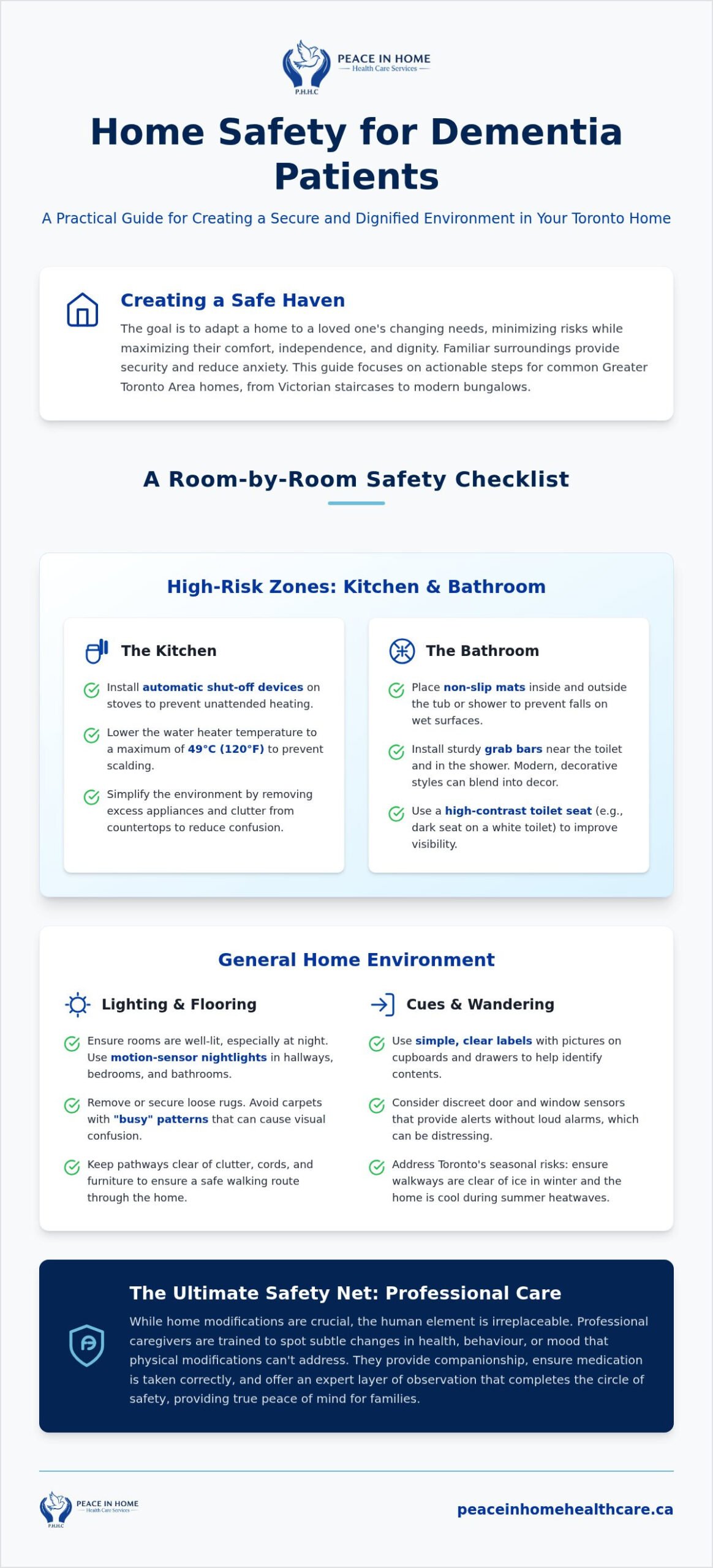
A thorough safety audit begins with a slow, room-by-room walkthrough during different times of the day. Lighting that seems adequate at noon might create confusing shadows or glare by 5:00 PM. Look for “hidden” dangers such as loose floorboards, high door thresholds, or patterned carpets that can look like holes or obstacles to someone with changing depth perception. To address these visual challenges, we recommend using high-contrast colours. For instance, placing a brightly coloured mat in front of a chair or using a dark toilet seat against a white floor helps the individual navigate their space with more confidence. If you feel overwhelmed during this process, the Toronto Seniors Helpline is an excellent local resource for initial guidance on community supports.
Balancing Security with Dignity
One of the biggest concerns for families is making a home safe without making it feel institutional. You don’t want your parent’s bedroom to look like a hospital ward. Modern safety features, including discreet Environmental Cues and Memory Aids, can blend seamlessly into existing decor. This might include decorative grab bars that double as towel racks or smart sensors that alert you if a door is opened at night without sounding a loud, frightening alarm. Respecting the individual’s history is vital. Keep meaningful photos and heirlooms accessible, but ensure they’re secured so they won’t be knocked over. True peace of mind comes from a well-researched plan that prioritizes the person’s comfort as much as their physical security.
A Room-by-Room Safety Checklist for GTA Homes
Creating a secure environment involves more than just a general cleanup. It requires a detailed look at how each space functions during a typical day. For families managing home safety for dementia patients Toronto services often recommend a phased approach, starting with the areas where the most frequent activities occur. By focusing on one room at a time, you can make meaningful changes without feeling overwhelmed by the scope of the project.
Kitchen and Bathroom: Minimizing High-Risk Hazards
The kitchen and bathroom are the highest-risk areas for accidents involving heat, water, and sharp objects. In the kitchen, your goal is to maintain autonomy while removing the possibility of a catastrophe. Installing automatic shut-off valves for stoves is a reliable way to manage heat sources. Lowering water heater temperatures to 120°F (49°C) prevents accidental scalding, which is a common risk as sensory perception changes. In the bathroom, falls on wet surfaces remain a primary concern. You can address this by using non-slip mats and installing grab bars that blend with your home’s existing style. Simplifying these environments is also helpful. Removing excess small appliances or cluttered toiletries reduces the “noise” that can lead to confusion and mistakes during daily routines.
Lighting and Flooring: Preventing Falls
The bedroom and living areas should be sanctuaries of calm. In the bedroom, keep the space clutter-free to ensure a clear path to the bed. Nighttime safety is particularly important, as many seniors experience “sundowning” or nighttime restlessness. Motion-sensor nightlights in the bedroom, hallway, and bathroom provide a soft, guiding light that helps prevent trips in the dark. Flooring is another critical factor. “Busy” patterns on rugs or carpets can be misinterpreted as holes or objects, leading to hesitation or falls. Stick to solid, high-contrast colours that clearly define where the floor ends and the furniture begins. In living areas, secure all loose cables and consider the placement of furniture with sharp corners. If you need help identifying these subtle risks in your own home, you can reach out to our team for personalized guidance on creating a safer space.
Environmental Cues and Memory Aids for Daily Success
Visual cues are more than just labels; they’re anchors in a world that can often feel shifting and unpredictable. For families managing home safety for dementia patients Toronto homes can be optimized to reduce the frustration of “looping” questions and repetitive searching. When a loved one can’t remember where the bathroom is or what’s inside a kitchen cupboard, it leads to a cycle of anxiety. By using clear, visual prompts, we help them navigate their day with a greater sense of autonomy and dignity.
Visual Signage and Orientation
Effective signage should be placed at eye level using large, clear fonts that are easy to read even with changing vision. Labelling a dresser drawer with both the word “Socks” and a simple picture allows a person to dress themselves without needing to ask for help. This preserves their independence and reduces the emotional weight of needing constant assistance. It’s also helpful to reduce visual “noise” by clearing countertops of unnecessary items. When only the essentials are visible, the brain doesn’t have to work as hard to process the environment. Mirrors can sometimes cause distress if a person no longer recognizes their own reflection, leading to the belief that a stranger is in the house. If this happens, simply covering mirrors or adjusting lighting can restore a sense of safety.
A “daily routine” board placed in a central location, like the kitchen or living room, acts as a reliable reference point. It provides a clear sequence for the day’s activities, such as meal times, medication reminders, or a scheduled walk in the park. This consistency helps ground the individual and provides a predictable rhythm to their life.
Managing Sensory Overload
Sensory input plays a massive role in emotional regulation. Background noise from a television or radio can quickly become overwhelming, leading to agitation or increased confusion during the evening hours. We recommend controlling noise levels and instead using soft, familiar scents through aromatherapy to create a calming atmosphere. Lavender or vanilla can be particularly soothing during transition periods. Natural light is also essential; keeping curtains open during the day helps regulate the body’s internal clock, supporting healthier sleep-wake cycles. While these physical aids are vital, they’re most effective when reinforced by a compassionate presence. A trained caregiver doesn’t just look at the signs; they use them to guide the individual through their routine, gently pointing to the routine board to encourage self-reliance. This human-first approach ensures that memory aids aren’t just decorations, but active tools for a dignified life.
Addressing Wandering and Seasonal Safety in Toronto
Wandering is one of the most stressful challenges for GTA families, but it’s often a form of communication rather than a random act. Some seniors engage in “purposeful walking” because they’re restless or bored, while others are “exit-seeking” because they believe they need to go to work or a former home. Understanding this distinction is a core part of home safety for dementia patients Toronto residents must manage. Rather than simply locking doors, which can cause intense agitation and a sense of being trapped, we focus on redirection and subtle environmental changes that preserve a person’s dignity.
Securing Exits Without Creating Anxiety
Creating a secure perimeter doesn’t mean your home has to feel like a locked ward. You can use several gentle strategies to discourage leaving without increasing a loved one’s distress:
- Disguising Exits: Placing a mural over a door or using a simple “do not enter” sign can effectively hide the exit from the person’s view.
- Strategic Lock Placement: Moving deadbolts to the very top or bottom of a door frame often removes them from the natural line of sight.
- Notification Systems: Instead of loud sirens that cause panic, use smart sensors that send a quiet alert to a caregiver’s phone or a pager when a door is opened.
- Safe Wandering Paths: If your space allows, create a circular path inside the home or a secure, fenced backyard area where they can walk freely and safely.
Winter Safety for Seniors in the GTA
Toronto winters present unique dangers that go beyond the four walls of the home. Icy sidewalks and sudden temperature drops are significant risks for those with cognitive decline. Seniors living with dementia may not always recognize when they’re becoming too cold, making them vulnerable to hypothermia even while indoors. Ensuring your furnace is serviced and thermostats are set to a consistent, comfortable temperature is vital for their well-being.
Outside, the risk of a fall is exceptionally high. It’s essential to keep walkways salted and clear of snow at all times to prevent devastating injuries. Because balance often becomes an issue as dementia progresses, many families find that professional mobility and transfer assistance is necessary during the icy months to ensure safe transitions to the car or medical appointments. Additionally, we highly recommend registering your loved one with the Toronto Police Service’s Vulnerable Persons Registry. This local database provides first responders with essential information if a person is ever found wandering in the city.
How Professional Caregivers Act as the Ultimate Safety Net
Physical modifications to your house are essential, but they’re only one part of a truly secure environment. A grab bar cannot notice if a loved one is suddenly more confused than usual, and a motion sensor cannot de-escalate a moment of intense agitation. This is where the human element becomes the most vital component of home safety for dementia patients Toronto families can provide. A house remains static, but dementia is dynamic. It requires a stable, attentive presence that can adapt as the condition evolves.
Professional caregivers bring a “trained eye” to the home. They’re often the first to spot subtle changes in health or behaviour, such as a slight change in gait that could lead to a fall or a new pattern of restlessness that signals a urinary tract infection. By integrating safety into every daily routine, from assistance with meal preparation to ensuring the environment remains clutter-free, they provide a layer of protection that technology alone cannot match. This approach brings a profound sense of “peace” to Dementia and Alzheimer’s Care, allowing family members to step back from being constant monitors and return to being daughters, sons, and spouses.
The Role of a Dementia-Trained Caregiver
A specialized caregiver understands that safety often starts with emotional regulation. When a person with dementia becomes frustrated or scared, they may act in ways that put their physical safety at risk. A trained professional knows how to de-escalate these moments through redirection and calm reassurance. Loneliness is another hidden risk; it frequently triggers exit-seeking behaviour as the individual goes looking for connection. Providing consistent companionship care reduces this emotional trigger, making wandering much less likely. Furthermore, caregivers manage the critical task of medication reminders, ensuring that prescriptions are taken exactly as directed to prevent avoidable medical emergencies.
Respite Care: A Safety Strategy for the Whole Family
We often forget that a burnt-out family caregiver is, themselves, a safety risk. Exhaustion leads to missed cues, slower reaction times, and increased stress for everyone in the household. Utilizing respite care Toronto services is a proactive safety strategy. It ensures that your loved one has 24/7 supervision during high-stress periods while you take the necessary time to recharge. Transitioning to professional help doesn’t have to be a sudden or frightening change. By introducing a caregiver slowly, perhaps starting with a few hours of light housekeeping or companionship, you can build a relationship of trust. This steady, methodical progression ensures that when more intensive support is needed, the individual already feels safe and secure with their new partner in care.
Building a Foundation of Safety and Peace
Creating a secure home is a journey of small, meaningful adjustments that prioritize both physical protection and emotional dignity. By mastering a room-by-room safety plan and utilizing clear visual cues, you transform a space from a source of worry into a sanctuary of comfort. Achieving reliable home safety for dementia patients Toronto families can trust means looking beyond just physical hardware to the compassionate, human observation that anticipates needs before they become emergencies.
With over 17 years of experience, Peace In-Home Health Care Services stands as a trusted guide for families across Toronto, Vaughan, Markham, and the entire GTA. Our specialized dementia care experts are here to help you identify subtle risks and implement tailored solutions that preserve your loved one’s independence. You don’t have to navigate these complex changes on your own.
Taking this first step provides the steady hand your family needs during a time of transition. We’re here to walk alongside you, ensuring your home remains a place of security, respect, and enduring peace.
Frequently Asked Questions
How can I prevent my loved one with dementia from wandering out of the house at night?
You can prevent nighttime wandering by installing motion-sensor floor mats that alert you quietly when your loved one leaves their bed. Using high-contrast tape to mark the path to the bathroom helps them navigate safely without feeling the need to leave the house. It’s also effective to use window film or murals to disguise exit doors, reducing the visual cue that there’s a way out during periods of confusion.
Is it safe for a person with early-stage dementia to live alone in Toronto?
While some individuals with early-stage dementia can live alone, it requires a robust support system and regular safety check-ins. Toronto families often utilize smart home technology, such as automated stove shut-offs and medication dispensers, to manage daily risks. However, as the condition progresses, introducing professional companionship care ensures that a trained eye is present to identify when living alone is no longer a dignified or secure option for the senior.
What are the most important bathroom safety modifications for dementia patients?
The most critical bathroom modifications include installing non-slip flooring and weighted shower curtains to prevent water from pooling. High-contrast colours are essential for home safety for dementia patients Toronto residents can use a dark-coloured toilet seat against a white floor to improve depth perception. Additionally, removing locks from bathroom doors ensures that caregivers can provide quick assistance if a fall occurs or if the individual becomes confused while inside.
How do I handle “sundowning” and the safety risks it creates in the evening?
Managing sundowning involves creating a calm, well-lit environment as the sun begins to set. Close the curtains early to prevent confusing shadows and use bright, full-spectrum lighting to help regulate their internal clock. Reducing background noise and maintaining a predictable evening routine can significantly lower the agitation that often leads to safety risks, such as pacing or exit-seeking behaviour, during these sensitive late-afternoon and early-evening hours.
Are there Toronto-specific grants or subsidies for home safety modifications?
Toronto residents may access the Ontario Seniors Care at Home Tax Credit to help offset the costs of safety modifications and professional support. You should also contact Ontario Health atHome to see if you qualify for a home assessment or equipment subsidies. While specific 2026 grant amounts vary based on individual circumstances, these provincial programs are designed to help seniors stay in their familiar surroundings for as long as possible.
Can a professional caregiver help with home safety assessments in North York or Etobicoke?
Yes, professional caregivers from specialized agencies like ours provide comprehensive home safety assessments across North York, Etobicoke, and the entire GTA. During these visits, we identify specific architectural hazards common in these neighbourhoods, such as steep basement stairs or narrow hallways. Our experts offer tailored recommendations that balance your loved one’s need for independence with the practical requirements of a secure and dignified living environment.
What should I do if my loved one refuses to allow safety changes in their home?
If a loved one refuses safety changes, it’s often best to introduce modifications slowly and frame them as upgrades for comfort rather than safety features. For example, instead of calling a grab bar a medical device, describe it as a stylish new towel rack. Involving them in the selection of colours or placements can help them feel a sense of control, which often reduces the resistance they feel toward environmental changes.
How does Peace In-Home Health Care Services ensure the safety of dementia patients during Toronto winters?
Peace In-Home Health Care Services prioritizes home safety for dementia patients Toronto winters can make treacherous. Our caregivers ensure that walkways are salted and clear of ice during every visit to prevent falls. Indoors, we monitor the home’s temperature and hydration levels, as seniors with dementia may not always realize they are cold or thirsty. This attentive, person-centred approach ensures that seasonal weather changes don’t compromise their security or well-being.