
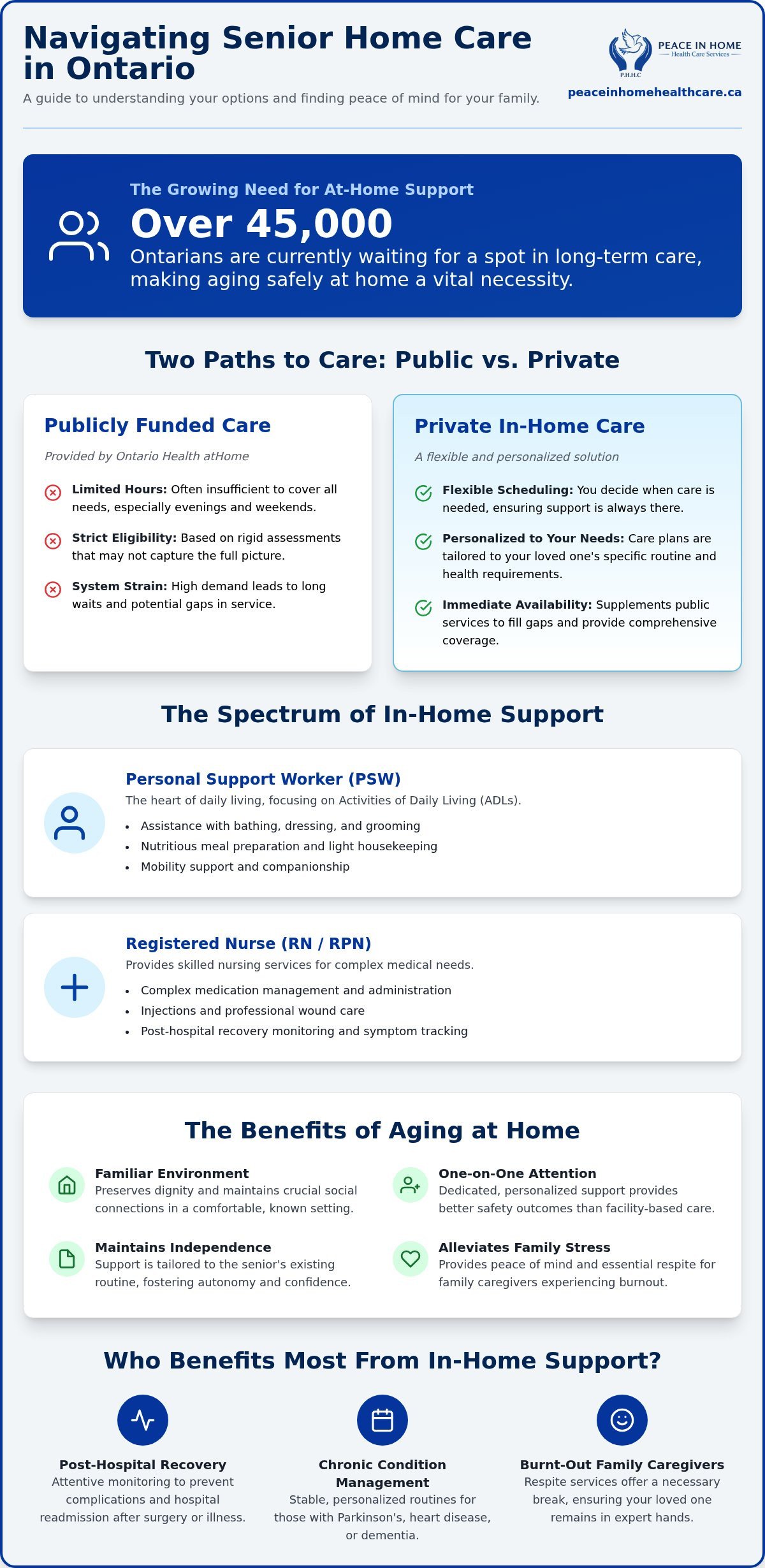
With over 45,000 Ontarians currently waiting for a spot in long-term care, the desire to age safely at home has become a practical necessity for families across the GTA. You likely feel a deep responsibility to ensure your parents are comfortable, yet the constant worry about a missed medication or a dangerous fall can lead to overwhelming caregiver burnout. It’s a heavy burden to carry alone, and the confusion between public funding and private senior home health care services often makes the next step feel even more daunting.
We understand that you want to honour your loved one’s independence without sacrificing their safety. This guide will help you discover how professional in-home support can provide the medical supervision and daily assistance your family needs to find true peace of mind while your parent ages with dignity. We’ll walk you through the differences between Ontario’s public and private care systems, explain how to tailor support to your parent’s unique routine, and show you how to navigate this transition with confidence and compassion.
Key Takeaways
- Learn the distinct roles of Personal Support Workers and Registered Nurses to ensure your loved one receives the correct level of clinical or personal support.
- Understand how senior home health care services can be personalized and scaled from simple companionship to skilled nursing as your family’s needs evolve.
- Discover the psychological benefits of aging in a familiar environment and why one-on-one attention often provides better safety outcomes than facility-based care.
- Identify the essential steps for selecting a reliable agency in the GTA, including how to verify experience with specialized conditions like dementia.
- Realize how a “human-first” approach to care can alleviate family stress and provide the emotional security needed for your parents to age with dignity.
What are Senior Home Health Care Services?
Senior home care isn’t just a clinical term; it’s a supportive bridge that allows older adults to remain in the comfort of their own homes while receiving the help they need. This support system combines medical supervision with non-medical assistance, tailored to the unique rhythm of a person’s life. To understand the foundational scope, it’s helpful to look at What is Home Care? and how it differentiates between basic daily assistance and professional health monitoring.
In Ontario, care is usually delivered by two distinct types of professionals. Personal Support Workers (PSWs) are the heart of daily living. They help with personal care, meal preparation, and mobility. Registered Nurses (RNs) or Registered Practical Nurses (RPNs) step in when skilled nursing care services are required, such as managing complex medications, injections, or wound care. By blending these roles, families can ensure their loved ones are safe without the clinical coldness of an institutional setting.
Most Canadian seniors have a strong preference for “aging in place.” Staying in a familiar environment preserves a person’s dignity and maintains the social connections that are often lost during a move to a facility. The core goal of these services is to maintain independence for as long as possible while ensuring that health monitoring and safety protocols are always in place. It’s about life continuing as usual, just with a steady, professional hand nearby.
The Difference Between Public and Private Home Care
Ontario Health atHome provides publicly funded support, but it’s often restricted by strict eligibility assessments and limited hours. While the provincial government recently committed $1.1 billion in additional funding over three years to bolster home care, the system remains under significant strain. Many families find that government-allotted hours don’t cover the full scope of their needs, especially during evenings or weekends. This is why many choose to supplement with private senior home health care services. Private care offers the flexibility to set your own schedule, ensuring a caregiver is there when your family actually needs them, rather than just when a government slot becomes available.
Who Benefits Most from In-Home Support?
In-home care is a versatile solution that adapts to various life stages and health challenges. It’s particularly vital for seniors who fall into these categories:
- Post-hospital recovery: Seniors returning home after surgery or a major illness need attentive monitoring to prevent complications or hospital readmission.
- Chronic condition management: Individuals living with Parkinson’s, heart disease, or respiratory issues benefit from a stable, personalized routine that tracks symptoms daily.
- Burnt-out family caregivers: If you’re feeling the physical and emotional weight of providing constant care, respite services allow you to take a necessary break while knowing your parent is in expert hands.
Comprehensive Care Options: From Companionship to Skilled Nursing
Providing the right level of support requires a thoughtful, tiered approach that prioritizes both medical safety and emotional comfort. Effective senior home health care services are never one-size-fits-all; they must evolve as your loved one’s needs change. We focus on matching caregivers with seniors based on personality and routine, ensuring that the person coming into the home feels like a trusted companion rather than a clinical visitor. This relationship-first model helps preserve a sense of normalcy even as health challenges arise.
Professional skilled nursing care at home Toronto integrates with daily personal support by providing a clinical safety net while maintaining the senior’s familiar household routine. This seamless blend ensures that whether a parent needs help with a meal or a complex medical procedure, they receive it in the same dignified environment.
Daily Living Support and Personal Care
For many seniors, the first step toward staying at home is receiving help with Activities of Daily Living (ADLs). This includes gentle assistance with bathing, dressing, and grooming. Beyond physical tasks, nutritious meal preparation and light housekeeping create a safe, organized space that reduces the risk of falls. Choosing personal care assistance for seniors is a choice to prioritize dignity, allowing your parent to feel their best every day without the stress of managing a household alone.
Specialized Dementia and Alzheimer’s Care
Memory loss brings unique emotional hurdles, such as sun-downing or anxiety during transitions. Our approach focuses on creating a “failure-free” environment where seniors feel successful and safe. We use specialized techniques to manage confusion and encourage confidence through familiar patterns. Engaging in activities for dementia patients at home can significantly slow cognitive decline and improve daily mood, turning a difficult diagnosis into a journey managed with patience and expertise.
Skilled Nursing and Medical Oversight
Medical needs often require more than just a watchful eye. Skilled nursing involves medication management to prevent adverse drug events, wound care, and monitoring vitals to catch potential issues before they become emergencies. Our nurses act as a vital link between the home and the healthcare system, liaising with family doctors and pharmacists. While you may be exploring Ontario government programs for seniors for basic support, adding private nursing ensures a holistic health approach. If you’re unsure which level of care is right for your family, you can speak with a care coordinator to explore your options.
Home Care vs. Nursing Homes: Why Aging in Place is the Priority
Choosing between a nursing home and staying at home is one of the most emotional decisions a family will face. For the vast majority of seniors in Ontario, the preference is clear. They want to remain in the houses where they raised their children and built their lives. There is a profound psychological benefit to staying in a familiar environment; it provides a sense of continuity and security that an institutional setting simply cannot replicate. Research from the National Institute on Ageing highlights the significant benefits of aging in place, noting that it often leads to better health outcomes and a higher overall quality of life.
One of the most striking differences lies in the level of attention. In many long-term care facilities, a single staff member might be responsible for ten or more residents at once. This often leads to long wait times for basic needs like help with mobility or a glass of water. Private senior home health care services eliminate this gap by providing dedicated, one-on-one attention. This focused care means the caregiver can spot subtle changes in health or mood immediately, preventing small issues from becoming emergencies.
From a financial perspective, home care can often be more economical than high-end retirement residences in the GTA. Facility fees are typically fixed and high, regardless of how much actual care is used. In contrast, home care is scalable. You can start with a few hours a week for meal preparation and gradually increase support as needs evolve. You only pay for the time and expertise your family actually requires.
The Role of Companionship in Senior Health
A common fear for families is that a parent might become lonely at home. However, professional companionship care for seniors Toronto is designed to combat the social isolation that often leads to depression. Caregivers do more than just monitor health; they engage in meaningful conversation, accompany seniors on errands, and provide a steady social connection. Over time, this consistent presence builds a deep bond of trust, making the caregiver a cherished part of the family circle.
Safety and Fall Prevention at Home
Safety is the cornerstone of aging in place. Falls are the leading cause of injury for seniors in Ontario, often resulting in hospitalizations that are difficult to recover from. Professional mobility and transfer assistance provide the physical support needed to navigate the home safely, significantly reducing the risk of hip fractures. For families dealing with high fall risks, 24/7 live-in care options provide a constant safety net, ensuring help is always seconds away without the need for a stressful relocation.
How to Choose the Right Senior Care Agency in the GTA
Choosing an agency is about more than just finding a set of hands; it’s about finding a partner for your family’s journey. To find the right senior home health care services, follow a methodical process that prioritizes your parent’s safety and your own peace of mind.
- Step 1: Conduct a thorough assessment of your loved one’s physical, medical, and social needs. It’s helpful to write down daily routines and specific challenges.
- Step 2: Verify the agency’s experience, specifically with conditions like dementia. Building on the specialized care discussed earlier, you should confirm they have a proven track record in memory support.
- Step 3: Ask about their screening process. A reliable agency will perform rigorous background checks and provide ongoing training for their staff.
- Step 4: Evaluate the flexibility of the care contract and their emergency protocols. You shouldn’t be locked into a rigid schedule if your parent’s health suddenly requires more intensive monitoring.
- Step 5: Schedule an in-home consultation. This allows you to observe the agency’s approach firsthand before making any commitments.
Questions to Ask During an Initial Consultation
When you meet with a potential provider, don’t hesitate to ask direct questions. You need to know how they handle caregiver absences or emergencies. It’s also reasonable to ask if you can meet the caregiver before the service officially begins to ensure a good personality match. Finally, ask how they document and communicate daily progress to the family. Knowing exactly what happened during a shift helps you realize that your parent is safe even when you aren’t physically present.
Navigating Care in Toronto, Vaughan, and Mississauga
Providing care in the GTA requires a deep understanding of local logistics. Whether it’s navigating traffic in Toronto or coordinating appointments in Vaughan and Mississauga, your agency should be familiar with the area. It’s beneficial to choose a provider that understands the layouts and protocols of local hospitals like Sunnybrook or Trillium Health Partners. This familiarity ensures that errands and appointment accompaniment are handled smoothly and punctually. If you’re still feeling uncertain, using respite care Toronto serves as an excellent trial period. This trial helps you determine if the senior home health care services align with your parent’s lifestyle and temperament.
Peace In-Home Health Care: 17+ Years of Compassionate Support
Peace In-Home Health Care isn’t just a service provider; we’re a stabilizing presence for families managing the complexities of aging. With over 17 years of experience in the home care industry, we’ve refined a philosophy that prioritizes emotional security alongside clinical excellence. We serve a broad range of GTA communities, from the quiet streets of Oakville to the vibrant neighbourhoods of Richmond Hill, Toronto, Vaughan, and Mississauga. Our goal is to ensure that every senior we support feels respected and understood, turning the challenge of aging into an opportunity for continued comfort and safety.
We understand that many seniors are hesitant to accept help because they fear losing their independence. Our approach is designed to be gentle and non-intrusive. We start by building trust through small, supportive actions, showing your loved one that senior home health care services are meant to empower them, not restrict them. By focusing on their existing routines and honouring their personal preferences, we make the transition feel natural rather than forced. This patience is what allows even the most skeptical seniors to eventually embrace the support they need.
Our Human-First Approach to Senior Care
At the heart of our mission is a commitment to dignified aging. We don’t view our work as a checklist of tasks; we view it as a series of meaningful interactions that preserve a person’s sense of self. Our caregivers undergo specialized training to support complex needs, including dementia and Alzheimer’s care, ensuring they can handle clinical requirements with a soft, human touch. Families across the GTA often tell us that the greatest gift we provide is the “peace” that comes from knowing their parent is safe, respected, and genuinely happy in their own home.
Getting Started with a Personalized Care Plan
Every family has a different story, which is why we never use a rigid template for support. Our process begins with a no-obligation assessment where we visit your home to listen to your concerns and observe your parent’s daily environment. We look at everything from mobility challenges to social preferences. From there, we create a tailored strategy that can range from 4-hour companionship visits to comprehensive 24/7 live-in care. This flexibility ensures that as your needs change, our senior home health care services scale right along with you, providing a steady hand through every life transition.
Contact Peace In-Home Health Care today for your free consultation.
Empowering Your Loved One to Age with Dignity at Home
Choosing senior home health care services is about more than just managing medical tasks; it’s about preserving the quality of life and independence your parent deserves. You now have a clearer understanding of how personalized care can adapt from simple companionship to skilled nursing, providing a safer and more comfortable alternative to institutional living. By selecting a partner with deep local roots in Toronto, Vaughan, and Mississauga, you ensure your family has a trusted guide to navigate every health transition with confidence.
With 17+ years of experience in Ontario, we specialize in creating nurse-supervised care plans that prioritize the emotional well-being of our clients. We’re here to help you bridge the gap between public support and the comprehensive, one-on-one attention your loved one needs to stay safe and happy in their own environment.
You don’t have to carry the weight of caregiving alone. Taking this first step brings your family closer to the lasting security and peace of mind you’ve been looking for.
Frequently Asked Questions
What is the difference between home care and home health care?
Home care generally refers to non-medical support, such as companionship care and light housekeeping, while home health care involves clinical services provided by registered nurses. These medical services include wound care, medication administration, and monitoring vital signs. Many families choose a hybrid model that blends both to ensure their loved one is safe and supported. This approach provides a comprehensive safety net while allowing seniors to maintain their familiar daily routines in the comfort of their own homes.
How much do senior home health care services cost in Toronto?
The cost of care in Toronto depends on the level of clinical expertise required and the number of hours scheduled each week. Generally, specialized nursing services command a higher rate than non-medical companionship or personal care assistance. Urban centres like Toronto often see higher rates due to local demand and travel logistics. We recommend contacting a local agency for a personalized assessment to understand how a tailored care plan fits within your family’s specific budget and needs.
Can I get government funding for private senior home care in Ontario?
While the Ontario government provides some publicly funded support through Ontario Health atHome, families often use private services to fill the “care gap.” You may be eligible for the Ontario Seniors Care at Home Tax Credit, which is a refundable credit for residents aged 70 or older. This credit can help offset up to 25% of eligible medical expenses, including private senior home health care services, depending on your family’s net income levels and specific eligibility criteria.
What happens if my parent refuses to allow a caregiver into their home?
It’s common for seniors to feel protective of their independence and initially resist help. We suggest starting with a “human-first” approach by introducing a caregiver as a helper for specific, non-intrusive tasks like light housekeeping or meal preparation. This allows the senior to build a relationship of trust without feeling their autonomy is threatened. Over time, as they realize the benefits of the support, most seniors become more comfortable with expanding their care to include personal or medical assistance.
Do you provide specialized care for Alzheimer’s and dementia?
Yes, we provide specialized support for seniors living with memory-related conditions. Our caregivers are trained in techniques to manage sun-downing, confusion, and anxiety, focusing on creating a “failure-free” environment. This specialized care goes beyond basic supervision; it involves engaging the senior in meaningful activities that help slow cognitive decline. By maintaining a consistent routine and a familiar face, we help alleviate the stress that often accompanies dementia, providing your family with reliable peace of mind.
Is respite care available for just a few days at a time?
Respite care is designed to be highly flexible and can certainly be arranged for short-term needs. Whether you need a few days of support while you take a vacation or just a few hours a week to prevent caregiver burnout, these services are tailored to your schedule. Short-term respite allows family caregivers to recharge their own batteries while knowing their loved one is safe. It also serves as an excellent way to introduce professional senior home health care services to a skeptical parent.
How quickly can home care services be started after a hospital discharge?
Home care services can often be initiated quickly to ensure a safe transition from the hospital. While public assessments can sometimes involve waitlists, private agencies are generally able to mobilize support within 24 to 48 hours. Having professional help immediately upon discharge is crucial for preventing hospital readmissions. A nurse-supervised plan ensures that post-surgical instructions are followed correctly and that any changes in the senior’s health are caught and addressed right away to maintain their safety.
Are your caregivers and nurses insured and background-checked?
Every professional on our team undergoes a rigorous screening process to ensure the highest standards of safety and trust. This includes comprehensive criminal background checks, vulnerable sector screening, and verification of professional licenses for nurses. Additionally, our staff is fully insured and bonded. We believe that professional reassurance is the foundation of a successful care relationship. This strict vetting process ensures that the person entering your parent’s home is a reliable, high-integrity professional dedicated to their well-being.