

It is 3:00 AM, and instead of resting, you are sitting upright, listening for the sound of a floorboard creaking or a door opening. For many Canadian families, the fear of nighttime wandering or a sudden fall makes sleep feel like a luxury they can no longer afford. You want to provide the best possible support, but the physical and emotional toll of chronic exhaustion is becoming impossible to ignore. While you might have considered a live-in caregiver for dementia patient support, you may not be ready for a full-time arrangement yet. You simply need a night where you don’t have to keep one eye open.
We understand that the thought of bringing someone new into your home can feel overwhelming, and the guilt of needing help is a heavy burden to carry. This guide will show you how professional overnight respite care ensures your loved one’s safety in their own familiar surroundings while providing you with the restorative rest you need to remain a healthy, present caregiver. We will explore how to avoid the transfer trauma often caused by temporary facility stays and walk through the practical steps of finding reliable, compassionate support right here in Ontario.
Key Takeaways
- Learn how overnight respite provides one-on-one professional support during late-night hours, allowing family caregivers to achieve uninterrupted sleep while ensuring patient safety.
- Understand why staying in a familiar environment is often safer than facility transfers, and how a live-in caregiver for dementia patient support provides more personalized attention than institutional care.
- Discover the differences between publicly funded hours through Ontario Health atHome and the flexible private care options available across the Greater Toronto Area.
- Get a practical checklist for preparing your home, including how to create a detailed “Care Brief” and implement essential safety measures like door alarms.
- Find out how specialized care plans and empathetic caregiver selection prioritize the dignity of your loved one while providing you with lasting peace of mind.
What is Overnight Respite Care for Dementia Patients?
Overnight respite care is a specialized form of one-on-one support designed to protect seniors during the most vulnerable hours of the day. While many families initially search for a live-in caregiver for dementia patient to manage 24-hour needs, overnight respite focuses specifically on the evening and late-night window. This service ensures that a trained professional is present to monitor for safety, assist with bathroom trips, and provide comfort during periods of nighttime confusion.
Respite care serves as a temporary but essential bridge, allowing the primary caregiver to disconnect and rest without the constant fear of what might happen in the next room. Whether it’s a one-time shift to help a family recover from an exhausting week or a recurring schedule of three nights a week, the goal remains the same: safety for the patient and restorative sleep for the family. These professionals manage symptoms that often peak at night, including wandering, anxiety, and significant sleep-wake cycle disturbances.
Addressing the Challenge of Sundowning
Sundowning is a distressing phenomenon where individuals with memory loss experience increased confusion, agitation, and anxiety as the sun begins to set. This often leads to pacing, wandering, or repetitive questioning that can last well into the night. It’s a physically and emotionally draining experience for family members who don’t have the tools to de-escalate these situations. Professional caregivers bring specialized dementia training to manage these late-day shifts effectively. They use gentle redirection and calming techniques, such as adjusting lighting or engaging in soothing conversation, to help lower anxiety levels. By managing the agitation that often accompanies dementia, they create a peaceful environment that encourages rest rather than conflict.
The Impact of Caregiver Sleep Deprivation
Caring for a loved one with dementia is a marathon, and “sleeping with one eye open” is not a sustainable long-term strategy. Chronic sleep deprivation increases the risk of heart disease, depression, and weakened immune systems for family caregivers. When you’re exhausted, it’s difficult to maintain the patience and focus required for daytime care. Restorative sleep isn’t just a luxury; it’s a medical necessity that improves the quality of care you provide during the day. Caregiver burnout is a leading cause of premature long-term care placement in Canada. By incorporating overnight support, families can preserve the dignity of their loved one at home for much longer. While you might not need a permanent live-in caregiver for dementia patient right now, securing help for the night can be the difference between a healthy home environment and a crisis.
Why In-Home Overnight Support is Often Better Than Facility Respite
Many families explore respite care in Ontario when they realize they can no longer manage the nights alone. While facility-based stays are a common suggestion, they often overlook the distress of “transfer trauma.” This is a state of acute confusion and agitation triggered by moving a dementia patient into an unfamiliar environment. For someone struggling to make sense of the world, their own home provides a vital anchor that no facility can replicate. Choosing in-home support ensures your loved one stays in a space where they feel safe and secure.
Staying at home maintains the patient’s existing nighttime routine, which is crucial for reducing anxiety. If you are considering a live-in caregiver for dementia patient support or just looking for overnight help, the focus is on keeping the individual in their comfort zone. This approach prevents the catastrophic confusion that often follows a move to an institutional setting, even for a short stay.
Maintaining Familiarity and Routine
The layout of a home is etched into the long-term memory of a senior. They know exactly how many steps it takes to reach the bathroom or where the light switch sits on the wall. In a new facility, these simple tasks become obstacles that increase the risk of nighttime falls. Familiar scents, furniture, and even the specific firmness of their own mattress help regulate a patient’s circadian rhythm. When they wake up disoriented at 2:00 AM, seeing their own curtains and family photos can be enough to prevent a full-blown panic attack and allow them to drift back to sleep.
Personalized 1-on-1 Monitoring
In a care facility, staff often manage a “one-to-many” ratio, meaning one worker might be responsible for ten or more residents during the night. This leads to wait times for bathroom assistance or delayed responses to wandering. In contrast, professional in-home care provides dedicated one-on-one attention. This means there is an immediate response to any movement, preventing falls before they happen. A caregiver can also tailor their interaction style based on the patient’s specific life history and preferences, providing a level of comfort that a busy facility staff might overlook.
This level of personalized care ensures that dignity is preserved throughout the night. If you’re feeling overwhelmed by the options, reaching out for a compassionate conversation can help clarify which path is right for your family. Staying at home isn’t just about comfort; it’s about providing the most stable environment possible for someone whose world already feels unstable. A live-in caregiver for dementia patient needs can often be transitioned into gradually, starting with these essential, supportive overnight shifts.
Comparing Respite Options in Ontario: Public vs. Private
Families across the Greater Toronto Area often begin their search for support by exploring publicly funded respite care in Ontario. Ontario Health atHome, formerly known as the LHIN, serves as the primary gateway for government-funded home services. While these programs provide a vital foundation, the reality is that demand in urban centres like Toronto and Mississauga often exceeds available resources. Government-funded hours are frequently capped, which may leave families without the consistent overnight monitoring they need to ensure safety.
To bridge this gap, many families adopt a hybrid model of care. They utilize their allocated public hours for daytime personal support while hiring private agencies to handle the critical overnight shifts. This approach provides a safety net that the public system alone may not be able to offer. If your family is eventually considering a live-in caregiver for dementia patient, starting with private overnight support allows you to build a relationship with a consistent provider before transitioning to full-time assistance.
Navigating Ontario Health atHome
Accessing the public system requires a valid OHIP card and a formal home assessment conducted by a care coordinator. This assessment determines the level of need and the number of hours your loved one is eligible to receive. Services typically include professional nursing or personal support workers (PSWs) for essential hygiene and mobility tasks. However, it is important to realize that housekeeping or meal preparation is rarely covered unless it is directly paired with personal care. The intake process can be slow, often involving waitlists that don’t account for the immediate “crisis mode” many families find themselves in.
The Flexibility of Private Overnight Care
Private care offers a level of responsiveness and personalization that the public system cannot always guarantee. When a family reaches the point of severe sleep deprivation, they often need help immediately rather than weeks or months down the road. Private agencies can typically begin care within days, providing a rapid solution to an urgent need. This flexibility allows you to maintain control over the care environment in several ways:
- Choice of Caregiver: You have the opportunity to ensure a strong personality match, which is essential for calming a confused dementia patient at night.
- Consistency: Private care focuses on sending the same dedicated professional every night, rather than a rotating pool of staff, which helps build trust and reduces agitation.
- Tailored Schedules: Whether you need a live-in caregiver for dementia patient support or just three “awake” shifts a week, private care plans are designed around your family’s specific rhythm.
By combining the available public resources with targeted private support, families can create a sustainable care plan that prioritizes both the safety of the senior and the health of the primary caregiver.
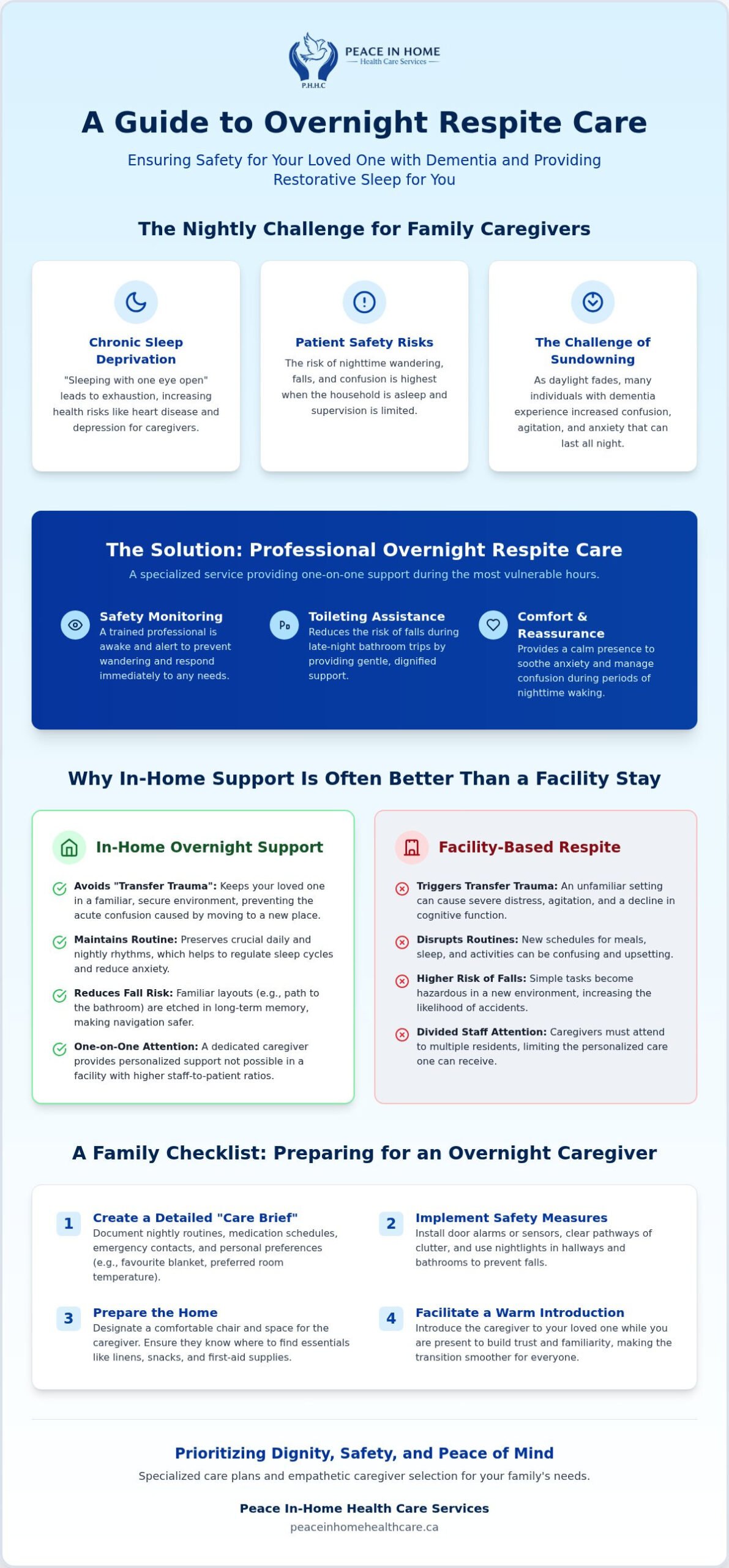
Preparing for an Overnight Caregiver: A Family Checklist
Welcoming a new professional into your home is a significant transition that requires thoughtful planning. While you may be working toward hiring a live-in caregiver for dementia patient support in the future, starting with overnight shifts requires specific preparation to ensure a smooth experience. The most effective tool you can provide is a “Care Brief.” This document should detail your loved one’s personal history, known triggers for nighttime agitation, and the specific soothing techniques that have worked for your family. Sharing these insights helps the caregiver build an immediate connection based on trust and familiarity.
Practical safety measures are equally important. Organize all medications and nighttime supplies in a central, well-lit location so the professional doesn’t have to search through cupboards in the dark. Ensure that trip hazards like loose rugs are removed and that door alarms are functional if wandering is a concern. When introducing the caregiver to a resistant or suspicious loved one, it often helps to frame the professional as a “companion” or “house assistant” who is there to help with evening tasks. This approach preserves the senior’s dignity and reduces the anxiety of having a stranger in the house.
The Nighttime Environment
Safety during the late hours relies heavily on visibility. Hallways and bathrooms must have adequate lighting to prevent falls, as shadows can often be misinterpreted by those with dementia, leading to increased fear. You should also designate a specific space, such as a kitchen table or a small desk, where the caregiver can document the night’s events and observations. If you have pets, consider how their presence might affect the care routine. Ensuring your dog or cat is settled in a separate area can prevent unexpected disruptions or trip hazards during a sensitive care moment.
Communication and Trust
Clear expectations are the foundation of a successful partnership. It is essential to define whether the shift is an “awake” shift, where the caregiver remains vigilant all night, or a “sleep” shift, where they are only woken for specific needs. Utilizing daily logs is a powerful way to track sleep patterns and medication efficacy, providing valuable data for your next medical appointment. This organized approach is a key part of providing Personal Care Assistance for Seniors: A Dignified Approach to Aging at Home. By tracking these subtle changes, you can adjust the care plan as your loved one’s needs evolve. If you eventually decide to transition to a live-in caregiver for dementia patient care, these logs will provide the necessary history to make that transition seamless.
Request a personalized care consultation for your family.
Compassionate Overnight Respite with Peace In-Home Health Care Services
Peace In-Home Health Care Services understands that choosing a partner for dementia care is a deeply personal decision. We serve families across the Greater Toronto Area, providing specialized support that prioritizes safety, dignity, and the preservation of independence. While some families may eventually require a live-in caregiver for dementia patient support, our overnight respite services offer a critical starting point for those needing immediate relief from the physical demands of nighttime monitoring. Our team is available in Vaughan, Markham, Mississauga, and throughout the GTA to ensure that no family has to face the challenges of memory loss alone.
Every caregiver in our family is chosen through a rigorous selection process that evaluates more than just technical skill. We look for deep empathy and a proven history of compassionate care, backed by extensive background checks and professional references. This ensures that when a professional enters your home, they are a reliable and calming presence. Our care plans are never generic; they are tailored to include specific needs such as medication reminders and mobility assistance, ensuring your loved one remains safe and comfortable through the night while you get the rest you deserve.
Our Human-First Philosophy
We believe in a human-first approach that honours the personality and life history of the senior, rather than focusing solely on a diagnosis. Our caregivers are trained to provide a stable, attentive presence that helps alleviate the distress of sundowning and nighttime anxiety mentioned earlier in this guide. Our 17+ years of experience in senior care informs every specialized dementia protocol we use, ensuring we provide the highest standard of support for your family. By focusing on the individual’s dignity, we help maintain a familiar lifestyle that supports their emotional well-being.
Getting Started in the GTA
Taking the first step toward professional support should be a soothing, low-stress experience. We offer a simple process that begins with a free home assessment and a compassionate care consultation to understand your family’s unique rhythm and needs. For more information on managing the demands of caregiving locally, you can read our Respite Care Toronto: A Comprehensive Guide to Preventing Caregiver Burnout. We are committed to providing the reliable, consistent care that families in Toronto trust to keep their loved ones safe at home. Whether you need temporary relief or are looking for a long-term live-in caregiver for dementia patient care, we are here to guide you through every transition with kindness and expertise.
Restoring Safety and Rest for Your Family
Navigating the complexities of memory loss shouldn’t mean sacrificing your own health. By choosing specialized overnight support, you ensure your loved one remains in the comfort of their own home, which helps avoid the acute confusion often caused by facility transfers. This professional monitoring provides the safety net needed to manage nighttime wandering and sundowning while giving you the restorative sleep required to remain a healthy caregiver during the day.
Whether you need temporary relief or are eventually considering the long-term support of a live-in caregiver for dementia patient, we are here to walk alongside you. With over 17 years of dedicated experience and specialized dementia training, our team provides personalized and reliable support across Toronto, Vaughan, Markham, and the entire GTA. We prioritize the dignity of your loved one while offering you the peace of mind you deserve.
You don’t have to carry this burden alone. We are ready to help you find a sustainable path forward that preserves your loved one’s independence and your own well-being.
Frequently Asked Questions
Is overnight respite care covered by OHIP in Ontario?
Publicly funded home care is managed through Ontario Health atHome rather than through direct OHIP billing. While you may qualify for funded hours after a formal home assessment, these government resources are often capped and might not cover full overnight shifts. Many families choose to pay privately for consistent support to ensure a dedicated professional is present throughout the night without the waitlists or limitations often found in the public system.
What is the difference between an “awake” and “sleep” overnight shift?
An “awake” shift means the professional remains alert and vigilant throughout the entire night to monitor for wandering or safety concerns. This is ideal for seniors with high-risk needs or frequent confusion. A “sleep” shift allows the caregiver to rest in a separate room, waking only if your loved one requires specific assistance. The choice depends on the patient’s level of agitation and the frequency of their nighttime needs.
How do you handle a dementia patient who refuses care at night?
Resistance is often a reaction to fear or confusion rather than a personal refusal. Our caregivers use gentle redirection and calming techniques to build trust without causing further agitation. We focus on the individual’s personality and life history to find soothing ways to introduce support. By maintaining a quiet, non-confrontational presence, we can often de-escalate suspicious feelings and help your loved one feel secure in their own home environment.
Can an overnight caregiver also help with medication and bathing?
Yes, our professionals provide comprehensive support that includes medication reminders and personal care assistance. If your loved one requires help with bathing or hygiene before bed or upon waking, these tasks can be integrated into the personalized care plan. Whether you have a temporary arrangement or a live-in caregiver for dementia patient support, the goal is to maintain a dignified routine that preserves their comfort and independence at all times.
Do we need to provide a bed for the caregiver during an overnight shift?
A bed is only required if you have requested a “sleep” shift where the caregiver is permitted to rest between tasks. For an “awake” shift, the professional stays alert throughout the night, so a bed isn’t necessary. However, it’s helpful to provide a comfortable chair and a well-lit area with a table where they can document the night’s events and observations as part of our specialized dementia care protocols.
How quickly can overnight respite care be started in the Toronto area?
Private care can often be arranged much faster than the public system, frequently starting within a few days of your initial consultation. While government assessments can involve significant waitlists, our team in the Toronto area prioritizes rapid response for families in crisis. We conduct a free home assessment to understand your needs quickly, allowing us to provide a reliable and supportive presence when your family needs it most.
What happens if my loved one wanders or becomes aggressive during the night?
Our caregivers are specifically trained to manage wandering and episodes of nighttime aggression with patience and empathy. They use proven de-escalation techniques to ensure safety without increasing the patient’s distress. By identifying triggers and using gentle redirection, the professional can often guide your loved one back to bed calmly. Their constant presence prevents falls and ensures that any agitation is handled with the highest level of professional reassurance.
Is overnight respite care available for just one night, or is there a minimum?
While we can accommodate one-time emergency relief, we generally recommend a recurring schedule to help your loved one become familiar with their caregiver. Consistency is vital for those with memory loss to reduce anxiety and build trust. Many families in the GTA start with a few nights a week to find a healthy balance. If you are eventually transitioning to a live-in caregiver for dementia patient, a regular overnight schedule provides a gentle introduction.