Imagine the moment the hospital discharge papers are signed and you finally bring your loved one back to their favourite armchair in Richmond Hill. While there’s relief in being home, it’s often shadowed by the quiet fear of what happens when the medical team is no longer steps away. You might worry about managing complex physical therapy exercises alone or feel the heavy weight of constant monitoring. Professional post-stroke home care Richmond Hill services provide the steady, expert hand you need during this delicate transition. This support ensures that your home remains a sanctuary for healing rather than a source of daily uncertainty.
It’s natural to feel overwhelmed by the sudden shift in your family’s life, and the pressure to provide 24/7 care can quickly lead to exhaustion. You’ll discover how specialized in-home support helps stroke survivors regain their independence and dignity in the environment they love most. This article explores the vital steps for a safe transition from hospital to home, methods for achieving measurable progress in mobility and speech, and the ways professional caregivers restore peace of mind for the entire family.
Key Takeaways
- Learn why the “Golden Window” of neuroplasticity makes recovering in a familiar environment a vital part of restoring independence and comfort.
- Discover how personalized post-stroke home care Richmond Hill provides the 1-on-1 attention needed to maintain consistency with vital physical and speech therapy exercises.
- Understand the practical steps to realize a safe living space by conducting a room-by-room safety audit to remove hazards and prevent falls.
- Explore the benefits of dedicated home care over long-term care facilities, focusing on dignified, one-on-one support that prioritizes your loved one’s unique needs.
- Gain peace of mind by learning how a tailored care plan acts as a trusted guide during the sensitive transition from the hospital back to daily life.
What is Post-Stroke Home Care and Why is it Essential?
Post-stroke home care Richmond Hill involves more than just monitoring vitals; it’s a carefully integrated blend of clinical oversight and compassionate daily assistance. When a survivor leaves the hospital, the transition can feel abrupt. Suddenly, the structured environment of a medical ward is replaced by the quiet of one’s own living room. This is where professional support becomes essential. It bridges the gap between acute medical treatment and long-term wellness by ensuring that the stroke recovery process continues without interruption in a safe, supportive setting.
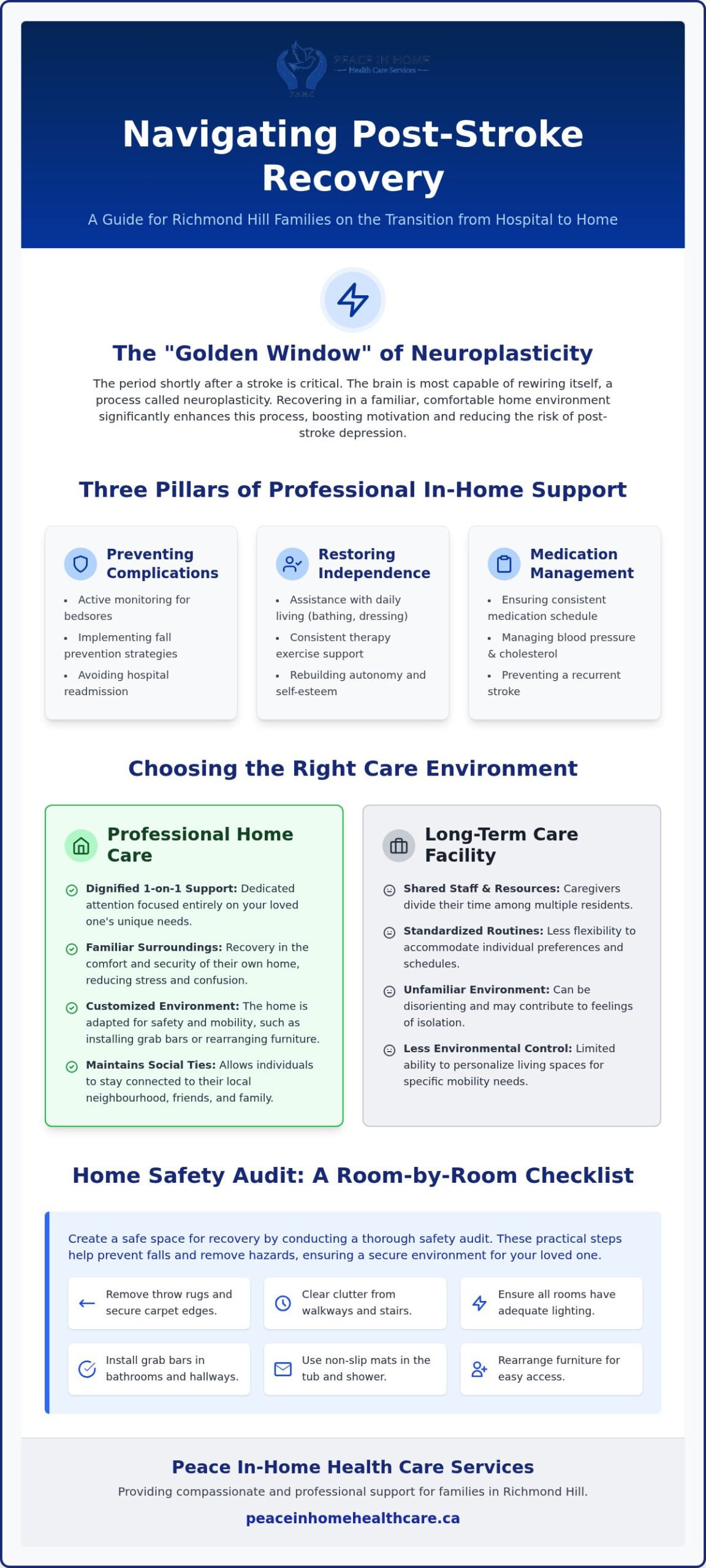
The “Golden Window” of neuroplasticity refers to the period shortly after a stroke when the brain is most capable of rewiring itself. Recovery isn’t just about survival; it’s about reclaiming the ability to move, speak, and interact. Performing these intensive rehabilitation tasks in a familiar home setting often leads to better outcomes because the survivor feels secure and motivated. A Personal Support Worker (PSW) plays a central role in this team, acting as a steady guide who helps with everything from mobility to emotional encouragement, ensuring the survivor never feels they are facing these challenges alone.
The Goals of Professional Recovery Support
The primary objective of specialized care is to create a safe, stable foundation for healing. Without professional eyes on the situation, secondary complications can stall progress or lead to hospital readmission. Dedicated support focuses on three pillars:
- Preventing Complications: Caregivers actively monitor for signs of bedsores or skin breakdown and implement fall prevention strategies to avoid further injury during the healing phase.
- Restoring Independence: By assisting with Activities of Daily Living (ADLs) like bathing, dressing, and grooming, support workers help survivors slowly regain their autonomy and self-esteem.
- Medication Management: Consistent medication reminders are vital for managing blood pressure and cholesterol, which are critical factors in preventing a recurrence.
Why Richmond Hill Families Prefer Aging in Place
For many in our community, staying at home is a matter of dignity and comfort. Richmond Hill offers a unique blend of quiet residential streets and accessible local amenities that provide a sense of continuity. The psychological benefit of familiar surroundings can’t be overstated. Recovering in one’s own bedroom, surrounded by family photos and personal belongings, significantly reduces the risk of post-stroke depression. It allows the individual to maintain ties with their local neighbourhood and social circles.
Additionally, professional post-stroke home care Richmond Hill allows for a level of environmental customization that facilities often lack. Whether it’s rearranging furniture for better wheelchair access or installing grab bars in a specific bathroom layout, the home is tailored entirely to the survivor’s unique mobility needs. This personalized approach ensures that the recovery journey is as smooth and dignified as possible.
Tailored Care Plans: Addressing Physical and Cognitive Challenges
The first thirty days following a return from Mackenzie Health or other local facilities are often the most critical. During this time, a care plan serves as a personalized roadmap. We work closely with hospital discharge teams to ensure every medical instruction is translated into a daily routine that supports your loved one’s specific recovery goals. This isn’t just about safety; it’s about creating a rhythm that fosters progress. Effective post-stroke home care Richmond Hill relies on this seamless hand-off between clinical settings and the comfort of home.
Consistency is the secret to successful rehabilitation. While a physiotherapist or speech pathologist might visit once or twice a week, the real work happens in the hours between those appointments. Following the American Heart Association’s stroke recovery guidelines, our caregivers help survivors practice their exercises daily. This repetition helps the brain forge new pathways, turning difficult tasks into manageable ones. For families managing complex medical needs like wound care or feeding tubes, skilled nursing care at home Toronto provides the clinical expertise required to manage these challenges safely.
Beyond physical needs, we focus on the survivor’s emotional and cognitive health. Social isolation can lead to depression, which slows physical healing. Our caregivers provide meaningful companionship and cognitive stimulation, such as puzzles or conversation, to keep the mind active and engaged. If you’re feeling uncertain about managing these needs alone, you can always speak with a care coordinator to explore your options and find a path forward that works for your family.
Mobility and Transfer Assistance
Regaining movement requires patience and the right technique. We prioritize safe transfers to ensure both the survivor and the family remain injury-free during daily activities. Our support includes:
- Safe Techniques: Using proper body mechanics to move from a bed to a chair or wheelchair without strain.
- Walking Support: Guiding prescribed walking routines to rebuild muscle strength and balance.
- Fatigue Monitoring: Watching for subtle signs of exhaustion to prevent overexertion and potential falls.
Nutrition and Meal Preparation
A healthy diet provides the fuel necessary for the brain to heal. We adapt mealtime routines to meet specific health requirements and dietary restrictions. Our approach focuses on:
- Managing Dysphagia: Preparing meals with appropriate textures for those experiencing swallowing difficulties.
- Heart-Healthy Menus: Creating meals that limit sodium and unhealthy fats to support cardiovascular health.
- Hydration Monitoring: Ensuring survivors drink enough fluids to maintain energy levels and support recovery.
Home Care vs. Long-Term Care: Making the Best Choice for Your Family
Choosing the right path after a hospital stay is one of the most significant decisions a family can make. While long-term care facilities provide a structured environment, they often struggle with high staff-to-patient ratios. In contrast, post-stroke home care Richmond Hill offers dedicated one-on-one attention. This means a caregiver is focused entirely on your loved one’s needs, rather than splitting their time between dozens of residents. This individual focus ensures that subtle changes in health or mood are noticed immediately, which is vital for a safe recovery.
Families often find that home care services for seniors Toronto are a more cost-effective choice than private nursing homes, especially when you consider the quality of life and personalized support provided. Beyond the financial aspect, recovering at home offers superior infection control. In a private setting, the risk of exposure to common facility-wide illnesses is significantly reduced. You also have total control over hygiene standards and daily routines, ensuring a level of cleanliness that meets your family’s expectations. This model also provides immense flexibility; you can choose anything from a few hours of respite care to full-time live-in support, adapting as your loved one’s recovery progresses.
The Importance of Respite Care for Richmond Hill Families
Caring for a survivor is a marathon, not a sprint. It’s common for family members to experience irritability or extreme physical exhaustion. Recognizing these signs of burnout is the first step toward preventing caregiver burnout Toronto. By utilizing respite care, you ensure that you remain healthy enough to support your loved one in the long run. Whether you need a few hours during the day to run errands or overnight support so you can sleep securely, professional help provides the necessary relief to keep your family unit strong.
Preserving Dignity Through Personal Care
A stroke can make once-simple tasks feel like insurmountable hurdles. Professional personal care assistance for seniors plays a crucial role in maintaining a survivor’s self-esteem. We provide gentle support with bathing, dressing, and grooming, ensuring these intimate tasks are handled with the utmost respect. Our “human-first” approach means we don’t just complete a checklist; we honour the individual’s history and personal preferences. This level of attentive care helps your loved one feel like themselves again, rather than just a patient in a system.
Preparing Your Richmond Hill Home for a Safe Recovery
Bringing a loved one back to their Richmond Hill home is a significant milestone, but the physical environment must change to match their new needs. A proactive safety audit is the first step in ensuring that post-stroke home care Richmond Hill is successful. You should walk through every room before the discharge day, looking for obstacles that a person with limited mobility or balance might face. Small adjustments today prevent major setbacks tomorrow. You’ll soon realize that a safe home environment is the foundation of a dignified recovery, allowing your loved one to focus on healing rather than navigating hazards.
Trip hazards are the most common threat to a safe recovery. Area rugs, while they add colour and warmth to a room, are dangerous for someone using a walker or cane. You must clear cluttered hallways and ensure there is a wide, unobstructed path between the primary living areas. Organization is just as important as physical safety. Keep medications, hydration, and communication tools in a central, easy-to-reach location to reduce the need for unnecessary movement. A clear, well-organized home reduces the cognitive load on the survivor, making daily life feel much more manageable.
Bathroom and Bedroom Modifications
Many homes in our community are multi-level. If stairs are a barrier, setting up a temporary ground-floor bedroom preserves energy and prevents falls. In the bathroom, transfers are high-risk moments. Installing grab bars and raised toilet seats provides essential stability. Use non-slip mats and a sturdy shower chair to make hygiene routines less stressful for both the survivor and the caregiver. These changes help maintain a dignified lifestyle while prioritizing safety.
Technology and Communication Setup
Communication provides a vital safety net. Simple call buttons or emergency alert systems allow the survivor to ask for help without straining their voice or moving unsafely. It’s helpful to create a “care station” where all medical records and daily logs are organized. This ensures that any professional post-stroke home care Richmond Hill provider has immediate access to vital information. Lastly, ensure the home is well-lit; bright spaces help those with visual impairments navigate their surroundings with confidence.
How Peace In-Home Health Care Supports Richmond Hill Survivors
Peace In-Home Health Care Services operates as a “Compassionate Expert,” standing beside families during the complex transition from hospital to home. With over 17 years of caregiving experience, we understand that effective post-stroke home care Richmond Hill requires more than just a list of medical tasks; it requires a relationship built on genuine trust and reliability. Our process begins with a detailed, in-home consultation where we listen to your concerns and recovery goals. This collaborative approach allows us to realize a personalized care plan that specifically addresses the severity of the stroke while prioritizing your loved one’s dignity and comfort.
Our support model is designed to be holistic, integrating skilled nursing care with warm, attentive companionship. We ensure that while vital safety features like medication reminders and mobility assistance are handled with professional precision, the human need for daily connection is never overlooked. We invite Richmond Hill families to reach out for a no-pressure discussion about their needs. We are here to act as your trusted guide, offering a steady hand and expert navigation through every stage of the recovery journey, ensuring you never feel alone in this process.
Our Human-First Care Philosophy
We believe that the quality of care depends on the strength of the connection between the caregiver and the survivor. We don’t just assign the first person available; we carefully match caregivers based on personality, temperament, and daily routines to ensure a harmonious fit. This focus on emotional well-being provides the survivor with a sense of security and the family with essential peace of mind. By maintaining a steady, calm rhythm of care, we create an environment at home that fosters patience and steady progress. Our approach focuses on:
- Personality Matching: Pairing survivors with caregivers who share similar interests or communication styles to build a true bond.
- Family Well-being: Prioritizing the emotional health of family members to reduce stress and prevent caregiver burnout.
- Steady Routines: Maintaining consistent daily patterns that encourage the brain’s natural healing process and reduce anxiety.
Take the First Step Toward Recovery
Choosing local Richmond Hill expertise means you have a reliable partner who truly understands the community and its resources. Our specialized post-stroke home care Richmond Hill is designed to provide the security, comfort, and independence your loved one deserves during this sensitive time. Reclaiming a familiar lifestyle is possible with the right support standing by your side. We encourage you to reach out and discover how our tailored approach can make a meaningful difference in your family’s life.
We invite you to contact our team today for a personalized assessment and a clear, low-stress path forward for your loved one’s recovery.
A Path Toward Dignified Recovery and Independence
Recovering from a stroke is a journey that requires patience, expertise, and a deeply personal touch. You’ve learned how a safe home environment, combined with consistent rehabilitation exercises, can significantly improve outcomes during the critical window of recovery. By choosing professional post-stroke home care Richmond Hill, you’re not just securing medical support; you’re ensuring your loved one can heal with dignity in the place they love most.
With over 17 years of compassionate care experience, our team provides the steady guidance needed to manage complex recovery needs. We offer customized plans and local Richmond Hill caregivers who understand your community, allowing you to focus on being a family again rather than a full-time monitor. Peace of mind is possible when you have a trusted guide standing by your side.
You don’t have to navigate this transition alone. We are here to help you realize a future where recovery is met with comfort, security, and a renewed sense of hope for the days ahead.
Frequently Asked Questions
How soon can home care services start after hospital discharge?
We aim to begin support as soon as your loved one is ready to leave the hospital. Our team acts as a trusted guide during the hospital-to-home transition, working to have a personalized care plan in place before the discharge date. This prompt start helps prevent readmission and ensures that the recovery window isn’t missed. We coordinate with discharge teams to provide immediate, reliable support the moment they arrive home.
Can a caregiver help with speech and physical therapy exercises?
Yes, our caregivers provide the vital consistency needed between professional therapy sessions. While they don’t replace licensed therapists, they assist with the daily repetition of prescribed speech and physical therapy exercises. This daily practice is crucial for neuroplasticity and regaining independence. By offering encouragement and steady physical support, we help survivors stay motivated to reach their recovery goals while monitoring for signs of fatigue or overexertion.
Is 24-hour care available for stroke survivors in Richmond Hill?
Yes, we provide flexible care models including live-in care for seniors and 24-hour monitoring. This is particularly helpful for families who fear another stroke occurring at home or those who need constant assistance with transfers and personal care. Our caregivers provide a stable and experienced presence throughout the night, offering peace of mind to the entire family. This round-the-clock support ensures that help is always just a few steps away.
What is the difference between a PSW and a nurse for stroke recovery?
A Personal Support Worker (PSW) focuses on daily living activities such as bathing, meal preparation, and companionship. They are essential for maintaining a survivor’s routine and self-esteem. In contrast, a Registered Nurse or RPN provides Skilled Nursing Care Services, which include clinical tasks like wound management, catheter care, or complex medication administration. We help you determine the right balance of support based on the severity of the stroke and medical needs.
How does home care help prevent another stroke from occurring?
Our post-stroke home care Richmond Hill services focus on managing the primary risk factors for recurrence. Caregivers provide consistent medication reminders to help control blood pressure and cholesterol levels. We also prepare heart-healthy meals that align with dietary guidelines and monitor for subtle changes in health that might require medical attention. This proactive approach, combined with regular mobility support, creates a safe foundation for long-term health and stroke prevention.
Do you provide respite care for family members who are currently the primary caregivers?
Yes, we offer dedicated respite care for families to help prevent caregiver burnout. Caring for a stroke survivor is physically and emotionally demanding, and family members often need a chance to rest and recharge. We can step in for a few hours or several days, providing the same high level of attentive care your loved one expects. This support ensures that you can continue to be a loving family member rather than an exhausted monitor.