

Last Tuesday, Sarah spent three hours on the phone trying to decode the difference between government-funded support and private help for her father in Oakville. Like many families across the GTA, she felt overwhelmed by the realization that love alone wasn’t enough to keep him safe at home. You likely feel that same weight of responsibility, paired with the confusion of how to actually afford the support your family deserves. It’s common to feel a sense of guilt when you can’t be there every hour, or a fear that hidden costs in a contract might suddenly deplete your savings.
We’re here to help you find clarity and professional reassurance. This guide simplifies the cost of in-home care for seniors Ontario families must plan for in 2026, from understanding hourly agency rates to maximizing provincial subsidies. You’ll learn how to leverage the latest Ontario Seniors Care at Home Tax Credit and how to bridge the gap when public wait times are too long. We will provide a clear framework to build a sustainable care budget that prioritizes your loved one’s safety, dignity, and independence.
Key Takeaways
- Distinguish between public HCCSS support and private agency roles to build a comprehensive care plan that fits your family’s unique needs.
- Learn to calculate the average monthly cost of in-home care for seniors Ontario families should budget for, including industry hourly averages and minimum requirements.
- Discover how to reduce your out-of-pocket expenses by maximizing the Ontario Seniors Care at Home Tax Credit and federal disability benefits.
- Assess the value of specialized dementia and Alzheimer’s support to ensure your loved one receives dignified care while staying safe at home.
- Identify the security advantages of partnering with a vetted, professional agency to eliminate the risks and stress of private hiring.
Understanding the Senior Care Landscape in Ontario
Ontario’s senior care system is built on two distinct pillars: public funding and private support. For many families, realizing that the government might not cover every hour of care can be a stressful discovery. The public system, managed by Home and Community Care Support Services (HCCSS), is designed to prioritize those with the highest medical needs first. This leaves a significant gap for families seeking companionship, meal preparation, or light housekeeping. Because of this, most families in the GTA move toward a hybrid model. This approach uses government hours for essential medical tasks while relying on private agencies for the consistent, daily support that preserves a senior’s quality of life.
It’s helpful to understand the different professionals who provide this care. Personal Support Workers (PSWs) are the heart of home care, assisting with bathing, dressing, and mobility. Registered Nurses (RNs) or Registered Practical Nurses (RPNs) step in for specialized medical needs, such as wound care or complex medication administration. Understanding these roles is the first step in accurately estimating the total cost of in-home care for seniors Ontario families should expect to pay.
Public Funding: What HCCSS Covers
To qualify for government-funded care, a care coordinator from HCCSS must assess your loved one’s needs. While this support is a vital resource, the reality in 2026 is that hours are often capped based on provincial budgets and regional waitlists. Public care is usually focused strictly on medical necessity. This means tasks like social engagement or grocery shopping are rarely included. For families calculating their budget, it’s safer to view public funding as a foundation rather than a complete solution for aging in place.
Private Care: The Role of Agencies
Private agencies provide the flexibility and reliability that the public system often lacks. When you choose home care services for seniors Toronto agencies offer, you gain control over the schedule and the specific caregiver coming into your home. This consistency is essential for seniors, especially those living with cognitive changes who benefit from a familiar, friendly face. Private care acts as a professional “top-up,” filling the gaps during evenings, weekends, or whenever your family needs respite. By combining both pillars, you ensure your loved one is never left without the attentive, dignified care they deserve.
Estimating the Cost: Hourly and Monthly Care Rates
Budgeting for senior care is often the most stressful part of the journey for families. It’s about more than just a line item in a ledger; it’s about ensuring your loved one has the support they need to stay safe. The cost of in-home care for seniors Ontario residents pay can vary significantly based on your location and the specific level of support required. In the Greater Toronto Area, where the cost of living is higher, you’ll find that rates reflect the professional expertise and reliability required to provide high-quality care.
Typical Hourly Rates in the GTA
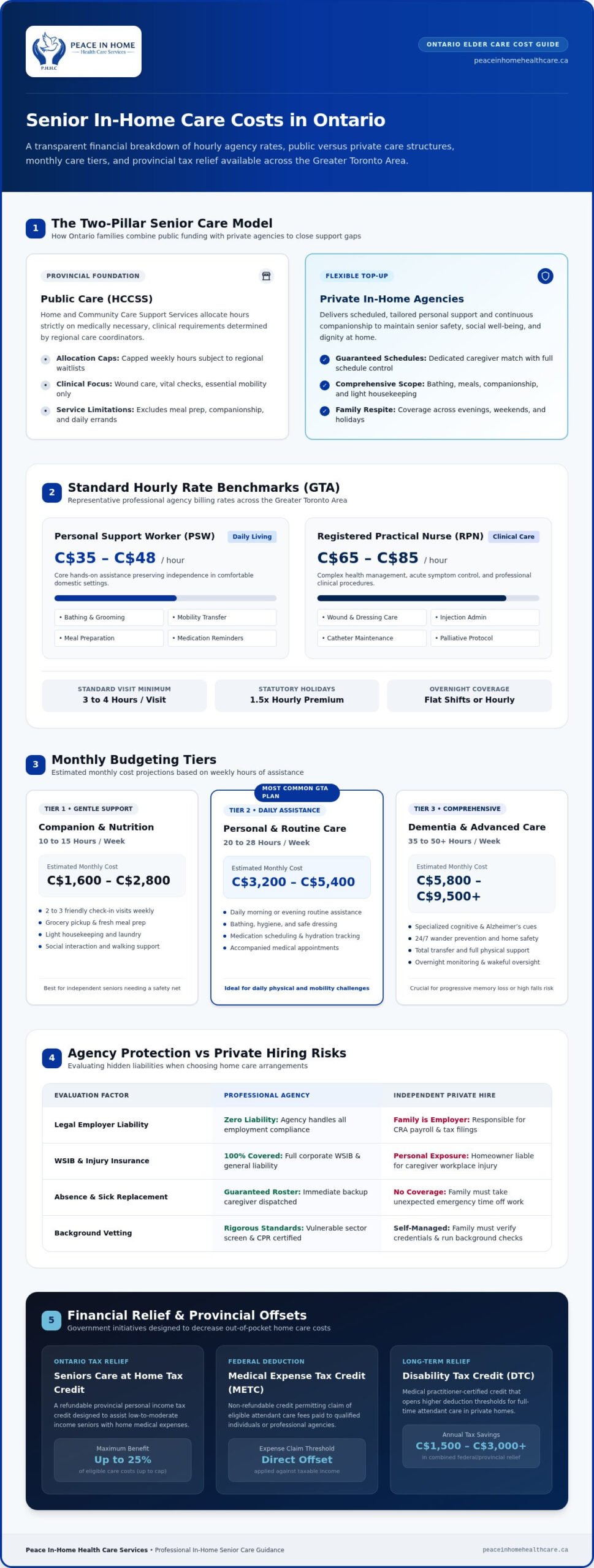
In 2026, industry averages for a professional Personal Support Worker (PSW) in the GTA typically range from C$35 to C$48 per hour. If your loved one requires specialized clinical support, a Registered Practical Nurse (RPN) generally costs between C$65 and C$85 per hour. Most professional agencies implement a “minimum hour” requirement, usually three to four hours per visit. This policy helps maintain a stable, dedicated team for your family. You should also plan for weekend premiums or holiday rates, which are standard across the province to ensure caregivers are fairly compensated for their time.
While hiring a private individual might seem like a way to save money, it often introduces significant risks. Families become legal employers, responsible for WSIB, payroll taxes, and liability insurance. If a private hire is unwell, you’re left without a backup. Professional agencies handle these logistics for you, providing a vetted and insured safety net. This ensures that the focus remains entirely on the well-being of the senior rather than administrative burdens.
Monthly Budgeting for Different Care Levels
To help you visualize your monthly expenses, consider these three common care tiers based on industry standards:
- Low-Intensity Support: This involves 10 to 15 hours per week for companionship and meal preparation. Families should budget approximately C$1,600 to C$2,800 per month.
- Moderate-Intensity Support: This includes daily visits for personal care, medication reminders, and mobility assistance. Monthly costs typically range from C$4,500 to C$7,500.
- High-Intensity or Live-In Care: For seniors with advanced needs or safety concerns, 24/7 live-in support is a comprehensive option. This usually starts around C$10,000 per month, depending on the complexity of care.
Finding the right balance for your family’s budget while maintaining the highest standard of support is a delicate process. If you’re feeling unsure about which level of care is right for your situation, you can always reach out for a gentle conversation about your options.
Specialized Care Costs: Dementia, Alzheimer’s, and Nursing
When a loved one is diagnosed with a cognitive condition, their care requirements shift from simple assistance with daily tasks to a need for constant vigilance and specialized communication. The cost of in-home care for seniors Ontario families pay for this specialized support reflects a higher level of training and increased responsibility. Unlike standard companionship, memory care involves managing complex behaviours, such as agitation or confusion, with patience and proven techniques that prioritize the senior’s dignity.
The Value of Memory Care Expertise
Caregivers trained in dementia support understand how to navigate “sundowning” or the urge to wander. They use redirection and sensory engagement to keep the environment calm and safe, which is vital for reducing the anxiety that often leads to crisis situations. Consistency is the most important factor here. Having the same familiar face every day helps build a bond of trust that is often lost in larger institutional settings. Choosing specialized dementia care at home is often a more cost-effective and dignified alternative to institutional memory care. It allows your loved one to remain in the comfort of their own home while receiving the same high-intensity oversight found in a facility.
Skilled Nursing and Post-Surgical Support
Recovery after a hospital stay often requires more than just help with meals; it involves wound care, catheter management, and the administration of complex medications. While a rehabilitation facility is one option, many families prefer the privacy and comfort of their own residence. Investing in skilled nursing care at home Toronto services provides a direct clinical link between the hospital and the home. This professional oversight significantly reduces the risk of post-surgical complications and ensures that recovery happens in a familiar, low-stress environment.
Preventing a single emergency room visit can save your family from immense emotional stress and physical setback. By having a professional who can spot early signs of infection or decline, you’re not just paying for a service. You’re investing in a proactive safety net. This specialized support ensures that the cost of in-home care for seniors Ontario residents invest in translates directly into a longer, safer, and more dignified life at home. It provides the peace of mind that comes from knowing every clinical and emotional need is being met by a compassionate expert.
Financial Assistance: Offsetting the Cost in Ontario
Finding the funds to support a loved one’s independence can feel like a heavy weight on your shoulders. It’s a common worry for families in the GTA, but you don’t have to carry it alone. Several government programs and tax incentives are designed to help manage the cost of in-home care for seniors Ontario families face. These resources act as a financial bridge, allowing you to prioritize professional, dignified support while preserving your family’s long-term savings.
Maximizing Provincial Tax Credits
The Ontario Seniors Care at Home Tax Credit is one of the most significant tools available to you. This is a refundable tax credit, which means you can receive money back even if you don’t owe any provincial income tax. For the 2026 tax season, eligible seniors aged 70 or older can claim 25% of their home care expenses up to a specific limit. To ensure you receive every dollar you’re entitled to, you must keep every invoice and receipt from your service provider. Proper documentation is the only way to prove the care was provided by a professional agency, which is a key requirement for the credit.
There’s a vital difference between refundable and non-refundable credits that you should understand. A non-refundable credit only reduces the tax you owe to zero. A refundable credit, like the one for home care, actually puts money back into your pocket. This distinction makes professional care much more accessible for families who are managing a fixed retirement income.
Beyond provincial help, the federal Disability Tax Credit (DTC) offers substantial relief for seniors with a prolonged physical or mental impairment. This credit is often the gateway to other benefits, including the Medical Expense Tax Credit (METC). You can claim the cost of attendant care as a medical expense, which can significantly lower your federal tax bill. For those who served our country, Veterans Affairs Canada (VAC) provides the Veterans Independence Program (VIP). This program can cover the costs of personal care, meal preparation, and even light housekeeping to help veterans stay in their own homes longer.
Other Funding Sources
If your loved one has a long-term care insurance policy, now is the time to review the fine print. Most policies trigger a claim when a senior needs help with two or more “activities of daily living,” such as bathing or dressing. Another option some families explore is a reverse mortgage, which allows you to tap into home equity to pay for daily support. In communities like Mississauga and Vaughan, many families use a hybrid approach. They combine government hours with private respite care to bridge the gaps in their own schedules. This strategy manages the total cost of in-home care for seniors Ontario residents need without leading to caregiver burnout.
The Peace In-Home Health Care Advantage: Quality Meets Value
With over 17 years of experience serving families across the GTA, Peace In-Home Health Care Services understands that quality isn’t just about clinical tasks. It’s about the relationship built between a caregiver and a senior. Our deep roots in communities like Toronto and Markham allow us to provide efficient, high-quality support that respects the dignity of every individual. We don’t just provide a service; we offer a customized care plan that evolves as your loved one’s needs change. This ensures you’re never paying for support you don’t need, while always having the right level of care in place.
Why an Agency is a Safer Investment
Choosing an agency over a private hire is a decision that protects your family’s future. When you look at the total cost of in-home care for seniors Ontario families manage, the value of an agency becomes clear through its built-in safety nets. Every member of our team is vetted, insured, and supervised by experienced professionals. We handle WSIB coverage and liability protection so you don’t have to worry about the legal risks of being an employer. Perhaps most importantly, we provide a “Peace of Mind” guarantee. If a primary caregiver is unwell, we have a reliable backup ready to step in. Your parent is never left alone, and you never have to scramble to fill a shift.
We also recognize that preventing family burnout is a vital part of the care equation. While some providers focus only on medical duties, we believe in the power of companionship and light housekeeping. These “extra” touches allow you to stop being a logistics manager and start being a daughter or son again. It’s this holistic approach that makes the cost of in-home care for seniors Ontario residents invest in truly worthwhile. It preserves the family dynamic while ensuring a safe, professional environment.
Your Next Steps to Peace of Mind
Taking the first step toward professional support doesn’t have to be stressful. We offer a free in-home assessment to understand your family’s unique situation and health goals. This is a time for us to listen to your concerns and for you to see our compassionate approach firsthand. During your first consultation, feel free to ask about our staff training, how we handle emergencies, or how we match caregivers to a senior’s personality. We’re here to lead you through this transition with patience and expertise, ensuring you feel confident in every decision you make.
Choosing a Path Toward Dignified Aging at Home
You’ve explored the essential pillars of senior support in the GTA, from balancing public hours with private agency expertise to maximizing provincial tax credits. Planning for the cost of in-home care for seniors Ontario families face in 2026 is a journey that requires both financial clarity and emotional resilience. By understanding industry averages and leveraging available subsidies, you can create a sustainable plan that keeps your loved one safe in the environment they love most.
Peace In-Home Health Care brings over 17 years of trusted GTA service to your doorstep. Our fully insured and WSIB protected staff are more than just caregivers; they’re compassionate experts with specialized Alzheimer’s and dementia training. We understand the weight of this decision and stand ready to offer the professional reassurance your family needs during this transition. We’re here to handle the logistics so you can focus on simply being a family again.
You don’t have to manage this complex transition alone; expert support and peace of mind are just a gentle conversation away.
Frequently Asked Questions
Is home care for seniors tax-deductible in Ontario?
Yes, home care expenses are often eligible for significant tax relief. The Ontario Seniors Care at Home Tax Credit is a refundable credit that helps seniors over 70 manage their expenses. Additionally, the federal Medical Expense Tax Credit allows you to claim attendant care costs. You must keep all professional invoices and receipts to prove the services were provided. This financial support helps reduce the total cost of in-home care for seniors Ontario families pay annually.
How much does a PSW cost per hour in Toronto?
In Toronto and across the GTA, the industry average for a professional Personal Support Worker (PSW) typically ranges from C$35 to C$48 per hour. These rates reflect the high cost of living and the professional expertise required for dignified care. Most agencies have a minimum visit requirement of three to four hours. Choosing a professional agency ensures your caregiver is fully insured and supervised, which provides a much safer environment than hiring a private individual.
Does OHIP pay for in-home care services?
OHIP does not directly pay for private in-home care services; however, the Ontario government funds home care through Home and Community Care Support Services (HCCSS). If eligible, your loved one may receive a capped number of hours for essential medical tasks or personal care. Because these public hours are often limited, many families in Mississauga and Vaughan choose to pay privately for additional support to ensure their parents are never left alone or unsafe during the day.
What is the difference between home care and home health care?
Home care generally refers to non-medical support such as companionship, meal preparation, and light housekeeping. Home health care involves clinical services provided by Registered Practical Nurses or Registered Nurses, such as wound care or medication administration. Peace In-Home Health Care Services provides both, ensuring a seamless transition as a senior’s health needs become more complex. This integrated approach allows your loved one to age in place with dignity and consistent professional oversight.
Can I hire a family member as a caregiver and get paid by the Ontario government?
Ontario offers a Family Managed Care program through HCCSS that allows eligible individuals to receive direct funding to hire their own caregivers. While this can include certain family members, there are strict eligibility requirements and significant administrative responsibilities. You become the legal employer, which means you handle payroll and taxes. Many families find that partnering with a professional agency is less stressful, as the agency manages all the legal, staffing, and liability protections for you.
How do I apply for the Ontario Seniors Care at Home Tax Credit?
You apply for this refundable credit when you file your personal income tax return each year. To be eligible, the senior must be at least 70 years old and a resident of Ontario. You must keep detailed invoices and receipts from your care provider throughout the year. These documents must clearly show the cost of in-home care for seniors Ontario residents paid to a professional agency for attendant care or personal support services.
What happens if my parent needs care immediately but we are on a waitlist?
If your parent requires immediate support while waiting for government-funded hours, a private agency can typically begin services within 24 to 48 hours. This bridge care is a common solution for families in Scarborough and North York during post-hospital recovery. You can start with a few hours of respite care and adjust the schedule once public funding is approved. This flexibility ensures your loved one stays safe while your family navigates the provincial health system.
Are there subsidies for dementia care specifically in the GTA?
While there isn’t a single subsidy dedicated solely to dementia, families can use the Ontario Seniors Care at Home Tax Credit and the federal Disability Tax Credit to offset costs. Some local chapters of the Alzheimer Society offer small respite grants, though these are often limited. Investing in specialized dementia and Alzheimer’s care ensures your loved one receives support from caregivers trained in redirection and safety, which prevents expensive emergency room visits and family burnout.