
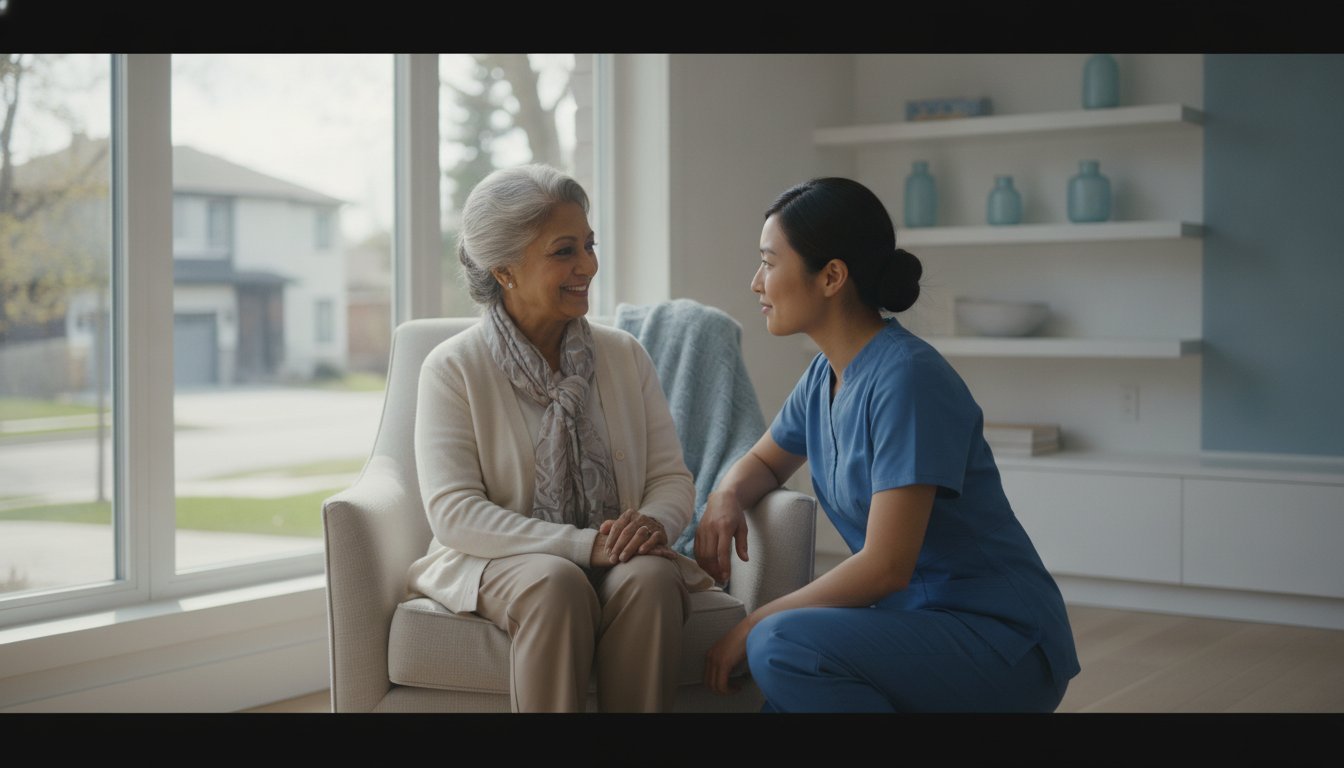
What if the help your parent needs isn’t a sign of lost independence, but rather the very tool that allows them to keep it? It’s often emotionally exhausting to balance the roles of medical advocate, housekeeper, and adult child while constantly worrying about a potential fall or a missed dose of medication. You want the absolute best for them, but the weight of daily responsibility can lead to burnout and a heavy sense of guilt. Choosing professional personal care assistance for seniors is about more than just checking off a list of tasks. It’s about finding a reliable partner who values your loved one’s dignity as much as you do.
We promise to show you how professional support can preserve a senior’s autonomy while providing your family with essential peace of mind. This guide explores the 2026 landscape of care in Ontario, explains how tailored assistance prevents common safety risks, and provides a clear path for you to step back from being a constant caregiver so you can simply be a daughter or son again. You will learn how to navigate these transitions with confidence, ensuring your loved one remains safe, respected, and comfortable in their own home.
Key Takeaways
- Understand the vital difference between non-medical support and skilled nursing to ensure your loved one receives the right level of help for their daily routine.
- Learn how to navigate the Ontario healthcare system and why private personal care assistance for seniors often fills the critical gaps left by public waitlists and hour caps.
- Discover how personalized care plans and professional mobility assistance reduce the risk of falls, helping seniors feel more confident and secure in their own homes.
- Gain practical strategies for helping a reluctant parent accept home support by focusing on building trust and dignity during the initial assessment process.
- Realize the benefits of a “human-first” approach that prioritizes emotional well-being, backed by over 17 years of experience serving families across the GTA.
What is Personal Care Assistance for Seniors?
Helping a loved one maintain their independence often starts with acknowledging that some daily tasks have become difficult to manage alone. When families begin researching What is home care?, they quickly find that personal care assistance for seniors is the most vital component for staying at home. This service provides professional support with Activities of Daily Living (ADLs), which are the fundamental tasks we all do to stay healthy, clean, and safe. In Ontario, this specialized support is the key to “aging in place” safely, ensuring that a senior doesn’t have to leave their cherished home just because they need a hand with their morning or evening routine.
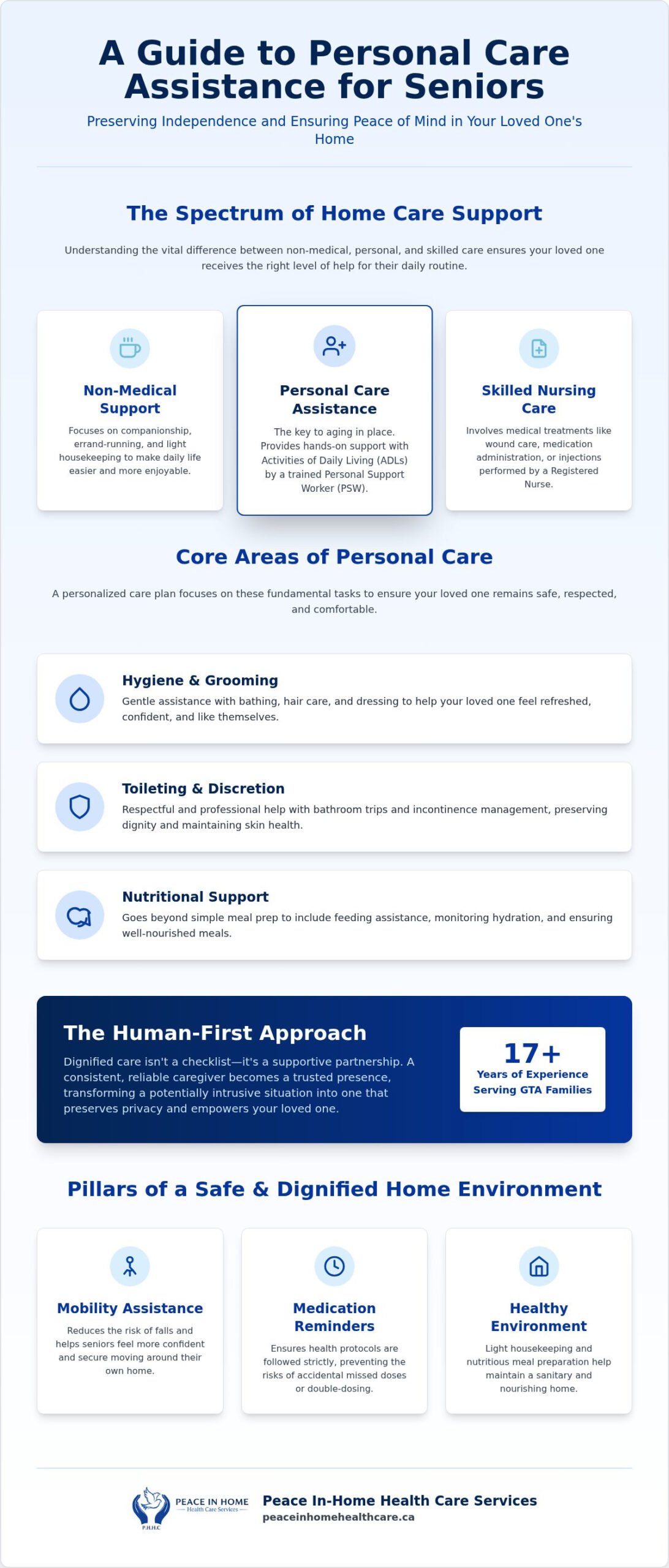
It’s helpful to understand where these services fit within the broader healthcare system. Non-medical home care usually involves companionship or light housekeeping; it’s about making life a bit easier. Skilled nursing care, on the other hand, involves medical treatments like wound care or injections performed by Registered Nurses. Personal care sits in the vital space between the two. It’s delivered by a Personal Support Worker (PSW) who is trained to provide hands-on physical help while watching for subtle changes in health. This distinction is important because it ensures the senior gets the right level of attentive care without the environment feeling overly clinical or cold.
Beyond Basic Chores: The Human Element
A checklist can tell you if someone was bathed, but it won’t tell you if they felt respected during the process. The human element is what transforms a service into a supportive partnership. When a caregiver provides personal care assistance for seniors, they become a steady, reliable presence in that person’s life. This consistency builds deep trust, which is essential for preserving a senior’s dignity. Instead of feeling like they’ve lost their privacy, the senior begins to feel empowered. This shift allows them to move beyond just surviving the day and start thriving in their own environment again.
Common Tasks Included in Personal Care
Every care plan we create is personalized to the individual’s physical and emotional needs. This isn’t a one-size-fits-all approach; it’s a tailored strategy for comfort. Generally, these services focus on three core areas:
- Hygiene and Grooming: This includes bathing, hair care, and dressing. These tasks are handled with a gentle touch to ensure the senior feels refreshed and confident.
- Toileting and Discretion: Managing incontinence or helping with bathroom trips requires professional discretion. A trained PSW handles these moments with the respect they deserve, preventing embarrassment and maintaining skin health.
- Nutritional Support: This goes beyond meal prep. It includes actual feeding assistance if mobility is an issue, alongside careful monitoring to ensure the senior is staying hydrated and well-nourished.
By addressing these needs early, families can prevent the “crisis mode” that often leads to emergency room visits or premature moves to long-term care. It’s a proactive way to ensure safety while keeping the focus on the person, not just their physical limitations.
The Pillars of Dignified Home Care: What to Expect
Dignified care isn’t just about showing up; it’s about how the caregiver enters the home and respects the senior’s space. When you arrange for personal care assistance for seniors, you should expect a service that feels like a natural extension of your family’s love. It starts with a personalized care plan that looks at the whole person. We consider their physical needs, their emotional triggers, and even their preferred daily rhythm. This holistic approach is why many families find success with our services; it turns a potentially intrusive situation into a supportive partnership that focuses on the individual’s comfort and history.
There are several core pillars that form the foundation of a safe home environment. When implementing personal care assistance for seniors, medication reminders ensure that health protocols are followed strictly, reducing the risk of accidental missed doses or double-dosing. Additionally, light housekeeping and meal preparation help maintain a sanitary and nourishing environment. A clean home is a safer home, and nutritious meals are the fuel for maintaining strength. You can find more comprehensive details on these supports in this National Institute on Aging guide to aging at home, which highlights the essential role of professional help in maintaining independence.
Mobility and Fall Prevention in the Home
Falls are a primary concern for families. They often lead to a loss of confidence for the senior and a sudden increase in caregiver stress. Our caregivers use safe transfer techniques to move clients from bed to chair or bathroom, protecting both the senior and the caregiver from injury. We also assist with walking and gentle exercises designed to improve balance and strength. Part of our routine involves a constant eye for home hazards. We identify loose rugs, poor lighting, or cluttered pathways that could lead to a trip. This proactive vigilance allows your loved one to move through their home with renewed assurance.
Specialized Support for Dementia and Alzheimer’s
Caring for a loved one with memory impairment requires a specific set of skills and a deep well of patience. We focus on managing “sundowning” and other behavioural changes using compassionate, non-confrontational techniques. Cognitive engagement is equally important. By incorporating activities for dementia patients at home, we help maintain mental function and provide a sense of accomplishment. Our goal is to create a secure, predictable environment where the senior feels safe despite the confusion their condition may cause. If you’re feeling overwhelmed by these challenges, reaching out for a personalized care consultation can be the first step toward regaining your peace of mind.
Comparing Public Support vs. Private Personal Care in Ontario
Ontario families often begin their journey with Ontario Health atHome, the organization that replaced the LHIN. While this public system provides essential support, it often operates within strict limits. Publicly funded personal care assistance for seniors is usually determined by a standardized assessment, which can lead to “capped” hours that may not cover all your loved one’s needs. Additionally, high demand across the GTA often results in significant waitlists for basic services. This is why many families look toward private options to fill the gaps, ensuring their parents aren’t left waiting for basic hygiene or safety support during the most critical times of the day.
Private care offers a level of responsiveness that the public system often can’t match. When you choose a private provider, you’re in the driver’s seat regarding the schedule and the specific type of support provided. Many families find the best balance through a hybrid model. They use public hours for basic tasks while supplementing with private care for evening routines, weekends, or specialized dementia support. This approach ensures a continuous safety net while managing the family budget effectively. For a broader look at available provincial resources, you can consult the Government of Ontario’s senior programs guide.
The Value of Choice and Consistency
For a senior living with anxiety or cognitive decline, seeing a different face every morning can be deeply distressing. Private care prioritizes caregiver consistency, allowing a bond to form between the senior and the professional. You can also select specific times that align with your family’s existing schedule, rather than waiting for a public caregiver who might arrive during a wide window. When evaluating the “true cost” of care, consider the level of expertise required. While basic help is often enough, some situations require skilled nursing care at home Toronto to manage complex medical conditions alongside daily routines.
Navigating Care Costs in the GTA
Understanding how to fund personal care assistance for seniors is a common concern for families in 2026. In Toronto and surrounding areas, private care is typically billed on an hourly basis, though live-in care is a sustainable option for those requiring constant supervision. To help offset these costs, Ontario residents should explore provincial tax credits, such as the Seniors’ Home Safety Tax Credit or the Ontario Caregiver Tax Credit. Some private insurance plans also cover home health services depending on the policy details. By prioritizing the most critical hours for professional help, families can create a sustainable care plan that protects their loved one’s dignity.
Planning for Personal Care: Safety, Trust, and Transition
Transitioning to professional help is often the most difficult hurdle for families to clear. Many seniors view personal care assistance for seniors as a threat to their independence, rather than a way to protect it. This resistance is natural; it’s a reaction to the fear of losing privacy. To ease this transition, we prioritize a thorough initial assessment that focuses on the person first and the tasks second. This meeting is the foundation of trust. It’s a time for your loved one to share their preferences and for us to demonstrate that our goal is to support their choices, not take them away.
Safety is the bedrock of trust. You should feel confident that the person entering your home is not only skilled but also deeply reliable. We implement rigorous safety protocols, including comprehensive background checks and ongoing specialized training for all our caregivers. Supervision is a continuous process, ensuring that the high standards of care established on day one are maintained throughout the relationship. If the idea of full-time support feels overwhelming, many families find success by starting with respite care Toronto. This allows for a gentle trial period where the senior can experience the benefits of professional help without feeling like they’ve made an irreversible life change.
How to Introduce the Idea of Help
The way you frame the conversation can change the outcome. Use “we” language to make the decision feel like a collaborative family effort. Focus on how personal care assistance for seniors actually increases freedom by preventing accidents that could lead to hospitalization. Involve your parent in the interview process. Giving them the final say on which caregiver joins the household restores their sense of control and makes them a partner in their own care journey.
Evaluating a Home Care Agency
Ask potential agencies about their specific emergency protocols and how they handle caregiver absences. Local knowledge is invaluable; a provider that understands the nuances of neighbourhoods like North York, Vaughan, or Scarborough can offer more responsive and personalized service. Most importantly, look for a dignified approach to aging at home in their philosophy. This ensures that the care provided is compassionate and respectful, rather than just clinical.
Why Peace In-Home Health Care Services is Trusted in Toronto
Choosing a care provider is a deeply personal decision that rests on the promise of trust and reliability. At Peace In-Home Health Care Services, we believe that the “Peace” in our name represents the ultimate benefit for the families we serve. It’s the quiet relief you feel knowing your parent is safe, respected, and well-cared for in their own home. With over 17 years of experience in the home care industry, we have become a steady hand for families across the Greater Toronto Area, navigating the complexities of aging with patience and deep-rooted expertise.
Our “human-first” philosophy is the core of everything we do. We prioritize emotional well-being alongside physical tasks because we know that a senior’s spirit is just as important as their physical safety. When providing personal care assistance for seniors, our caregivers don’t just follow a checklist. They build meaningful relationships based on attentive listening and professional reassurance. This approach ensures that every interaction is tailored to the individual’s history and preferences, transforming routine support into a dignified experience that honours the person behind the care needs.
We offer a comprehensive range of services that can adapt as your family’s situation changes. This includes everything from the social engagement of companionship care for seniors Toronto to highly specialized dementia support and skilled nursing. Having a single, reliable source for all these needs provides a sense of continuity that is rare in modern healthcare. Our commitment at Peace In-Home Health Care Services is to provide personal care assistance for seniors that remains consistent, even as medical or cognitive challenges become more complex.
Local Expertise Across the GTA
Our deep connection to the local community allows us to serve diverse families in Mississauga, Oakville, Markham, and Vaughan with a true understanding of the regional resources available. We recognize that Toronto seniors have specific needs, and our experienced team is organized to provide support that feels familiar and local. We maintain a stable team of professionals so that you aren’t faced with a revolving door of strangers. This stability is what allows Peace In-Home Health Care Services to offer reliable, attentive care that families can count on every single day.
Take the First Step Toward Peace of Mind
We know that starting this journey can feel overwhelming, so we’ve made the first step as simple and low-stress as possible. Our free initial assessment is not a sales pitch; it’s a supportive conversation designed to identify the exact level of care that will help your loved one thrive. We lead you through a logical progression from understanding your needs to delivering a tailored care plan that restores your time to be a son or daughter again. Contact Peace In-Home Health Care Services today to discuss how we can bring peace and professional support into your family’s home.
Choosing a Path of Dignity and Peace
Choosing the right support is a journey rooted in love and the desire for your parent to age in place safely. We’ve explored how personal care assistance for seniors provides more than just help with daily tasks; it offers a foundation of respect and security. By balancing physical support with emotional well-being, professional care allows your loved one to maintain their sense of self while giving you the freedom to focus on being a family again. This approach honours their history while protecting their future.
With over 17 years of trusted experience serving families across Toronto and the entire GTA, we understand the nuances of this transition. Our personalized care plans are designed to meet the unique needs of every senior we serve, ensuring that every interaction is both reliable and dignified. You don’t have to navigate these complex life changes alone; expert help is available to guide you through every step of the process.
Taking the first step is often the hardest, but it’s also the most rewarding. We’re here to walk alongside you, offering a steady hand and expert guidance to ensure your family finds the peace of mind you deserve. Together, we can create a safe, supportive environment where your loved one can truly thrive.
Frequently Asked Questions
What is the difference between personal care and companionship?
Personal care involves hands-on physical support with activities of daily living, such as bathing, dressing, and toileting. Companionship care focuses on social interaction, emotional support, and shared activities like reading or walking. While companionship helps prevent isolation, personal care assistance for seniors ensures that health and hygiene needs are met with professional discretion and safety.
How much does personal care assistance for seniors cost in Toronto?
The cost of home care in Toronto depends on several factors, including the number of hours required and the complexity of the senior’s needs. Since every care plan is personalized, we recommend a consultation to determine a schedule that fits your family’s budget. Private care offers the flexibility to choose exactly when and how much help is needed, allowing you to prioritize the most critical times of day.
Can personal care assistance be provided in a retirement home or hospital?
Yes, we can provide supplemental care to seniors residing in retirement homes, long-term care facilities, or hospitals. Many families choose this option when their loved one requires more one-on-one attention than the facility’s staff can provide. This extra layer of support ensures that personalized routines are maintained and that the senior always has a familiar, attentive presence by their side.
Are your caregivers trained to handle seniors with dementia?
Our caregivers receive specialized training to support individuals living with Alzheimer’s and other forms of dementia. We focus on compassionate techniques to manage behavioural changes and “sundowning” while providing cognitive stimulation. This expertise allows us to create a secure, predictable environment that reduces anxiety for the senior and provides much-needed relief for their family members.
What happens if our regular caregiver is sick or unavailable?
We maintain a dependable backup system to ensure your loved one never misses a scheduled visit if their regular caregiver is unwell or unavailable. Continuity of care is one of our highest priorities, so we work to introduce a secondary caregiver who is already familiar with the personalized care plan. This approach minimizes disruption and maintains the sense of security your family relies on.
Is personal care assistance covered by OHIP or insurance?
Private personal care assistance for seniors is generally not covered by OHIP, but it is often eligible for coverage through private long-term care insurance policies. Additionally, Ontario residents may be able to claim provincial tax credits, such as the Seniors’ Home Safety Tax Credit. We recommend checking with your insurance provider and a tax professional to see which financial supports apply to your specific situation.
How quickly can we start receiving personal care services?
Services typically begin shortly after we complete a comprehensive in-home assessment to understand your family’s unique requirements. This initial meeting allows us to match your loved one with a caregiver whose skills and personality are a good fit. We strive to move through this process efficiently so that your family can regain peace of mind as quickly as possible.
Do you provide personal care for seniors in Vaughan and Mississauga?
Yes, we provide professional care services across a wide range of GTA locations, including Vaughan, Mississauga, and Toronto. Our team is familiar with the local resources and needs of seniors in these diverse communities. Whether your loved one is in North York or Oakville, we are committed to delivering reliable, dignified support that allows them to age in place comfortably.