
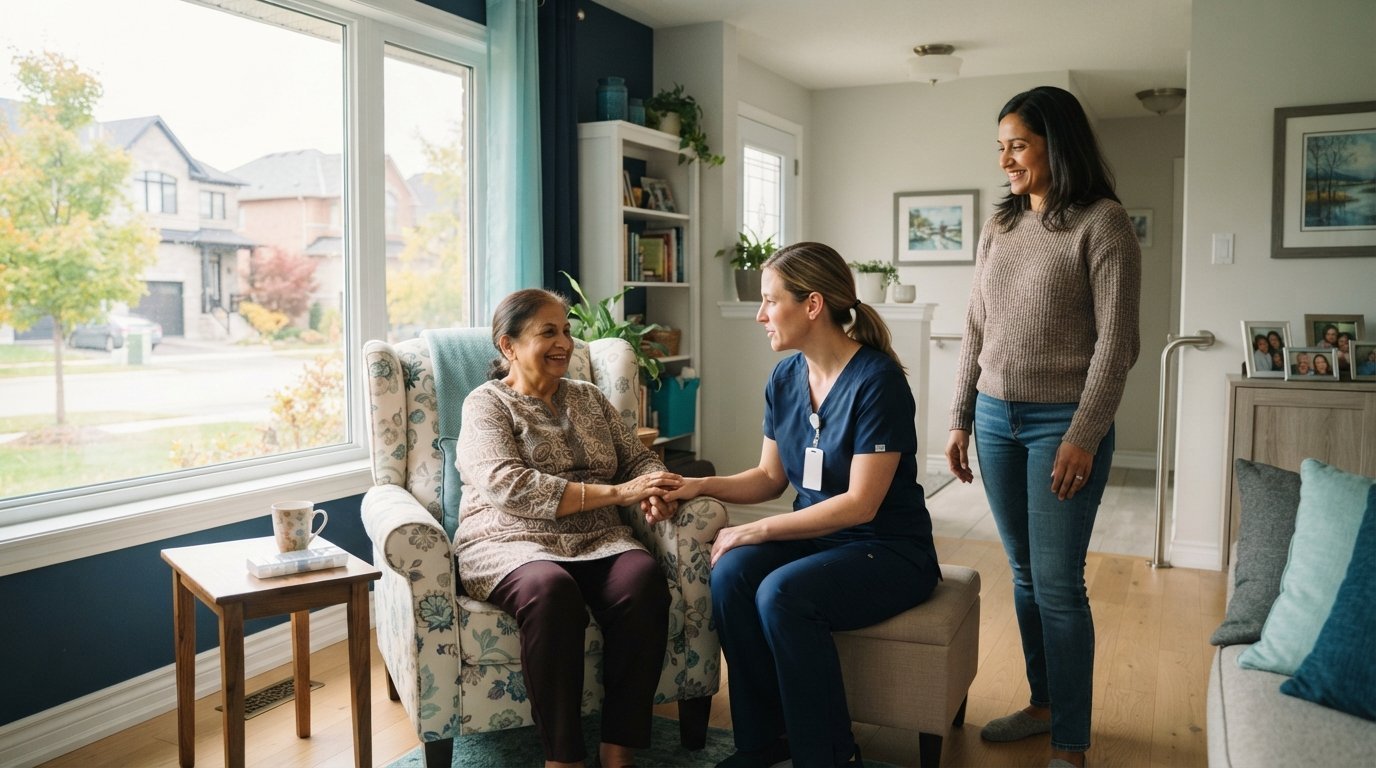
With over 45,000 people currently on the provincial waitlist for nursing beds, securing dependable long term home care Ontario families can trust has become an urgent priority. You want your parent to stay safe and comfortable in familiar surroundings, but facing institutional delays or considering an unfamiliar facility can feel overwhelming.
You already know how exhausting it is to juggle your career, personal life, and hands-on caregiving while worrying that limited public visiting hours won’t keep your loved one safe. You shouldn’t have to carry that uncertainty alone. In this guide, you will discover how to evaluate provincial support through Ontario Health atHome, bridge critical coverage gaps with dedicated private caregivers, and protect your parent’s dignity. We will walk through how public and private options work together so you can establish a stable, compassionate routine for aging in place.
Key Takeaways
- Understand how long term home care Ontario services operate, distinguishing between temporary post-hospital recovery and ongoing support for chronic conditions.
- Learn the realistic boundaries of Ontario Health atHome funding and how dedicated private caregivers fill critical safety gaps.
- Protect your well-being by reducing caregiver burnout while navigating extensive provincial nursing facility waitlists.
- Follow a step-by-step evaluation framework to assess daily living routines and remove mobility hazards throughout the living space.
- Create a stable, personalized care schedule that preserves your loved one’s independence, comfort, and dignity at home.
Long-Term Home Care in Ontario: Definitions and Models
Long-term home care provides comprehensive medical, personal, and social support delivered directly inside a senior’s private residence. Unlike short-term post-operative rehabilitation, which wraps up once an acute injury heals, long-term assistance offers an ongoing, adaptable foundation for living with chronic conditions. At its core, understanding what long-term care is helps families recognize that aging in place does not mean compromising on safety. For many seniors across the province, choosing long term home care Ontario services preserves cherished daily routines, personal dignity, and familiar neighbourhood ties, serving as a compassionate alternative to institutional nursing facilities.
The Spectrum of In-Home Care Services Available
Meeting a loved one’s evolving needs requires a coordinated continuum of support rather than a rigid, one-size-fits-all plan. Reputable care models blend non-medical help with specialized clinical oversight:
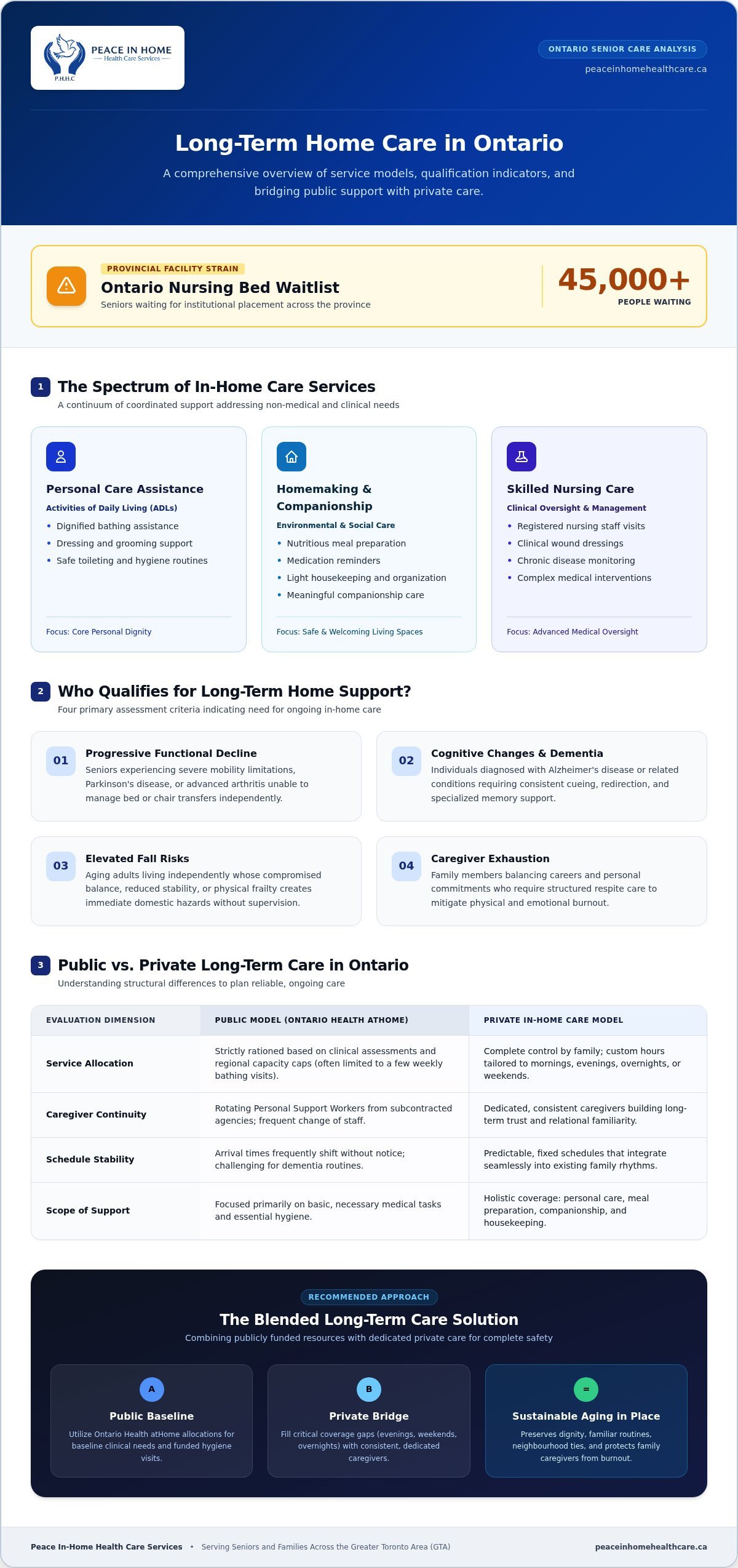
- Personal Care Assistance: Practical help with essential activities of daily living, such as dignified bathing, dressing, grooming, and safe toileting routines.
- Daily Homemaking and Companionship: Nutritious meal preparation, medication reminders, companionship care, and light housekeeping that keep living spaces clean, organized, and welcoming.
- Skilled Nursing Care Services: Clinical attention from registered nursing staff for wound dressings, chronic disease monitoring, and medical tasks that exceed standard daily support.
Who Qualifies for Long-Term Home Support in Ontario?
Eligibility for extended in-home support centres on physical vulnerability, overall safety, and the sustainability of family caregiving. Seniors and families typically seek ongoing arrangements when facing:
- Progressive functional decline: Seniors experiencing severe mobility limitations, Parkinson’s disease, or advanced arthritis who cannot manage bed or chair transfers alone.
- Cognitive changes: Individuals diagnosed with Alzheimer’s disease or other forms of dementia who require cueing, redirection, and specialized memory support.
- Elevated fall risks: Aging adults living independently whose compromised balance or frailty creates immediate hazards without supervision.
- Caregiver exhaustion: Family members balancing full-time employment and personal commitments who need regular respite care to avoid emotional and physical burnout.
Public vs. Private Long-Term Home Care in Ontario: Key Differences
Understanding how care is funded and delivered makes a world of difference when planning support for an aging parent. In Ontario, families encounter two distinct paths: publicly funded services coordinated through Ontario Health atHome, and privately arranged support. While public funding covers basic medical necessities through provincial resources, allocations are strictly rationed based on clinical assessments and local community capacity. For many households seeking dependable long term home care Ontario options, combining both systems offers the safest, most practical solution.
The Scope and Limitations of Publicly Funded Care
Publicly coordinated care provides vital baseline help, yet it often falls short of what seniors need to live comfortably at home. Hours are heavily capped, sometimes limited to just a few bathing visits each week. Because public agencies subcontract their assignments across rotating providers, arrival times often shift without warning. This unpredictable scheduling can cause deep distress for seniors with dementia, who rely heavily on familiar routines and consistent faces to feel secure.
The Benefits of Dedicated Private In-Home Support
Private care eliminates the rigidity of provincial caps by placing complete control back in your hands. Families choose their preferred schedules, securing vital coverage for morning waking routines, late-evening meals, overnight wakefulness, or weekend assistance. Industry insights from the Ontario Long Term Care Association highlight how mounting institutional pressures make robust, home-based alternatives essential for preserving senior independence.
Private arrangements prioritize continuity above all else. Instead of opening the front door to a different Personal Support Worker every few days, your loved one builds a trusting relationship with a dedicated, familiar companion. You can explore how our home care services for seniors in Toronto deliver customized care plans that seamlessly align with existing family rhythms.
Blending these approaches allows you to take full advantage of OHIP-funded nursing visits while supplementing with private support for daily living tasks. If you feel unsure about how to bridge existing provincial allocations, taking a moment to connect with our care coordinators can help you design a harmonious, sustainable routine for your family.
Navigating Ontario Long-Term Care Waitlists and Caregiver Strain
Placing a loved one on an institutional waitlist rarely brings immediate relief. In major metropolitan areas like Toronto, securing a spot in a preferred long-term care residence can take anywhere from one to over three years. When an aging parent experiences an acute health crisis, the pressure mounts rapidly. Hospital teams must discharge recovering patients promptly, often leaving families with a stressful choice: accept an unfamiliar interim facility far away from home on short notice, or manage complex medical routines alone. Choosing dependable long term home care Ontario services gives families a stabilizing alternative, keeping seniors safe while avoiding rushed, unwanted placements.
The Hidden Costs of Family Caregiver Burnout
Supporting a frail relative without reliable help takes a heavy toll. Adult children frequently adjust work hours, miss personal commitments, and lose restorative sleep to manage nighttime wanderings or toileting support. This unrelenting pace often leads to deep emotional and physical exhaustion. Lingering guilt can prevent devoted relatives from seeking help until a fall or sudden illness makes intervention unavoidable. Read our dedicated guide on preventing caregiver burnout in Toronto for practical relief strategies and scheduled respite planning.
In-Home Care as a Sustainable Primary Choice, Not Just a Bridge
While many families initially seek private support as a temporary bridge during long waitlists, personalized in-home assistance often becomes the ideal permanent solution. Remaining in a familiar environment nurtures mental clarity, calms anxiety, and protects daily autonomy. Seniors continue sleeping in their own beds, eating home-cooked meals tailored to their dietary tastes, and enjoying neighbourhood strolls with a companion. Additionally, individual support minimizes the infection exposure risks often present in shared communal living spaces. Embracing tailored long term home care Ontario models ensures vulnerable older adults maintain their independence with warmth, stability, and enduring dignity.
How to Build a Safe, Sustainable Long-Term Home Care Plan
Building a successful care routine requires moving methodically through distinct planning stages rather than reacting during emergencies. A reliable care roadmap evaluates physical capabilities, secures the physical environment, and incorporates skilled oversight. Following a structured step-by-step approach ensures your strategy adapts smoothly over time:
- Conduct a functional evaluation: Assess activities of daily living (ADLs), such as independent bathing, dressing, meal preparation, and safe ambulation.
- Eliminate environmental hazards: Inspect the residence room by room to remove tripping obstacles and secure mobility pathways.
- Integrate clinical protocols: Determine necessary medical supports, including scheduled medication reminders, vital monitoring, or memory care cueing.
- Establish a dependable schedule: Organize caregiver hours to establish a consistent, predictable daily rhythm.
- Review care needs periodically: Reassess physical and cognitive changes every few months to adjust caregiver support accordingly.
Assessing Environmental Hazards and Mobility Requirements
Safety begins with modifying the physical living space to accommodate declining balance. Walk through hallways to clear loose rugs and improve lighting, particularly along paths leading to the washroom. Adding sturdy grab bars beside the toilet and shower prevents devastating falls during vulnerable hygiene routines. If an aging parent struggles to stand from low furniture, integrating mobility and transfer assistance preserves confidence. Exploring dedicated personal care assistance for seniors ensures safe transfers alongside respectful, hands-on personal hygiene support.
Specialized Care Considerations: Dementia, Nutrition, and Clinical Oversight
Caring for complex conditions requires deliberate attention to daily stability. For seniors living with memory loss, calm routines and gentle cognitive activities reduce evening confusion and agitation. Wholesome meal preparation ensures aging bodies receive proper hydration and nutrients that align with physician recommendations. When chronic wounds, catheter care, or complex medical conditions enter the picture, incorporating skilled nursing care services ensures clinical complications are identified and treated early.
Determining Caregiver Hours: Visiting vs. Full-Time Live-In Support
Care schedules should mirror your loved one’s specific vulnerabilities throughout the day and night:
- Hourly Visiting Support: Practical coverage focused on peak routines, such as morning dressing, mid-day meals, or evening preparation.
- Overnight Care: Attentive monitoring that prevents nighttime wanderings, calms confusion, and provides reliable transfer assistance during washroom visits.
- Live-In Care for Seniors: Around-the-clock presence within the household, delivering continuous companionship, steady assistance, and total peace of mind.
Selecting the right coverage model creates a dependable long term home care Ontario arrangement that respects personal boundaries while maintaining continuous household safety.
Choosing Peace In-Home Health Care for Senior Support Across the GTA
Selecting a care provider requires finding an agency that blends clinical competence with genuine kindness. With over 17 years of experience supporting Ontario families, Peace In-Home Health Care Services designs personalized care plans rooted in respect and attentive communication. Whether your family requires visiting personal care assistance, skilled nursing care services, or around-the-clock live-in support, our locally owned team treats every senior like a member of our own family. We proudly serve households across Toronto, Mississauga, Vaughan, Markham, Richmond Hill, Oakville, and neighbouring Greater Toronto Area communities.
A Person-Centred Approach Rooted in Compassion and Respect
Dignified care begins with understanding each individual’s unique lifestyle, personality, and cultural background. Rather than dispatching random staff on rotating rosters, we carefully match dedicated caregivers based on specific medical requirements, language preferences, and personal compatibility. This close relationship fosters trust, comforting seniors who feel anxious about receiving help with delicate hygiene or mobility routines. Our tailored care plans encourage active daily engagement, celebrate personal milestones, and preserve independence at home. As physical or memory conditions change, experienced care managers conduct regular reassessments to ensure care continues to fit your family’s needs perfectly.
Starting Your Family Care Journey Without Stress
Organizing dependable long term home care Ontario support does not need to feel confusing or rushed. Our team guides you through each stage with quiet confidence, transparent coordination, and total scheduling flexibility:
- Initial conversation: Speak directly with an empathetic care coordinator who listens to your family’s daily challenges, current gaps in provincial care, and long-term goals.
- Comprehensive home evaluation: We visit your loved one’s living environment to review mobility hazards, daily schedules, medication reminders, and dietary preferences.
- Tailored care design: Together, we build a predictable schedule that balances morning routines, respite intervals, and specialized clinical visits without locked-in contracts.
You do not have to carry the heavy emotional weight of senior care alone. Discover how our experienced caregivers can bring comfort and stability to your loved one by arranging a free in-home care consultation today.
Building a Dignified Future for Your Aging Loved One
Navigating long term home care Ontario options doesn’t have to be an isolating struggle between institutional waitlists and relentless caregiver exhaustion. By pairing the baseline provisions of provincial support with tailored private home care, you can bridge critical scheduling gaps, secure consistent caregivers, and honour your parent’s wish to remain comfortably in familiar surroundings.
With over 17 years of trusted experience supporting families across the Greater Toronto Area, Peace In-Home Health Care Services delivers an adaptable continuum of support. Whether your parent requires morning hygiene assistance, skilled nursing visits, or continuous live-in care, our thoroughly screened and matched caregivers bring stability back to your household. You can finally step away from constant worry and focus on cherishing meaningful moments together as a family.
Take that reassuring first step today, and give your loved one the dignified, attentive support they truly deserve.
Frequently Asked Questions
How does Ontario Health atHome determine eligibility for long-term home care?
Ontario Health atHome assesses eligibility for long term home care Ontario programs based on physical frailty, chronic medical diagnoses, and an individual’s ability to manage daily living tasks safely. A provincial care coordinator conducts an in-person clinical assessment to evaluate personal mobility, cognitive function, and household hazards. Support allocations prioritize individuals with complex healthcare requirements, though total authorized visiting hours remain subject to regional staffing constraints.
Can my aging parent receive both publicly funded and private home care simultaneously?
Yes, seniors can freely combine publicly funded visits from Ontario Health atHome with private home care services. Many families rely on this blended arrangement to establish dependable daily coverage. While provincial coordinators may authorize visits for morning hygiene or physical therapy exercises, private caregivers step in to provide companionship, meal preparation, and evening tuck-in assistance, creating a continuous circle of support.
What happens if government home care hours in Ontario are not enough for safety?
When provincial hours fall short of keeping your loved one safe, you can request an immediate reassessment through your care coordinator or supplement with private caregivers. Public allocations often leave evenings, weekends, and overnight hours completely uncovered due to strict regional resource caps. Arranging private support bridges these critical vulnerability gaps, preventing falls and protecting family members from exhaustion.
How long is the waitlist for institutional long-term care homes in the Greater Toronto Area?
Wait times for long-term care facilities across Toronto and surrounding GTA communities typically span from one to over three years for preferred homes. While crisis hospital admissions may speed up placement, seniors are often transferred to temporary facilities far from family. Choosing high-quality long term home care Ontario services bridges this waiting period safely, keeping seniors in familiar surroundings.
Is private long-term home care tax deductible or covered under insurance in Ontario?
Many private home care expenses qualify as eligible medical expenses under the federal Medical Expense Tax Credit on your Canadian tax return. Additionally, certain extended health insurance plans and private policies partially cover skilled nursing visits or personal support worker hours. Because coverage terms vary, we recommend reviewing your policy details or speaking with an accountant to verify eligible medical deductions.
Can long-term home care support seniors living with advanced Alzheimer’s or dementia?
Yes, personalized long-term home care provides specialized care for seniors experiencing advanced cognitive decline. Staying in familiar domestic surroundings helps reduce agitation, disorientation, and sundowning symptoms. Dedicated caregivers establish calming daily routines, assist with nutritious meal preparation, and provide gentle redirection, while overnight monitoring prevents wandering and keeps vulnerable seniors secure in their own beds.
What is the main difference between personal support workers and skilled home nurses?
Personal Support Workers assist with essential non-clinical activities of daily living, such as bathing, dressing, meal preparation, and gentle mobility transfers. Skilled home nurses, including Registered Nurses and Registered Practical Nurses, provide specialized clinical interventions. They handle complex wound dressing changes, manage medication administration systems, monitor vital signs, and coordinate with family physicians on chronic illness management.
How quickly can Peace In-Home Health Care begin services for our family?
Peace In-Home Health Care Services can arrange an initial in-home safety and lifestyle assessment promptly to address urgent family needs. Serving communities across Toronto, Vaughan, Markham, Mississauga, and the wider GTA, our coordinators move quickly to design a personalized care schedule. We match compassionate, fully vetted caregivers to your parent’s unique personality and physical requirements without unnecessary delays.