

Imagine it’s 3:00 AM in a quiet Toronto neighbourhood. You’re wide awake, listening for the sound of a footstep or a fall from your mother’s room. The exhaustion is heavy, yet the thought of moving her into a facility feels like a betrayal of the life she built. You want her to stay in the home she loves, surrounded by familiar memories, but the physical and emotional toll of 24-hour supervision has pushed you to your limit. It’s a weight that many families across the GTA carry, often feeling lost in a complex health system while trying to balance safety with dignity.
This guide shows you how live-in care for seniors Toronto provides a compassionate, professional alternative that restores your peace of mind while honouring your loved one’s independence. You’ll discover how a dedicated caregiver can manage daily routines, medication, and safety without the need for a stressful move. We’ll walk through the practicalities of the 2026 care landscape, from understanding Ontario’s support options to finding the right fit for your family’s unique needs.
Key Takeaways
- Learn how private live-in care provides the continuous, one-on-one attention that often surpasses the limited scope of publicly funded health services in Ontario.
- Understand the logistical and financial benefits of a dedicated live-in caregiver compared to the complexity of managing multiple rotating shift workers.
- Discover how live-in care for seniors Toronto offers a dignified alternative to long-term care waitlists while preserving your loved one’s cherished daily routine.
- Identify the essential home safety modifications and private space requirements needed to ensure a comfortable and professional environment for both the senior and the caregiver.
- Recognize how a personalized matching process, backed by 17 years of experience in the GTA, ensures a supportive relationship built on both clinical needs and personality fit.
What is Live-in Care for Seniors in Toronto?
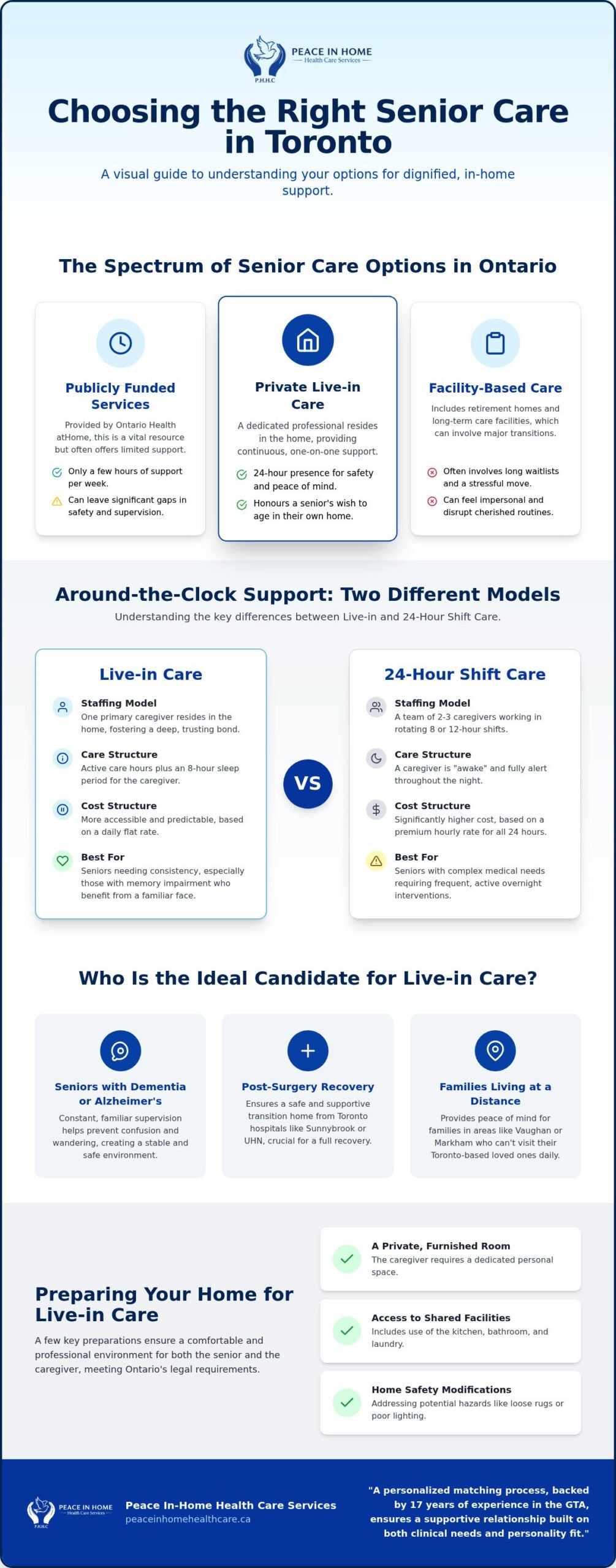
Live-in care is a specialized form of home support where a professional caregiver resides in your loved one’s home. It provides a 24-hour presence, ensuring someone is always there to help with a meal, a medication reminder, or a steady arm during a midnight walk to the bathroom. For many families, this is the most dignified way to honour a parent’s wish to stay in their own home. When you’re trying to understand What is a live-in caregiver?, it’s helpful to see them as a professional partner who bridges the gap between basic assistance and the intense supervision of a facility.
In Ontario, many families start their journey with Ontario Health atHome. While these publicly funded services are a vital resource, they often provide only a few hours of support per week. This leaves significant gaps in safety, especially for those with complex needs. Private live-in care for seniors Toronto fills these gaps by offering a consistent, dedicated presence that government programs aren’t designed to provide. Families across the GTA are choosing this model to avoid the long waitlists of long-term care and the impersonal feel of local retirement residences. It allows for a personalized daily routine that respects the senior’s history and preferences.
The Core Components of Live-in Support
The primary goal of this service is to ensure your loved one thrives in their own environment. Caregivers assist with Activities of Daily Living (ADLs) like bathing, dressing, and grooming, which helps maintain personal dignity. Beyond physical needs, safety monitoring is crucial. Falls are a major concern in older Toronto homes with steep stairs or narrow hallways. A live-in professional provides constant eyes on the situation, especially during the vulnerable nighttime hours. They also offer emotional companionship, which is vital in a city where social isolation among seniors can happen even in busy neighbourhoods.
Who is the Ideal Candidate for Live-in Care?
This level of support is often the best fit for seniors with advanced dementia or Alzheimer’s who need constant supervision to prevent wandering or confusion. It’s also an excellent solution for those recovering from major surgery at a Toronto hospital like Sunnybrook or UHN, where a safe transition home is essential for a full recovery. Additionally, choosing live-in care for seniors Toronto is a practical choice for families living in Vaughan or Markham who find they can’t visit their parents in the city every day. Knowing a reliable professional is on-site provides the peace of mind they need to focus on their own lives while staying deeply connected to their loved one’s well-being.
Live-in Care vs. 24-Hour Shift Care: Which is Right for You?
Deciding between live-in and 24-hour shift care depends on your loved one’s specific medical needs and your family’s budget. Many families find comfort in the National Institute on Ageing’s research on ‘Ageing in the Right Place’, which emphasizes finding a balance between safety and independence. In the GTA, the cost of 24-hour shift care can quickly escalate because you’re paying a premium hourly rate for every hour of the day. In contrast, live-in care for seniors Toronto is often more accessible as it operates on a daily rate. This provides a more predictable financial path for families while ensuring a personalized level of support.
The Live-in Care Model Explained
This model features one primary caregiver who resides in the home. The day is structured to include active care hours and a dedicated eight-hour sleep period. To meet Ontario’s legal requirements, the caregiver must have a private, furnished room and access to shared facilities. This stability allows a deep bond to form. For seniors with memory impairment, having one familiar face who understands their unique cues is far more soothing than a rotating door of staff. We ensure our primary aides receive scheduled respite to maintain their high standard of support, keeping the environment calm and dignified.
The 24-Hour Rotating Shift Model
This approach is necessary for seniors who require “awake” supervision throughout the night, perhaps due to frequent medical interventions or wandering. It typically involves a team of three caregivers working eight-hour shifts or two working 12-hour shifts. This ensures someone is always fully alert and attentive. If your loved one has complex medical needs, skilled nursing care at home Toronto can be integrated into these shifts to provide professional clinical oversight. It’s a reliable system for those who don’t have a predictable sleep schedule or require constant repositioning.
If you’re still unsure which model fits your parent’s routine, you can speak with our care coordinators to explore the best options for your home.
Comparing Live-in Care to Toronto Retirement Homes
Choosing between a retirement residence and staying at home is one of the most emotional decisions a family can make. In Ontario, the Long-Term Care (LTC) system is currently facing a significant crisis, with waitlists for preferred facilities often stretching into several years. This leaves many families in a stressful state of limbo. While high-end retirement residences in neighbourhoods like North York offer many amenities, they often lack the intimacy and consistency of a familiar environment. Choosing live-in care for seniors Toronto allows your loved one to bypass these waitlists and remain in the place where they feel most secure.
The financial aspect is also a major consideration. When you look at the monthly costs of premium retirement suites, which often start at several thousand dollars before adding extra care fees, private home care becomes a highly competitive and value-rich option. More importantly, staying home helps prevent “transfer trauma.” This is the clinical term for the severe stress, confusion, and physical decline that seniors often experience when forced to move out of their long-term residence. By opting for personalized senior care in Toronto, you’re protecting their emotional well-being and physical health during a vulnerable life transition.
Autonomy and Daily Freedom
Facilities operate on strict institutional schedules to manage large groups of residents. This means wake-up calls, meal times, and even social activities are dictated by the staff’s needs rather than the senior’s preferences. Home care flips this dynamic. Your parent keeps their preferred routine, whether they enjoy a late breakfast or a midnight snack. They can also keep their beloved pets, a comfort often restricted in Toronto facilities. Staying at home also preserves deep-rooted social ties with neighbours in communities like Etobicoke or Scarborough, which are vital for mental health.
Medical Safety and One-on-One Attention
The most significant difference lies in the ratio of care. In a facility, one staff member may be responsible for a dozen or more residents at once. With live-in care for seniors Toronto, the ratio is always one-to-one. This dedicated professional is solely focused on your loved one’s safety and comfort. They provide consistent medication reminders to ensure prescriptions are taken accurately and on time. Beyond the home, they act as a reliable companion for appointments at Toronto clinics, ensuring that medical advice is heard and followed without the stress of navigating transportation alone.
Transitioning to Live-in Support: Preparing Your Toronto Home
Welcoming a new person into your family’s private space is a significant milestone. Preparing for live-in care for seniors Toronto isn’t just about clearing a closet; it’s about creating an environment where both your loved one and their caregiver can thrive. This transition requires a thoughtful balance of physical safety upgrades and emotional preparation to ensure the arrangement feels supportive rather than intrusive. By taking these steps early, you help bridge the gap between a senior’s fear of losing independence and the reality of a safer, more comfortable life at home.
Creating a Welcoming Space for the Caregiver
A successful care relationship relies on the well-being of the caregiver. In Ontario, standards for live-in arrangements require that the aide has a private, furnished bedroom with a door that locks. Beyond the basic requirements, a comfortable room with adequate storage and reliable internet access helps the caregiver feel respected. When a professional feels at home, they’re more likely to provide the high-quality, attentive support your parent deserves. It’s also helpful to establish clear boundaries early on, such as which areas of the house are shared and which remain private for the senior’s quiet time.
Physical Safety Audits for the Home
Many Toronto homes, especially in historic neighbourhoods like Roncesvalles or Riverdale, feature narrow hallways and steep staircases that pose risks as mobility declines. A thorough safety audit is essential before care begins. We recommend removing trip hazards like area rugs and ensuring every room has bright, motion-activated lighting. Installing grab bars in the bathroom and considering smart home monitoring can provide extra layers of security for everyone. It’s also vital to organize the kitchen so that equipment is within easy reach for meal preparation for the elderly, allowing the caregiver to focus on nutrition rather than searching for supplies.
Managing the emotional side of this change is just as important. It’s natural for seniors to feel a loss of autonomy when help arrives. We suggest involving your loved one in the process of setting “house rules” to give them a sense of control. This might include preferences for meal times or how they’d like their laundry handled. Open communication helps dissolve resistance and builds the foundation for a dignified, harmonious partnership that benefits the whole family.
Choosing Peace In-Home Health Care for Live-in Support
With over 17 years of experience serving the Greater Toronto Area, we understand that inviting a caregiver into your home is an act of profound trust. Our mission is to transform that trust into the “Peace” our name promises. We don’t just provide a service; we offer a stable, professional partnership that allows you to step back from the role of primary caregiver and return to being a daughter, son, or spouse. By handling the logistics of live-in care for seniors Toronto, we ensure your loved one’s daily life is managed with the dignity and attentiveness they deserve.
Our comprehensive range of support is designed to cover every aspect of aging in place. Whether your family requires specialized dementia care or simply needs help with light housekeeping and meal preparation, we tailor our approach to fit your specific situation. We believe that professional care should feel personal, not clinical, which is why we focus on preserving the familiar lifestyle your loved one has always enjoyed. This human-first philosophy ensures that the care provided is as much about emotional well-being as it is about physical safety.
Our Rigorous Caregiver Matching Process
We know that the success of live-in support rests on the relationship between the senior and the aide. Our matching process goes beyond clinical qualifications to consider language, shared interests, and temperament. It’s about finding a companion who truly “clicks” with your parent. To maintain the highest standards, all our live-in care plans are supervised by registered nurses who provide expert clinical oversight. We also offer respite care Toronto families can rely on, ensuring that primary caregivers have the support they need to avoid burnout while their loved ones remain in safe hands.
Service Areas Across the GTA
Our dedicated team provides coverage across the entire region, ensuring high-quality support is accessible wherever you reside. We have a strong local presence in several key areas:
- Toronto, North York, and Scarborough
- Mississauga, Oakville, and Burlington
- Vaughan, Richmond Hill, and Markham
Getting started is designed to be a low-stress experience. We offer a free in-home consultation to help you realize your care goals and understand how live-in care for seniors Toronto can work for your family. This initial meeting is an opportunity for us to listen to your concerns, assess the home environment, and begin the journey toward a more secure and peaceful future together.
Embracing a Future of Comfort and Security at Home
Deciding on the right path for an aging parent is a journey of love and responsibility. You now understand that live-in care for seniors Toronto offers more than just supervision; it provides a way to honour the dignity and rhythm of home life. By choosing a dedicated caregiver over a facility, you ensure your loved one receives the one-on-one attention necessary for their safety and emotional well-being.
At Peace In-Home Health Care, we’ve spent over 17 years supporting GTA families through these delicate transitions. Our specialized dementia and Alzheimer’s care is delivered by a locally owned and operated team that truly understands our Toronto neighbourhoods. We’re here to help you navigate the process with confidence and compassion, providing the steady hand your family needs.
Your family deserves the security that comes with professional, reliable support. Let’s work together to create a supportive environment where your loved one can thrive in the home they cherish.
Frequently Asked Questions
How much does live-in care cost in Toronto compared to a nursing home?
Private live-in care for seniors Toronto often proves more cost-effective than private retirement residences, which frequently charge extra for every additional support service. While basic long-term care is government-subsidized, the waitlists are extensive. Private live-in care provides a predictable daily rate and a one-to-one care ratio that facilities can’t match. This model allows your loved one to stay in their familiar environment while receiving personalized attention that would cost significantly more in a high-end North York suite.
Does the live-in caregiver need their own bedroom and bathroom?
Every live-in caregiver requires a private, furnished bedroom with a door that locks to ensure they have a space for rest and privacy. While a private bathroom is ideal and highly appreciated, it isn’t a mandatory requirement under Ontario’s living standards. A shared bathroom is acceptable as long as it’s clean and easily accessible. Providing a comfortable, dignified space for the aide helps ensure long-term retention and a more harmonious relationship within your Toronto home.
Can a live-in caregiver help with dementia or Alzheimer’s patients?
Yes, specialized dementia and Alzheimer’s care is one of the most common reasons families seek live-in support. A dedicated caregiver provides the constant supervision needed to prevent wandering and manage the confusion that often occurs during evening hours. By maintaining a calm, familiar routine and using person-centred techniques, our caregivers help reduce the anxiety associated with memory loss. This 24-hour presence ensures your loved one is safe and supported in a setting they recognize.
What happens if our live-in caregiver gets sick or needs a vacation?
We manage all the logistics of caregiver absences so your family never experiences a gap in support. If a primary caregiver becomes ill or schedules a well-deserved vacation, we provide a qualified replacement who is briefed on your loved one’s specific care plan and routine. This continuity is a key benefit of working with a professional agency. You won’t have to worry about finding back-up help or managing payroll for a temporary substitute during these times.
Is live-in care covered by OHIP or Ontario Health atHome?
OHIP doesn’t directly cover the costs of private live-in care for seniors Toronto. Publicly funded support through Ontario Health atHome is available for those who qualify, but the hours provided are usually limited to a few visits per week. Most families use a combination of government support for basic needs and private care to ensure 24-hour safety. It’s important to check if your loved one has private long-term care insurance, which may help offset these costs.
What is the difference between a live-in caregiver and a nanny for seniors?
While both provide support at home, a live-in caregiver is trained to handle complex health needs, mobility assistance, and medication reminders. A nanny for seniors typically focuses on companionship and light housekeeping. Our professional caregivers often have experience with dementia care and skilled nursing tasks, providing a higher level of clinical oversight. This ensures that your loved one’s physical health is monitored alongside their daily social needs, offering a more comprehensive and reliable safety net.
How do we handle groceries and meal planning with a live-in caregiver?
Caregivers take an active role in meal preparation, focusing on nutritious dishes that meet your loved one’s dietary requirements. You can choose to have the caregiver manage the grocery list and shop at local Toronto markets, or they can accompany the senior on these errands to keep them engaged with the community. Families usually provide a budget or a household card for these expenses. This collaborative approach ensures that meals are both healthy and enjoyable.
Can we interview the caregiver before they move into our Toronto home?
We believe that a successful care arrangement starts with a strong personal connection. You and your loved one are encouraged to meet and interview potential caregivers to ensure their personality and temperament are a good fit for your household. This matching process is vital for long-term comfort and peace of mind. We want you to feel confident that the professional entering your home is not just an expert, but a trusted and welcome companion.