
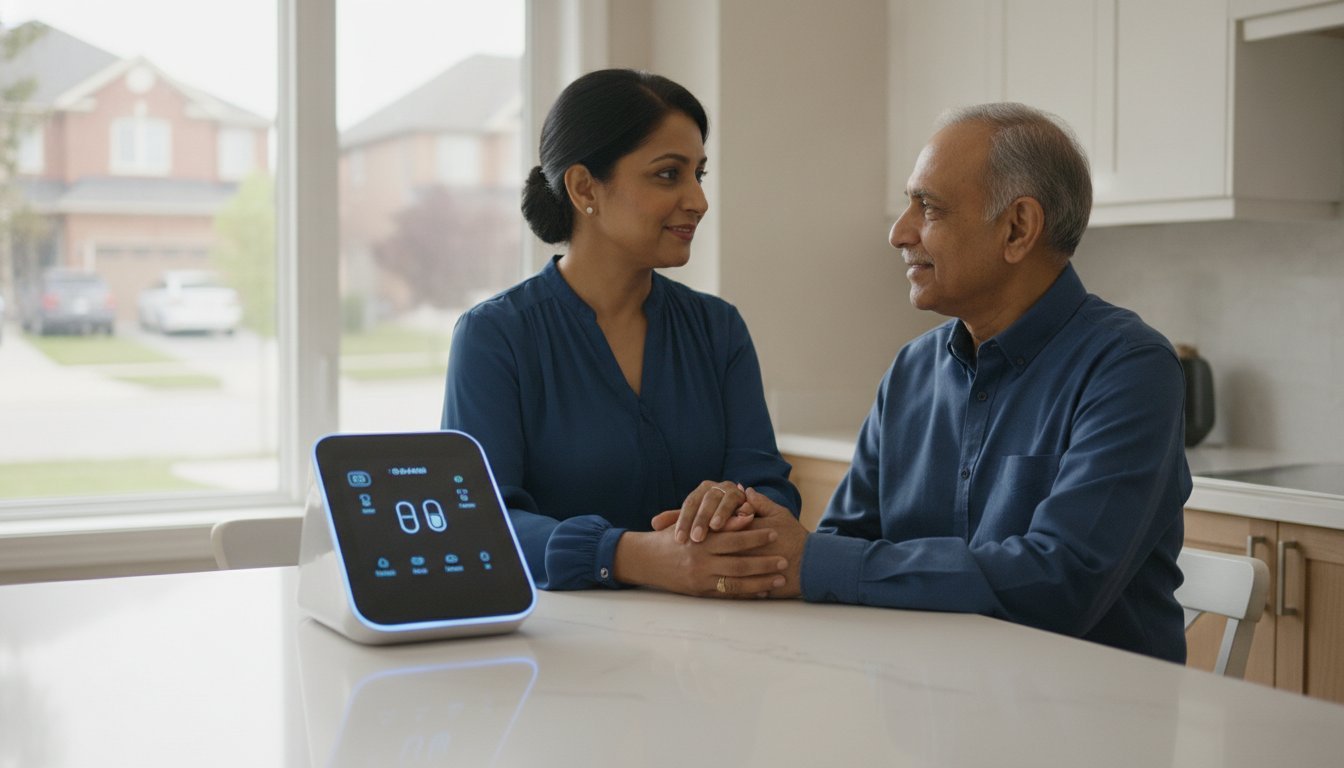
You glance at the kitchen counter and feel your heart sink as you realize your father’s morning heart medication is still sitting in the plastic tray at 3:00 PM. It is that familiar mix of panic and guilt, wondering if a simple mistake might lead to a hospital visit or an accidental overdose. Managing medication reminders for seniors at home is one of the most stressful parts of caregiving, especially when you cannot be there every hour of the day. You want them to stay safe, but you also want to honour their dignity without feeling like you are constantly hovering.
We know how heavy this responsibility feels and how much you want to preserve your loved one’s independence. This 2026 guide offers a clear path forward, sharing professional tools and practical strategies to ensure they never miss a dose. You will learn about the latest smart dispensers, simple manual systems, and how professional oversight can bridge the gap. Our goal is to help you build a reliable routine that keeps your senior safe while giving your family the peace of mind you deserve.
Key Takeaways
- Learn how to conduct a thorough medication audit and organize the home to keep prescriptions accessible for seniors but safe from visiting grandchildren.
- Evaluate the best 2026 technology, comparing traditional pillboxes with automated smart dispensers to find the right fit for your loved one’s comfort level.
- Discover tailored strategies for providing medication reminders for seniors at home who are living with cognitive challenges like dementia or Alzheimer’s.
- Understand how to leverage Ontario pharmacy programs to simplify complex regimens and reduce the daily stress of sorting multiple pills.
- Recognize the critical “red flag” signs that indicate when it is time to transition from family monitoring to professional nursing or companion support.
Understanding the Importance of Medication Reminders for Seniors at Home
Medication reminders are much more than a simple list taped to the refrigerator. They are a vital combination of verbal and visual cues designed to ensure a senior takes the correct dose at the exact time their doctor intended. When we implement medication reminders for seniors at home, we are creating a personalized safety net. This support allows your loved one to maintain their health without the constant fear of making a dangerous mistake.
The stakes of missing a dose or accidentally taking a double dose are incredibly high. For many seniors, a single error can lead to a sudden fall, a visit to the emergency room, or a rapid decline in cognitive clarity. It is a delicate balance. When prescriptions are managed correctly, they provide the stability needed to stay independent. When they aren’t, the consequences can be life-altering for the entire family.
Common Barriers to Medication Adherence
Seniors often face a phenomenon called “forgetting to remember.” Even those with sharp minds can lose track of whether they took their morning pill ten minutes ago or not at all. This confusion grows when polypharmacy enters the picture. Managing five or more daily prescriptions is a complex task that requires intense focus. Achieving consistent patient adherence becomes difficult when you add in physical challenges like hard-to-open caps or fading eyesight that makes reading labels nearly impossible.
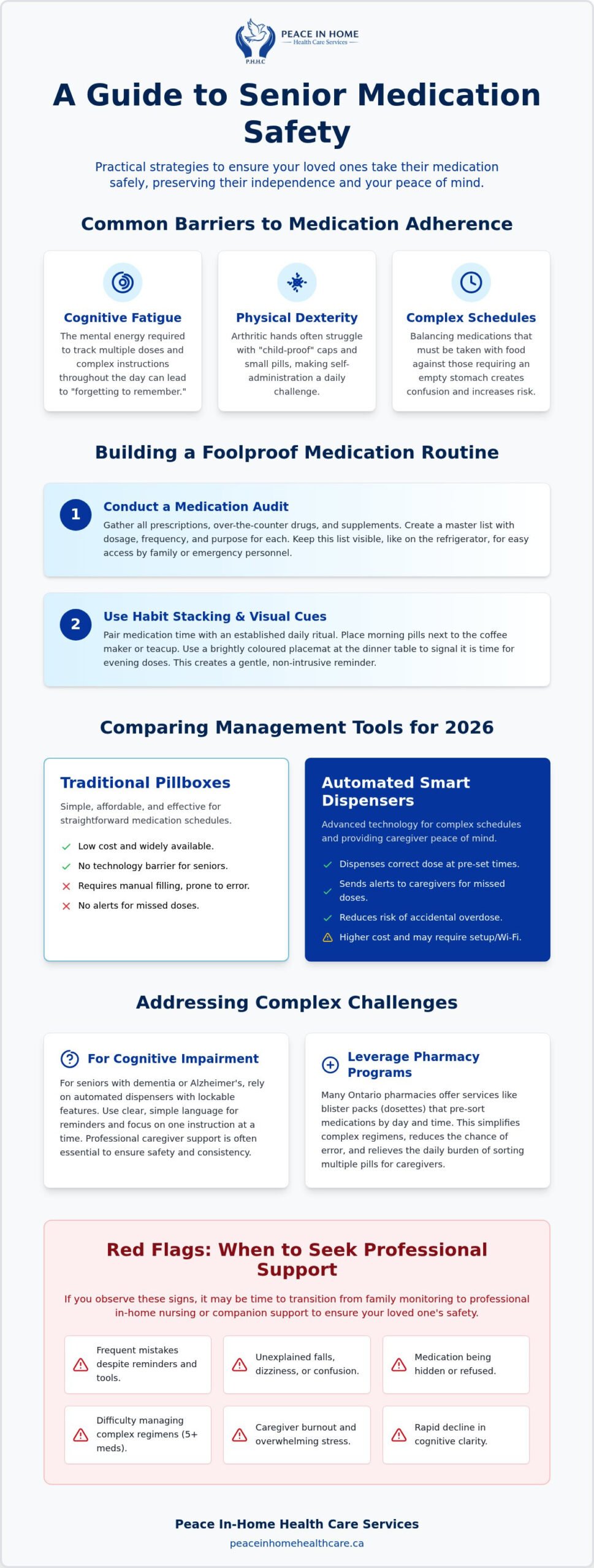
- Cognitive fatigue: The mental energy required to track multiple doses and specific instructions throughout the day.
- Physical dexterity: Struggling with “child-proof” packaging that was never designed for arthritic hands.
- Complex schedules: Balancing medications that must be taken with food against those that require a completely empty stomach.
The Caregiver’s Burden: Beyond the Pillbox
Many families in the GTA find themselves in the “sandwich generation,” balancing the needs of their children with the health of their aging parents. This often leads to a cycle of constant phone calls and check-ins that can feel like nagging. It strains the relationship and creates a sense of guilt for everyone involved. In Ontario, medication errors are a primary driver of avoidable hospital admissions, placing a heavy burden on our local healthcare resources.
Establishing a reliable system for medication reminders for seniors at home changes everything. It moves you out of the role of the “monitor” and back into the role of a loving family member. By using a structured approach, you restore your loved one’s dignity. They feel in control of their own daily routine, and you regain the peace of mind that comes from knowing they are safe even when you aren’t in the room.
Building a Foolproof Medication Routine: A Step-by-Step Guide
Creating a reliable system for medication reminders for seniors at home starts with structure rather than just memory. It is about building a fail-safe environment where the right choice is the easiest one to make. By following a methodical approach, you can transform a source of daily anxiety into a calm, manageable habit that respects your loved one’s independence.
Step 1: The Medication Audit and Master List
The first step is a comprehensive audit. You should gather every single bottle in the house; this includes prescription medications, over-the-counter vitamins, and herbal remedies. It is vital to document the dosage, frequency, and specific instructions like whether to take it with food. Helping your loved one understand the purpose of each pill, explaining that the blue one protects their heart while the small white one keeps their breathing clear, empowers them to manage their medications with more confidence. This master list should be kept in a visible spot, such as the fridge door, so it is easily accessible for doctors or emergency services.
Step 2: Habit Stacking and Environment Cues
Habit stacking is a powerful tool for consistency. This involves pairing a medication dose with an existing, unbreakable daily ritual. For example, morning pills can be placed right next to the kettle or the first cup of tea. You can also use visual cues like a brightly coloured placemat at the dinner table to signal a mealtime dose. These environmental prompts act as a gentle nudge that doesn’t feel like an intrusion. Some families find success with the “Upside Down” trick: once a senior takes their dose, they turn the bottle over. At the end of the day, all bottles are flipped back for the next morning, creating a clear visual reset.
Step 3: Documentation and Tracking
Even with the best habits, documentation is essential to prevent accidental double-dosing. When families manage medication reminders for seniors at home, a simple paper medication diary often works best for those who are tech-averse. An “initialling” system, where the senior or caregiver marks a chart immediately after a dose is swallowed, provides instant visual confirmation. This level of detail is particularly helpful if you eventually decide to involve skilled nursing care at home Toronto, as it gives professionals a clear history of adherence. If the process of organizing these routines feels like too much to handle alone, speaking with a care coordinator can help you find a supportive path forward.
Comparing Tools and Technology for Medication Management in 2026
Technology has significantly changed how we approach medication reminders for seniors at home. Choosing the right tool is not about finding the most expensive gadget on the market. It is about finding a solution that fits seamlessly into your loved one’s daily life without causing frustration or confusion. For some, a simple plastic tray is perfect. For others, a voice-activated assistant provides the gentle, personalized nudge they need to stay on track.
Low-Tech Reliability: Pill Organizers and Alarms
While digital tools are popular, many families still rely on the tactile nature of physical organizers. These have evolved beyond the flimsy trays of the past. You can now find monthly organizers that allow for a full 30 days of preparation, which is ideal for seniors with stable, long-term prescriptions. Colour-coded systems that clearly separate morning, noon, evening, and bedtime doses provide an immediate visual cue that reduces the risk of error. Digital alarm clocks with programmable text are also excellent for those who may have hearing difficulties. These devices can flash bright alerts alongside a loud chime, ensuring the reminder is both seen and heard.
- Daily vs. Weekly Organizers: Smaller daily kits are portable for outings, while weekly trays offer a broader view of the regimen.
- Programmable Alarms: Simple devices that allow you to record a short voice message can make a reminder feel more personal.
- Colour Coding: Using specific colours for different times of day helps seniors quickly identify which compartment to open.
High-Tech Innovation: Smart Dispensers and Apps
For families dealing with more complex needs, smart dispensers offer a higher level of security. These devices often feature locking mechanisms that only open the specific compartment for the current dose at the scheduled time. This is a crucial safety feature that helps prevent accidental overdoses, a common concern for those with memory impairment. Many of these dispensers can be linked to a smartphone app, providing a digital paper trail of every dose taken.
Mobile applications have become incredibly user-friendly in 2026. They don’t just alert the senior; they can also send a notification to a family member if a dose is missed. This “caregiver notification” feature provides a safety net that allows you to check in only when necessary, preserving the senior’s sense of independence. Additionally, smart home assistants like Alexa or Google Home can be programmed with verbal cues. Hearing a familiar voice say, “It is time for your heart medication,” can feel much more dignified than a piercing electronic beep. Wearable reminder devices are also gaining popularity for active seniors, providing vibrating alerts that are discreet and impossible to miss even when they are away from the kitchen counter.
The key is to match the technology to the individual’s comfort level. If a senior finds screens confusing, a reliable low-tech organizer paired with a simple alarm is often the safest path. Regardless of the tool chosen, the goal remains the same: ensuring every dose is taken safely and on time to support a healthy life at home.
Addressing Complex Challenges: Dementia and Pharmacy Integration
When a loved one is living with Alzheimer’s or other forms of dementia, the standard approach to medication reminders for seniors at home needs to shift. It is no longer just about a forgetful moment; it is about ensuring they don’t accidentally “graze” on medications throughout the day or ingest non-medicinal items. Safety protocols become the priority. Managing these complex needs requires a blend of environmental changes and professional support to keep the home environment safe and dignified.
Medication Reminders for Dementia Patients
Constant verbal questioning can sometimes trigger agitation or defensive behaviour in those with cognitive decline. Instead of a direct “Have you taken your pills yet?”, try using gentle, non-verbal cues. As memory loss progresses, locking medication cabinets becomes a necessity rather than an option to prevent accidental ingestion. You can also integrate these moments into a broader daily plan by using activities for dementia patients at home to keep their routines predictable and engaging. This helps medication time feel like a natural part of a pleasant day rather than a clinical interruption.
Leveraging Local Pharmacy Services in the GTA
One of the most effective ways to simplify care in Ontario is through your local pharmacist. Most major chains across Toronto and the GTA, such as Shoppers Drug Mart or Rexall, offer “Compliance Packaging.” Often called blister packs or Dispill, these systems organize every pill into a clear, plastic bubble labelled with the exact date and time it should be taken. It is a simple, visual way to see at a glance if a dose was missed or already swallowed.
You should also take advantage of the MedCheck programme. This is a one-on-one consultation with a pharmacist, covered by OHIP for Ontario seniors taking three or more chronic medications. It is an excellent opportunity to review the entire regimen and identify any potential interactions that could be causing side effects like dizziness or confusion. Coordinating home delivery is another reliable way to ensure prescriptions never run out, removing one more layer of stress for busy families. By integrating these professional pharmacy services, you create a more robust system for medication reminders for seniors at home.
When to Transition to Professional In-Home Medication Support
There often comes a point where even the most organized family systems reach their limit. You might realize that despite your best efforts with colour-coded trays and phone alerts, the risk of a mistake is still present. Deciding to bring in professional help isn’t a sign of failure; it is a proactive step to protect your loved one’s health and your own well-being. Transitioning to professional medication reminders for seniors at home ensures that safety remains the priority while you return to being a daughter, son, or spouse rather than a clinical monitor.
Red Flags: When DIY Systems Fail
Recognizing when a DIY approach is no longer safe is crucial for preventing a crisis. It is helpful to look for specific “red flags” that suggest the current routine is breaking down. If you notice any of the following, it may be time to consider a more structured level of support:
- Physical evidence: Finding “lost” pills on the kitchen floor, tucked into sofa cushions, or forgotten in coat pockets.
- Increasing confusion: The senior frequently calls you because they can’t remember if they took their midday dose, even with a tracker in place.
- Physical symptoms: Unexplained dizziness, sudden changes in blood pressure, or recurring hospitalizations that doctors attribute to “medication mismanagement.”
- The “Nagging” Dynamic: Your relationship is becoming defined by medication check-ins, leading to tension, arguments, and caregiver burnout.
Understanding the Levels of Support
In the Canadian healthcare landscape, it is important to distinguish between “reminders” and “administration.” This is a key safety distinction that many families overlook. A companion or personal care assistant provides medication reminders for seniors at home by gently prompting them to take their pre-sorted pills. However, if your loved one requires complex injections, wound care medications, or cannot physically manage their own blister packs, a skilled nurse is required for actual medication administration. Understanding this difference helps you choose the right level of care for their specific medical needs.
The Peace In-Home Advantage
At Peace In-Home Health Care Services, we have spent over 17 years helping families across the GTA find this balance. Our approach is built on dignity and unhurried support. Whether we are providing simple reminders or skilled nursing oversight, our caregivers ensure that the senior never feels rushed or pressured. We provide families with regular, transparent updates, so you always know exactly how your loved one is doing. Whether you need home care Markham or support in Vaughan, Mississauga, or Toronto, we work with you to create a sustainable plan. This professional partnership allows your loved one to age in place safely while giving your family the reliable peace of mind you have been searching for.
Taking the Next Step Toward Peace of Mind
Managing medication doesn’t have to be a source of constant friction or fear. By combining structured daily habits with the right technology and local pharmacy support, you can create a safer environment for your loved one. Whether you are implementing simple visual cues or exploring smart dispensers, the goal is always to protect their health while honouring their desire to stay at home.
When the complexity of a health regimen becomes overwhelming, remember that you don’t have to carry the burden alone. Professional medication reminders for seniors at home provide a stable, expert presence that reduces the risk of errors and hospital visits. With over 17 years of experience in the GTA, Peace In-Home Health Care Services offers personalized care plans and skilled nursing oversight tailored to your family’s unique needs.
Our compassionate caregivers and nurses are here to provide the attentive support your family deserves. You can regain your role as a loving family member, knowing that your parent’s health is in reliable hands.
Frequently Asked Questions
Is it safe to use a standard pillbox for a senior with dementia?
Generally, a standard pillbox is not recommended as cognitive decline progresses. Seniors with dementia may become confused by the multiple compartments, leading to double-dosing or taking the wrong day’s medication. A locking smart dispenser is a much safer alternative because it only provides access to the specific dose needed at that exact moment, preventing accidental over-medication and providing better security in the home.
What should I do if my parent refuses to take their medication?
It is best to stay calm and try to understand the root cause of the refusal. They might be struggling with a bad taste, difficulty swallowing, or a simple desire for independence. Instead of arguing, try offering a small choice, such as whether they would prefer to take their pill with water or apple juice. If the refusal continues, it is important to consult their doctor or a professional caregiver to find a gentle solution.
Are there apps that notify me if my parent misses a dose?
Yes, several user-friendly apps like Medisafe and MyTherapy offer “caregiver alerts” that send a notification to your smartphone if a dose is not marked as taken. These digital tools are excellent for managing medication reminders for seniors at home when you cannot be there in person. They provide a vital safety net that allows you to check in only when a reminder is actually missed, preserving your parent’s dignity.
Does OHIP cover medication reminder services at home?
OHIP does not directly cover private in-home medication reminder services. However, the Ontario government does fund the MedCheck programme, which allows seniors to have a free annual consultation with their pharmacist to review their prescriptions. For those who qualify, Home and Community Care Support Services (HCCSS) may provide some funded home care hours, though many families choose private care to ensure consistent, personalized oversight that meets their specific schedule.
How do I simplify a medication schedule with too many pills?
The most effective way to simplify a complex schedule is to speak with a pharmacist about “Compliance Packaging” or blister packs. These pre-sorted packs organize all medications by the date and time they should be taken, removing the need for manual sorting. You can also ask the doctor if any medications can be consolidated into once-daily doses or if any non-essential supplements can be safely removed from the daily routine.
Can a non-medical caregiver actually give the medicine to my parent?
In Ontario, a non-medical caregiver can provide a “reminder” or “assistance” by handing your parent a pre-sorted dose or opening a bottle for them. This is a common part of providing medication reminders for seniors at home. However, they cannot “administer” medications in a clinical sense, such as giving injections or managing complex wound care. Those tasks require the specialized expertise of a skilled nurse to ensure safety and legal compliance.
What are the best smart pill dispensers available in Canada in 2026?
In 2026, models like the Hero dispenser and Pria remain top choices for Canadian families due to their high reliability and seamless app integration. These devices are designed to stay locked until the programmed time, at which point they use light and sound to alert the senior. They are particularly helpful for those with complex regimens, as they can hold a 90-day supply of multiple different medications at once.
How can I find a reliable home care agency in Toronto for medication help?
You should look for an agency with a long-standing reputation in the GTA and one that offers a full range of support, from companionship to skilled nursing. It is important to choose a provider that conducts a personalized assessment and creates a tailored care plan. Agencies with over 15 years of experience in regions like Toronto, Markham, and Vaughan are often the most reliable partners for navigating these sensitive health transitions.