
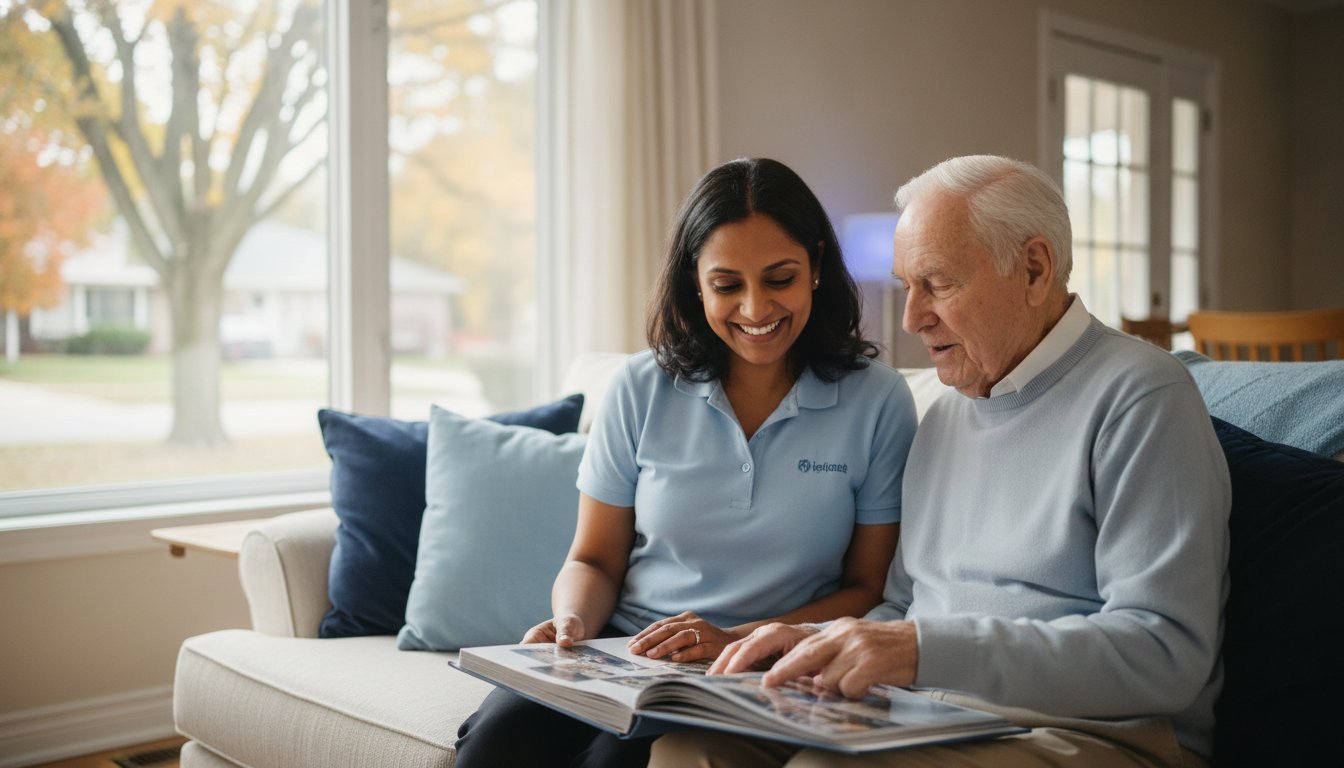
You might worry that bringing someone into your home means stepping back from your role as a loving family member, but it’s actually the moment you get to be a daughter or son again. Many families across the GTA feel a quiet sense of guilt or exhaustion as they try to manage their parent’s safety along with their own busy lives. It is completely natural to wonder, what does a home caregiver do to truly bridge that gap between independence and safety? Professional caregiving isn’t just about checking boxes; it’s a dedicated partnership that ensures your loved one can age with dignity in the comfort of their own home.
We understand the pressure of trying to prevent falls or manage complex medication schedules while balancing your own career and family. This guide will walk you through the essential duties and daily impact of home care services, from personal care and meal preparation to specialized dementia support. You will discover how a structured routine provides the security your parent needs and the peace of mind you deserve. By the end, you’ll have the clarity to realize exactly which level of support will best help your family thrive.
Key Takeaways
- Understand exactly what does a home caregiver do to bridge the gap between your loved one’s independence and their safety at home.
- Learn how professional assistance with daily activities and mobility can prevent falls and reduce the risk of medication errors.
- Discover the vital role of companionship care in combating senior isolation and improving your parent’s overall mental well-being.
- Gain insight into specialized support for Alzheimer’s and dementia, ensuring your loved one receives the patient memory cues they need to feel secure.
- Identify the critical differences between private hires and licensed GTA agencies to ensure your family has reliable, insured, and dignified care.
Understanding the Role: What is a Home Caregiver?
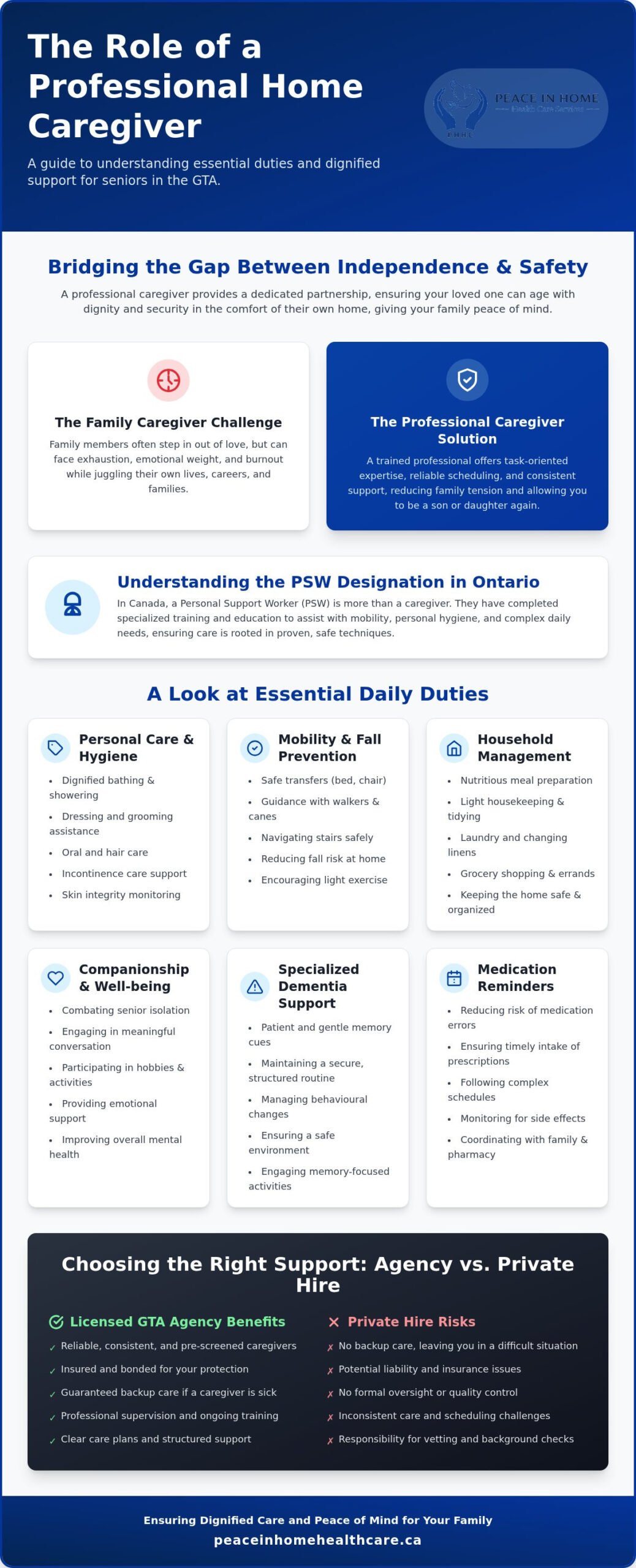
When families first ask, What is a Home Caregiver?, they are often looking for more than just a list of tasks. A home caregiver is a trained professional who provides either non-medical or skilled support to seniors within the familiar surroundings of their own residence. In Ontario, you will frequently hear these professionals referred to as Personal Support Workers, or PSWs. Their role is specifically designed to bridge the gap between a senior living in complete independence and the need for a long-term care facility. The core goal of home care is to maintain a senior’s safety, comfort, and dignity while aging in place.
The Professional vs. Family Caregiver
Loving a parent and caring for them are two different things. Family members often step into the role of an informal caregiver out of necessity, but the emotional weight can be overwhelming. A professional caregiver brings task-oriented expertise that allows you to return to your role as a daughter or son. By taking over physically demanding or difficult tasks like bathing or incontinence care, a professional helps reduce family tension and conflict. Agencies provide the consistent, reliable scheduling that families need to avoid burnout. It’s about having a steady hand you can count on every Tuesday morning or every overnight shift without fail. This reliability creates a sense of security that is hard to maintain when you’re juggling your own career and children.
Caregiver vs. Personal Support Worker (PSW)
In the Canadian healthcare system, the PSW designation is a mark of specialized training. While the term “caregiver” is a broad umbrella, a PSW has completed specific education to assist with mobility, personal hygiene, and complex daily needs. Understanding what does a home caregiver do often comes down to recognizing this level of skill. For seniors living with chronic conditions like heart disease or respiratory issues, this training is vital. It ensures that every transfer from a bed to a chair is done safely and that every interaction is rooted in proven care techniques rather than guesswork. This expertise is especially important in the GTA, where the healthcare landscape can feel complex and fast-paced. A PSW doesn’t just watch a senior; they actively monitor for changes in health and provide the dignified support that maintains a person’s sense of self.
Essential Daily Duties: Personal Care and Physical Support
Assisting with Activities of Daily Living (ADLs) is the cornerstone of professional home care. When families start to wonder, what does a home caregiver do on a practical level, the answer often begins with these fundamental physical needs. For many seniors, the ability to stay at home depends on having a reliable partner to help with tasks that have become difficult or unsafe to manage alone. Professional support ensures these Essential Daily Duties are handled with the respect and patience they deserve. This assistance isn’t just about getting through a checklist; it’s about providing the security that allows a senior to move through their day without fear or frustration.
Personal Hygiene and Grooming
Maintaining a routine for hygiene is vital for both physical health and emotional well-being. A caregiver provides dignified assistance with bathing, showering, and dressing, ensuring that these private moments remain respectful. Beyond the basics, they provide attentive hair care and oral hygiene while monitoring skin integrity to prevent issues like pressure ulcers. This level of care helps preserve a senior’s “social self.” When a person feels clean and well-groomed, they’re more likely to engage with the world and maintain their self-esteem. If you find your parent is starting to neglect these routines, discussing a tailored plan for your parent can help restore their comfort and confidence.
Mobility and Transfer Assistance
Safety is a primary concern for GTA families, especially during high-risk times like morning routines or late-night bathroom trips. Caregivers use safe, proven techniques to help seniors move from a bed to a chair or navigate the stairs in their home. They also ensure that mobility aids, such as walkers or canes, are used correctly under supervision to maximize stability. By providing a steady hand, a caregiver significantly reduces the risk of falls, which are a leading cause of injury for seniors. You can learn more about how professional techniques keep your loved one safe in our guide on mobility assistance for seniors Toronto. This physical support provides the peace of mind that your loved one is safe, even when you can’t be there to watch every step.
- Safe transfers from bed to chair or wheelchair.
- Assistance with specialized clothing and compression stockings.
- Supervision during exercise or physical therapy routines.
- Gentle reminders to change positions to maintain circulation.
Beyond the Basics: Companionship and Household Management
While physical support is the foundation of safety, the true value of home care often lies in the emotional and environmental support that follows. Loneliness is a silent but major health risk for seniors in the GTA, often leading to a faster decline in both physical and cognitive health. When families ask, what does a home caregiver do to improve quality of life, the answer is found in the social stimulation they provide. A caregiver manages the home environment so your loved one can focus on living with joy, rather than just surviving through the day. To understand the full scope of What is a caregiver?, we must look at how they blend practical household tasks with genuine human connection.
Nutritional Support and Meal Preparation
Maintaining a healthy diet becomes increasingly difficult when a senior lives alone. It isn’t just about the physical effort of cooking; it’s about the lack of motivation to prepare a nutritious meal for one. Caregivers step in to plan and prepare meals that respect specific dietary restrictions, whether that’s a low-sodium plan for heart health or a diabetic-friendly menu. They also manage grocery shopping, ensuring the pantry is always stocked with fresh, healthy options. The social benefit here is just as important as the nutrition. Having someone to talk to during meal prep or to share a story with over lunch turns a necessary task into a dignified social event. It ensures your parent isn’t just eating, but truly nourishing their body and spirit.
Light Housekeeping and Organization
A cluttered home is a dangerous home, especially for those with limited mobility. Light housekeeping is a vital part of what does a home caregiver do to maintain a sanitary and hazard-free living space. By managing laundry, changing bed linens, and tidying common areas, a caregiver removes the physical burden of chores from the senior. This support includes:
- Reducing floor clutter to prevent trips and falls.
- Ensuring frequently used items are within easy reach.
- Maintaining a clean kitchen and bathroom to prevent infection.
- Organizing mail and tidying living spaces to reduce mental stress.
A clean and organized environment contributes significantly to a senior’s mental well-being. It provides a sense of order and “peace of mind” that allows them to feel proud of their home. When the environment is managed by a professional, the senior can enjoy their space without the anxiety of seeing chores they can no longer complete themselves. This reliable support creates a soothing atmosphere where dignity and comfort are the top priorities.
Specialized Support: Dementia Care and Medication Reminders
For many families, the most daunting challenges of aging are those that affect the mind and health management. When exploring what does a home caregiver do for a parent with memory loss, the focus shifts toward cognitive safety and medical reliability. Specialized support goes beyond physical assistance; it involves a deep understanding of how to navigate the complexities of Alzheimer’s and other forms of dementia. A trained caregiver provides the essential “memory cues” and structured routines that allow seniors to feel grounded and secure in their own environment, even as their cognitive needs change.
Dementia and Alzheimer’s Support
Caring for someone with memory impairment requires a unique blend of patience and specialized technique. Caregivers are trained to manage “sundowning,” a period of increased confusion or agitation that often occurs in the late afternoon. By using gentle redirection and creating a safe, predictable routine, they can significantly reduce the anxiety that leads to difficult behaviours. This support isn’t just about supervision; it includes tailored engagement activities that match the senior’s specific cognitive stage to keep their mind active. You can find more detailed information on these specialized techniques in our guide to dementia care at home Toronto. This level of attentive care ensures your loved one is treated with the dignity they deserve while keeping them safe from wandering or household hazards.
Health Monitoring and Appointment Accompaniment
Managing a complex health profile is a heavy burden for family members to carry alone. Professional caregivers provide medication reminders to ensure prescriptions are taken on time and in the correct dosage, which is a critical step in preventing avoidable hospital visits. They also act as a vital link between the senior, the family, and medical professionals. By tracking daily health logs and monitoring for subtle changes in mood or physical health, they can catch potential issues before they become emergencies. This role often includes:
- Tracking vital signs and keeping detailed daily health records.
- Accompanying seniors to medical appointments in Toronto, Vaughan, or Mississauga.
- Acting as a “second set of ears” during doctor visits to ensure instructions are accurately recorded.
- Reporting any significant changes in behaviour or health directly to the family.
Having a professional accompany your parent to a specialist in downtown Toronto or a clinic in Oakville provides an extra layer of security. It ensures that the senior isn’t just getting to the appointment, but that the information shared by the doctor is understood and implemented. This proactive monitoring offers families the quiet confidence that their loved one’s health is being watched over with professional precision and human kindness.
Choosing the Right Support in Toronto and the GTA
Deciding how to support an aging parent is a significant milestone for any family. As you look closer at what does a home caregiver do, it becomes clear that the quality of the provider is just as important as the tasks they perform. Many families in the GTA initially consider hiring a private individual, but there are vital benefits to choosing a bonded and insured agency. An agency handles the complex details of vetting, background checks, and reliable backup scheduling. This professional structure provides a safety net that ensures your loved one is never without care, even if a primary caregiver is unwell or takes a vacation.
A truly effective care relationship is built on a personalized plan that evolves alongside the senior. Needs change over time; what begins as a few hours of companionship each week might eventually grow into more intensive personal care or mobility assistance. Professional support also includes respite care, which offers essential relief for family members who may be facing burnout. Taking a step back to recharge isn’t a sign of failure. It’s a responsible way to ensure you can continue to provide the love and emotional support your parent needs while experts handle the daily physical demands.
Why GTA Families Trust Peace In-Home Health Care Services
With over 17 years of experience, we have served as a trusted guide for families across Toronto, Scarborough, Oakville, and the surrounding regions. Our “Compassionate Expert” model ensures that every interaction blends high-level technical skill with genuine kindness. We don’t just provide a service; we advocate for the dignity of every senior we meet. If you are feeling uncertain about how to begin this process, we have developed a detailed resource on how to transition loved one to home care. This guide helps families move through the emotional and practical steps of welcoming a professional into the home with confidence and ease.
Starting the Journey Toward Peace of Mind
The first step toward realizing the benefits of professional support is an in-home assessment. During this initial consultation, we take the time to understand the senior’s health requirements, their daily habits, and their unique personality. This allows us to create a tailored care plan that feels like a natural extension of their current lifestyle. We believe that matching a caregiver to a senior’s personality is just as important as matching their medical needs. When the right connection is made, the question of what does a home caregiver do is answered through the friendship and security that develops between them.
You don’t have to manage these complex life transitions alone. We invite you to reach out for a supportive conversation about how we can help your parent age with dignity and safety in the home they love. Whether you need a few hours of help or more comprehensive support, we are here to provide the steady hand and expert care your family deserves.
Restoring Peace and Safety to Your Home
Understanding exactly what does a home caregiver do allows you to move from a place of worry to a place of confidence. It’s about realizing that professional support isn’t just a list of tasks; it’s a specialized partnership that preserves your parent’s independence. By combining physical assistance with social companionship and expert dementia support, you create an environment where your loved one can truly thrive. You deserve the peace of mind that comes from knowing they’re safe.
For over 17 years, we’ve helped families across Toronto and the GTA navigate these transitions with our bonded, insured, and professionally trained staff. Our team brings specialized dementia and Alzheimer’s expertise to every home, ensuring that dignity remains the top priority. You don’t have to carry the weight of caregiving alone.
We’re here to guide you through every step of this journey with kindness and steady expertise. Let’s work together to ensure your parent receives the attentive care they deserve in the comfort of the home they love.
Frequently Asked Questions
What is the difference between a caregiver and a Personal Support Worker (PSW)?
A caregiver is a broad term for anyone providing assistance, but a Personal Support Worker (PSW) is a specific Ontario healthcare designation. PSWs have completed formal education to assist with complex physical needs, mobility, and personal hygiene. While all our staff act as compassionate caregivers, their PSW training ensures a higher level of safety and technical skill for seniors living with chronic health conditions.
Can a home caregiver help with medical tasks like injections or wound care?
Standard home care focuses on non-medical support, but we also provide Skilled Nursing Care Services for more complex medical needs. Our Registered Nurses and Practical Nurses can manage tasks like injections, wound care, and catheter management. If your loved one only requires a PSW, they can provide medication reminders but cannot legally administer injections or perform sterile medical procedures.
Do home caregivers provide services in apartments and retirement residences in Toronto?
Yes, our caregivers provide support wherever your loved one calls home, including private apartments, condos, and retirement residences across the GTA. Many seniors in retirement homes use our services to supplement the facility’s standard care. This provides the one-on-one attention necessary for personalized routines that a busy residence staff might not be able to provide during a shift.
How many hours a day does a home caregiver typically work?
The hours are entirely dependent on your family’s unique needs, ranging from a few hours of companionship a week to 24-hour live-in care. When families ask what does a home caregiver do during a shift, it often includes morning routines, meal prep, and evening safety checks. We work with you to create a schedule that ensures your parent is never left without the support they require.
Will my loved one have the same caregiver every time?
We prioritize consistency because we know how important trust is for seniors, especially those living with dementia. Our goal is to match your loved one with a primary caregiver who visits regularly to build a meaningful, supportive relationship. If your primary caregiver is unwell or on vacation, we provide a professionally trained backup who is already familiar with your parent’s personalized care plan.
Is home care covered by OHIP or private insurance in Ontario?
OHIP provides some limited support through Ontario Health atHome, but many GTA families supplement this with private care to get the consistent hours they need. Most private insurance plans and employee health benefits cover home care services provided by a licensed, bonded agency. We recommend checking with your specific insurance provider to see how your policy can help manage the costs of professional support.
What happens if the caregiver and the senior do not get along?
If a senior and their caregiver don’t click, we will work quickly to find a better match for your family. The relationship is the heart of effective care, and we want your loved one to feel completely comfortable and respected at all times. We take personality and interests into account during our initial matching process to ensure the interaction is positive, dignified, and reliable.
Can a caregiver help with grocery shopping and errands outside the home?
Absolutely, our staff can assist with grocery shopping, picking up prescriptions, and accompanying seniors to medical appointments. This service is a key part of what does a home caregiver do to help seniors maintain their independence and stay connected to their community. Whether it is a trip to the local market or a doctor’s visit in Vaughan, we ensure they get there and back safely.