
You’re standing in your parent’s kitchen in the GTA, watching them struggle to open a medication bottle or steady themselves against the counter, and the weight of responsibility feels overwhelming. You know they need more support than you can provide between your own work and family life, but the maze of healthcare acronyms often makes the process feel even more stressful. It’s completely natural to feel a sense of guilt or a constant fear that a medical emergency might happen when you aren’t there to help.
We realize that you simply want your loved one to be safe, respected, and well-cared for at home. To help you find clarity, we’ve created this guide to explain the critical differences between skilled nursing vs non-medical home care. You’ll learn how to distinguish between the roles of Personal Support Workers (PSWs) and Registered Practical Nurses (RPNs), ensuring your aging parent receives the most appropriate level of support. We’ll provide a clear decision-making framework and explain how to coordinate care within the Ontario health system so you can finally trade your anxiety for peace of mind.
Key Takeaways
- Understand the fundamental difference between support for daily activities and clinical care provided by licensed medical professionals.
- Identify the specific clinical triggers that indicate when your parent requires the specialized expertise of a registered nurse.
- Gain a clear decision-making framework for choosing skilled nursing vs non-medical home care based on your loved one’s unique health needs and safety requirements.
- Learn how to navigate the Ontario health system with confidence by understanding the distinct roles of PSWs and RPNs in the GTA.
- Discover how integrated care services can adapt to your parent’s changing needs, helping them age in place with dignity and security.
Defining the Difference: Skilled Nursing vs. Non-Medical Home Care
When you start looking for support for a parent in the GTA, you’re often met with a confusing wall of jargon and healthcare acronyms. Understanding the fundamental distinction between medical and non-medical support isn’t just about learning new terms; it’s about ensuring your loved one’s safety. It’s the first step toward that elusive peace of mind, allowing you to feel confident that your parent is in the right hands. In Ontario, these levels of care are typically provided by Personal Support Workers (PSWs) or licensed nurses, such as Registered Practical Nurses (RPNs) and Registered Nurses (RNs).
The choice between skilled nursing vs non-medical home care usually comes down to the specific goals of the care. Is the primary need to help a senior stay independent and safe during their daily routine, or is there a specific medical condition that requires clinical monitoring? Distinguishing between these two paths helps you avoid the guilt of feeling underprepared while ensuring your parent receives the exact level of attention they deserve.
What is Non-Medical Home Care?
Non-medical home care focuses on the “human” side of daily life, assisting with what professionals call Activities of Daily Living (ADLs). A Personal Support Worker (PSW) acts as a supportive companion who helps your parent maintain their dignity and independence at home. They handle the tasks that have become physically or cognitively challenging. This includes personal care assistance like bathing and dressing, meal preparation, and light housekeeping to keep the home safe. This level of care is designed to preserve a parent’s routine and prevent social isolation. It doesn’t require a medical prescription; it’s about providing the attentive care that allows a senior to age in place comfortably without clinical intervention.
What is Skilled Nursing Care?
Skilled nursing care involves clinical interventions that can only be performed by licensed professionals. If your parent is recovering from a hospital stay or managing a complex chronic condition, a PSW’s support might not be enough. This is when the medical expertise of an RPN or RN becomes essential. For a deeper look at the clinical scope, this home health nursing overview explains how these professionals manage health outcomes in a residential setting. Skilled nursing includes complex wound care, administering injections, and catheter management. Typically, a doctor’s order or a specific medical diagnosis triggers the need for this level of service. While non-medical care focuses on lifestyle and routine, skilled nursing focuses on medical stability and recovery.
The Role of Non-Medical Caregivers in Daily Senior Life
Choosing between skilled nursing vs non-medical home care often feels like a heavy decision, but for many GTA families, the journey starts with non-medical support. This level of care is rooted in a human-first philosophy. It prioritizes the person behind the diagnosis. While medical interventions are necessary for health, the daily rhythm of life is what preserves a person’s sense of self and dignity. Non-medical caregivers focus on the “how” of living, ensuring that every day is filled with familiar routines rather than the sterile atmosphere of an institution.
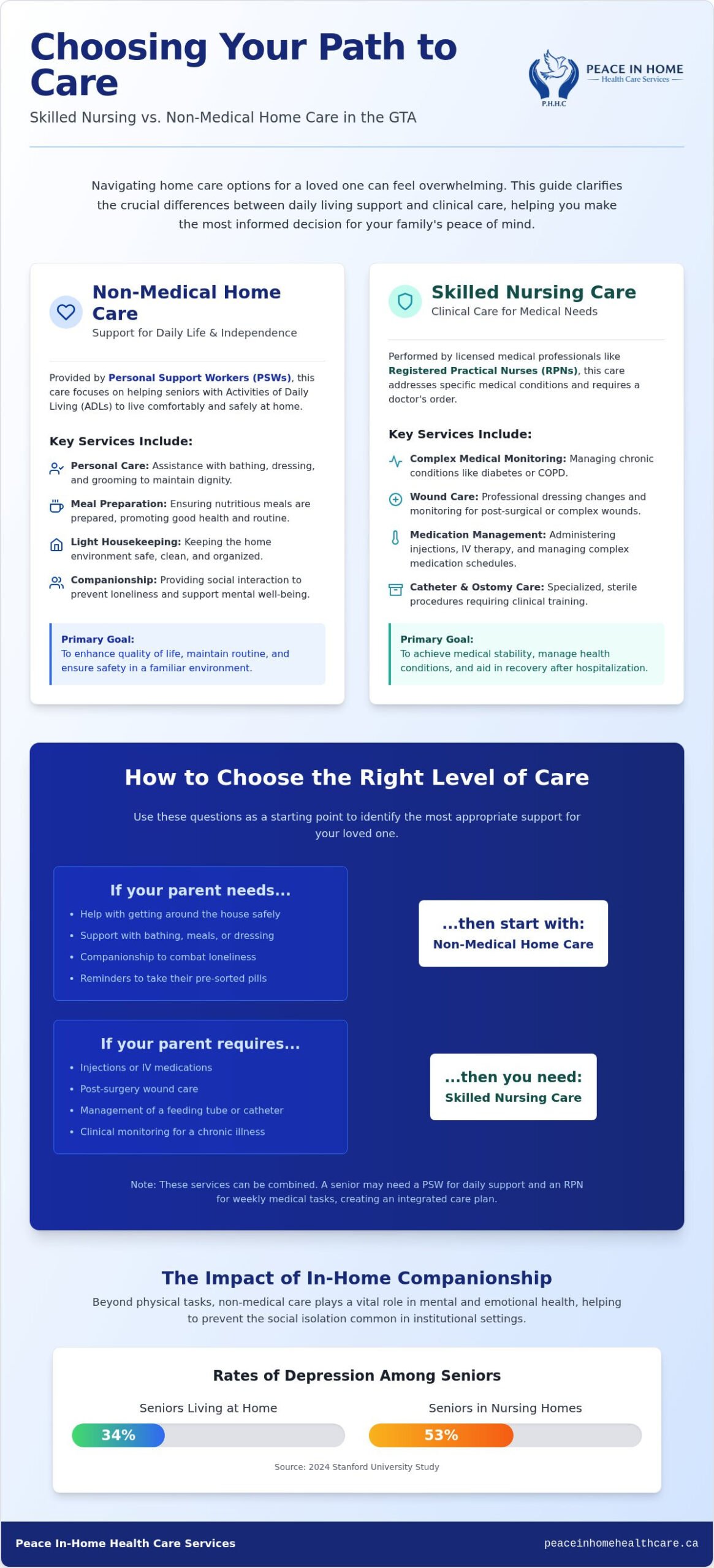
One of the most significant benefits of this approach is the prevention of social isolation. Loneliness is a quiet crisis for many seniors. A 2024 Stanford University study found that depression affects approximately 53% of nursing home residents, compared to 34% of seniors living at home. This data underscores the profound impact of remaining in a familiar environment with dedicated companionship. When considering long-term care options, the emotional stability provided by a consistent caregiver at home can be just as vital as any clinical treatment.
For those living with dementia or Alzheimer’s, routine is a form of medicine. Sudden changes can trigger confusion or anxiety, but a reliable caregiver maintains the structure that helps a senior feel safe. They also act as a second set of eyes for safety. By assisting with mobility and transfers, they prevent the falls that often lead to hospitalizations. This proactive support allows your parent to move through their home with confidence rather than fear. For family members who lie awake worrying about nighttime wandering or a midnight fall, exploring overnight respite care for dementia patients can be a vital step toward protecting both your loved one and your own well-being.
Personal Care and Physical Support
Daily life requires physical effort that can become daunting as we age. Non-medical caregivers step in with a gentle hand to assist with bathing, dressing, and dignified grooming. They also ensure that physical health is supported through proper meal preparation for elderly at home. Beyond nutrition, they maintain a safe living environment through light housekeeping. This ensures that tripping hazards are removed and the home remains a sanctuary of comfort rather than a source of stress.
Companionship and Emotional Well-being
The value of companionship care for seniors Toronto cannot be measured in tasks alone. It’s about shared stories, walks in the neighbourhood, and accompaniment to errands or medical appointments across the GTA. This relationship provides essential respite for family members. It allows you to step back from being a full-time caregiver and return to being a daughter or son. If you’re feeling the weight of these decisions, our team is here to help you discuss your family’s needs with compassion and expertise.
When Medical Expertise is Required: Skilled Nursing at Home
There comes a point in many care journeys where the comfort of a steady routine isn’t enough to manage a changing health profile. Deciding between skilled nursing vs non-medical home care often depends on whether your parent is navigating a stable lifestyle or a complex medical recovery. When health needs shift from supportive to clinical, having a licensed medical professional in the home becomes a matter of safety and long-term stability. It’s about ensuring that a medical emergency is prevented before it ever has a chance to happen.
A frequent point of confusion for families is the management of medications. It’s a subtle but vital distinction. A Personal Support Worker can offer medication reminders, which involve helping your parent remember to take their pre-poured pills at the right time. However, if your parent requires medication administration, such as insulin injections or dosages that must be adjusted based on daily vital signs, a licensed nurse is legally and professionally required. This level of oversight ensures that potential side effects are caught early and that medical protocols are followed with precision.
Skilled nursing is especially critical during the vulnerable window following a hospital discharge. Professional monitoring can identify small changes in a patient’s condition, such as a slight increase in blood pressure or signs of a brewing infection, before they escalate into a crisis. By providing this attentive oversight, nursing care helps reduce the risk of hospital readmission. This allows your parent to recover in the comfort of their own bedroom rather than a sterile clinical ward, surrounded by the things they love.
Clinical Tasks Only a Nurse Can Perform
Certain health needs simply cannot be delegated to non-medical staff. Licensed nurses provide specialized care that requires years of clinical training and a deep understanding of human physiology. This includes complex wound care and dressing changes after a major surgery, which are essential for preventing life-threatening infections. They also manage intravenous (IV) therapy and specialized injections that require precise technique. For high-needs patients, nurses provide life-sustaining ventilator and tracheostomy care, ensuring that even the most complex health challenges are managed safely within a home setting.
The Value of Skilled Nursing Care at Home Toronto
Our nursing team acts as a vital bridge between your family and the broader healthcare system. They coordinate directly with family physicians and specialists across the GTA, ensuring that everyone is on the same page regarding your parent’s treatment plan. This integrated approach is particularly beneficial for pain management and palliative support. It allows for a dignified, comfortable experience that respects your parent’s wishes. By having a professional advocate on-site, you can step back from the stress of medical coordination and focus on being a supportive presence for your loved one.
Choosing the Right Level of Care: A Decision Framework
Deciding on the right path for your parent isn’t always a straight line. Often, the best solution for skilled nursing vs non-medical home care isn’t choosing one over the other, but finding the right balance of both. This decision framework is designed to help you move past the confusion and toward a plan that ensures your loved one’s safety while respecting their independence. We want to help you replace the weight of uncertainty with a clear, supportive path forward.
One of the most frequent questions we hear from families in the GTA is: “Can’t my PSW just give my mom her morning pills?” It’s an understandable question, but the answer is rooted in safety and provincial regulations. While a Personal Support Worker is a vital partner for medication reminders, the actual administration of medication is a clinical task. This boundary exists to protect your parent from dosage errors or complex drug interactions that only a trained nurse can manage. By understanding these roles, you can build a care team that provides the right support at the right time without compromising safety.
Many families find that a hybrid model offers the most comprehensive peace of mind. For example, a senior might have a PSW for daily companionship and help with bathing, while an RPN visits weekly to manage wound care or monitor a chronic condition. This approach ensures that your parent’s emotional and physical needs are met simultaneously. It allows you to focus on your relationship with your parent rather than acting as their medical coordinator.
When to Hire a Caregiver for Your Aging Parent
Recognizing when it’s time for extra help can be difficult, especially when a parent is determined to stay independent. Look for subtle changes in their daily habits that might signal a need for support. Are they skipping meals or losing weight? Have you noticed a decline in their personal hygiene or a house that isn’t as tidy as it once was? Mobility struggles and frequent “near misses” with falls are also clear indicators that a supportive presence is needed. For those caring for a parent with cognitive decline, utilizing respite care for dementia caregivers can provide the necessary break you need to assess the situation clearly without the fog of burnout. If nighttime hours are a particular source of anxiety, overnight respite care for dementia patients offers a specialized solution that keeps your loved one safe while allowing you to rest and recharge.
Navigating the Ontario Healthcare Landscape
In the GTA, navigating the public health system can feel like a full-time job. While Home and Community Care Support Services (formerly known as the LHIN) provide essential funding, many families find that the allocated hours aren’t enough to ensure 24/7 safety. This is why many Toronto families choose to supplement government-funded hours with private personal care or nursing. This hybrid approach allows you to fill the gaps in care, ensuring your parent is never left vulnerable. Budgeting for long-term support involves looking at both immediate clinical needs and the ongoing companionship that prevents isolation, creating a sustainable plan for the years ahead.
Peace In-Home Health Care: Integrated Support for GTA Families
Deciding between skilled nursing vs non-medical home care doesn’t have to be a binary choice that leaves you feeling restricted. For over 17 years, Peace In-Home Health Care has served as a reliable bridge between these two worlds, recognizing that a senior’s needs rarely fit into a single category. We provide a seamless transition between supportive companionship and clinical expertise, ensuring that as your parent’s health evolves, their care team evolves with them. This integrated approach removes the stress of managing multiple agencies and allows for a consistent, dignified experience.
Our deep roots in the community allow us to offer a level of personalized attention that large national chains often struggle to match. Whether you are seeking home care Etobicoke or specialized support in the surrounding regions, our focus remains on the “human-first” element of care. We understand the unique textures of life in the GTA and the specific challenges families face when navigating the local healthcare landscape. Our goal is to provide more than just a service; we aim to be a steady partner that stands alongside your family during complex life transitions.
Our Compassionate Assessment Process
We realize that every family arrives at our door with a different story and a unique set of anxieties. Our assessment process is designed to be a conversation rather than a clinical interrogation. We look beyond the immediate medical requirements to understand who your parent is as an individual. This includes:
- Evaluating the balance between clinical nursing needs and daily companionship desires.
- Matching caregivers based on personality, language, and cultural background to ensure a genuine connection.
- Creating a flexible care plan that can be adjusted immediately if health conditions change.
- Identifying safety gaps in the home environment to prevent future emergencies.
Restoring Peace to Your Family
The ultimate benefit of our integrated model is the restoration of peace within your household. There is a profound emotional relief that comes from knowing a professional is “on watch,” allowing you to sleep through the night without fearing a midnight phone call. We proudly support families in Vaughan, Markham, Mississauga, and across the entire GTA, bringing reliable and attentive care directly to your doorstep. You don’t have to navigate this journey alone or feel guilty about your own limitations. By trusting a team that understands the nuances of skilled nursing vs non-medical home care, you can return to your role as a loving family member while we handle the complexities of care.
If you are ready to create a safer, more supportive environment for your loved one, the first step is a simple conversation. Our experts are here to listen, guide, and help you find the clarity you deserve. Book a consultation with our care experts today and take the first step toward lasting peace of mind.
Finding a Path of Safety and Dignity for Your Parent
Choosing the right support for your parent is one of the most significant decisions you’ll make. You now understand that the choice between skilled nursing vs non-medical home care isn’t about choosing a label, but about matching the right level of expertise to your loved one’s unique daily needs. Whether they require the clinical oversight of a registered nurse for medical stability or the attentive companionship of a Personal Support Worker to maintain their routine, the focus remains on preserving their independence at home.
With 17+ years of specialized experience across the GTA, our integrated medical and non-medical care teams have become a reliable presence for families in Toronto, Vaughan, and Mississauga. We realize that navigating healthcare transitions can feel overwhelming. Our role is to act as your trusted guide, ensuring every safety concern is addressed with professional reassurance and deep empathy.
You deserve the quiet confidence that comes from knowing your parent is safe, respected, and well-cared for. We’re here to help you turn a time of uncertainty into a season of comfort and security for your entire family.
Frequently Asked Questions
What is the primary difference between a PSW and a Registered Nurse in Ontario?
The main difference lies in their clinical training and the scope of care they can legally provide. Personal Support Workers (PSWs) focus on personal care and activities of daily living, such as bathing, dressing, and meal preparation. Registered Nurses (RNs) and Registered Practical Nurses (RPNs) are licensed medical professionals who perform clinical tasks like wound care, catheter management, and administering injections.
Can a non-medical caregiver administer medication to my parent?
No, a non-medical caregiver can only provide medication reminders. This means they can prompt your parent to take their pre-poured pills at the correct time. If your parent requires medication administration, such as insulin shots or dosage adjustments based on health readings, a licensed nurse must perform these tasks to ensure safety and compliance with Ontario regulations.
Does insurance or OHIP cover skilled nursing care at home?
OHIP provides some funding for home care through Home and Community Care Support Services, though the number of hours is often limited based on an assessment. When comparing skilled nursing vs non-medical home care for insurance purposes, most private policies cover clinical nursing services but may not cover personal support or companionship. It’s best to check your specific policy for details on “home health” coverage.
How do I know if my parent needs 24-hour nursing or just companionship?
The decision depends on your parent’s medical stability and safety needs. If they have a complex condition requiring constant clinical monitoring or life-sustaining equipment, 24-hour nursing is likely necessary. If they are medically stable but struggle with loneliness, memory loss, or physical tasks like cooking and bathing, companionship and personal care are usually the more appropriate and comfortable choice.
Can skilled nursing and non-medical care be provided by the same agency?
Yes, Peace In-Home Health Care provides both levels of support under one roof. This integrated approach is often the best choice for families because it allows for better communication between caregivers and nurses. Having one agency manage both clinical and personal needs ensures that your parent’s care is consistent and holistic rather than fragmented between different providers.
What happens if my parent’s needs change from non-medical to medical?
We update the care plan immediately to reflect their new health status. Because we employ both PSWs and licensed nurses, we can pivot quickly to include clinical oversight without the stress of you having to find a new agency. This flexibility is vital for seniors recovering from surgery or those with progressive conditions like dementia where needs can shift unexpectedly.
Is skilled nursing at home more expensive than a nursing home in Toronto?
Home care is often more cost-effective because it’s completely flexible. You only pay for the specific hours of support your parent needs, whereas a nursing home requires a fixed monthly cost for room and board. For many GTA families, staying at home with targeted nursing visits is a more affordable way to provide high-quality care while allowing their loved one to stay in a familiar environment.
How do I start the process of hiring a caregiver in the GTA?
The process begins with a professional care assessment to determine the right balance of skilled nursing vs non-medical home care. We visit your parent’s home in Toronto, Vaughan, or Mississauga to evaluate their health goals and safety requirements. This allows us to create a personalized plan and match your parent with a caregiver who fits their personality and clinical needs.