

What if the decision to bring professional help into your home wasn’t a sign that you’re giving up, but rather a way to reclaim your role as a daughter, son, or spouse? Many families feel an immense weight of responsibility, often believing that doing everything themselves is the only way to prove their devotion. You might be struggling with the fear of your parent’s resistance or feeling a heavy sense of guilt for even considering outside help. It’s completely normal to worry about how a new person in the home will affect your loved one’s independence and comfort.
In this guide, you’ll learn exactly how to transition a loved one to home care while honouring their dignity and your own well-being. We will show you how to navigate the emotional and practical steps of introducing support without causing conflict or distress. We’ll walk through a gentle, step-by-step process to help you improve safety at home, restore your family’s balance, and realize that professional care is simply a new way to protect the people you love most.
Key Takeaways
- Learn how to reframe the conversation around support to help your parent realize that home care is a tool for preserving their independence, not a sign of failure.
- Discover practical ways to conduct a dignified assessment of daily needs and home safety to ensure a truly personalized and comfortable experience.
- Follow a gentle roadmap on how to transition a loved one to home care by using trial periods and supportive language that builds trust between the family and the caregiver.
- Gain professional strategies to overcome common hurdles, such as managing the anxiety of having a new face in the home while maintaining your family’s emotional balance.
- Understand the essential differences between public and private care options available to families throughout Toronto and the GTA to make an informed choice for your family.
Preparing for the Shift: Emotional Readiness and Communication
The decision to bring support into a private home is rarely just about logistics; it’s an emotional milestone that carries significant weight for everyone involved. For the senior, it can feel like a loss of autonomy or a sign that their world is shrinking. For you, the family caregiver, it often brings a complex mix of relief and deep-seated guilt. Understanding how to transition a loved one to home care starts with acknowledging these feelings rather than pushing them aside. When you approach this shift with empathy, you create a foundation of trust that makes the practical steps much smoother.
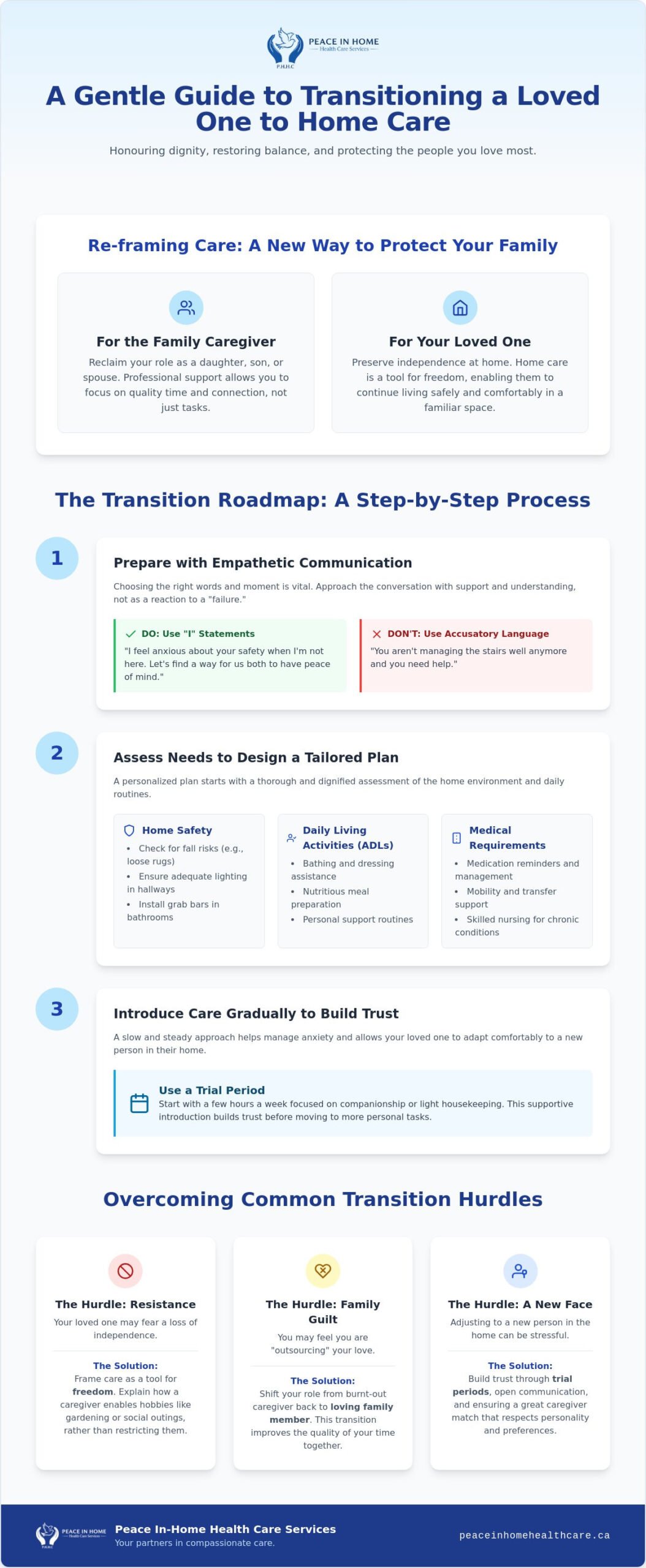
Choosing the right moment for this conversation is vital. Avoid bringing it up during a period of high stress or immediately after a health scare, as this can make the suggestion feel like a reaction to a “failure.” Instead, find a calm, quiet time when everyone feels relaxed. Using “I” statements is a powerful way to keep the dialogue supportive. Instead of saying, “You aren’t managing the stairs well,” try saying, “I feel anxious about your safety when I’m not here, and I want to find a way for us both to have more peace of mind.”
Navigating the ‘Independence’ Conversation
The most effective way to reduce resistance is to frame care as a tool for freedom. If your loved one treasures their garden but struggles with the physical demands, explain how a helper can handle the heavy lifting while they focus on the planting. If they miss social outings, position the caregiver as a companion who can get them to their favourite local coffee shop safely. It is helpful to understand What is Home Care? in its broadest sense; it is a service designed to bridge the gap between what a person can do and what they wish to do. Ultimately, personal care assistance for seniors is about protecting their dignity by ensuring they stay in the driver’s seat of their own lives.
Managing Caregiver Guilt and Family Dynamics
Many family members feel they are “outsourcing” their love when they hire help. However, the reality is that “doing it all” often leads to burnout, which can lower the quality of care you provide. When you bring in a professional, you aren’t stepping away; you are stepping back into your rightful role as a daughter, son, or spouse. This transition allows you to spend your time together enjoying each other’s company rather than managing medication schedules or laundry. To keep family dynamics healthy, ensure all siblings are part of the initial planning. This prevents resentment and ensures that the plan for how to transition a loved one to home care is a unified effort that supports the entire family unit.
Assessing Care Needs: Designing a Tailored Care Plan
Before you can fully understand how to transition a loved one to home care, you must first look closely at the environment where that care will happen. A home safety assessment is more than just a checklist; it’s a way to ensure your parent can move through their space with confidence. Look for common fall risks like loose area rugs, poor lighting in hallways, or the lack of sturdy grab bars in the bathroom. These small adjustments, combined with professional support, create a foundation of security that allows your loved one to age in place safely.
Next, evaluate daily routines with a focus on Activities of Daily Living (ADLs). Can they safely manage bathing and dressing without assistance? Are they eating nutritious, home-cooked meals, or have they started relying on processed snacks? Assessing these needs helps determine the level of personal support required. For some, a few hours of help with morning routines or meal preparation is enough. For others with more complex needs or cognitive decline, live-in care for seniors might be the most reliable way to maintain safety and dignity around the clock.
Identifying Physical and Medical Requirements
Medication management and mobility are critical factors in any care plan. If your loved one has multiple prescriptions, consistent reminders are essential to avoid dangerous errors. You should also consider if they require skilled nursing care for wound management or chronic conditions like diabetes. Consulting with their family doctor is a necessary step to align your home care goals with medical advice. While resources like the Eldercare Locator can help you understand the types of services available, your doctor provides the clinical roadmap that ensures all health needs are met professionally.
Holistic Needs: Companionship and Household Support
Care isn’t just about physical safety; it’s about the overall quality of life. Loneliness can take a significant toll on a senior’s mental health, often leading to physical decline. A compassionate caregiver provides more than just mobility assistance; they offer a listening ear and a shared laugh. Identify the ‘invisible’ burdens that cause stress, such as laundry or light housekeeping. By incorporating their hobbies, like a love for puzzles or birdwatching, into the care plan, you ensure the transition feels like a positive addition to their life. If you’re unsure where to start with your assessment, you can speak with a care coordinator to help clarify your family’s unique needs.
The Transition Roadmap: A Step-by-Step Implementation
Moving from the planning stage to actual implementation requires a gentle touch and a methodical pace. If you’ve been wondering how to transition a loved one to home care without causing a rift, the secret lies in a gradual introduction. Rather than jumping into a full-time schedule, start with a “trial run” using respite care. This low-pressure approach allows your parent to get used to a new presence in their home without feeling like they’ve made a permanent, irreversible commitment. It gives everyone a chance to see how the personalities mesh before setting a long-term routine in stone.
During these initial visits, focus on non-invasive tasks. It’s often easier for a senior to accept help with meal preparation or light housekeeping than with personal grooming or medication. By starting with these “extra hands” for chores, the caregiver becomes a helpful addition to the household rather than an intruder into their private space. The National Institute on Aging provides helpful guidance on Getting Started With Caregiving, highlighting that taking small, manageable steps is the best way to ensure a sustainable and positive experience for the whole family.
The ‘Helper’ Introduction Strategy
The words you use can significantly impact your loved one’s receptivity. Many seniors react negatively to the term “nurse” or “caregiver” because it reinforces a sense of illness or dependency. Instead, try introducing the professional as a “household assistant,” “companion,” or “helper.” This subtle shift in language positions the support as a luxury or a convenience, similar to a cleaning service or a personal driver. We recommend that family members stay for the first few visits. Your presence acts as a bridge of trust; when your parent sees you interacting warmly with the assistant, they’ll feel much more comfortable doing the same. Use this first week to set clear boundaries and establish exactly how your loved one prefers their tea made or their mail organized. If you want a clearer picture of the daily duties involved, learning what does a home caregiver do can help you set realistic expectations and communicate the role more confidently to your loved one.
Establishing Communication and Feedback Loops
A successful transition depends on open lines of communication between you, the caregiver, and the agency. Reliable providers often use a daily log or a digital app to record what happened during the visit, from what was eaten for lunch to any changes in mood. These updates provide you with peace of mind and help you spot trends before they become problems. Schedule a brief weekly check-in with the agency during the first month to adjust the care plan as needed. Most importantly, give your loved one a private space to share their honest feelings about the new arrangement. Knowing their voice is heard will help them feel more in control as they learn how to transition a loved one to home care alongside you.
Overcoming Common Transition Hurdles
Transitions are rarely perfect from day one. Even when you follow the best advice on how to transition loved one to home care, you might encounter resistance or unexpected emotions. One of the most common hurdles is the “I don’t need help” response. This often stems from a fear of losing control rather than a lack of need. Instead of arguing about their physical abilities, try focusing on your own need for peace of mind. Tell them that having a professional there allows you to sleep better at night or focus on your daily tasks, knowing they are safe and supported.
Another hurdle is the anxiety of having a “stranger” in the house. This is natural; it takes time for a professional to become a familiar face. If your loved one starts to bond more with their Personal Support Worker (PSW) than with you, you might even feel a twinge of caregiver jealousy. Remind yourself that this bond is a success. It means they feel safe and comfortable; which is exactly what you wanted for them. If the personality match feels wrong, don’t feel guilty about requesting a change. A smooth transition depends on everyone involved feeling completely at ease.
Handling Resistance with Empathy
When faced with “I can do it myself,” avoid the urge to list all the things they can no longer manage. Instead, use scripts that validate their strength while introducing support. You might say, “I know you’re capable of managing the house, but having a helper for the heavy cleaning means we can spend our Saturday afternoons at the park instead of doing chores.” If they remain stubborn, use the “doctor’s recommendation” as a neutral motivator. Many seniors are more likely to accept care if they believe it is a medical necessity prescribed by a professional they trust. This approach is about honouring their history while ensuring their current safety.
Refining the Caregiver Match
Sometimes, the transition feels rocky because the “vibe” is simply off. Personality mismatches happen; and it is okay to acknowledge them without causing a scene. In a diverse region like the GTA, cultural and linguistic compatibility are also essential for comfort. Whether your family is in Toronto, Vaughan, or Mississauga, you deserve a caregiver who understands your loved one’s background and communication style. A professional agency like Peace In-Home Health Care prioritizes personality matching to ensure the relationship feels natural rather than forced. Learning how to transition loved one to home care involves patience and the willingness to adjust the plan. If you are finding the process difficult, connect with our care coordinators to discuss how we can find a caregiver who truly feels like a part of your family.
Finding the Right Partner: Home Care in Toronto and the GTA
Choosing the right support team is the final, most critical step in learning how to transition a loved one to home care. In Ontario, families often start with publicly funded services through Ontario Health atHome. While these programmes provide essential baseline support, they are often limited by strict eligibility requirements and fixed schedules. For many families, personalized senior care Toronto providers offer the flexibility and consistency that public systems cannot always guarantee. Private care allows you to choose your own schedule and ensures the same familiar face arrives at the door every day, which is vital for building the trust we discussed earlier.
Local context matters, especially during a delicate transition like a hospital discharge. If your parent is being released from North York General Hospital or Oakville Trafalgar Memorial Hospital, the first 48 hours at home are a high-risk period. Having a professional caregiver ready to meet them at the door ensures that medication is organized and mobility risks are managed immediately. Whether you are in the heart of Toronto, the quiet streets of Vaughan, or the growing communities of Markham and Mississauga, a local agency understands the specific resources and logistics of your neighbourhood, providing a more reliable safety net for your family.
The Peace In-Home Health Care Advantage
With over 17 years of experience serving families across the GTA and Scarborough, Peace In-Home Health Care has refined the process of bringing support into the home. We understand that we aren’t just providing a service; we are entering a sacred family space. Our approach is rooted in a “human-first” philosophy, where the dignity of the senior is just as important as their physical safety. We take the lead on the entire management process, from the initial home assessment to the careful matching of a caregiver whose personality and skills align with your loved one’s unique life story.
Next Steps: Starting Your Journey
The path to a more balanced family life begins with a single, low-pressure conversation. We encourage you to book a free in-home assessment to explore how a tailored plan can meet your family’s needs. During this visit, we can help you identify subtle safety improvements and discuss a gradual schedule that respects your loved one’s boundaries. Preparing for the first visit doesn’t require a total home renovation; it simply requires a willingness to try a new way of caring. Remember, the hardest part of finding how to transition a loved one to home care is simply taking that first step toward peace of mind.
Reclaiming Quality Time and Peace of Mind
Transitioning to home care is a journey of love; it is about ensuring your family member remains safe while you return to your rightful role as a supportive child or spouse. By starting with a gradual “helper” approach and focusing on non-invasive tasks, you can reduce resistance and build lasting trust. Understanding how to transition loved one to home care with patience and empathy makes all the difference in preserving their dignity and independence.
At Peace In-Home Health Care, we have spent over 17 years supporting families across the GTA through these complex life changes. Whether you require specialized dementia and Alzheimer’s care or RN-supervised care plans, our team is here to act as your trusted guide. We handle the logistical details so you can focus on the moments that matter most. Our “human-first” approach ensures that every care plan is as unique as the person receiving it.
Book a Compassionate In-Home Assessment Today to take the first step toward a safer, more balanced home life. You don’t have to navigate this transition alone; we are ready to stand alongside you with the experience and kindness your family deserves.
Frequently Asked Questions
How do I know if it’s the right time to transition my loved one to home care?
It is the right time to introduce support when daily tasks become overwhelming or safety concerns like falls begin to arise. Look for signs such as missed medications, poor nutrition, or a decline in personal hygiene. Early intervention prevents a crisis and helps you learn how to transition loved one to home care before an emergency occurs, ensuring a much smoother experience for everyone involved.
What if my parent refuses to let a caregiver into their home?
If a parent refuses care, try focusing on your own need for peace of mind rather than their limitations. Frame the caregiver as a “household assistant” to help with chores like meal preparation or light housekeeping. Validating their feelings of loss while emphasizing that help allows them to stay in their own home longer often reduces resistance and preserves their sense of autonomy.
Is home care safer than a nursing home during a health transition?
Home care can be significantly safer during a health transition because it provides one on one attention in a familiar, low stress environment. In a private home, the risk of illness is lower and the care plan is entirely personalized to the individual’s needs. This focused approach ensures that mobility assistance and medication reminders are never missed or delayed during the recovery process.
How much does professional home care cost in Toronto and the GTA?
Professional home care costs in Toronto and the GTA vary based on the level of support and the frequency of visits required. Factors like whether you need companionship or specialized nursing care will influence the total investment. While rates differ across the region, many families find that tailored home care is a cost effective alternative to the high monthly fees of private retirement residences.
Can home care assist with medical needs like medication and wound care?
Yes, home care can assist with medical needs when provided by a qualified and experienced team. Skilled nursing care services include wound management, catheter care, and chronic condition monitoring. For families navigating how to transition loved one to home care, having an RN supervised plan ensures that complex health requirements are met with professional clinical expertise and reliable safety protocols.
How do I choose between public and private home care services in Ontario?
Choosing between public and private care depends on your need for flexibility and consistency. Publicly funded services through Ontario Health atHome are excellent for baseline needs but often have waitlists or limited hours. Private agencies offer immediate support, consistent caregivers, and personalized plans that can be adjusted as your family’s situation changes, providing a more reliable and attentive experience.
What is the role of a Personal Support Worker (PSW) during the transition?
A Personal Support Worker acts as a reliable companion and assistant for daily living tasks. During the transition, they provide essential help with bathing, dressing, and mobility while building a relationship of trust. Their presence allows the senior to maintain their routine safely while giving family members the opportunity to rest and recharge, knowing their loved one is in capable hands. To better understand the full scope of their responsibilities, explore our detailed guide on what does a home caregiver do and how their daily duties support both seniors and families across the GTA.
How long does it typically take for a senior to adjust to a new caregiver?
Most seniors take between two to four weeks to fully adjust to a new caregiver and routine. The first few visits are often the most challenging as everyone learns to communicate and navigate the new dynamic. Consistency is key during this period; keeping the same caregiver and schedule helps build the familiarity and comfort necessary for a successful long term arrangement.