
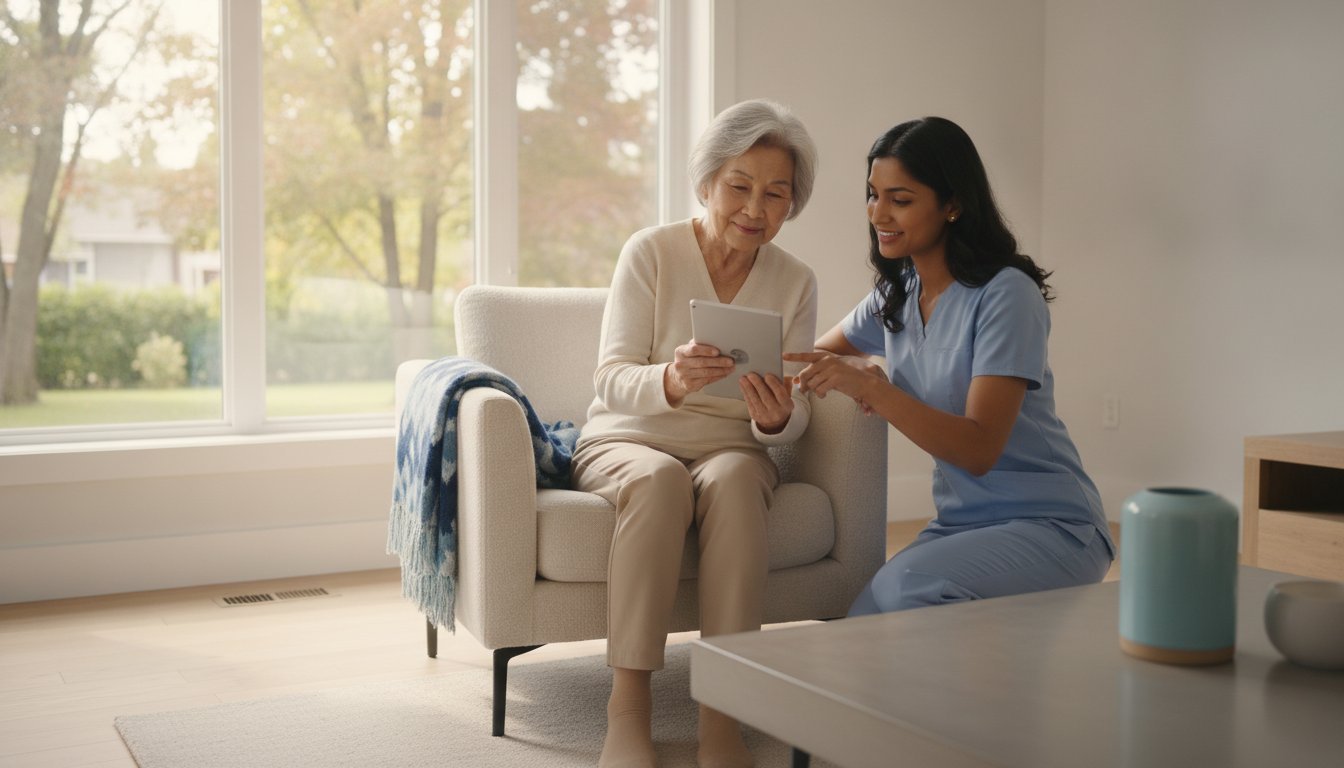
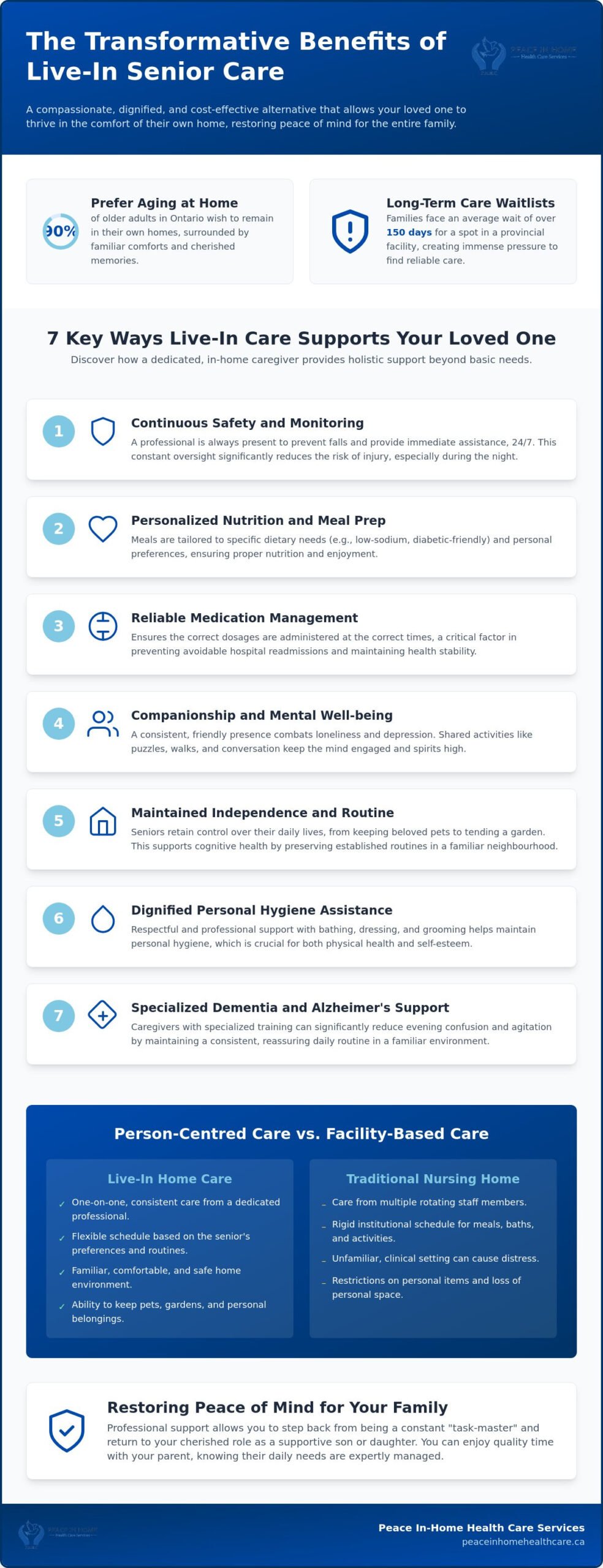
Did you know that 90% of older adults in Ontario prefer to age in their own homes, even when they face health challenges or limited mobility? It is a natural desire to stay where one feels most comfortable, yet for many families, the reality of providing constant support is overwhelming. You may feel a deep sense of guilt because you cannot be there 24/7, or perhaps you are losing sleep worrying about a parent’s safety while they live alone. With waitlists for provincial long-term care facilities now averaging over 150 days, the pressure to find a reliable solution is heavier than ever.
We understand the stress you are carrying, and we want you to know that you don’t have to choose between your parent’s safety and their happiness. The benefits of live-in care for seniors offer a compassionate, dignified, and cost-effective alternative to traditional nursing homes. This approach allows your loved one to remain in their familiar surroundings while receiving the attentive, one-on-one support they deserve. In this guide, we will explore 10 remarkable ways that live-in care can restore your peace of mind and help your parent thrive at home in 2026.
Key Takeaways
- Understand why staying in a familiar neighbourhood is vital for long-term cognitive health and how aging in place supports a dignified lifestyle.
- Discover the core benefits of live-in care for seniors, including continuous safety monitoring and meal preparation tailored to specific dietary needs.
- Learn how specialized expertise in dementia and Alzheimer’s care can significantly reduce evening confusion and agitation through a consistent daily routine.
- Realize how professional support allows you to step back from the “task-master” role and return to being a supportive son or daughter.
- Explore how a personalized matching process ensures your loved one receives care from someone who truly understands their personality and cultural background.
What is Live-in Care and Why is it the Preferred Choice in Ontario?
Live-in care is a professional support model where a dedicated caregiver resides within a senior’s private home to provide around-the-clock assistance. Unlike traditional shift-based nursing where different staff rotate every eight hours, this residential approach fosters a deep, consistent bond between the caregiver and your loved one. If you are researching What is a Live-in Caregiver?, you’ll find it’s often the most stable solution for families who want to avoid the disruption of multiple visitors. It provides a level of continuity that shift-based care simply cannot match.
In Ontario, this choice is becoming the gold standard for families facing the province’s strained healthcare system. With waitlists for long-term care homes now exceeding 150 days on average, many families turn to private support to ensure their parents aren’t left in a vulnerable position. One of the primary benefits of live-in care for seniors is the ability to support the “Aging in Place” movement. Staying in a familiar neighbourhood preserves cognitive health by maintaining established neural pathways linked to daily routines and local surroundings. It allows a senior to keep their sense of identity while receiving professional oversight.
The Core Difference: Person-Centred vs. Facility-Based Care
Traditional facilities often operate on a rigid schedule that prioritizes institutional efficiency over individual preference. In a nursing home, meal times, bath times, and even sleep schedules are often predetermined. Live-in care flips this dynamic. Your parent remains the director of their own life. They can keep their beloved pets, tend to their garden, and enjoy their favourite meals prepared exactly how they like them. This model provides a single, reliable point of contact for the family. You’ll always have an attentive professional who knows your parent’s nuances and can provide immediate health updates.
When to Consider the Transition
Recognizing the signs elderly parent needs home care is a vital first step for any family. Often, the need becomes clear following a hospital discharge or a minor fall, where the risk of living alone suddenly outweighs the senior’s current abilities. Beyond physical safety, we must address the loneliness epidemic. With nearly 1 in 5 Canadian seniors reporting feelings of isolation, having a consistent, friendly presence in the home does more than just manage medications. It restores the joy of daily life and provides the emotional security that comes from knowing someone is always there to help.
Checklist: 7 Key Benefits of Live-in Care for Your Loved One
Choosing a care model is a significant decision that impacts every member of the family. To help you evaluate if this is the right path, we have compiled a checklist of the core advantages. Peace In-Home Health Care focuses on these specific areas to ensure a seamless and supportive transition for your family.
- Continuous Safety and Monitoring: One of the primary benefits of live-in care for seniors is the guarantee of 24-hour safety. Whether it is a midnight trip to the bathroom or a sudden dizzy spell, a professional is always present. This immediate response significantly reduces the risk of long-term injury from falls.
- Personalized Nutrition: Caregivers don’t just provide calories; they prepare meals tailored to specific dietary restrictions, such as low-sodium or diabetic-friendly diets, while respecting personal tastes.
- Medication Management: Ensuring the right dose is taken at the right time is often the difference between staying home and an avoidable hospital readmission.
- Companionship and Mental Health: By fostering social interaction, live-in care directly combats the loneliness that often leads to depression. It allows for shared activities, from puzzles to walks in the garden, keeping the mind engaged.
- Maintained Independence: This model supports the concept of Growing Older at Home, where seniors keep control over their daily choices and environment.
- Professional Hygiene Assistance: Dignified support with bathing and grooming helps maintain self-esteem and skin health.
- Hazard-Free Living: Constant environmental oversight ensures that tripping hazards are removed and the home remains a safe sanctuary.
If you are feeling overwhelmed by these decisions, discussing your family's specific needs with a professional can provide much-needed clarity. We are here to help you navigate these choices with confidence and compassion.
Physical Health and Mobility Support
Maintaining physical health requires consistent, gentle effort. A live-in caregiver assists with “Activities of Daily Living” (ADLs) like bathing and dressing with the utmost respect for the senior’s dignity. They also encourage gentle mobility to prevent muscle atrophy, ensuring your loved one stays as active as possible. For residents in the GTA, this support extends to accompaniment for medical appointments, ensuring no vital details are missed during doctor visits.
Housekeeping and Environmental Comfort
A safe home is a clean home. Light housekeeping ensures that living spaces remain free of tripping hazards like cluttered walkways or loose rugs. Caregivers handle laundry and linen changes to maintain high hygiene standards, which is crucial for overall comfort. By organizing these daily routines, they create a centre of calm where your parent can relax. Understanding the benefits of live-in care for seniors includes realize that a well-maintained environment is the foundation of physical safety.
Ensuring Safety and Specialized Support for Complex Health Needs
Complex health challenges require more than just a helping hand; they demand a deep understanding of medical nuances and the patience to navigate them. One of the most significant benefits of live-in care for seniors is the specialized support provided for those living with memory impairment. For individuals with Dementia or Alzheimer’s, a consistent face is not just a comfort. It is a clinical necessity. While rotating staff in a facility can cause distress and increased confusion, a live-in caregiver becomes a familiar anchor. This continuity reduces the anxiety that often leads to more rapid cognitive decline.
This consistency is especially vital when managing ‘sundowning.’ This phenomenon involves increased confusion, agitation, and even aggression during the late afternoon and evening hours. Because a live-in professional is already settled in the home, they can anticipate these shifts before they escalate. They use personalized calming techniques, adjust lighting, and maintain a soothing environment to mitigate evening distress. This proactive approach is rarely possible in overcrowded facilities where staff-to-patient ratios are high and shift changes often occur right as the sun begins to set.
Beyond memory care, live-in support is a lifeline for chronic condition management. Whether it is Parkinson’s, stroke recovery, or severe mobility issues, having a trained eye on-site ensures that small changes in health are caught before they become emergencies. This model is also the ideal bridge for post-hospital recovery. It provides the intensive oversight needed to prevent readmission while the senior regains their strength in the comfort of their own bed.
The Role of Skilled Nursing in Live-in Care
Sometimes, non-medical support is not enough to manage complex needs. In these cases, integrating skilled nursing into the live-in plan becomes essential. This allows for professional wound care, injections, and rigorous health monitoring to happen right at home. We work closely with your family doctor and specialists to ensure every medical requirement is met with precision and care, creating a cohesive plan that evolves with your loved one’s health.
Fall Prevention and Home Safety Audits
Safety is a 24-hour commitment. Live-in caregivers perform real-time safety audits, identifying and removing new trip hazards as they appear throughout the day. They provide essential transfer assistance for seniors with limited mobility, especially during high-risk times like late-night bathroom trips. You can rest easy knowing a trained professional is there to offer a steady hand during the moments when the risk of a fall is highest.
How Live-in Care Supports the Whole Family (Not Just the Senior)
The emotional weight of caring for an aging parent often goes unspoken. Many adult children in Ontario find themselves caught in the “Sandwich Generation,” simultaneously managing the needs of their own children, their careers, and the declining health of a parent. This pressure creates a constant cycle of exhaustion and worry. One of the most profound benefits of live-in care for seniors is how it releases the family from this overwhelming burden. When a professional takes over the daily logistics, you’re finally free to stop being a “task-master” and return to being a son or daughter.
Relationships that have become strained by the stress of caregiving can finally begin to heal. Instead of spending your visits checking medication bottles or scrubbing floors, you can enjoy meaningful conversations and shared memories. This shift eliminates the “guilt cycle” that many families experience when they can’t be present 24/7. You can sleep soundly knowing that a reliable professional is providing attentive support. We prioritize regular, transparent communication, ensuring you receive the detailed updates you need for genuine peace of mind. Families who are worried about their parent’s resistance or the emotional complexity of introducing outside help will find our guide on how to transition a loved one to home care an invaluable resource for navigating this process with compassion and confidence.
Reducing Caregiver Burnout
The physical and emotional toll of providing constant care is immense. Without professional help, family caregivers often face chronic stress and health issues of their own. Live-in support acts as a permanent form of respite care, allowing you to reclaim your own health and personal life. It also prevents the family conflicts that often arise when siblings disagree on caregiving responsibilities. By introducing a neutral, expert presence, the focus remains where it should be: on the dignity and comfort of your parent.
Logistical Ease for Busy Families
Managing a senior’s daily life involves a complex web of logistics. From rushing to medical appointments across the GTA to coordinating grocery runs and pharmacy pickups, the list is endless. A live-in caregiver handles these errands seamlessly. They provide a reliable, calm presence during holidays and family events, ensuring your parent is part of the celebration. Another of the many benefits of live-in care for seniors is that it eliminates the need to manage a rotating door of different shift workers. If you’re ready to restore balance to your family life, contact our compassionate team to discuss how we can help.
Transitioning to Live-in Care with Peace In-Home Health Care
Moving toward a new care arrangement is a deeply personal journey that requires both sensitivity and expertise. At Peace In-Home Health Care, we bring over 17 years of experience to families across the Toronto area, providing a steady hand during these complex life transitions. We understand that inviting a professional into your home is a significant step. Our approach is rooted in the belief that care should be “human-first,” prioritizing the emotional well-being and dignity of your loved one above all else. One of the most vital benefits of live-in care for seniors is the opportunity for a personalized matching process. We don’t just assign a staff member; we find a caregiver who fits your parent’s unique personality, language, and cultural background. Families who want to understand all available options can explore our guide to personalized senior care in Toronto to see how tailored home care plans are designed to preserve dignity and independence.
A dignified transition is essential for maintaining a senior’s sense of control. We guide your family through this process with patience, ensuring that the introduction of support feels like a natural extension of the home environment rather than an institutional intrusion. For families concerned about how to introduce this change without causing distress, our compassionate step-by-step guide to transitioning a loved one to home care walks you through each stage of the process. By choosing this path, you are securing a reliable partner who advocates for your parent’s independence. We’ve seen how the right match can transform a senior’s outlook, replacing the anxiety of living alone with the comfort of dedicated companionship and professional oversight.
Our Local Toronto and GTA Coverage
We are proud to be a locally owned and operated agency with deep roots in our community. Our team serves families across the Greater Toronto Area, including:
- Toronto
- Vaughan
- Markham
- Mississauga
Because we are local, we possess a thorough understanding of Ontario healthcare standards and the specific senior resources available within the GTA. This expertise allows us to provide responsive support that larger, national corporations often cannot match. We are here to help you navigate the provincial system while providing the private, one-on-one attention your family deserves.
Booking Your Complimentary Consultation
The first step toward realizing the benefits of live-in care for seniors is a thorough, compassionate assessment of your family’s needs. During our initial home consultation, we listen to your story and evaluate the home environment to identify any immediate safety concerns. This information allows us to develop a tailored care plan that is not static; it is designed to evolve alongside your loved one’s health. We aim to replace your stress with a clear, manageable path forward. Contact Peace In-Home Health Care to start your journey today.
Embracing a Brighter Path for Your Loved One’s Future
Choosing the right path for an aging parent is one of the most significant decisions your family will ever make. By prioritizing a “human-first” approach, you ensure that your loved one remains in the home they love while receiving the specialized attention they deserve. The benefits of live-in care for seniors extend far beyond simple safety; they encompass the preservation of dignity, the restoration of family relationships, and the expert management of complex conditions. You are choosing a model that values the individual’s history and personal preferences above institutional routine. For families across the GTA navigating these decisions, our comprehensive resource on personalized senior care Toronto families rely on offers a detailed look at how tailored care plans are built around each senior’s unique needs.
With over 17 years of compassionate experience, Peace In-Home Health Care serves families across the entire GTA, from Oakville to Barrie, with specialized Dementia and Alzheimer’s support. We are ready to provide the steady hand and expert guidance your family needs to find lasting peace. You don’t have to face these challenges alone; we are here to walk beside you every step of the way and ensure your parent’s comfort and safety.
Book a Free Home Care Assessment with Peace In-Home Health Care to begin creating a tailored plan that honours your parent’s legacy. Your family’s journey toward a safer, more supportive home environment starts with a single, caring conversation.
Frequently Asked Questions
Is live-in care more expensive than a nursing home in Toronto?
Live-in care is often a financially competitive alternative to private nursing homes in the GTA. While public long-term care is subsidized, the waitlists are extensive and the care is institutional. Private facilities in Toronto can carry high monthly fees that match or exceed the cost of professional home support. By choosing live-in care, you receive dedicated one-on-one attention in a familiar environment; this often provides better value for your investment.
Does a live-in caregiver need their own room and food provided?
A live-in caregiver must have a private, furnished bedroom to ensure they receive the rest required to provide high-quality support. While families generally provide meals or a grocery budget, these details are personalized during our initial consultation. Providing a comfortable space allows the caregiver to settle into a routine that mirrors your parent’s lifestyle; this fosters a more natural and supportive relationship within the home.
Can live-in care help with advanced dementia or Alzheimer’s?
Yes, specialized support for memory loss is a cornerstone of our service. One of the core benefits of live-in care for seniors with dementia is the stability of having a consistent professional who understands their specific triggers. This continuity is vital for managing evening confusion and agitation. Unlike facilities with high staff turnover, a live-in caregiver builds a deep bond that helps maintain the senior’s dignity and emotional security.
What happens if our live-in caregiver gets sick or needs a day off?
We handle all the logistics of backup care so your family doesn’t have to worry about gaps in support. If a caregiver needs time off or becomes ill, we provide a reliable replacement who is fully briefed on the care plan. This ensures that your loved one’s daily routine stays consistent and safe, providing you with the peace of mind that professional help is always present.
Is live-in care safe for seniors who are at high risk of falling?
It is exceptionally safe because it provides a constant, watchful eye that technology alone cannot offer. Caregivers provide hands-on transfer assistance and monitor the home for new tripping hazards in real-time. Having someone present during high-risk hours, like late-night bathroom trips, significantly reduces the likelihood of a serious injury. This level of attentive supervision is the best way to prevent falls while maintaining a senior’s independence.
How do we choose the right person to live in our parent’s home?
We use a personalized matching process that goes beyond just medical qualifications. We look at your parent’s hobbies, language, and cultural background to find a caregiver who truly resonates with them. You’ll be involved in the selection process to ensure the chemistry is right. This “human-first” approach ensures the caregiver becomes a trusted companion who respects the sanctity and traditions of your parent’s home.
Can live-in care be temporary, such as for post-surgery recovery?
Live-in care is an excellent solution for temporary needs, such as recovering after a major surgery or a fall. This short-term support focuses on mobility assistance and medication reminders during the most vulnerable weeks of healing. It prevents the exhaustion that often leads to hospital readmission. Once your loved one regains their strength and independence, the care plan can be adjusted or concluded as needed.
What is the difference between live-in care and 24-hour care?
The main difference is the staffing model used to cover the day. Live-in care typically features one primary caregiver who lives in the residence and has designated sleep periods. In contrast, 24-hour care uses multiple professionals working rotating shifts to ensure someone is awake and active at every moment. Evaluating the benefits of live-in care for seniors helps determine if your parent needs this residential bond or more intensive, shift-based medical monitoring.