

You’ve likely noticed the small changes first: a missed medication dose, an unusually empty fridge, or a slight stumble that made your heart race. It’s a heavy moment when you realize your aging parent needs more support than you can personally provide, but you aren’t ready to consider a nursing home. You want them to stay in the home they love, yet the fear for their safety often keeps you up at night. It’s completely natural to feel overwhelmed by the different types of in-home care for seniors and the terminology used throughout the GTA.
We understand that this transition is about more than just logistics; it’s about preserving your loved one’s dignity while ensuring they’re protected. This article will help you discover the full spectrum of care options available to help your loved one age safely and comfortably at home. You’ll gain a clear understanding of service levels, from companionship to skilled nursing. We’ll also explain how these modular supports can grow with your family’s needs, giving you the confidence to choose a plan that brings lasting peace and security.
Key Takeaways
- Understand the concept of “Aging in Place” and why professional support is the key to helping seniors stay safely and comfortably in their own homes.
- Learn how to differentiate between various types of in-home care for seniors to find the specific level of support that preserves your loved one’s independence.
- Discover the difference between non-medical companionship and hands-on personal care for managing daily routines, household tasks, and hygiene.
- Identify when complex medical needs or progressive conditions like Alzheimer’s require the specialized expertise of skilled nursing care.
- Explore how flexible respite and live-in care options provide a vital lifeline and much-needed peace of mind for family caregivers across the GTA.
What is In-Home Care for Seniors? Defining Aging in Place
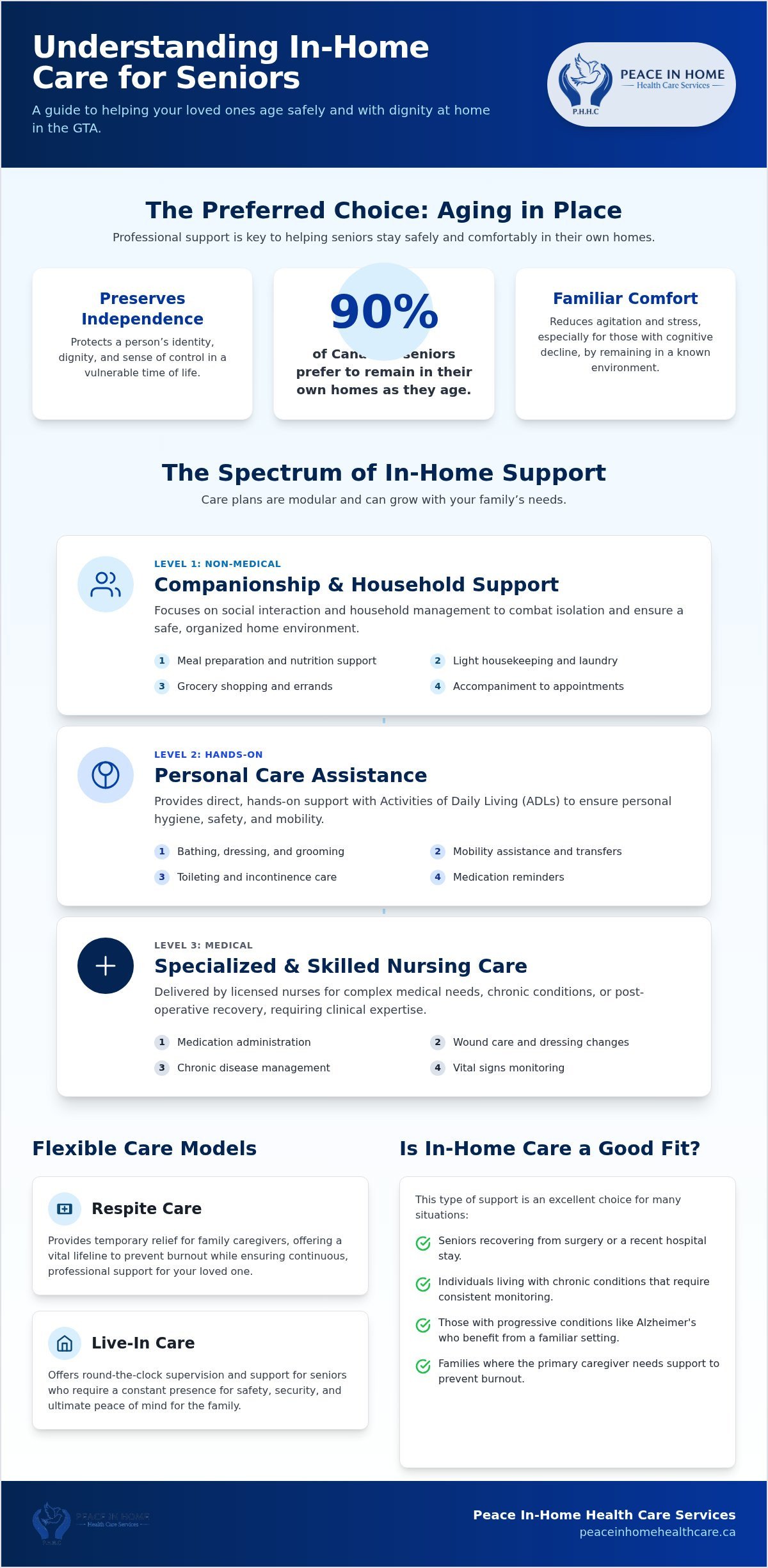
In-home care is a versatile spectrum of professional support delivered directly in a senior’s residence. To truly understand What is In-Home Care, one must view it as a compassionate partnership. It allows individuals to receive help with daily tasks while staying in the environment they know and love. This concept, known as Aging in Place, is the preferred choice for 90% of Canadian seniors. Staying at home isn’t just about comfort. It is about protecting a person’s identity and independence during a vulnerable time of life.
In Ontario, families navigate two main avenues for support. Publicly funded care is managed through Ontario Health atHome, providing baseline services for those who qualify. Many families in the GTA choose to supplement this or move entirely to private-pay models to access specific types of in-home care for seniors. Private care offers the flexibility to choose specific hours and specialized providers, ensuring that the care plan fits the person rather than the other way around. This model prioritizes the preservation of dignity while ensuring absolute safety in familiar surroundings.
The Benefits of Staying at Home in the GTA
Familiarity is a powerful tool for maintaining mental well-being. The comfort of a lifelong home environment, such as a favourite chair or a sunny window, can significantly reduce the agitation often seen in seniors with cognitive decline. Choosing home care is also a practical financial decision. It avoids the high overhead costs and fixed monthly fees associated with luxury retirement residences in Toronto. By focusing on 1-on-1 attention, you ensure that every dollar spent goes toward direct support. Facilities often divide a single staff member’s time among dozens of residents, but home care provides a dedicated presence that prioritizes your loved one’s unique needs.
Who is a Good Candidate for Home Care?
Many different situations make professional support a wise choice. Seniors recovering from surgery often need a steady hand during the first few weeks after hospital discharge. It is also an excellent option for those living with chronic conditions that require consistent monitoring to prevent complications. We often see families turn to respite care in Toronto when the primary family caregiver begins to feel the weight of burnout. This temporary relief allows the family to rest while knowing their parent is safe, dignified, and well-supported in their own living room.
Companionship and Household Support: Non-Medical Care
Isolation can take a significant toll on physical health, often leading to a decline that feels sudden to worried family members. Companionship care is designed to prevent this by providing meaningful social interaction and a steady, friendly presence. It’s one of the most vital types of in-home care for seniors because it addresses the person’s spirit as much as their schedule. Caregivers act as a supportive partner, helping with daily household management without taking away the senior’s sense of control. This support is tailored to be respectful and subtle, ensuring your loved one feels like the head of their own household. Companionship care is the foundation of emotional well-being for seniors living alone.
Meal Preparation and Nutrition
Proper nutrition becomes more challenging as we age, especially when cooking for one feels like a chore. A caregiver ensures that meals are heart-healthy and tailored to specific dietary restrictions, such as low-sodium or diabetic-friendly plans. They assist with grocery shopping to ensure the pantry is always stocked with fresh, senior-friendly ingredients. Beyond the kitchen, the social benefit of sharing a meal with a trusted companion can improve appetite and mood. This holistic approach is why many GTA families value these Services for Older Adults as a way to maintain a high quality of life.
Light Housekeeping and Errands
A tidy home is a safe home. Light housekeeping focuses on maintaining a hazard-free environment to prevent falls, which are a leading cause of injury for seniors in Ontario. Caregivers provide support with laundry, changing linens, and basic organization to keep the living space comfortable and dignified. They also offer accompaniment to important medical appointments at Mount Sinai or Sunnybrook. Having a reliable partner for errands or hospital visits provides a layer of security that traditional facility care often lacks; it ensures the senior is never left to navigate complex hallways or busy streets alone.
This level of support allows seniors to maintain their familiar routines while receiving just enough help to stay independent. It’s about adding quality to their days through reliable, attentive interaction that respects their boundaries. Whether it’s a walk through a local park in Markham or simply a game of cards in the afternoon, these moments of connection are transformative. With over 17 years of experience in the GTA, we’ve seen how a friendly face can change a person’s entire outlook. If you’re starting to notice that your parent is becoming more withdrawn or struggling with the upkeep of their home, you might want to reach out for a gentle conversation about how companionship can restore their sense of peace.
Personal Care Assistance: Hands-On Daily Living Support
While companionship addresses social and emotional health, personal care focuses on the physical tasks that keep a senior safe. It is among the most essential types of in-home care for seniors because it involves direct, hands-on support for intimate needs. Many families find these conversations difficult, yet professional help removes the emotional burden from the family caregiver. You can remain the daughter or son while a trained expert manages the physical requirements with absolute respect. This transition ensures that your loved one’s daily routine remains consistent without compromising their sense of self-worth.
Hygiene and Grooming Support
Maintaining a regular grooming routine isn’t just about physical wellness; it is about self-esteem. Our caregivers use safe bathing and showering techniques for those with limited mobility, ensuring the bathroom feels like a sanctuary rather than a source of stress. This assistance includes dignified help with dressing, hair care, and oral hygiene. For incontinence care and toileting, we prioritize privacy so your loved one never feels compromised. Consistent hygiene also allows for early detection of skin changes, which is vital for maintaining skin integrity and preventing infections that could lead to hospital visits.
Mobility and Transfer Assistance
Mobility and transfer assistance are the primary tools for fall prevention in a residential setting. Moving safely from a bed to a chair requires a steady, trained hand to avoid joint strain or sudden accidents. Caregivers also assist with walking and the proper use of mobility aids like walkers or canes, giving seniors the confidence to move around their own homes. Beyond physical help, they perform regular home safety checks to identify hazards like loose rugs or poor lighting. By providing this 1-on-1 support, personal care assistance for seniors prevents common injuries like skin breakdowns or dangerous falls.
Choosing this level of support means your loved one doesn’t have to struggle through the basic tasks of their morning or evening. It provides a sense of security that lets them start their day feeling refreshed and ready to engage with the world. With 17 years of experience serving families across Toronto and Markham, we realize that every person’s needs are unique. Our approach is always personalized, focusing on the specific physical requirements and comfort levels of the individual. This attentive care ensures that your loved one remains safe, clean, and dignified in the home they’ve spent a lifetime building.
Specialized and Skilled Nursing Care for Complex Needs
As health needs become more complex, families often realize that companionship and personal care are only part of the solution. Skilled nursing care provides medical support delivered by Registered Nurses (RNs) or Registered Practical Nurses (RPNs) right in the home. This level of expertise is essential for those managing progressive conditions or recovering from significant medical events. Dementia care is a specialized approach that prioritizes routine and redirection. Unlike general support, these types of in-home care for seniors require advanced training to manage the physical and cognitive symptoms that facilities sometimes struggle to address individually. Our nurses provide a stable, professional presence that gives families the confidence to handle even the most challenging health transitions.
Many families turn to skilled nursing care at home in Toronto during the critical weeks following a hospital discharge. It bridges the gap between the clinical setting and the comfort of home, ensuring that recovery is safe and professionally monitored. This transition period is often when seniors are most at risk, making the presence of a medical professional a vital safeguard for their long-term health.
Dementia and Alzheimer’s Support
Caring for a loved one with memory loss requires a unique blend of patience and strategy. Our specialized dementia models focus on managing “sundowning,” which is the increased confusion or agitation that often occurs in the late afternoon. We work to create a secure environment that prevents wandering while maintaining the senior’s dignity and comfort. Engagement is equally important. By incorporating tailored activities for dementia patients, we provide cognitive stimulation that helps maintain current abilities for as long as possible. This attentive approach reduces stress for both the individual and their family members.
Skilled Nursing and Medication Management
Skilled nursing goes beyond social support to include clinical tasks like wound care, injections, and the regular monitoring of vital signs. This is particularly vital for seniors with diabetes, heart disease, or post-surgical needs. Medication management is another cornerstone of this service. A nurse doesn’t just provide medication reminders; they ensure the correct dosage is administered at the right time, preventing dangerous drug interactions or missed doses. We coordinate closely with primary physicians and specialists across the GTA to ensure the care plan remains aligned with medical orders. This seamless communication provides a stable foundation for families who are navigating a complex health journey. Whether you’re dealing with a new diagnosis or managing a long-term illness, having a medical professional in the home changes the dynamic from crisis management to structured, reliable health support.
Choosing the Right Care: Respite and Live-In Options
Selecting the right delivery model is just as important as choosing the services themselves. Care is not a static product; it is a flexible support system that should adapt to your family’s unique rhythm. Whether you need a few hours of help each week or a constant, 24-hour presence, the goal remains the same: safety and dignity. Understanding the different types of in-home care for seniors allows you to build a plan that evolves alongside your loved one’s health. This modular approach ensures that support is never intrusive, but always available when it matters most.
For many GTA families, hourly care is the ideal starting point. It provides targeted support for specific tasks like morning routines, meal preparation, or medication reminders. However, when a senior’s safety is at risk overnight or they require constant supervision due to cognitive decline, 24-hour live-in care becomes a more reliable option. This ensures that a professional is always on hand to assist with transfers, prevent wandering, and provide immediate help if a fall occurs. It offers a level of security that hourly visits simply cannot match for those with high-risk health profiles.
To evaluate your current needs, consider this 5-step checklist:
- Is your loved one frequently forgetting their medications or taking incorrect dosages?
- Have there been any recent falls, “near misses,” or unexplained bruises?
- Is the primary family caregiver feeling physically exhausted or emotionally drained?
- Are basic household tasks like laundry, groceries, and cleaning being neglected?
- Does the senior spend most of their day alone without meaningful social interaction?
Respite Care for Family Caregivers
Caring for an aging parent is a profound labour of love, but it is also physically and emotionally demanding. Respite care in Toronto serves as a vital lifeline, offering scheduled relief so you can rest and recharge. This service is not just for emergencies; it is a proactive strategy to prevent caregiver burnout. Short-term support allows you to take a much-needed vacation or attend to your own health needs without guilt. Knowing a seasoned professional is in charge brings a level of peace that allows you to return to your role with renewed patience and energy.
How to Get Started in the GTA
Taking the first step can feel daunting, but a structured approach makes the process manageable. First, conduct an initial assessment of the home environment to identify immediate safety risks or mobility barriers. Second, define specific goals for the care, such as improving nutritional intake or increasing daily social engagement. Finally, contact our compassionate team for a personalized consultation. We serve families across Toronto, Vaughan, and Mississauga, providing the expert navigation you need during this complex life transition. We realize that every family’s journey is different, and we are here to ensure yours is met with consistency and kindness.
Finding Peace Through Personalized Support
Deciding on the right level of support is a deeply personal journey that requires a balance of medical necessity and emotional comfort. We’ve explored how a modular approach, from companionship to specialised nursing, allows your parent to remain in the home they love. By understanding the different types of in-home care for seniors, you can create a tailored plan that prioritises their independence while providing the professional safety net they need. This transition is not about losing control; it’s about gaining the resources to live life with dignity.
With 17+ years of dedicated service in the GTA, our team of Certified Personal Support Workers (PSWs) and Registered Nurses realises that every family situation is unique. We are committed to delivering attentive, reliable care that evolves with your loved one’s needs, offering you the lasting peace of mind you deserve. You don’t have to navigate these complex health transitions alone.
You have the strength to make this transition a positive experience for your entire family. We are here to offer a steady hand and expert guidance every step of the way.
Frequently Asked Questions
What is the difference between home care and home health care in Ontario?
Home care typically refers to non-medical support like companionship and meal preparation, while home health care involves clinical services provided by registered nurses. In Ontario, these two types of in-home care for seniors often overlap to provide a holistic support system. While public services focus on baseline medical needs, private agencies offer the flexibility to combine social interaction with professional nursing, ensuring your loved one is safe and emotionally supported at the same time.
How do I know if my parent needs personal care or just companionship?
You should look for changes in their daily physical routine to determine the level of support required. If your parent is lonely but manages their hygiene and mobility independently, companionship is likely sufficient. However, if they struggle with bathing, dressing, or transferring safely from a bed to a chair, personal care is necessary. This hands-on assistance protects their physical safety while preserving their dignity during more intimate tasks of daily living.
Can I hire a caregiver for just a few hours a week in Toronto?
Yes, you can absolutely hire a caregiver for just a few hours a week in Toronto and the surrounding GTA. This flexible, hourly model is ideal for families who need help with specific tasks like grocery shopping, light housekeeping, or accompaniment to medical appointments. It allows you to introduce support gradually, ensuring your loved one feels comfortable and in control while receiving the exact amount of assistance they need to stay independent.
Is in-home care for seniors covered by OHIP or private insurance?
OHIP provides coverage for basic, intermittent services through the Ontario Health atHome program for those who meet specific eligibility criteria. For more consistent or specialized support, many families use private insurance or personal funds. Many long-term care insurance policies in Canada cover various types of in-home care for seniors, including personal care and nursing. It’s always best to check your specific policy or contact a care coordinator to discuss your funding options.
What happens if my loved one’s condition changes and they need more care?
Our care plans are designed to be modular and flexible, meaning they can be adjusted immediately as your loved one’s health evolves. If a senior recovers from surgery or, conversely, experiences a decline in mobility, we simply scale the service level up or down. This ensures they always have the right amount of support without having to move to a new environment. We coordinate closely with families to make these transitions seamless and low-stress.
How does live-in care work for seniors in the GTA?
Live-in care involves a professional caregiver residing in the senior’s home to provide constant, 24-hour support and supervision. This model is particularly beneficial for those at high risk of falls or seniors living with advanced dementia who may wander. In the GTA, this provides a safer and more personalized alternative to a retirement residence. It ensures that a trained hand is always available for transfers, meal times, and emergency assistance throughout the day and night.
Are your caregivers trained specifically for dementia and Alzheimer’s?
Yes, our team includes Certified Personal Support Workers and Registered Nurses who receive specialized training in dementia and Alzheimer’s care. We use proven techniques for redirection and behavioural management to help seniors navigate the confusion often associated with memory loss. Our approach focuses on maintaining a calm, familiar routine that reduces agitation and promotes a sense of security. We also incorporate stimulating activities to help preserve cognitive function and improve daily quality of life.
How do you ensure the safety and background of your caregivers?
We prioritize safety through a rigorous vetting process that includes comprehensive background checks and professional reference verifications for every staff member. With over 17 years of experience serving the GTA, we’ve built a reputation for reliability and high-integrity care. Our caregivers are not only technically proficient but are also chosen for their empathy and patience. Regular supervision and ongoing training ensure that every client receives the dignified, attentive support that our brand is known for.