

You’re sitting in your Toronto kitchen, heart racing, because your father just tried to walk out the front door in his slippers, convinced he had to go to work at a job he left decades ago. It’s a moment of pure, cold fear that many families in our city face every day. We understand that managing Alzheimer’s care at home Toronto isn’t just a logistical challenge; it’s an emotional journey that can lead to profound caregiver burnout. You want to honour your parent’s wish to stay in their own neighbourhood, but the fear of a fall or a wandering incident makes every night a sleepless one.
We believe that your loved one deserves to age with dignity in the place they feel most secure. This guide will help you discover how specialized memory care can transform a stressful household into a safe, calm environment. We’ll walk you through the differences between public and private care in Ontario, explain how to mitigate safety risks, and show you how to find the professional support you need to restore peace to your family unit. You don’t have to navigate this transition alone.
Key Takeaways
- Learn how to modify your Toronto home to prevent wandering and falls while maintaining a familiar, comfortable atmosphere.
- Understand why families are choosing Alzheimer’s care at home Toronto to provide one-on-one attention that facility-based settings often cannot match.
- Discover personalized daily routines and cognitive engagement strategies that help manage “sundowning” symptoms and reduce senior agitation.
- Navigate the differences between public and private care in Ontario with a clear path toward securing the right level of support for your family’s unique needs.
- Find out how 17+ years of professional expertise can alleviate caregiver burnout and provide the peace of mind your family deserves.
What is Specialized Alzheimer’s Care at Home in Toronto?
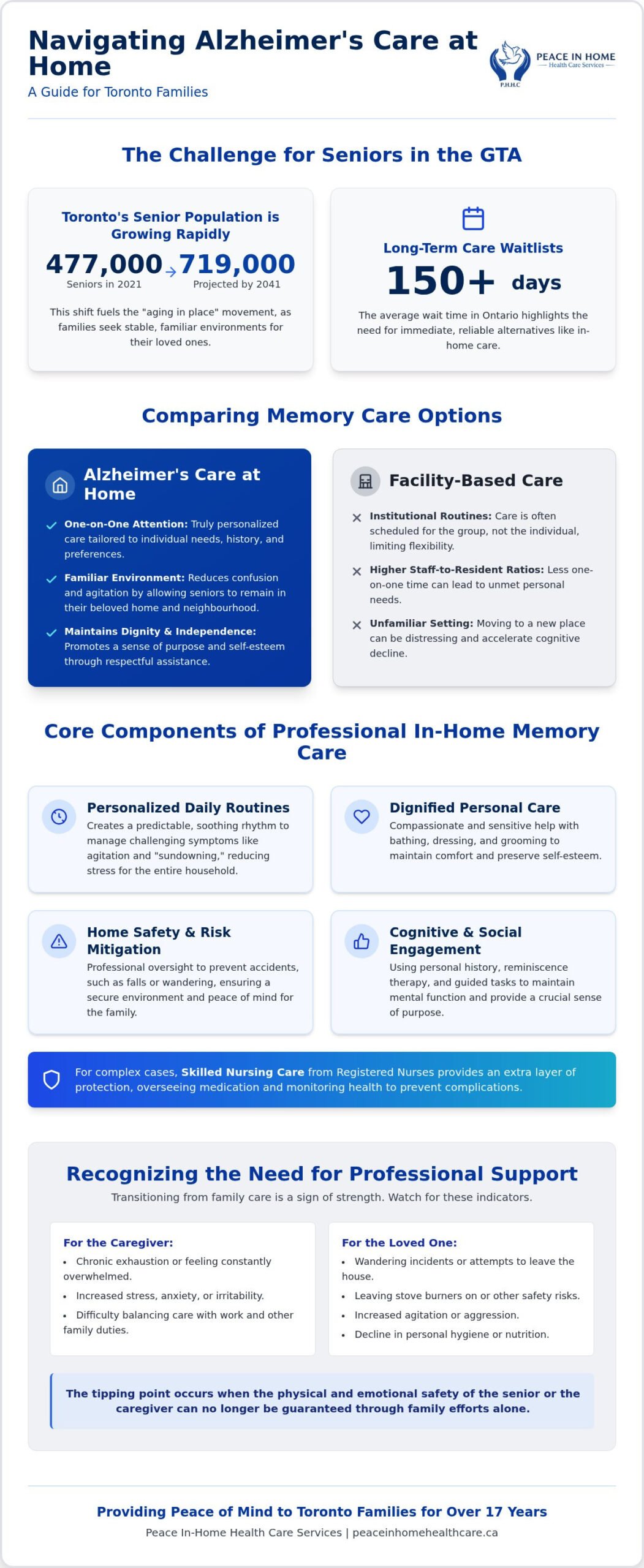
Specialized Alzheimer’s care at home Toronto is a deeply personalized service designed to provide safety, cognitive stimulation, and daily assistance within the comfort of a familiar environment. Unlike general senior care, which may focus on basic physical tasks, memory care is tailored to the unique neurological needs of those living with dementia. Many families in the GTA choose this path because it allows their loved ones to stay in the neighbourhoods they know and love. In a city where waitlists for long-term care homes average over 150 days, home care offers a dignified alternative that prioritizes the individual’s life story over institutional routine.
Professional support is typically delivered by a dedicated team. Personal Support Workers (PSWs) manage the daily rhythm, providing companionship care, meal preparation, and mobility assistance. When medical needs become more complex, Registered Nurses provide skilled nursing care services to oversee medication and health monitoring. This combination ensures that your parent isn’t just supervised, but truly supported by professionals who understand the progression of the disease.
The Growing Need for Memory Care in the GTA
Toronto’s aging population is changing rapidly. In 2021, there were approximately 477,000 seniors aged 65 and older in the city, a number projected to grow to over 719,000 by 2041. This shift has fueled the “aging in place” movement across Ontario, as more families realize that home is often the best setting for emotional stability. While Ontario Health atHome provides essential nursing visits and limited PSW support, these public hours are often insufficient for the 24/7 nature of Alzheimer’s care at home Toronto. Private care works alongside these community supports to fill the gaps, ensuring a consistent and reliable presence in the home.
When to Transition from Family Care to Professional Support
Recognizing the need for help is a sign of strength, not a failure of love. Caregiver burnout often creeps in slowly, manifesting as chronic exhaustion or a feeling of being constantly overwhelmed. You might notice specific warning signs, such as your parent wandering toward the door or leaving the stove unattended. These moments of risk indicate that the environment needs a higher level of professional oversight to prevent accidents. The tipping point for Alzheimer’s care at home Toronto occurs when the physical and emotional safety of the senior or the caregiver can no longer be guaranteed through family efforts alone.
The Core Components of Professional Memory Care
Professional memory care is more than just a checklist of tasks. It’s about creating a predictable, soothing rhythm that respects the individual’s history while ensuring their physical safety. When families seek Alzheimer’s care at home Toronto, they’re often looking for a way to manage the more challenging symptoms of the disease, like agitation and “sundowning.” A professional caregiver doesn’t just supervise; they actively curate a day that reduces stress through personalized daily routines. This attentive approach helps stabilize the emotional environment for everyone in the house.
Dignity remains at the centre of this support. Our caregivers provide compassionate assistance with the following core components:
- Dignified Personal Care: Sensitive help with bathing, dressing, and grooming to maintain self-esteem and comfort.
- Nutritious Meal Preparation: Creating healthy meals that respect dietary needs, textures, and personal preferences.
- Medication Reminders: Ensuring prescriptions are taken accurately and on time to prevent health complications.
- Health Monitoring: Keeping a close eye on physical changes to avoid hospital readmissions and manage chronic conditions.
Person-Centred Care and Cognitive Stimulation
We believe that every senior has a unique life story that should be celebrated. Caregivers use these personal histories to build a genuine connection, turning simple interactions into moments of meaning. Our approach to Alzheimer’s care at home Toronto focuses on using reminiscence therapy or music that resonates with a senior’s past to spark engagement. Maintaining a sense of purpose is vital; even small, guided tasks like light housekeeping can help a senior feel like a valued part of their own household. This cognitive stimulation is essential for maintaining mental function for as long as possible.
Skilled Nursing and Health Supervision
For complex Alzheimer’s cases, the oversight of a professional is invaluable. Skilled nursing care services provide an extra layer of protection, as Registered Nurses can monitor for secondary health issues like infections that often affect cognition. Our team works to coordinate these efforts with Toronto-based family physicians and specialists, ensuring that the care plan remains cohesive and responsive. If you are unsure how to balance medical needs with daily support, you can reach out for a professional care assessment to explore your options. This expert navigation helps families move from a state of constant worry to one of reliable, structured support.
Comparing Home Care to Facility-Based Care in Toronto
Deciding between a specialized facility and Alzheimer’s care at home Toronto is a choice that carries immense emotional weight. For many seniors, their home is a map of their life, filled with familiar scents, furniture, and memories that provide a sense of grounding. Moving to a facility, even a high-quality one, often triggers “transfer trauma.” This sudden change in environment can lead to increased confusion and a faster rate of cognitive decline. By choosing to stay at home, your loved one maintains their connection to their Toronto neighbourhood and their established daily rhythms.
One of the most significant advantages of home care is the staffing ratio. In a typical long-term care facility, a single staff member may be responsible for ten or more residents. This makes it difficult to provide the immediate, personalized attention required during a moment of agitation or a “sundowning” episode. In contrast, home care provides a dedicated one-on-one relationship. This ensures that the caregiver is fully focused on your parent’s safety, dignity, and emotional well-being at all times. While Ontario’s Long-Term Care (LTC) waitlists average over 150 days, professional home care can often be implemented quickly to address urgent safety concerns.
The Cost-Benefit Ratio of Aging in Place
Many families worry about the financial sustainability of private support. While 24/7 live-in care is a significant investment, it is often comparable to the monthly fees at high-end memory care residences in the GTA. You can also utilize respite care for families to make the transition more affordable. This flexible model allows you to bring in professional help during high-stress periods, such as overnight or during work hours, while you handle other times. This approach preserves the family’s budget while preventing the physical and emotional decline that often follows a stressful move to an institutional setting.
Navigating the Ontario Healthcare System
The path to support in Toronto usually begins with an assessment from Ontario Health atHome. While these publicly funded hours provide a helpful foundation for nursing or basic personal care, they are rarely enough to manage the complex, around-the-clock needs of an Alzheimer’s patient. Private Alzheimer’s care at home Toronto acts as a vital supplement to these government services. As a family, you remain the primary advocate for your parent, but a professional care team helps you bridge the gap. This is especially critical during the vulnerable period after a hospital discharge, ensuring your loved one returns to a safe, supervised environment rather than an empty house.
Creating a Safe Home Environment for Alzheimer’s Patients
Toronto’s unique architecture, from narrow Victorian semi-detached houses to modern high-rise condos, presents specific challenges for families managing memory care. Steep staircases and uneven flooring in older neighbourhoods can quickly become dangerous obstacles as cognitive decline progresses. Professional Alzheimer’s care at home Toronto begins with a thoughtful environmental assessment to identify these risks before they lead to a crisis. We aim to preserve the familiar comfort of the home while implementing subtle, effective safety measures that don’t feel institutional.
Wandering prevention is often the most pressing concern for families. Simple adjustments, such as installing door chimes or placing locks above or below the direct line of sight, can provide vital extra seconds for a caregiver to intervene. Reducing visual clutter is equally important. Busy patterns on carpets or excessive decor can confuse a senior, potentially leading to hallucinations or falls. A consistent, organized space helps your loved one feel more in control of their surroundings, reducing the anxiety that often triggers difficult behaviours.
Bathroom and Kitchen Safety Essentials
The bathroom and kitchen are high-risk areas that require careful modification. Installing grab bars and non-slip surfaces in the shower is essential, and many modern designs allow these to blend seamlessly with your home’s aesthetics. In the kitchen, managing risks might involve removing stove knobs or using automatic shut-off devices for appliances. A safety-first approach to dementia-friendly design involves adapting the environment to meet the senior’s current cognitive abilities, ensuring every room supports their independence without compromising their security.
Managing ‘Sundowning’ and Night-time Safety
As the sun sets, many seniors experience increased confusion and agitation, a phenomenon known as “sundowning.” Ensuring your home is well-lit in the late afternoon can help eliminate shadows that cause fear. Establishing a soothing evening routine is vital for a restful night. If your loved one’s sleep patterns are disrupted, overnight respite care for dementia patients can be a lifesaver for the rest of the family. This professional support ensures that your parent is supervised if they wake up confused, allowing you to get the rest you need to be an effective caregiver during the day.
How Peace In-Home Health Care Supports Toronto Families
With more than 17 years of experience as a trusted guide for families across the GTA, Peace In-Home Health Care Services understands that every journey with dementia is unique. We provide specialized Alzheimer’s care at home Toronto that prioritizes the dignity and independence of your loved one. Whether you are in North York, Scarborough, Etobicoke, or the surrounding areas like Vaughan and Oakville, our mission is to bring a sense of calm and reliability back into your household. We don’t just provide a service; we stand alongside you as a partner in care.
Our approach is rooted in the belief that care plans must be as dynamic as the people they serve. As your parent’s needs evolve, so does our support. We offer flexible care models that range from companionship and meal preparation to more intensive live-in support and skilled nursing care services. This adaptability ensures that your loved one can continue to age in place safely, even as their cognitive or physical requirements become more complex over time. We focus on the person, not just the diagnosis, to ensure every interaction is meaningful.
Our Caregiver Matching Process
We know that inviting someone into your home is a significant step, which is why we place immense value on our caregiver matching process. It isn’t just about finding someone with the right skills; it’s about finding a personality match that resonates with your loved one’s life story. Consistency is vital for those living with memory loss, so we strive to ensure the same friendly face arrives at the door every day. This reliability builds trust and reduces the confusion often associated with having multiple rotating staff members. Our specialized memory care team also receives ongoing training to stay current with the best practices in dementia support.
Taking the First Step Toward Peace of Mind
The transition to professional support starts with an initial in-home assessment where we take the time to listen to your concerns and understand your family’s specific goals. We coordinate closely with your existing medical team and family physicians to ensure our care plan aligns with their clinical recommendations. By choosing a home care agency Toronto with a proven track record of compassion and expertise, you can move forward with confidence. We’re here to help you navigate the complexities of the Ontario healthcare system, providing a clear path toward a safer and more peaceful future for your entire family unit.
Finding Peace and Security for Your Family
Choosing the right support for a loved one with dementia is a deeply personal decision that impacts the entire family unit. You now have a clearer understanding of how staying in a familiar environment, supported by professional expertise, can preserve your parent’s dignity and emotional stability. Implementing Alzheimer’s care at home Toronto allows your family to focus on quality time rather than the constant stress of managing safety risks and wandering alone.
With 17+ years of GTA experience, Peace In-Home Health Care Services acts as a trusted guide through every stage of this journey. Our dedicated memory care specialists develop personalized care plans that evolve alongside your loved one’s needs, ensuring they always receive attentive, respectful support. You’ve done the hard work of researching the best options; now it’s time to find the reliable partnership your family deserves.
We’re ready to help you create a safe, dignified future for your parent right here in Toronto.
Frequently Asked Questions
Is Alzheimer’s care at home safer than a nursing home in Toronto?
Home care is often safer because it provides a dedicated one-on-one relationship that institutional settings can’t match. In a Toronto nursing home, staff ratios are much higher, which increases the risk of falls or missed symptoms. Staying at home also eliminates transfer trauma, which is a significant risk for those with cognitive decline. This personalized attention ensures that safety protocols are tailored specifically to your parent’s unique environment and daily habits.
How many hours of care does a dementia patient typically need at home?
The number of hours depends entirely on the stage of the disease and your family’s support system. Many families starting Alzheimer’s care at home Toronto begin with four to eight hours of respite care to prevent burnout. As the condition progresses, needs often shift toward overnight support or full-time live-in care. We conduct a detailed assessment to help you determine a schedule that balances safety with your family’s budget and lifestyle.
Does the Ontario government pay for Alzheimer’s home care?
The Ontario government provides limited support through Ontario Health atHome, but it rarely covers all the needs of a dementia patient. Publicly funded Personal Support Workers typically visit for only a few hours per week for basic hygiene. Most families supplement these services with private care to ensure 24/7 safety. While OHIP doesn’t cover private agencies, you may be eligible for the Ontario Seniors Care at Home Tax Credit to help offset costs.
What is the difference between dementia care and standard senior care?
Standard senior care focuses on physical tasks like light housekeeping or meal preparation. Specialized dementia care adds a layer of cognitive engagement and behavioural management. It involves recognizing the triggers for agitation, using reminiscence therapy, and creating a structured environment that reduces confusion. Our team is trained to handle the complex neurological aspects of memory loss, ensuring that your loved one’s emotional well-being is prioritized alongside their physical health.
Can a caregiver help with wandering prevention in a private home?
Yes, a professional caregiver is an essential tool for wandering prevention. We use a combination of constant supervision and environmental strategies to keep your loved one safe. This might include redirecting them during moments of confusion or establishing a soothing evening routine to minimize the urge to leave the house. Our caregivers are trained to stay alert to the subtle signs of restlessness that often precede a wandering incident in a private home.
How do I talk to my parent about bringing a caregiver into their home?
It’s best to introduce the idea slowly and focus on the benefits of extra help around the house rather than medical necessity. You might describe the caregiver as a companion or a helper for chores and meal preparation. Using a trial period can also make the transition feel less permanent and overwhelming. We find that focusing on the senior’s comfort and the goal of staying at home helps reduce resistance.
What happens if my loved one’s condition worsens over time?
Our care plans are designed to be flexible and evolve as the condition changes. If your loved one’s needs increase, we can seamlessly transition from part-time companionship to more intensive personal care assistance or live-in support. We also provide skilled nursing care services for complex medical requirements that may arise. Regular reviews ensure that the level of support remains appropriate, providing your family with a clear, reliable path forward at every stage.
Do you provide Alzheimer’s care in Scarborough and North York?
Yes, we provide comprehensive Alzheimer’s care at home Toronto across the entire GTA, including Scarborough and North York. Our local teams are familiar with these neighbourhoods and are ready to provide the same high standard of dignified support found in our central Toronto locations. We also serve families in Etobicoke, Vaughan, Markham, and Oakville. No matter where you are located in the city, we can provide a consistent and reliable caregiver for your parent.