
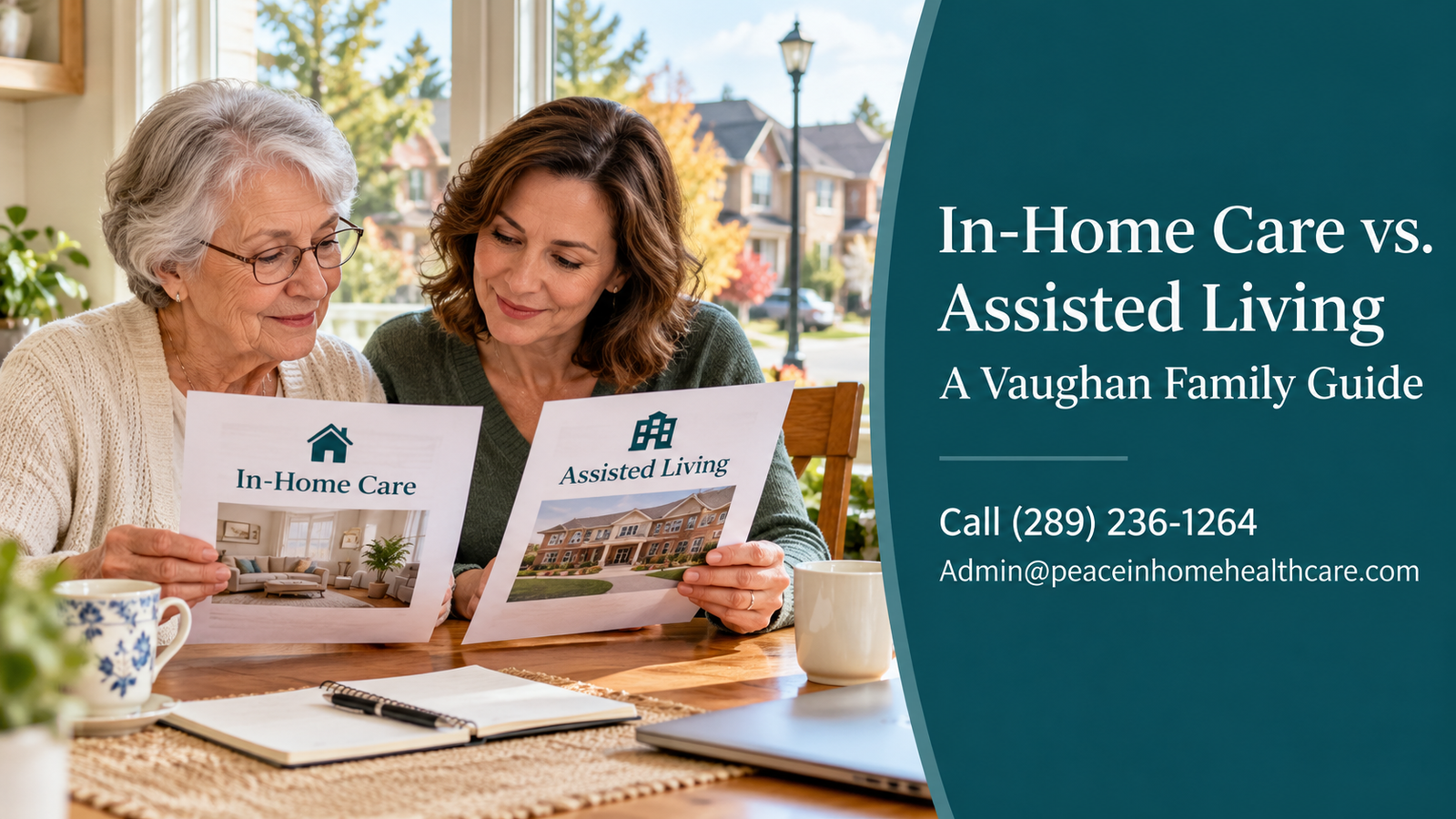
When an older parent needs more day-to-day support, families are often asked to make a difficult choice: should they remain at home with help, or move to an assisted-living residence? There is no single right answer. The best option depends on safety, health needs, personal preferences, family support, and the kind of routine that helps the person feel most like themselves.
For many families, home care in Vaughan is a way to add practical support without asking a loved one to leave a familiar home, neighbourhood, and daily routine. Assisted living may be a better fit when someone needs a more structured setting, frequent on-site supervision, or the social environment of a residence.
What is the difference between in-home care and assisted living?
The main difference is where care is provided. In-home care brings support to the senior’s own home. Assisted living usually means moving into a residence where meals, housing, activities, and different levels of help are available in one place.
With in-home care, support can be arranged around the person’s real needs and schedule. This may include help with personal care, meal preparation, medication reminders, mobility, light housekeeping, companionship, errands, or appointments. The senior remains in control of many everyday choices, from when to wake up to how they spend the afternoon.
Assisted living can offer a more predictable routine and easy access to community activities. It may be especially helpful when living alone is no longer safe, when family cannot provide enough oversight, or when the home itself is no longer suitable.
When in-home care can be a good fit
Staying at home can work well for a senior who values familiar surroundings and can remain safe with the right level of assistance. A caregiver can step in for the tasks that have become difficult while encouraging the person to keep doing what they can independently.
Familiar surroundings and routines
Home is more than an address. It may hold decades of memories, favourite neighbours, a faith community, and a daily rhythm that feels reassuring. For someone living with early mobility changes, memory concerns, or recovery needs, this familiarity can make a meaningful difference.
Flexible support that can change over time
Care at home does not have to be all or nothing. A family may begin with a few hours of companionship or meal support each week, then adjust the plan as needs change. This flexibility can be useful after a hospital stay, during recovery, or when a family caregiver needs regular respite.
Independence with the right safeguards
Independence does not mean doing everything alone. It means having a say in daily life. A caregiver can help with bathing, dressing, safe transfers, meals, or transportation while still respecting the senior’s preferences and abilities.
When assisted living may be a better option
Assisted living may be worth considering when a senior needs more consistent supervision than can reasonably be arranged at home. It can also be a good choice for someone who would enjoy a built-in social setting and does not want the responsibility of managing a home.
Families may want to explore this option when there are repeated falls, frequent wandering, significant difficulty managing medications, isolation that is affecting well-being, or a home environment that would require major changes to become safe. A healthcare professional can help the family understand what level of care is appropriate.
Questions Vaughan families can ask before deciding
- What tasks does our loved one now need help with each day?
- Can the home be made safer with small changes and regular support?
- How important is it for them to remain close to their Vaughan community, friends, and routines?
- Would they benefit more from one-to-one help at home or a shared residential environment?
- What support can family members realistically provide without becoming overwhelmed?
- How might their needs change over the next six to twelve months?
It is helpful to include the senior in these conversations whenever possible. Listening to what matters most to them often makes the decision clearer and helps the entire family move forward with more confidence.
Making a practical care plan
Before making a permanent move, some families try a short period of in-home support to see what difference it makes. This can reveal whether help with personal care, meals, companionship, mobility, and household routines is enough to make staying home safe and comfortable.
Peace In-Home Health Care Services can speak with Vaughan families about a loved one’s routine, concerns, and goals. A thoughtful care plan should support safety and dignity without pushing a family toward a one-size-fits-all solution. To explore support options, visit our Vaughan home care services page.
Frequently asked questions