

You’re visiting your mother in her Toronto home when you notice the mail piling up on the hallway table and a faint scent of scorched milk in the kitchen. It’s a quiet realization that stops your heart for a moment. Most Canadian families struggle to distinguish between the natural slowing down of age and the critical signs your parent needs a caregiver to remain safe. You want to honour their independence, yet the weight of worry follows you home after every visit.
We understand that suggesting help feels like a betrayal of their autonomy, but professional support is actually a way to preserve it. In this guide, you’ll learn how to recognize the subtle physical and cognitive red flags that indicate your loved one needs extra support to stay safe at home. From noticing changes in personal hygiene to identifying mobility risks, we’ll walk through seven key indicators that it’s time to transition from being their primary worrier back to being their son or daughter. By the end of this article, you’ll have the clarity needed to make a compassionate decision for your family’s peace of mind.
Key Takeaways
- Learn to distinguish between the natural aging process and the critical safety risks that require professional attention to keep your loved one safe.
- Identify the physical and cognitive signs your parent needs a caregiver, such as neglected personal hygiene, unexplained bruising, or frequent “near-miss” falls.
- Discover how to use the “Kitchen and Calendar” test to spot subtle household red flags like expired food, scorched cookware, or piles of unopened mail.
- Master the art of starting a calm conversation about support using “I” statements to preserve your parent’s dignity and avoid defensiveness.
- Understand how tailored home care in the GTA allows you to return to your role as a son or daughter while ensuring your parent’s independence is protected.
The Emotional Transition: Recognizing When Home Safety Changes
Watching a parent age is rarely a sudden event. Instead, it’s often a “slow creep” of subtle shifts that go unnoticed until a crisis occurs. You might notice the garden isn’t as tidy as it once was or that your father seems more tired after a short walk. These moments create a heavy sense of uncertainty. Is this just aging, or are these the signs your parent needs a caregiver? For most Canadian seniors, “aging in place” is the preferred choice. They want to remain in the comfort of their own homes, surrounded by familiar memories and neighbours. The common misconception that accepting help means losing one’s home often prevents families from seeking support. In reality, a professional caregiver acts as a partner who makes staying home possible for much longer.
Why Families Often Wait Too Long
Families often normalize a decline because they see their loved ones every day. You might start doing their grocery shopping, shovelling their Toronto driveway, or cleaning their bathroom without realizing you’ve taken on a second full-time job. This gradual shift can lead to profound physical and emotional exhaustion. It’s vital to focus on preventing caregiver burnout Toronto families often face when trying to do it all alone. When you’re depleted, your relationship with your parent suffers. Quality time disappears, replaced by a never-ending list of chores and growing resentment.
Independence vs. Safety: Finding the Balance
There’s a fine line between respecting a parent’s autonomy and ensuring they’re safe. When a parent’s desire to be independent leads to missed medications, poor nutrition, or “near-miss” falls, safety must take priority. Recognizing the signs your parent needs a caregiver early can prevent a minor mishap from becoming a life-changing injury. A professional caregiver offers a unique form of “supported independence.” They don’t take over your parent’s life. Instead, they provide the tailored scaffolding that allows a senior to continue their daily routines with dignity. Having a reliable third party involved also removes the emotional power struggle that often happens between parent and child. It allows you to return to being a supportive daughter or son while an expert handles the daily logistics of care.
Physical and Cognitive Red Flags: A Checklist for Families
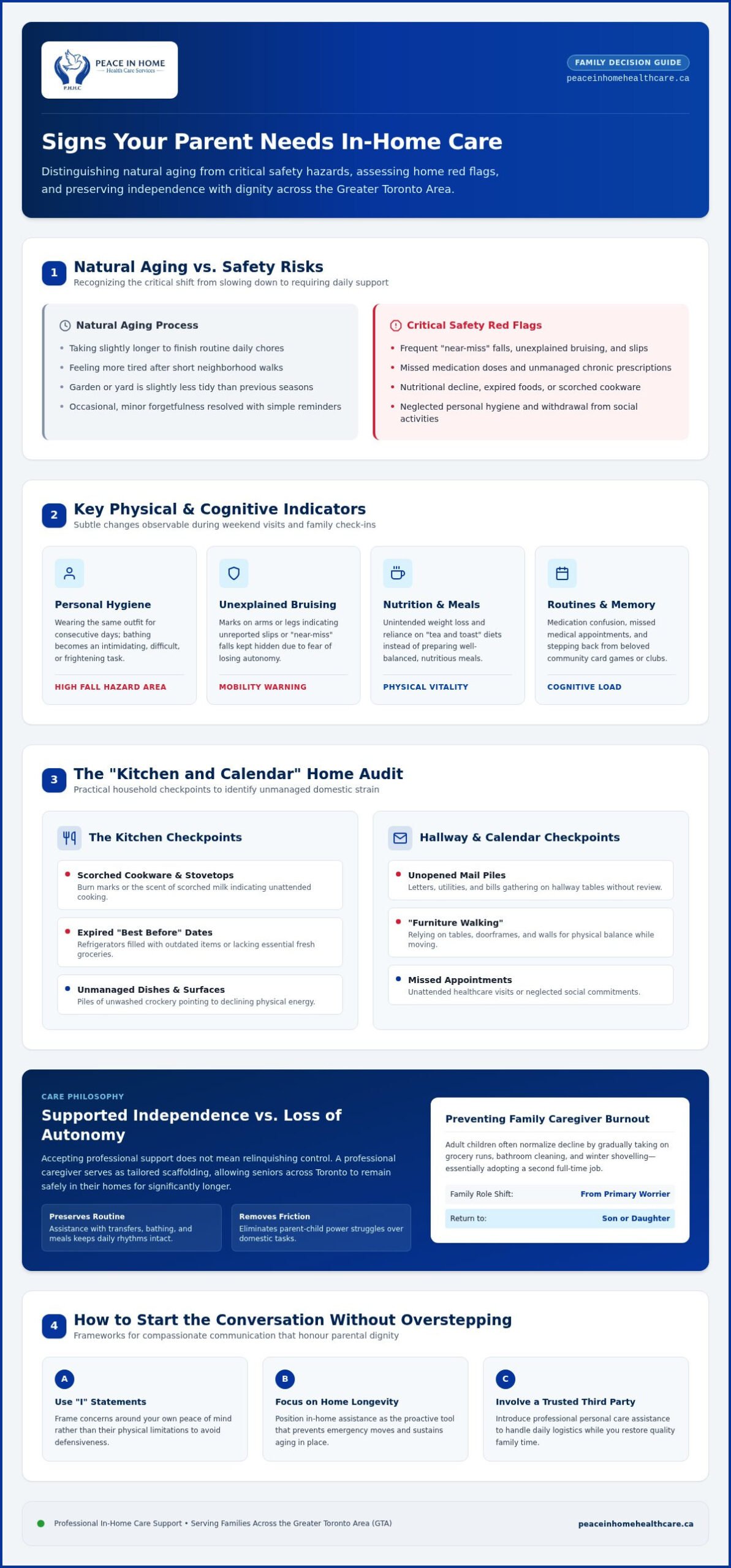
It’s often the physical changes that families notice first during a weekend visit or a quick check-in. When you’re with your loved one, look for subtle shifts in their daily routine that might feel small but carry significant meaning. A decline in personal hygiene is a major indicator. If your mother has always taken pride in her appearance but is now wearing the same outfit for several days straight, it may be because bathing has become a difficult or frightening task. Unexplained bruising on the arms or legs is another warning. These marks often point to frequent “near-miss” falls that your parent might be too embarrassed to mention, especially if they’re worried about losing their independence.
Weight loss and a sudden lack of interest in meal preparation are also common signs your parent needs a caregiver. You might notice their fridge is filled with expired “best before” dates or that they’re relying on tea and toast rather than balanced meals. Confusion regarding medication schedules or missed doctor appointments also signals that the mental load of daily life is becoming too heavy. Social withdrawal is equally telling. If a once-active senior stops attending community events or skips their weekly card game, it could be a sign of depression or a loss of confidence in their physical abilities. These changes aren’t just part of getting older; they are clear signals that the current living situation is no longer supportive enough.
Mobility and Physical Safety Concerns
Navigating a home can eventually become a series of obstacles. Watch how your parent moves through their space. Are they “furniture walking,” using tables and walls for balance as they move from the kitchen to the living room? Difficulty with stairs or getting in and out of the bathtub often leads to dangerous slips. Professional personal care assistance for seniors can provide the steady hand and mobility support needed to prevent hospitalizations. Having a trained professional there to assist with transfers ensures your loved one stays safe while maintaining their dignity.
Early Signs of Cognitive Decline
It’s helpful to distinguish between normal “senior moments” and more serious cognitive issues. Use the “repetition” test: does your parent ask the same question several times within a short timeframe? This repetition suggests they aren’t retaining new information. Safety risks escalate quickly when memory fades. Leaving the stove on or becoming disoriented in familiar Toronto neighbourhoods are clear signs your parent needs a caregiver. These aren’t just lapses in memory; they are risks to their physical well-being. If you’re feeling unsure about the changes you’re seeing, reaching out for a professional care assessment can provide the clarity and reassurance your family needs during this transition.
The ‘Kitchen and Calendar’ Test: Subtle Signs of Decline
The heart of any home is the kitchen, and it’s often where the first quiet warnings of a struggle appear. While physical changes are visible, the way a person manages their environment reveals much about their executive function. Opening the refrigerator can be eye-opening. You might find three identical cartons of milk or several jars of mayonnaise that expired months ago. This often indicates that your loved one is struggling to keep track of what they have or when they last shopped. These patterns are significant signs your parent needs a caregiver to help manage the logistics of daily life.
Beyond the fridge, look at the state of the appliances. Scorched pots, grease buildup on the stovetop, or a collection of stained dishcloths suggest that cooking has become a hazardous or overwhelming task. Similarly, a stack of unopened mail on the counter or a laundry basket that hasn’t been emptied in a week points to a loss of the energy required for routine upkeep. When a previously organized person starts missing social engagements or forgetting medical appointments, it signals that the mental load of a calendar is becoming too much to carry alone.
Nutritional Health and Dehydration
Many seniors gradually stop cooking for themselves because of physical fatigue or a growing fear of using the stove. This shift often leads to a diet of “tea and toast,” which lacks the protein and vitamins necessary for brain health. Poor nutrition and dehydration are directly linked to increased confusion, dizziness, and a higher risk of falls. Professional meal preparation services do more than just provide food; they ensure your parent receives consistent, healthy nourishment. This support helps maintain their cognitive clarity and physical strength, allowing them to stay safely in their own home.
Financial and Administrative Red Flags
The mailbox is another place where subtle decline hides. If you notice aggressive “final notice” letters or utility bills left unopened, it’s a sign that administrative tasks are causing significant stress. Seniors are also frequently targeted by sophisticated phone scams, and a sudden change in spending patterns can be a major red flag. A companion caregiver acts as a second set of eyes, noticing these paperwork stresses early before they lead to financial hardship. By handling the “paperwork” of life, a professional can alleviate the anxiety that often accompanies a parent’s signs your parent needs a caregiver and the realization they can no longer keep up with their affairs.
How to Start the Conversation Without Overstepping
Once you’ve identified the signs your parent needs a caregiver, the next hurdle is talking to them about it. This conversation is often fraught with emotion because it touches on their deepest fears of losing control. To make the process easier, pick a calm, neutral time to talk. Avoid bringing it up during high-stress moments like a holiday dinner or immediately after a medical appointment. A quiet afternoon over a cup of tea is often much more productive. Start by using “I” statements to express your feelings rather than “You” statements that can feel like an attack. For example, saying “I feel worried when I see the stairs are becoming difficult for you” is much softer than “You aren’t safe on the stairs anymore.”
The most effective way to frame this support is as a tool for independence. Instead of suggesting they “need help,” explain that a caregiver is a way for them to stay in their beloved home much longer. Listen more than you speak. Acknowledge their concerns about privacy and strangers in their space. It’s also helpful to suggest a trial period rather than a permanent lifestyle change. Many seniors are more open to the idea if they know they can try it out for a few weeks to see how it feels. This approach honours their autonomy while addressing the safety concerns you’ve noticed.
Scripts for a Dignified Discussion
If you’re unsure what to say, try these gentle opening lines. When addressing a recent fall, you might say: “I was so unsettled to hear about your slip in the hallway, and I’d love to find a way to make sure you’re supported so it doesn’t happen again.” If you want to frame a caregiver as a personal assistant, try: “I know you’ve always hated the heavy laundry and vacuuming; what if we found someone to handle those chores so you can focus on your bridge club and gardening?” If they worry about a “stranger” in the house, reassure them by saying: “We’ll find someone who matches your personality, and we can even have a short visit first to make sure you’re comfortable with them.”
Involving the Professionals Early
Sometimes, the best way to move forward is to bring in a neutral third party. A professional home assessment can identify safety needs without the emotional baggage of the parent-child relationship. When an expert points out the signs your parent needs a caregiver, it often feels less like “nagging” and more like a medical recommendation. This helps alleviate the power struggle and allows you to go back to being a supportive family member. The ultimate goal is peace of mind for the entire family, ensuring your parent is safe and you are no longer overwhelmed by the weight of constant worry.
Professional In-Home Care: Preserving Independence in the GTA
Identifying the signs your parent needs a caregiver is a significant milestone that leads to a much safer future. In the Greater Toronto Area, the challenges of aging are often amplified by our climate and urban layout. Professional in-home care is the most effective way to address these hurdles while keeping your parent in the home they love. These personalized care plans are designed to be fluid, adapting as your loved one’s needs evolve over time. By carefully matching caregivers to a senior’s personality and culture, the support feels like a dignified partnership rather than an intrusion.
Tailored Support for Every Stage
Support is never one-size-fits-all. Some families start with companionship care to help a parent stay socially active in their neighbourhood. Others require more intensive personal care or specialized dementia support to manage cognitive decline safely. If your parent has complex medical requirements, skilled nursing care at home Toronto provides professional clinical oversight in a familiar setting. Respite care is also available for family members who need a temporary break to avoid burnout, ensuring that the care your parent receives is always delivered with patience and energy.
Peace In-Home Health Care Services: Your Partner in the GTA
With more than 17 years of experience, Peace In-Home Health Care Services is a dedicated advocate for seniors across the region. We provide compassionate, human-first care in Toronto, Vaughan, Markham, Richmondhill, and Mississauga. Moving from the initial realization of the signs your parent needs a caregiver to a settled routine is a journey we navigate alongside you. Our goal is to handle the daily logistics of care so you can return to your role as a son or daughter. Choosing professional support is a proactive step that protects your parent’s autonomy and restores peace of mind to your entire family.
Book a compassionate home care assessment today
Taking the First Step Toward Peace of Mind
Recognizing the signs your parent needs a caregiver is a profound act of love, not an admission of failure. By paying attention to subtle household shifts and physical red flags, you can intervene before a crisis occurs. This proactive approach ensures your loved one maintains their dignity and independence within the comfort of their own home. You’ve learned how to spot the red flags and how to start a gentle, “human-first” conversation that preserves your parent’s autonomy.
Transitioning from a full-time worrier back to a supportive son or daughter is possible with the right partner. With over 17 years of experience serving families across Toronto, Vaughan, and Markham, Peace In-Home Health Care Services provides the reliable, personalized support your family deserves. We specialize in tailored care plans that prioritize the emotional well-being of your loved one while ensuring their physical safety in a familiar environment.
You don’t have to navigate this transition alone. We’re here to provide a steady hand and expert guidance every step of the way, helping your family find the security and comfort you need for the future.
Frequently Asked Questions
What is the first sign that a senior needs help at home?
The first sign is often a subtle shift in their personal environment or daily routine rather than a major medical event. You might notice the fridge contains expired milk or that the house isn’t as tidy as it once was. These small changes are often the early signs your parent needs a caregiver. Pay close attention to their mail, as unopened bills often signal that administrative tasks are becoming overwhelming.
How do I convince my parent to accept a caregiver if they are resistant?
Focus the conversation on their desire to stay in their own home rather than on their limitations. Frame a caregiver as a personal assistant who handles the chores they dislike, such as heavy cleaning or laundry. Suggesting a short trial period often feels less threatening than a permanent change. Listen to their fears about privacy and emphasize that having support is the best way to protect their long-term independence.
Is home care safer than a nursing home for a parent who falls often?
Home care offers the advantage of one-on-one attention that is tailored to their specific living environment. While nursing homes provide supervision, a professional caregiver in the home focuses solely on your parent’s mobility and transfer needs. This dedicated support helps identify trip hazards in their familiar surroundings, such as loose rugs or poor lighting. For many Toronto seniors, personalized support is a highly effective way to prevent falls while maintaining a familiar lifestyle.
What is the difference between a companion and a personal support worker (PSW)?
A companion focuses on social engagement, meal preparation, and light housekeeping to keep your parent active and well-nourished. They are wonderful for seniors who are lonely or need help with errands. In contrast, a personal support worker provides hands-on personal care assistance, including bathing, dressing, and toileting. Both roles are essential components of a comprehensive care plan, but the choice depends on whether your parent needs social support or physical help.
Can a caregiver help my parent with their medication and doctor appointments?
Yes, professional caregivers play a vital role in managing health logistics. They provide consistent medication reminders to ensure prescriptions are taken safely and on schedule. Additionally, services include errands and appointment accompaniment, where a caregiver can drive your parent to their Toronto medical centre and help them navigate the office. This support ensures they never miss an important check-up and gives your family peace of mind that their health is being monitored.
How much does home care typically cost in the Toronto area?
The cost of home care in the Greater Toronto Area depends entirely on your parent’s specific needs and the number of hours required. Since every situation is unique, a personalized assessment is the best way to determine a budget. Factors like whether they need simple companionship or skilled nursing care will influence the final plan. We recommend speaking with a care coordinator to discuss a tailored schedule that provides the necessary support while respecting your family’s resources.
What should I do if my parent is showing signs of dementia but refuses to see a doctor?
It’s helpful to introduce a professional for a home safety assessment rather than a medical evaluation. This neutral third party can identify the signs your parent needs a caregiver without the emotional friction of the parent-child relationship. Focus on the practical benefits of help with daily chores first. Often, once a senior experiences the comfort and dignity that a reliable caregiver provides, they become more open to discussing their health with a medical professional.
Can we hire a caregiver for just a few hours a week to start?
Absolutely. Many families start with just a few hours a week of companionship care or light housekeeping. This “slow start” approach allows your parent to build a relationship with their caregiver without feeling overwhelmed by a sudden change in their routine. It’s a flexible way to provide respite care for families while gradually introducing more support as your parent’s needs evolve. Starting small is often the most compassionate way to ensure a successful transition.