
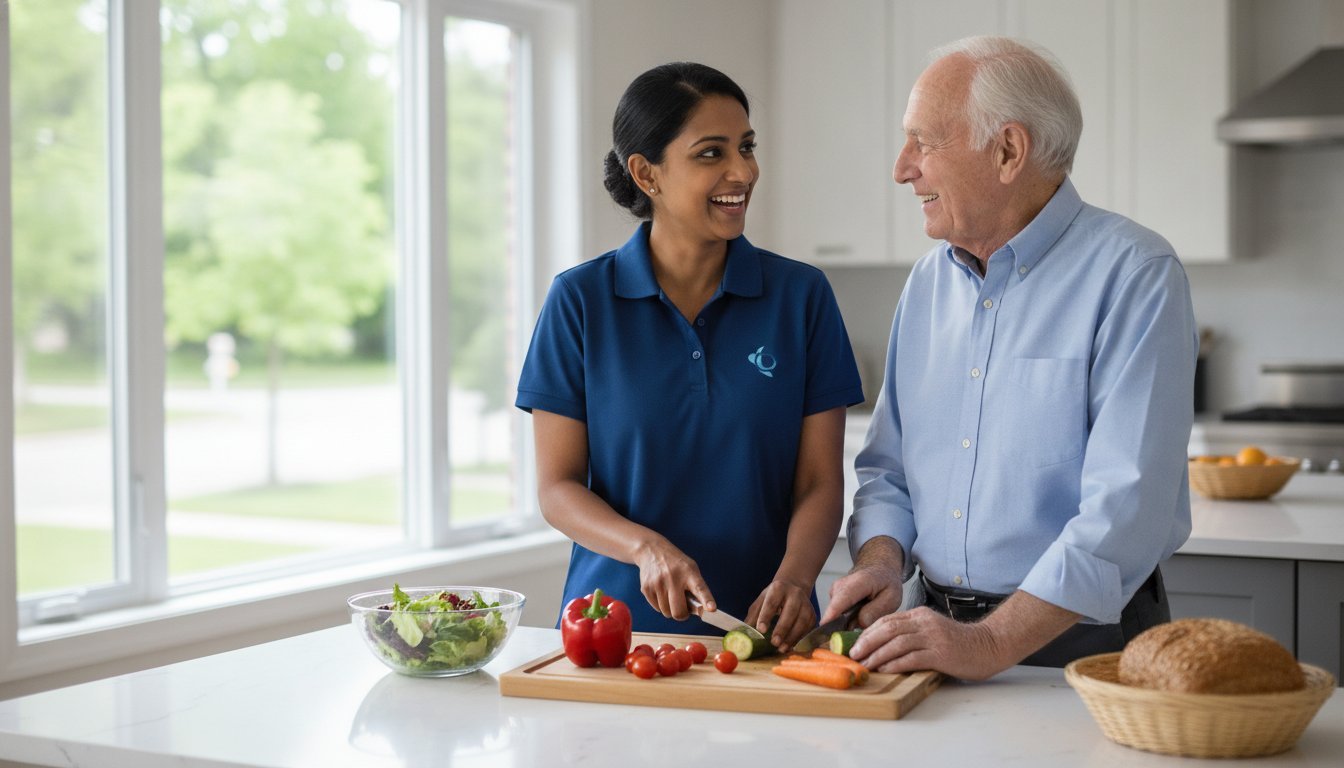
Imagine visiting your father in Oakville only to find his fridge holds little more than tea and toast because the stove now feels like a hazard rather than a tool. It’s a quiet, painful realization that many Canadian families experience as their loved ones age. You want them to enjoy the hearty, nutritious food they’ve always loved, but the logistics of meal preparation for elderly at home can feel like a mounting source of stress. Whether you’re worried about kitchen safety, managing a complex diabetic-friendly menu, or simply seeing a parent lose interest in eating due to loneliness, you aren’t alone in this journey.
You deserve the peace of mind that comes with knowing your loved one is well-fed and safe, and they deserve to maintain their independence. This guide outlines how to create a structured, supportive meal system that improves physical health and restores the joy of dining. We’ll look at practical safety strategies, nutritional tips for specialized diets, and the transformative power of companionship in the kitchen.
Key Takeaways
- Learn why appetite naturally declines with age and how to prioritize nutrient density to keep your loved one’s energy levels stable.
- Discover how to conduct a kitchen safety audit to prevent falls and fires while ensuring essential items are in accessible reach zones.
- Master practical strategies for meal preparation for elderly at home, balancing the convenience of batch cooking with the appeal of fresh flavours.
- Explore tailored meal ideas, from high-protein breakfasts to light lunches, designed to fuel a senior’s day without causing afternoon fatigue.
- Understand how the presence of a compassionate caregiver can transform mealtime from a chore into a social highlight that encourages healthy eating.
Understanding the Unique Nutritional Needs of Seniors
As we age, our bodies go through subtle but significant shifts that change how we relate to food. You might notice your mother in Mississauga or your father in Toronto isn’t finishing their favourite meals anymore. This decline in appetite is often a natural part of aging, but it requires a compassionate, tailored approach. Metabolism slows down, and physical activity often decreases, which means the body simply requires fewer calories. However, while calorie needs drop, the requirement for specific vitamins and minerals actually stays the same or increases. This makes meal preparation for elderly at home a delicate balancing act of quality over quantity.
One of the most overlooked aspects of senior nutrition is hydration. Many seniors lose their natural thirst reflex, meaning they don’t feel thirsty even when their body is dehydrated. We often suggest “eating” water through moisture-rich foods like Ontario-grown cucumbers, celery, or berries. Additionally, common roadblocks like medication side effects can create a metallic taste in the mouth or cause chronic dryness, making dry foods difficult to swallow. Understanding these physical changes helps us move away from frustration and toward supportive solutions that prioritize the senior’s comfort.
Key Nutrients for Aging in Place
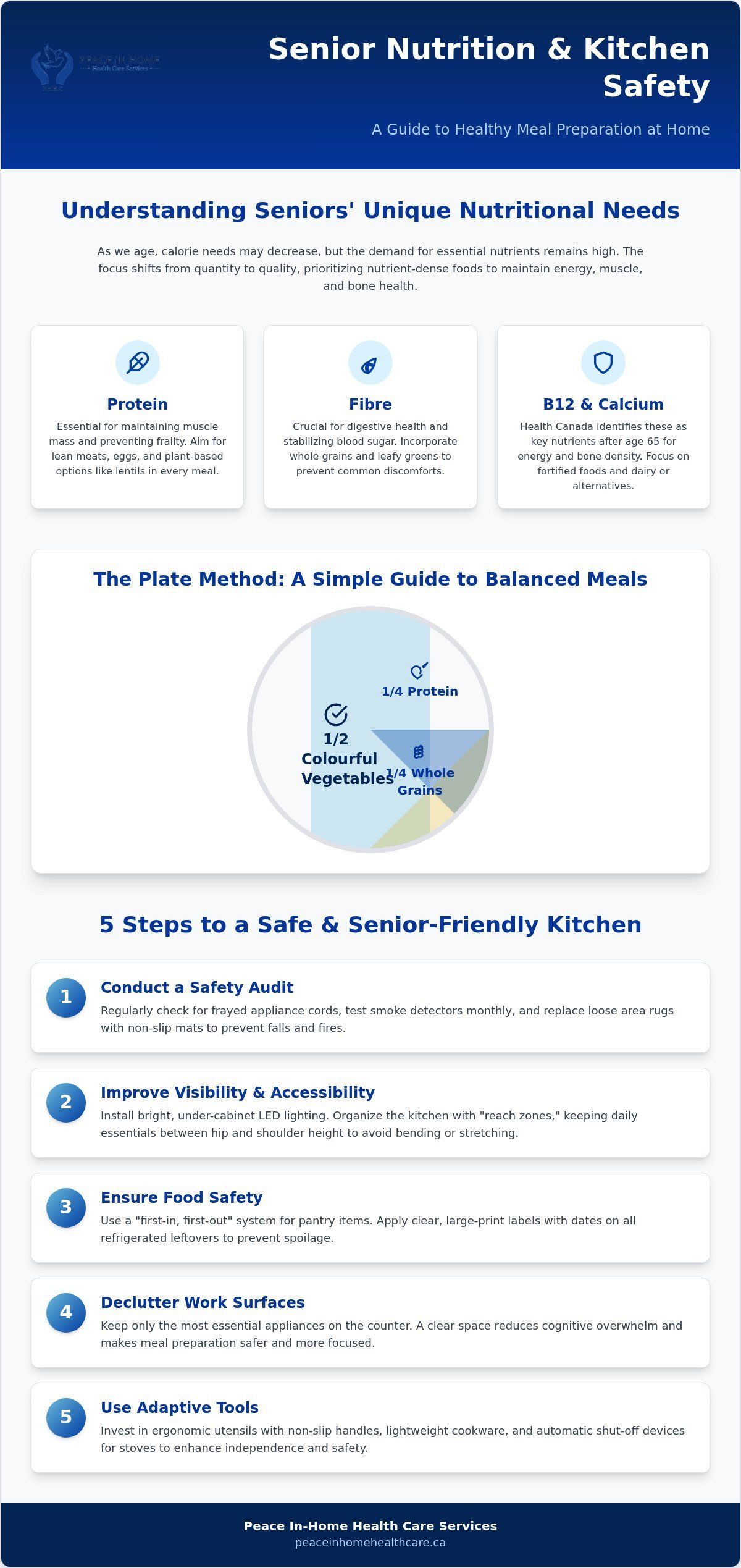
- Protein: Essential for maintaining muscle mass and preventing the frailty that leads to falls. We aim for lean meats, eggs, or plant-based proteins like lentils in every meal.
- Fibre: Crucial for digestive health and stabilizing blood sugar. Whole grains and leafy greens help prevent the discomfort of constipation, which is a common concern for seniors.
- Vitamin B12 and Calcium: Health Canada identifies these as “nutrients of concern” after age 65. Because the body’s ability to absorb B12 decreases, and bone density becomes a priority, we focus on fortified foods and dairy or dairy alternatives.
Adapting to Health Canada’s Food Guide
Health Canada’s updated guidelines move away from rigid food groups and toward the “Plate Method.” This is a simple, visual way to handle meal preparation for elderly at home without the stress of measuring every gram. We aim to fill half the plate with colourful vegetables, a quarter with whole grains, and a quarter with high-quality protein. It’s a dignified way to ensure balance while keeping portions manageable.
Reducing sodium is another priority, as high salt intake is linked to hypertension. We swap salt for local herbs like dill, parsley, or chives to keep flavours vibrant. Finally, stay alert for signs of malnutrition, such as loose-fitting clothing, sudden lethargy, or a lack of interest in social dining. These signals often mean it’s time to adjust the meal plan to better support their changing needs.
5 Steps to a Safe and Senior-Friendly Kitchen
The kitchen is often the heart of a home, but for an aging loved one, it can become a place of hidden risks. Whether your family is in Vaughan, Oakville, or Scarborough, ensuring this space remains functional and secure is vital. A thorough kitchen safety audit is the first step to preventing common accidents like fires or falls. Start by checking for frayed appliance cords and ensuring that smoke detectors are tested monthly. Removing loose area rugs and replacing them with non-slip flooring can significantly reduce the risk of a dangerous trip during meal preparation for elderly at home.
Visibility and accessibility are equally important. Dim lighting often leads to errors with sharp knives or incorrect ingredient measurements. Installing bright LED strips under cabinets can illuminate work surfaces effectively. We also recommend establishing “reach zones.” This means keeping daily essentials, like the kettle or a favourite mug, at a height between the hips and shoulders. This simple shift prevents the need for risky step stools or painful bending that can lead to loss of balance.
Food safety requires a proactive approach as well. As memory or vision changes, checking expiry dates becomes more difficult. We suggest a “first-in, first-out” organization system for the pantry and clear, large-print labels on all refrigerated leftovers. If the kitchen feels cluttered, it can lead to cognitive overwhelm. Keeping only the most essential appliances on the counter helps a senior focus on their task without getting distracted by unnecessary items.
Adaptive Tools for Physical Independence
Arthritis or tremors shouldn’t mean the end of a senior’s time in the kitchen. Ergonomic utensils with built-up, non-slip handles make peeling and cutting much easier on sensitive joints. For families worried about a burner being left on, automatic shut-off devices for stoves provide immense relief. Switching to lightweight cookware, such as professional-grade aluminum instead of heavy cast iron, also reduces the strain on wrists and shoulders when moving pots from the sink to the stove.
Modifying the Kitchen Layout
Small physical changes can preserve energy and prevent injury. Move heavy items like bags of flour or large pots to waist-height counters to avoid deep bending. In high-moisture areas near the sink, non-slip mats are essential to catch splashes and provide a stable footing. For seniors living with early-stage dementia, labelling cupboards with both words and pictures, such as “Plates” or “Spices,” reduces frustration and encourages independence. If you feel unsure about which modifications are most urgent, a professional home safety consultation can help you create a personalized plan for your loved one’s specific needs.
Practical Strategies for Meal Planning and Prep
Effective meal preparation for elderly at home starts with a flexible plan that respects the senior’s changing energy levels. Some mornings, your loved one might feel vibrant and ready for a full breakfast, while other afternoons might bring fatigue that makes a heavy meal unappealing. We recommend a “sliding scale” menu. This involves having a mix of easy, nutrient-dense snacks and more substantial entrees available. By using a “Social Pantry” approach, where healthy options like Greek yogurt, pre-peeled oranges, or whole-grain crackers are kept at eye level, you encourage independent grazing throughout the day. This prevents the blood sugar drops that often lead to dizziness or confusion.
When it comes to shopping in the GTA, efficiency is your best friend. Don’t feel guilty about using shortcuts. Pre-cut vegetables from the local market and rotisserie chickens are fantastic tools for a busy family. A single rotisserie chicken can be transformed into a comforting soup, a protein-rich salad, and a soft chicken salad sandwich over three days. These strategies reduce the time spent standing at a counter, which can be physically taxing for seniors with back or hip pain.
Batch Cooking and Freezer Safety
Batch cooking is a popular way to save time, but it must be done with care to remain appetizing. We suggest portioning meals into clear, single-serve containers before they go into the freezer. Each container should have a large-print label with the date and simple reheating instructions, such as “Microwave for 3 minutes.” To ensure the best quality, we use the flash freeze method. Flash freezing involves placing individual food items on a tray to freeze separately before bagging them, which prevents clumping and preserves the original texture of the ingredients. When it’s time to eat, always thaw meals in the refrigerator overnight rather than on the counter to prevent the growth of harmful bacteria.
Meal Delivery vs. In-Home Preparation
Many families consider frozen meal delivery services, but these often lack the personal touch that encourages a healthy appetite. While convenient, “frozen-and-forgotten” meals can quickly become monotonous, leading to a senior skipping meals entirely. In contrast, fresh meal preparation for elderly at home provides a sensory experience. The smell of sautéing garlic or simmering stew can actually trigger the brain’s hunger signals. Perhaps most importantly, having a person physically present during prep allows for real-time monitoring. A caregiver can notice if a senior is struggling to chew certain textures or if their thirst has decreased, providing vital feedback that a delivery box simply cannot offer.
Nutritious Meal Ideas for Every Time of Day
When you’re organizing meal preparation for elderly at home, it’s helpful to view the day through four distinct nutritional windows. Breakfast sets the tone, and we’ve found that a high-protein start is the best way to fuel a senior’s morning. Rather than a simple piece of toast, consider a bowl of warm oatmeal enriched with a spoonful of Greek yogurt or a soft-scrambled egg with finely chopped spinach. These options provide the sustained energy needed for morning appointments or light physiotherapy exercises without causing a mid-morning blood sugar crash.
Lunch should be light but nutrient-dense to help your loved one avoid the common mid-afternoon slump. A hearty lentil soup or a tuna salad made with avocado instead of heavy mayo offers plenty of flavour and essential fats. As evening approaches, dinner should focus on easy-to-digest ingredients that promote better sleep. Turkey, which contains natural tryptophan, paired with roasted sweet potatoes, is a comforting choice that doesn’t sit heavily in the stomach overnight. For seniors with smaller appetites, “bridge” snacks like cottage cheese with peaches or a handful of walnuts can fill nutritional gaps between main meals.
Soft Food and Dysphagia-Friendly Options
Chewing or swallowing difficulties, known as dysphagia, shouldn’t mean a loss of dignity at the dinner table. We believe that pureed food should still look and taste like a gourmet meal. Instead of commercial thickening powders that can sometimes leave a chalky aftertaste, we use natural thickeners like silken tofu, mashed avocado, or cooked root vegetables. These add creaminess and calories without altering the authentic flavour of the dish. Presenting these meals in colourful, separate portions on a plate, rather than mixing them together, helps maintain the visual appeal and respect the senior’s dining experience.
Flavour-First Recipes for Diminished Taste
It’s common for taste buds to become less sensitive with age, often leading seniors to add too much salt. To combat this, we lean heavily on umami-rich ingredients like sautéed mushrooms, nutritional yeast, or a dusting of parmesan cheese to provide a savoury punch. Aromatics such as fresh ginger, garlic, and onions offer heart-healthy seasoning that wakes up the palate. This zesty lemon salmon, seasoned with cracked pepper and fresh dill, offers a delicious way to incorporate high levels of Omega-3 fatty acids that are vital for maintaining brain health. Personalized meal preparation for elderly at home ensures that every bite serves a purpose while keeping the joy of eating alive.
How Professional Caregivers Transform Mealtime
Loneliness is often the silent ingredient in senior malnutrition. When a person eats alone day after day, the act of dining can lose its joy, leading many to skip meals or settle for tea and toast. Professional companionship changes this dynamic entirely. By providing a warm, steady presence, a caregiver turns a routine task into a social highlight that naturally encourages a better appetite. This emotional connection is the foundation of successful meal preparation for elderly at home, ensuring that nutrition is met with a smile rather than a sense of obligation.
For adult children living in Toronto, Markham, or Mississauga, the daily worry about a parent’s nutritional intake can be a heavy burden. Caregivers act as your eyes and ears, meticulously monitoring how much is eaten and noticing subtle shifts in preference or physical ability. If a loved one suddenly struggles with certain textures or begins to show signs of dehydration, these changes are reported to the family immediately. This proactive approach prevents small issues from becoming health crises, offering you true peace of mind while you’re at work or managing your own household.
We prioritize a philosophy of “doing with” rather than “doing for.” Whenever possible, we invite the senior to participate in the process, whether it’s choosing the week’s recipes or helping with light tasks like washing vegetables. This collaborative spirit preserves their independence and keeps them tethered to the familiar rhythms of their own kitchen. It transforms the caregiver from a service provider into a supportive partner in the home.
The Peace In-Home Approach to Dining
Our team understands that food is deeply personal. We focus on the “theatre of the meal,” ensuring the table is set nicely and the food is presented with care to make every lunch or dinner feel like an event. We take great pride in customizing meal plans to reflect the rich cultural traditions and family recipes that define our clients’ lives in the GTA. To create an environment that truly supports health, we often integrate these services with light housekeeping for seniors Toronto, ensuring the kitchen is always clean, safe, and welcoming for the next meal.
Getting Started with Meal Support
Introducing help to a proud parent requires a gentle, respectful touch. We often suggest framing the caregiver as a “sous-chef” or a meal-prep assistant who is there to handle the heavy lifting, such as grocery shopping or chopping. The process begins with a professional nutritional assessment in the comfort of their home, where we learn about their likes, dislikes, and specific health requirements. This ensures the support feels like a tailored addition to their lifestyle rather than an intrusion.
To ensure your loved one is eating well every day, contact our compassionate team for a free consultation.
Restoring the Joy of Dining and Peace of Mind
Providing consistent, healthy meals for a parent shouldn’t be a source of constant anxiety. By focusing on kitchen safety, nutrient-dense ingredients, and the vital role of companionship, you can transform mealtime from a daily struggle into a dignified experience. Proper meal preparation for elderly at home is about more than just calories. It’s about preserving a familiar lifestyle and ensuring your loved one feels seen and supported in their own kitchen.
At Peace In-Home Health Care Services, we’ve spent over 17 years supporting families across the GTA with compassionate, person-centred care. Our fully vetted and trained caregivers don’t just follow a recipe; they provide the attentive connection that helps seniors thrive. Whether you are in Toronto, Mississauga, or Markham, you don’t have to navigate these transitions alone. We are here to offer a steady hand and expert guidance to ensure your family’s needs are met with respect.
You’ve already taken the first step by learning how to support their needs. With the right plan in place, you can return to simply being a daughter or son while knowing their health and energy are in expert hands. There is a brighter, healthier path forward for your family.
Frequently Asked Questions
How often should an elderly person eat if they have a low appetite?
Seniors with low appetites should aim for five or six small, nutrient-dense meals throughout the day instead of three large ones. This approach prevents them from feeling overwhelmed by a full plate. We focus on making every bite count by adding healthy fats like olive oil or avocado to these smaller portions. This ensures they receive the necessary energy even when they don’t feel particularly hungry or interested in a traditional dinner.
What are the best foods for seniors with high blood pressure?
The best foods for managing high blood pressure include leafy greens, berries, fatty fish like salmon, and unsalted seeds. These choices align with the DASH diet, which emphasizes reducing sodium while increasing potassium and magnesium. Using fresh herbs instead of salt shakers is a simple way to keep flavours vibrant. This is a core part of professional meal preparation for elderly at home for those with cardiovascular concerns.
Can a caregiver help with grocery shopping and meal planning?
Yes, our caregivers can assist with both grocery shopping and weekly meal planning as part of our supportive care. They can accompany your loved one to a local GTA supermarket or handle the shopping independently based on a personalized list. This ensures the fridge is always stocked with fresh, healthy ingredients while removing the physical strain of heavy bags and long walks for the senior. It’s a simple way to maintain a healthy kitchen.
How do I know if my parent is no longer safe to use the stove?
You’ll know it’s time to reconsider stove use if you notice scorched pots, lingering smells of burnt food, or if your parent frequently forgets to turn burners off. These are clear indicators that cognitive or physical changes are making independent cooking hazardous. If you see these signs, transitioning to professional meal preparation for elderly at home provides a safe alternative that preserves their dignity while keeping the home secure from fire risks.
What are some easy, high-protein snacks for seniors at home?
Excellent high-protein snacks include Greek yogurt, hard-boiled eggs, cottage cheese with fruit, and hummus with soft vegetables. These are easy to prepare and store in a social pantry where they’re easy to reach. For seniors who prefer something sweet, a small protein smoothie made with nut butter and milk can provide a significant nutritional boost without requiring much effort to consume. These snacks help maintain muscle mass between larger meals.
How can I encourage my parent with dementia to eat more?
Encouraging a parent with dementia to eat involves reducing dining room distractions and using high-contrast plates to help them see their food more clearly. Since complex utensils can be frustrating, offering nutritious finger foods like chicken strips or vegetable sticks can improve intake. Our caregivers are specifically trained in these techniques to ensure mealtime remains a calm, successful experience rather than a source of conflict or confusion for your loved one.
Is it better to have one large meal or several small ones for seniors?
It’s generally better for seniors to have several small meals rather than one or two large ones. Large meals can be difficult to digest and may lead to lethargy or discomfort. Smaller portions eaten every few hours help maintain stable blood sugar levels and provide a consistent stream of energy throughout the day. This rhythm is often much more manageable for those who find a traditional, overflowing dinner plate intimidating.
How does Peace In-Home Health Care handle specific dietary restrictions?
Peace In-Home Health Care manages dietary restrictions through a detailed initial assessment that identifies allergies, medical needs, and cultural preferences. Whether your loved one requires a low-sodium, diabetic-friendly, or gluten-free menu, our caregivers are trained to follow these specific guidelines. We work closely with the family to ensure every meal is safe, flavourful, and respectful of their long-standing traditions. This personalized approach ensures no nutritional need is overlooked.