What if the safest place for your parent to age isn’t a facility with a long waiting list, but the very living room where they raised their family? Many families across Ontario feel a crushing sense of guilt when they realize they can’t provide care alone, yet they fear that a move to an institution means a loss of their loved one’s spirit. It’s common to feel overwhelmed while searching for alternatives to nursing homes for seniors that don’t sacrifice dignity for professional safety.
We believe that professional support should enhance a senior’s life, not restrict it. You can find a solution that preserves your loved one’s independence while finally giving yourself the room to breathe. This guide explores seven compassionate care models available in 2026, ranging from the innovative “Nursing Home Without Walls” pilot to personalized live-in support. We’ll show you how to access high-quality care while keeping your family’s daily rhythm intact, ensuring your loved one remains in the familiar environment they love.
Key Takeaways
- Understand the vital differences between retirement homes and assisted living to ensure your family chooses the appropriate level of daily support.
- Explore how professional in-home care serves as one of the leading alternatives to nursing homes for seniors by prioritizing one-on-one attention and emotional well-being.
- Learn to evaluate your home environment and clinical needs to determine if aging in place is a safe and sustainable option for your loved one.
- Discover the cost-effective benefits of personalized care models where you only pay for the specific hours of assistance required.
- Gain peace of mind by understanding how a “human-first” approach to care transitions can reduce caregiver burnout and restore family harmony.
Exploring Your Options: Why Families Seek Alternatives to Nursing Homes
Choosing how to care for an aging parent is a deeply personal journey. In Ontario, we’ve seen a significant move toward aging in place as families seek alternatives to nursing homes for seniors that prioritize the individual over the institution. This isn’t just about finding a place for someone to stay; it’s about ensuring they continue to live with purpose. Many families realize that while a facility offers a bed and a schedule, it can’t always provide the warmth of a lifetime of memories.
The distinction between “care” and “facility-based living” is crucial. Care is an action; it’s the support, medical attention, and companionship a person receives. A facility is simply a setting. By separating these two concepts, you can explore a spectrum of senior care options that bring the support to the senior, rather than moving the senior to the support. This approach helps maintain mental health, especially for those experiencing cognitive decline who rely on familiar surroundings to feel safe.
The Desire for Independence and Dignity
Staying at home allows seniors to maintain a sense of self that often fades in institutional settings. When a person stays in their own house, they aren’t just a “resident” on a hall; they’re the owner of their space. This independence is a powerful motivator for physical and mental health. Daily routines, like tending to a small garden or sitting on a familiar porch, help preserve cognitive function by keeping the brain engaged with known patterns.
Home is a collection of comforts that a sterile facility cannot replicate. It’s the sound of the floorboards, the light in the kitchen, and the proximity to neighbours. These elements provide a layer of emotional security that is vital for long-term well-being. Professional support at home ensures these comforts remain while adding the necessary safety nets.
Safety and Health Concerns in Institutional Settings
Many families worry about the gaps in attention that can occur in large facilities. With staff often stretched thin across dozens of residents, one-on-one time becomes a luxury. Choosing home-based alternatives to nursing homes for seniors allows for a dedicated professional to focus entirely on your loved one. This personalized monitoring means small changes in health or mood are noticed immediately, preventing minor issues from becoming emergencies.
- Reduced infection risk: Private care limits exposure to community-acquired illnesses often found in shared living spaces.
- Tailored protocols: Health monitoring is based on the individual’s specific history, not a generalized facility checklist.
- Focused safety: Mobility assistance is always available, reducing the risk of falls in unfamiliar hallways.
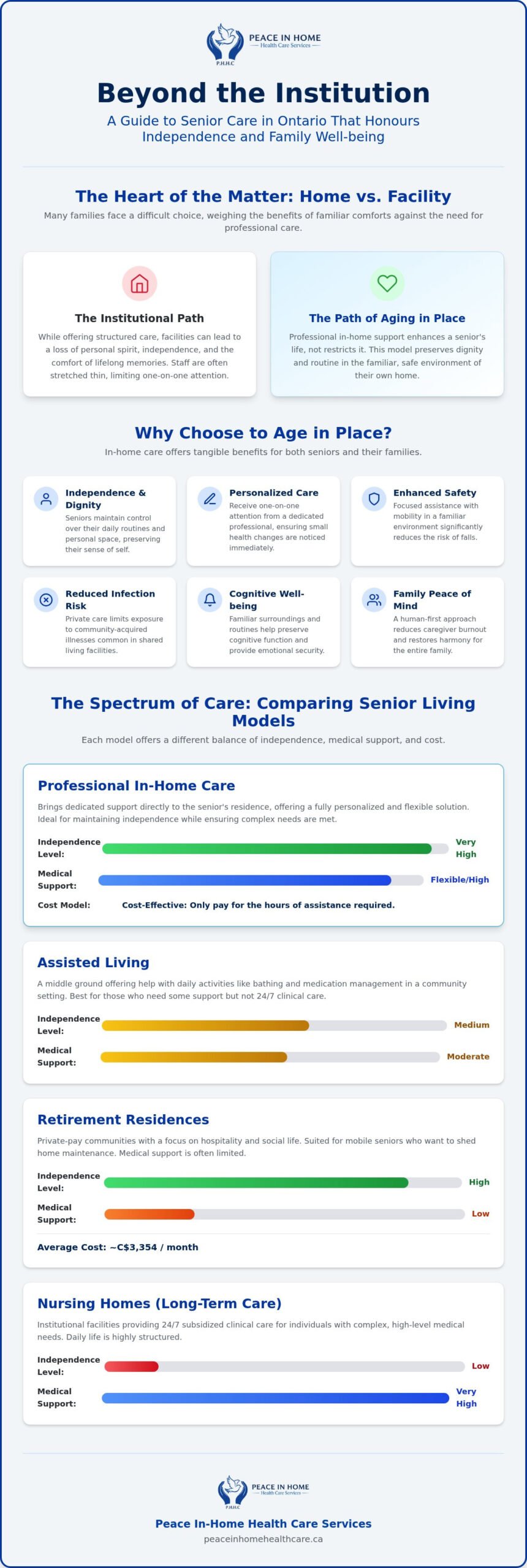
The Spectrum of Care: Comparing Senior Living Models in Ontario
Understanding the landscape of senior living in Ontario is the first step toward making an informed decision. The options vary significantly in cost, level of medical support, and lifestyle. While many families initially look at long-term care, there are several alternatives to nursing homes for seniors that offer a more tailored experience. In the GTA, the choice often comes down to balancing the need for safety with the desire for a familiar, dignified lifestyle.
Retirement Residences and Assisted Living
Retirement homes in Ontario are private-pay communities that offer a hospitality-focused environment. With an average monthly cost of approximately C$3,354, these residences typically include meals, light housekeeping, and social programming. They’re an excellent fit for seniors who are still mobile but want to shed the burden of home maintenance. However, it’s vital to recognize that retirement homes don’t offer the same level of subsidized clinical care as nursing homes.
Assisted living serves as a middle ground for those who require help with “activities of daily living,” such as bathing or medication management. While these settings provide a vibrant social life, they can sometimes fall short when a senior develops complex medical needs or advanced dementia. Before committing to a move, reviewing official government information regarding different care standards can help you understand what level of support is truly guaranteed in a facility setting.
Innovative Living Arrangements
Recent changes in municipal bylaws across Toronto, Vaughan, and Markham have opened the door for creative architectural solutions. “Garden suites” and secondary “granny flats” are becoming popular alternatives to nursing homes for seniors who wish to remain close to family. These self-contained units allow a senior to live on their adult child’s property while maintaining their own front door and private space. It’s a beautiful way to provide proximity without sacrificing independence.
Shared housing models are also on the rise, where seniors live together in a traditional house, sharing costs and companionship. These arrangements often work best when supplemented by professional personal care assistance for seniors. By bringing in external support for tasks like mobility assistance or meal preparation, the “roommate” dynamic remains focused on friendship rather than caregiving duties. If you’re exploring how to bridge the gap between independent living and professional support, speaking with a care coordinator can provide clarity on how to structure a safe, home-based plan.
The Benefits of Aging in Place with Professional In-Home Support
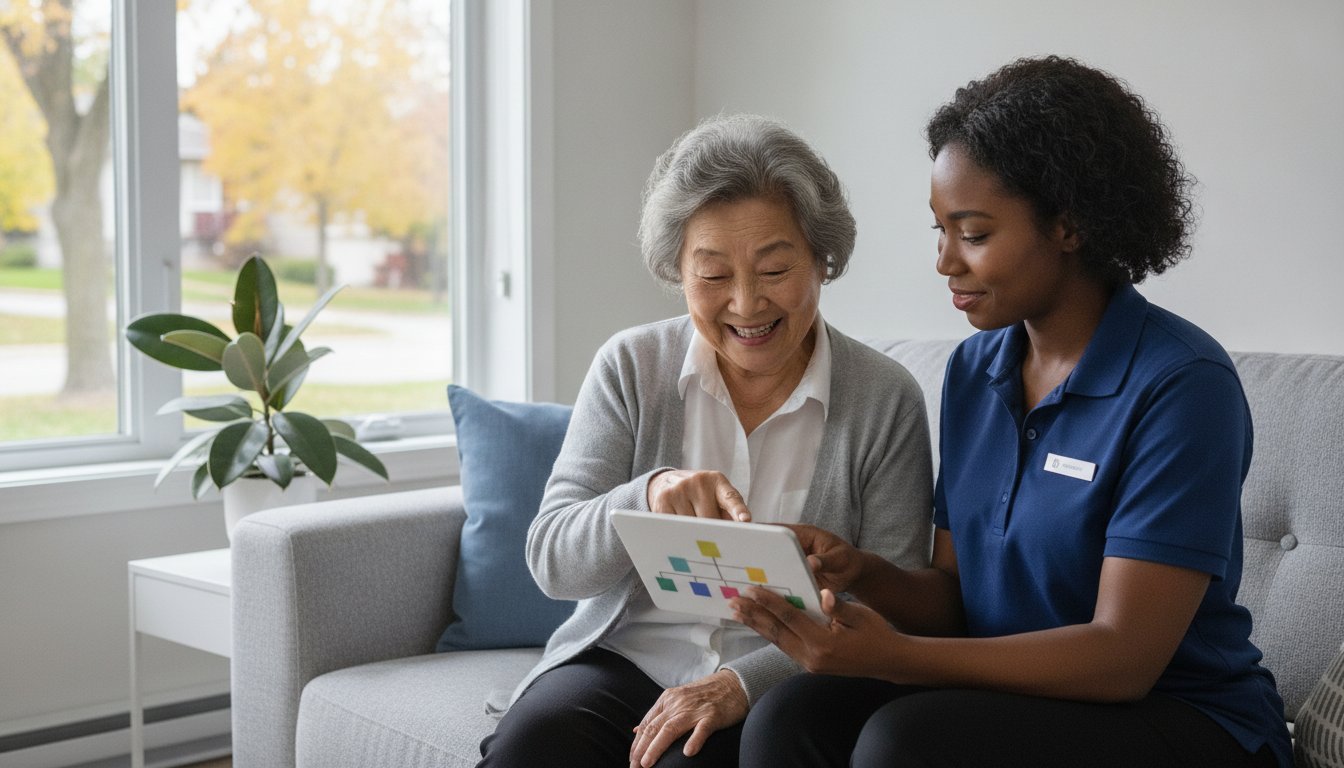
For many families, the most comforting of all alternatives to nursing homes for seniors is the ability to remain in their own residence. One-on-one care represents the gold standard for safety because a dedicated professional focuses entirely on one person’s needs. In a traditional facility, staff must divide their attention between dozens of residents, but at home, your loved one is always the priority. This level of attentiveness doesn’t just improve physical health; it fosters a deep sense of emotional security that is often lost in institutional settings.
Choosing in-home support is also a highly flexible financial decision. Instead of paying a flat monthly fee for a facility that includes services your loved one might not use, you only pay for the specific hours of care required. This flexibility allows families to scale support up or down as circumstances change. Perhaps most importantly, it preserves the parent-child bond. When a professional handles the heavy lifting of daily care, children can return to being family members rather than exhausted caregivers. It restores a sense of balance and harmony to the home environment.
While the transition can feel daunting, even international resources like Medicare’s guide on alternatives to nursing homes highlight that home-based care is a viable, dignified path for long-term support. By bringing professional expertise into the living room, you create a sanctuary that adapts to the senior, rather than forcing the senior to adapt to a rigid facility schedule.
Personalized Care Plans Tailored to the Individual
No two seniors have the same needs, which is why home care services for seniors in Toronto are designed to be fluid. A personalized plan might start with simple companionship and meal preparation but can seamlessly transition to include more intensive support as health needs evolve. Consistent caregivers play a vital role here; they learn the small details that matter, from how a senior likes their tea to the specific stories that bring them joy. These familiar routines are essential for preserving dignity and cognitive function.
Maintaining Specialized Health Standards at Home
Modern home care has evolved to handle complex clinical requirements that were once only possible in a hospital. Accessing skilled nursing care at home in Toronto ensures that medication management, wound care, and mobility transfers are handled with professional precision. Professional home care significantly reduces the risk of hospital readmissions through proactive health monitoring and immediate intervention when subtle changes in a senior’s condition occur. This clinical oversight, combined with the comfort of home, provides a level of protection that makes it one of the most reliable alternatives to nursing homes for seniors today.
How to Evaluate Which Senior Care Model is Right for Your Family
Choosing the right path requires more than just a list of services; it requires a deep understanding of your loved one’s daily reality. When exploring alternatives to nursing homes for seniors, the goal is to find a balance between the safety of clinical oversight and the comfort of personal freedom. This evaluation starts with a simple question: does your family member need help with the basic rhythm of their day, or do they require specialized medical intervention? Identifying this distinction early helps you avoid the stress of a mismatched care setting.
A Checklist for Care Needs Assessment
Start by observing how your loved one manages “Activities of Daily Living” (ADLs). These include bathing, dressing, meal preparation, and safely moving around the house. If they’re struggling with these tasks, personal care assistance can often bridge the gap while maintaining their dignity. It’s also vital to assess the primary caregiver’s health. If you feel exhausted or overwhelmed, preventing caregiver burnout in Toronto through respite services is a necessary step to ensure the long-term viability of aging at home. Consider these factors during your assessment:
- Clinical vs. Personal: Does the senior need wound care and injections, or help with mobility and medication reminders?
- Home Safety: Can the current house be modified with grab bars or ramps to prevent falls?
- Social Health: Does the senior value the privacy of their own space, or are they seeking the structured social calendar of a residence?
Financial Planning for Senior Care in the GTA
Budgeting for care in Ontario involves navigating both public and private systems. While Home and Community Care Support Services (HCCSS) provide some subsidized hours, many families find these aren’t enough for comprehensive safety. In these cases, private home care becomes the primary solution. For those requiring 24/7 supervision, live-in care can be a significantly more cost-effective choice than high-end private suites in GTA retirement residences, where costs can exceed C$7,000 per month for heavy care levels.
Don’t forget to explore government supports like the Ontario Seniors Care at Home Tax Credit, which can help offset eligible medical and care expenses. By combining public subsidies with strategic private support, you can build a sustainable plan that keeps your loved one where they are happiest. Finding the right alternatives to nursing homes for seniors often comes down to matching these financial resources with the senior’s desire for a dignified, familiar lifestyle. Consulting with a healthcare professional can provide the final confirmation needed to ensure your chosen model is safe for the long term.
Transitioning to In-Home Care with Peace In-Home Health Care Services
Deciding on the next steps for a parent is a journey that shouldn’t be taken alone. At Peace In-Home Health Care Services, we’ve spent over 17 years helping families navigate the transition from independent living to supported care. We understand that exploring alternatives to nursing homes for seniors isn’t just a logistical change; it’s an emotional one. Our “human-first” approach ensures that your loved one feels seen and heard, rather than just being another name on a patient chart. We act as a trusted guide, offering a steady hand during a time that often feels uncertain.
We provide a comprehensive range of support across Toronto, Markham, Mississauga, and the wider GTA. Whether your family needs light housekeeping and meal preparation or specialized 24/7 skilled nursing care, our team is equipped to handle the transition with grace. Our services are designed to be fluid, adapting as your loved one’s needs evolve over time. This flexibility is what makes home-based support one of the most reliable alternatives to nursing homes for seniors, as it allows for a tailored schedule that respects the senior’s existing daily rhythm.
Our Compassionate Expert Approach
With nearly two decades of experience in the Ontario care landscape, we’ve seen how the right support can transform a senior’s quality of life. Loneliness is one of the greatest risks to senior health, which is why our companionship care for seniors in Toronto is so vital to our mission. It isn’t just about having someone in the room; it’s about building a reliable relationship based on trust and shared interests. We prioritize the preservation of dignity in every task, from mobility assistance to personal care, ensuring your loved one feels safe and respected in their own home.
Ready to Find the Right Path?
Many families wait until a fall or a medical emergency occurs before they look for professional support. This often leads to rushed decisions made under high stress. Taking the first step early allows for a methodical, calm transition that respects your loved one’s wishes and prevents caregiver burnout. When you book a care consultation with us, you can expect a no-pressure conversation focused entirely on your family’s unique needs. We’ll help you evaluate the home environment and discuss a plan that brings peace of mind to everyone involved.
Embracing a Future of Dignity and Comfort at Home
Finding the right alternatives to nursing homes for seniors is about more than just safety; it’s about preserving the lifestyle your loved one worked a lifetime to build. You’ve seen how personalized in-home support can adapt to changing needs, from simple companionship to specialized dementia and Alzheimer’s care. By choosing a model that prioritizes the individual, you ensure that “home” remains a place of joy rather than a source of stress. This approach allows you to return to your natural role as a family member instead of an exhausted caregiver.
With over 17 years of trusted experience across Toronto, Vaughan, and Markham, we understand the nuances of the Ontario healthcare system. Our specialized team is here to help you navigate these transitions with quiet confidence and deep empathy. You don’t have to carry the weight of caregiving alone. We are ready to stand alongside you as a reliable partner, providing the professional reassurance needed to move forward with peace of mind.
Your family deserves the security and comfort that comes with professional, heart-centered care in the place you call home.
Frequently Asked Questions
Are alternatives to nursing homes safe for seniors with advanced dementia?
Yes, specialized in-home support is often safer for those with advanced dementia because it eliminates the confusion of a new environment. One-on-one dementia care ensures a consistent routine and immediate response to wandering or agitation. Unlike busy facilities, a dedicated caregiver focuses entirely on your loved one’s triggers and preferences. This personalized attention preserves dignity while maintaining a secure, familiar home setting where the senior feels most comfortable.
How do the costs of in-home care compare to nursing home fees in Ontario?
In-home care costs are highly flexible because you only pay for the specific hours of support required. While Ontario’s long-term care basic co-payment is C$2,129.17 per month in 2026, private retirement homes average C$3,354. In-home care often serves as one of the most cost-effective alternatives to nursing homes for seniors with moderate needs. It allows families to scale support up or down based on their budget and the senior’s actual health requirements.
Can I get government funding for home care alternatives in Toronto?
Yes, you can access public support through Home and Community Care Support Services (HCCSS) in Toronto. The Ontario government has invested an additional C$1.1 billion over three years to expand these community services. Families should also explore the Ontario Seniors Care at Home Tax Credit and the Seniors Co-Payment Program. These provincial initiatives help make professional home-based care more accessible for families who wish to avoid traditional institutional settings.
What happens if my parent’s medical needs increase while they are at home?
Care plans are designed to be fluid and can adapt immediately to changing health conditions. If a senior’s needs shift from personal assistance to clinical monitoring, we can introduce skilled nursing care services right in the home. This proactive approach ensures that medical issues are managed before they require a hospital visit. Professional caregivers provide the consistent health tracking necessary to keep your loved one safe as their level of care increases.
Is live-in care a viable alternative to a long-term care facility?
Live-in care is a highly effective alternative for families seeking 24/7 supervision without the move to an institution. It provides the same level of safety as a facility but within the comfort of a familiar environment. This model is one of the premier alternatives to nursing homes for seniors who value their privacy and independence. It ensures a dedicated professional is always present to assist with mobility, medication, and emotional support.
How do I talk to my parent about bringing a caregiver into their home?
The best approach is to frame the conversation around “preserving independence” rather than “losing control.” Start by suggesting a trial period of companionship care to help with light tasks or errands. This allows the senior to build a relationship with a caregiver at their own pace. Focus on how the extra help will give them more energy for the activities they actually enjoy, making the transition feel supportive rather than intrusive.
Can home care provide the same level of socialization as a retirement community?
While retirement homes offer group activities, home care provides personalized socialization that is often more meaningful. Companionship care focuses on deep, one-on-one engagement tailored to your loved one’s specific hobbies and history. Caregivers can also provide accompaniment to local community centres or family events. This ensures the senior remains socially active within their existing neighbourhood, avoiding the isolation or “lost in the crowd” feeling that sometimes occurs in large facility settings.
What geographical areas does Peace In-Home Health Care Services cover?
Peace In-Home Health Care Services provides dedicated support across Toronto, Vaughan, Markham, and the surrounding GTA regions. With over 17 years of experience in these local communities, we understand the specific resources available to Ontario families. Our team is mobile and ready to provide both non-medical and skilled nursing care wherever your loved one calls home. We are committed to being a reliable partner for families throughout the Greater Toronto Area.